

Is Fragrance in Skincare Bad? The Facts Behind the Controversy
Last updated on June 23rd, 2026
Fragrance in skincare isn’t inherently bad, but it is the leading cause of cosmetic allergic reactions. Whether it’s a problem for you depends on your skin, your biology, and how your products are stored.
For most people, fragranced skincare is perfectly fine. But for a meaningful number, it’s the hidden culprit behind rashes, persistent redness, and irritation that never quite makes sense. When dermatologists patch test people with unexplained skin reactions, fragrance is the cause more often than most people expect. And 75% of those people had no idea fragrance was their problem.
What makes this particularly tricky is that reactions don’t always happen right away. You can use the same products for months or even years, and then suddenly your skin turns on them. The fragrance compounds haven’t stayed the same inside those bottles, and your immune system eventually notices.
So if you’re here because your skin is reacting and you can’t figure out why, fragrance is a very reasonable place to start. This article covers how fragrance reactions develop, who is most at risk, and how to test whether fragrance is your problem.

Is Fragrance Toxic? What the Evidence Actually Shows
The short answer is that it depends on your skin. For most people, fragranced skincare causes no problems. But fragrance is also the most common cause of cosmetic dermatitis, and that’s worth knowing.
The issue isn’t fragrance itself. It’s how your immune system responds to it over time, and whether your skin barrier is intact enough to handle it.
What about the carcinogen claims?
You’ve probably seen the “fragrance is toxic” narrative online. It’s largely overstated. Fragrance compounds in cosmetics are regulated by the International Fragrance Association (IFRA), and about 80% of global fragrance production comes from IFRA members who follow safety guidelines based on toxicological evidence, reviewed by independent scientists. The real, documented risk is allergic and irritant reactions, not cancer.
What about fragrance and your thyroid?
Some synthetic fragrance compounds have raised questions as potential endocrine disruptors. But the evidence in humans at typical cosmetic exposure levels is not conclusive. Most studies showing hormonal effects used concentrations far higher than what’s in a moisturiser or serum. If this concerns you, fragrance-free products are a reasonable choice, but the current science doesn’t support alarm.
The well-established risk is skin reactions. That’s what the rest of this article covers.
Why Fragrance in Skincare Can Suddenly Cause Reactions
You’ve used the same moisturiser for a year without a single problem, and then one day your skin flares up. The product hasn’t changed. So what happened?
The answer starts with how allergic contact dermatitis works. Your immune system needs at least one prior exposure before it reacts. The first time you encounter a fragrance compound, nothing happens. But your body quietly registers it. After that sensitisation point, every subsequent exposure can trigger an immune response, much like how poison ivy works.
Most fragrance compounds start out as moderate to weak sensitisers. The problem is they don’t stay that way.
Common compounds like linalool, limonene, and linalyl acetate undergo a chemical process called auto-oxidation when exposed to air and light. As a pharmacologist, this is one of the most underappreciated mechanisms in skincare chemistry. Auto-oxidation transforms these compounds into hydroperoxides, which are significantly more potent allergens.
So that moisturiser you bought eight months ago looks identical, but the fragrance chemistry inside has shifted. Your immune system tolerated the original formula, but now it’s encountering oxidised, more allergenic versions of the same compounds. And it reacts.
This is also why identifying the culprit is so difficult. Fragrance is in skincare, personal care products, laundry detergent, and topical medications. By the time your skin is reacting, you’re dealing with cumulative exposure across multiple products, not a single obvious trigger.
How Common Are Fragrance Allergies?
Fragrance reactions in skincare are more common than most people realise, and harder to measure than you’d expect.
The challenge is that fragrance represents thousands of different compounds, and standard patch testing only covers a fraction of them. So the numbers we have likely underestimate the real picture.
Here’s what the research shows:
Fragrance causes 30 to 45% of cosmetic dermatitis cases. About one in three people report some form of adverse reaction to fragrance, whether that’s skin irritation, respiratory symptoms, or headaches. Self-reported rates are even higher in some countries, ranging from 19.9% in Germany to 34.7% in the US.
A 2018 meta-analysis found that around 3.5% of people tested positive to fragrance mix one in patch testing, with balsam of Peru at 1.8%. But fragrance mix one misses approximately 65% of fragrance allergic patients because hydroperoxides from auto-oxidation aren’t included in standard testing panels. When you account for that gap, the estimated true prevalence of allergy to at least one fragrance compound sits between 1.9% and 4.5% of the general population.
The statistic that stands out most, though, is this. Of people who test positive for fragrance allergy, 75% had no idea fragrance was causing their skin problems.
That’s the real issue. Not that fragrance allergies are rare, but that they’re consistently overlooked.
5 Types of Fragrance Reactions and What They Look Like
Not all fragrance reactions look the same, and that’s part of why they’re so easy to miss. Here are the five distinct types and what each one actually looks like.
1. Allergic Contact Dermatitis
This is the most common type and a true immune response. Your immune system becomes sensitised to one or more fragrance compounds, then launches an attack every time you’re exposed. Symptoms include rashes, eczema-like patches, and persistent irritation that doesn’t resolve when you stop using a new product, because the trigger is often something you’ve been using for a while.
2. Irritant Contact Dermatitis
This one doesn’t involve your immune system at all. The fragrance compound directly irritates your skin, causing redness, stinging, or burning on contact. If you have rosacea, your already compromised skin barrier makes this type of reaction more likely and more intense.
3. Immediate Hypersensitivity
Redness or hives appearing within minutes of application, without prior sensitisation. Less common than the other types, but it does happen.
4. Pigmented Contact Dermatitis
Hyperpigmentation that develops where you apply fragranced products. This was far more common in the 1970s and 80s before the industry removed the most strongly sensitising compounds. You still see occasional reports today, particularly with deodorants.
5. Respiratory Symptoms
Runny nose, itchy eyes, headaches, and in some cases asthma exacerbations. This is most common with atomised fragrances like room sprays, candles, and perfumes, but any fragranced product can trigger it if you’re sensitive.
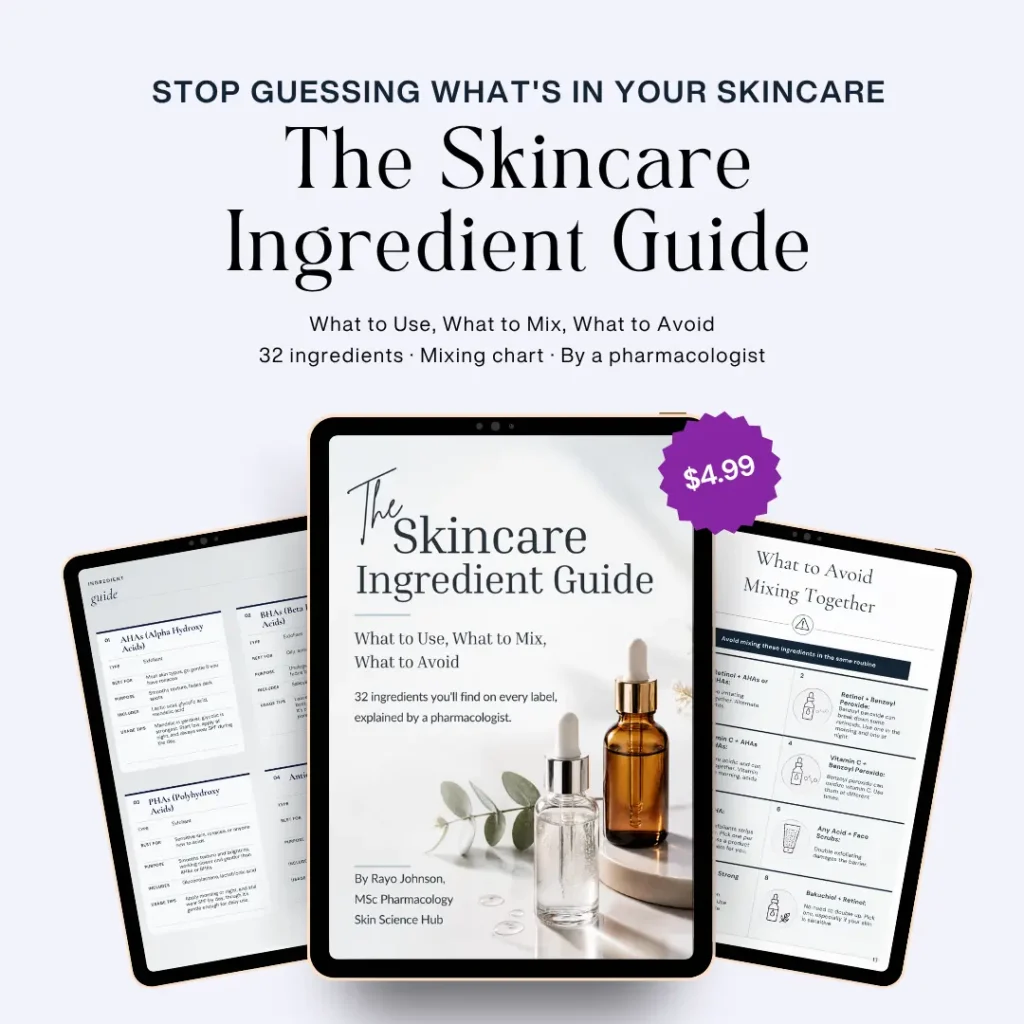
Fragrance isn’t the only thing to watch. My guide shows you which ingredient combinations irritate skin and how to avoid them.
Who Should Avoid Fragrance in Skincare?
Not everyone needs to avoid fragrance in skincare. But some people are genuinely more vulnerable to reactions, and knowing which category you fall into saves a lot of guesswork.
You’re at Higher Risk If You Have:
Eczema or atopic dermatitis. Your impaired skin barrier lets fragrance compounds penetrate more deeply, which makes sensitisation more likely. Fragrance can also act as a co-sensitiser, increasing your chances of developing allergies to other ingredients too. Even a mild fragrance reaction can trigger a significant eczema flare, which is why dermatologists routinely recommend fragrance-free products for eczema patients.
Rosacea. Chronic flushing already compromises your skin barrier, so irritant reactions to fragrance are more likely and harder to manage. Many people with rosacea find fragrance a consistent trigger even when other people tolerate the same products without issues.
Acne-prone skin. Fragrance doesn’t cause acne directly, but it can trigger inflammation in already sensitised skin, which worsens breakouts. If your acne is persistent despite a clean routine, fragrance could be contributing to the underlying irritation.
Unexplained sensitive skin. If you regularly experience redness, stinging, or irritation without a clear cause, fragrance is statistically your most likely culprit.
Asthma or respiratory sensitivities. Atomised fragrances like room sprays, candles, and perfumes are the biggest concern here, but any fragranced product can contribute to symptoms if you’re sensitive.
Which products carry the highest risk
Two product categories stand out. For women, scented deodorants, because they have higher fragrance concentrations, are applied to areas with skin on skin contact, and sweat enhances penetration. Shaving the underarms also creates micro-trauma that allows more allergen introduction. For men, scented aftershaves, because fragrance is applied directly to freshly shaved skin where micro-traumas dramatically increase absorption.
You’re Probably Fine If
You’ve used fragranced products for years without issues, your skin barrier is intact, and you don’t have eczema, rosacea, or persistent unexplained reactions. There’s no reason to avoid fragrance if it’s never caused you problems. That said, women develop fragrance allergies at twice the rate of men, largely because of higher cumulative product exposure. Keeping your routine simple reduces that risk naturally.
How to Test for Fragrance Sensitivity
If you suspect fragrance in skincare is behind your skin issues, the elimination test is the most practical place to start.
The elimination test
Remove every fragranced product from your routine, including anything labelled “unscented” since those can still contain masking fragrances. Switch to fragrance-free alternatives with no “fragrance,” “parfum,” or essential oils listed on the ingredient label. Then wait 4 to 6 weeks and watch what happens.
If your skin clears up significantly during that period, fragrance was likely your problem.
One thing worth remembering is that fragrance doesn’t only live in your skincare. Laundry detergents, fabric softeners, room sprays, and candles all count. For the most accurate result, reduce your overall fragrance exposure as much as you reasonably can, though eliminating it entirely is admittedly difficult in practice.
If your skin improves, you then have a choice. Stay fragrance-free entirely, or slowly reintroduce products one at a time to identify your specific triggers. You’re probably not reacting to every fragrance compound out there, just a handful of specific ones.
What about professional patch testing?
A dermatologist can patch test you for specific fragrance allergens, which gives you more targeted information than an elimination test alone. But there’s a significant limitation. Standard patch testing misses up to 65% of fragrance allergies because hydroperoxides from auto-oxidation aren’t included in most testing panels. So a negative patch test doesn’t rule fragrance out. The elimination test remains your most reliable first step.
How to Read Fragrance on Skincare Labels
Reading fragrance on a label is harder than it sounds. Here’s where to start.
What “fragrance” means on an ingredient list
When you see “fragrance” or “parfum” on a label, that single word can represent anywhere from 50 to 200 individual chemicals, drawn from a pool of over 3,000 possible fragrance ingredients. Fragrance formulas are protected as trade secrets, so brands aren’t required to disclose which specific compounds are in the blend.
This creates a real problem if you’re trying to identify your triggers. You can’t avoid what you can’t identify.
Fragrance-Free vs Unscented: What’s the Difference?
These two terms are not the same, and the difference matters if you’re sensitive.
Fragrance-free means no fragrance ingredients were added. No “fragrance” or “parfum” will appear on the label.
Unscented means the product has no detectable smell, but it may still contain masking fragrances added to neutralise the odour of other ingredients.
So an unscented product can still trigger reactions, while a fragrance-free product generally won’t. Neither term is regulated, so always read the full ingredient list rather than relying on the label claim. When choosing fragrance-free products, verify there’s no “fragrance,” “parfum,” or masking fragrance anywhere in the list.
The EU’s 26 listed allergens
Since 2005, EU regulations require cosmetics to list 26 specific fragrance allergens separately if present above certain concentrations, 0.001% in leave-on products and 0.01% in rinse-off products. Compounds like linalool, limonene, citronellol, geraniol, and citral fall into this list. Many global brands apply this standard across all markets, so you may see these listed even on non-EU products.
Is natural fragrance safer?
No. Essential oils like lavender, tea tree, and citrus are among the most common fragrance allergens because they’re complex mixtures containing compounds that undergo auto-oxidation, the same process that makes synthetic fragrances more allergenic over time. “Natural fragrance” on a label still represents undisclosed ingredients, just plant-derived ones. And “no artificial fragrance” or “perfume-free” are not the same as fragrance-free. They can still contain natural fragrances or essential oils.
Voluntary disclosure
Some brands go beyond legal requirements and list specific fragrance components after the word “fragrance,” for example “Fragrance (limonene, linalool, geraniol).” This transparency is worth looking for if you’re trying to pinpoint your specific triggers.
Should You Avoid Fragrance in Skincare?
If your skin is reacting and you can’t figure out why, fragrance is your most likely culprit. Run the elimination test first before overhauling your entire routine.
If fragranced products have never caused you problems, there’s no reason to change anything. Just know that cumulative exposure adds up, so the more products you layer, the higher your risk over time.
Is fragrance-free skincare better? For sensitive, eczema-prone, or reactive skin, yes. For everyone else, it’s a personal choice rather than a necessity.

