Azelaic Acid for Rosacea: How It Works, What to Buy, and What to Expect
Last updated on September 6th, 2026
Azelaic acid for rosacea is one of the most underrated treatment options available. It’s FDA-approved, targets the biology driving your flares, and is gentle enough to use for as long as you need it.
This post covers how it works, which rosacea subtypes it helps most, how it compares to metronidazole and ivermectin, and how to use it without aggravating your skin.
New to azelaic acid altogether? Start with What Is Azelaic Acid first, then come back here.
What Makes Rosacea Different From Regular Skin Inflammation
Rosacea is not just sensitive skin. It’s a chronic condition where your immune system overreacts to ordinary triggers, and that changes everything about how you treat it.
Heat, sun exposure, certain foods, or even a gentle cleanser can set off more inflammation than they should. When blood vessels near the skin surface widen, the skin flushes and reddens. Over time, that redness can become permanent. In papulopustular rosacea, the skin also develops bumps and pustules that look like acne but respond very differently to treatment.
There is no cure for rosacea. The goal is to reduce how often flares happen, bring down baseline redness over time, and keep the skin barrier intact. And because the root problem is an overactive immune response rather than bacteria or clogged pores, acne treatments often make rosacea skin worse, not better.
That’s what makes azelaic acid different.
How Azelaic Acid Actually Works on Rosacea Skin
Most rosacea treatments manage symptoms. Azelaic acid goes further. It works on the biological chain of events driving those symptoms.
1. It Starts by Blocking TLR2
Your skin has a built-in alarm system that detects threats and triggers inflammation to fight them off. In rosacea skin, one part of that alarm system, a receptor called TLR2, is stuck in the on position. It fires constantly, even when there’s no real threat, and that sets off a chain reaction that ends in redness, flushing, and inflammation.
Azelaic acid dials TLR2 back down by going after the switch that keeps triggering the reaction in the first place. That’s why the improvement you see with azelaic acid tends to be lasting rather than temporary.
2. It Breaks the Inflammation Chain
When TLR2 misfires, it triggers the skin to overproduce an enzyme called KLK5, which then causes a protein called LL-37 to build up far beyond normal levels.
LL-37 is helpful in small amounts. It protects your skin from infection. But when it accumulates in excess, it widens blood vessels, drives inflammation, and keeps the redness and flushing cycle running continuously.
Azelaic acid reduces both KLK5 and LL-37 directly. This is also why it outperforms topical antibiotics for rosacea. Bacteria aren’t the main driver here. A misfiring immune chain is, and that’s exactly what azelaic acid targets.
3. It Calms the Free Radicals That Keep Redness Going
Even after a flare passes, rosacea skin stays inflamed. Immune cells flood the area and release unstable molecules called free radicals. Those free radicals keep damaging skin tissue and sustaining the redness long after the original trigger is gone.
Azelaic acid reduces free radical release from these immune cells and lowers the inflammatory proteins driving the reaction. The redness gradually fades, and with consistent use, it stays down.
That’s why improvement takes weeks rather than days. The inflammation runs deep, and azelaic acid works through it steadily.
4. It Reduces the Mites That May Be Making Things Worse
Everyone has Demodex folliculorum mites living in their hair follicles. In rosacea skin, those numbers are unusually high, and research links higher mite counts to more frequent flares.
Azelaic acid’s antimicrobial properties reduce those numbers alongside everything else it does. Fewer mites, fewer triggers.
Which Rosacea Subtypes Does Azelaic Acid Help
Azelaic acid works better for some rosacea subtypes than others. The evidence is strong for some, partial for others, and absent for a couple entirely.
Papulopustular Rosacea (Subtype 2)
Azelaic acid is FDA approved specifically for papulopustular rosacea, and this is where the clinical evidence is strongest. If your rosacea shows up as red bumps and pustules that resemble acne but don’t clear with acne treatments, this is likely your subtype.
A randomised controlled trial involving 961 people showed a 61.6% mean reduction in inflamed bumps and lesions in the azelaic acid group, compared to 50.8% in the control group. Redness also improved significantly.
Erythematotelangiectatic Rosacea (Subtype 1)
Subtype 1 is the persistent redness and flushing type, and azelaic acid does help here. With consistent use, it brings down baseline redness and reduces how easily the skin flushes.
The limitation is visible broken blood vessels. Azelaic acid won’t shrink those, and laser treatments are the more effective option for that specific concern.
Ocular and Phymatous Rosacea
Azelaic acid isn’t indicated for either of these subtypes. Ocular rosacea, which affects the eyes, needs specialist care from an ophthalmologist. Phymatous rosacea, where the skin thickens, typically requires procedural treatment. If either describes your situation, a dermatologist is the right starting point.
Azelaic Acid vs Metronidazole for Rosacea
Metronidazole, sold as Metrogel, has been the standard topical treatment for rosacea for decades, and many dermatologists still prescribe it first. But the clinical evidence now puts azelaic acid clearly ahead.
One trial compared 15% azelaic acid gel against 0.75% metronidazole gel. Another compared it against the 1% concentration. Both found azelaic acid worked faster and more effectively. In the 15-week trial, azelaic acid kept improving throughout the entire study period while metronidazole plateaued around week eight. Because rosacea doesn’t go away, an ingredient that keeps delivering results over time gives you more consistent control.
Azelaic acid also does something metronidazole can’t. Rosacea flares often leave behind patchy discolouration, and because azelaic acid reduces pigment production, it clears both the active inflammation and the marks it leaves behind.
Azelaic Acid vs Ivermectin for Rosacea
Ivermectin, sold as Soolantra, is a newer topical treatment for rosacea and one your dermatologist may have already mentioned. It works well, but it works differently from azelaic acid.
Ivermectin targets Demodex mites directly through its antiparasitic properties, and it also carries anti-inflammatory benefits. Azelaic acid works earlier in the inflammatory process and also reduces the pigmentation that flares leave behind.
No head-to-head trial has compared the two directly. Their mechanisms complement each other, which is why some dermatologists prescribe both together. Ask yours which fits your rosacea, or whether combining them makes sense.
How to Use Azelaic Acid If You Have Rosacea
Start Lower and Slower Than You Think
Even though azelaic acid is one of the gentler actives available, rosacea skin can still find the initial tingling uncomfortable. Starting slowly gives it time to adjust without triggering a flare.
Begin every other day. Apply moisturiser first, then azelaic acid on top, then moisturiser again to buffer it. Build to once daily over a few weeks, then twice daily as your skin settles.
Which Formulation Works Best and What to Actually Buy
15% gel is the FDA approved formulation for rosacea, used in every major clinical trial, and it’s where the strongest evidence sits. Gel absorbs fast and sits light on the skin, which helps since heat is a known rosacea trigger.
Prescription options
Finacea 15% gel is the most well-studied prescription option and the one to ask your dermatologist about first. Finacea foam is available if you prefer that texture, though shake the can before use and keep it away from open flames because the propellants are flammable. Azelex 20% cream is another prescription option your dermatologist may suggest for more persistent or stubborn cases.
Over the counter options
For OTC options, the right choice depends on what your skin needs beyond azelaic acid itself.
The Ordinary Azelaic Acid Suspension 10% is the most straightforward option. No extra actives, no added complexity. If your skin is highly reactive and you want to keep your routine simple while it adjusts, start here.

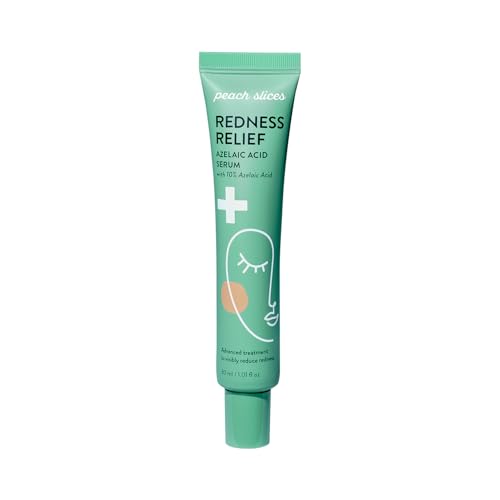
Peach Slices Redness Relief 10% Azelaic Acid Serum adds panthenol and cica alongside the azelaic acid. Both ingredients actively calm inflammation and repair the skin barrier, so if your rosacea skin is also sensitised and easily aggravated, this formulation gives you more support than azelaic acid alone.
Anua Azelaic Acid 10 Hyaluron Redness Soothing Serum is the better fit if your rosacea skin also runs dry. The added hyaluronic acid keeps the formula hydrating and lightweight.

The INKEY List SuperSolutions Azelaic Acid 10% has a green tint that neutralises redness visually while the azelaic acid works underneath. If you want something that reduces visible redness immediately while your skin clears over time, this is worth considering.

For moderate rosacea, prescription 15% will consistently outperform any 10% OTC option. It’s worth discussing with your dermatologist rather than relying on OTC alone.
What to Pair With It and What to Avoid
Niacinamide pairs well with azelaic acid because it calms inflammation and supports your skin barrier. Hyaluronic acid keeps skin hydrated without irritation. Ceramide based moisturisers are also a solid choice while your skin is adjusting.
Avoid salicylic acid, glycolic acid, benzoyl peroxide, and retinoids in the early weeks. If you want to eventually add retinoids, read azelaic acid for acne post covers how to combine them safely. And if you’re already using prescription medications for rosacea, check with your dermatologist before adding azelaic acid to the mix.
Rosacea-prone skin needs gentle partners. My guide lists the gentle ingredients that suit sensitive, redness-prone skin, azelaic acid included.
How Long Does Azelaic Acid Take to Work on Rosacea
Azelaic acid takes time. Some tingling or mild stinging in the first few weeks is normal and settles as your skin adjusts.
Clinical trials ran for 12 to 15 weeks, and that’s the timeframe where you’ll see a genuine difference. At 12 weeks, redness reduced, bumps cleared, and skin texture improved. The skin that started the trial looking inflamed and reactive looked noticeably calmer and clearer by the end.
Rosacea doesn’t go away permanently. If you stop using azelaic acid once your skin clears, the redness and flares will come back. Long-term consistent use is what keeps rosacea under control.
Why Azelaic Acid Is One of the Safest Long-Term Rosacea Options
Azelaic acid has been used for over 20 years and has a strong safety record to show for it. It doesn’t cause bacterial resistance, so you can use it long term. It doesn’t thin your skin, and it doesn’t make you more sensitive to the sun.
Extensive safety studies show no harmful effects with prolonged use. It’s also classified as pregnancy category B, meaning it’s safe to use during pregnancy and breastfeeding.
The most common side effects are mild tingling or stinging at application. These settle within the first few weeks for most people.
The Bottom Line
Azelaic acid is one of the few rosacea treatments that works on the actual biology driving the condition. It’s FDA approved, backed by solid clinical evidence, and safe to use for as long as you need it. Give it time, use it consistently, and it delivers.