How Azelaic Acid Clears Acne, Blackheads and Acne Scars
Last updated on September 6th, 2026
Azelaic acid for acne is one of the most underused treatments available, and most people have never tried it.
It works on three fronts at once. It kills acne-causing bacteria, unclogs pores, and calms inflammation. It clears blackheads and whiteheads by targeting the root cause of comedone formation, and while it’s doing all of that, it also fades the acne scars your breakouts leave behind. Those flat discoloured patches are actually post-inflammatory hyperpigmentation, and azelaic acid is one of the few ingredients that tackles both.
If you’re completely new to this ingredient, read up on what azelaic acid is and what it does for your skin for the full background. But if acne is your main concern, this guide covers exactly how it clears breakouts, what types it works best for, and how to use it to get results.
How Azelaic Acid Works for Acne
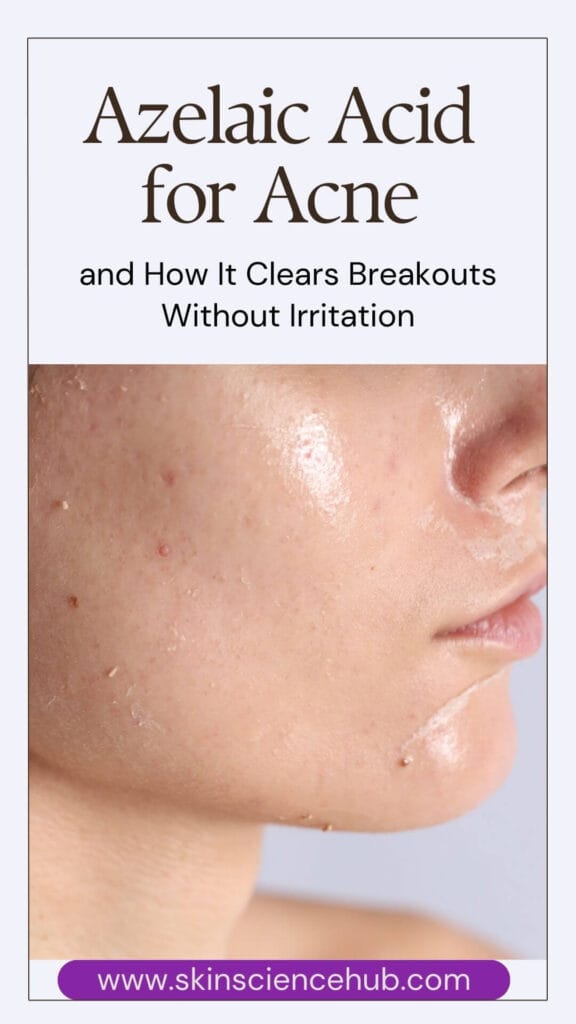
Most acne treatments do one thing. Azelaic acid does three.
1. Kills Acne-Causing Bacteria Without Building Resistance
Azelaic acid kills the two main bacteria behind acne, Propionibacterium acnes and Staphylococcus epidermidis, but not the way antibiotics do. It crosses the bacterial cell membrane, lowers intracellular pH, and shuts down protein and DNA synthesis at the same time. Because it attacks through multiple routes at once, bacteria cannot adapt to it. No resistance, even with years of use.
A 2024 study found that azelaic acid doesn’t just reduce P. acnes populations. Over time it restores healthier microbial diversity and increases lactobacilli, which is the bacterial profile of naturally clear skin. If your dermatologist has flagged antibiotic resistance after long-term clindamycin or erythromycin use, azelaic acid is a strong alternative
2. Azelaic Acid Unclogs Pores and Clears Blackheads
Every breakout starts weeks before you see it. Skin cells inside the follicle that should shed cleanly stick together instead, trap oil underneath, and give bacteria exactly what they need to thrive. Azelaic acid interrupts that process early.
It normalizes keratinization inside the follicle, keeping cells shedding cleanly so oil stays clear. A study using 20% azelaic acid cream twice daily for 8 to 12 weeks showed significant reduction in that buildup. Your pores stay clear, and your skin follows.
3. Reduces Inflammation and Calms Active Breakouts
When bacteria feed on trapped sebum, your immune system sends in neutrophils, and that’s when the visible damage happens. Neutrophils release free radicals that drive the redness, swelling, and heat you see on the surface. That angry red pimple isn’t just bacteria. It’s your own immune response making it worse.
Azelaic acid blocks free radical production at the neutrophil membrane, cutting off the inflammatory trigger before it spirals. Active breakouts calm down faster, redness fades, and your skin recovers more quickly.
What Types of Acne Does Azelaic Acid Treat
1. Azelaic Acid for Mild to Moderate Inflammatory Acne
This is where azelaic acid performs best. Studies show it performs on par with tretinoin, benzoyl peroxide, and erythromycin for inflamed, active breakouts. At 15% to 20%, it clears breakouts, reduces redness, and improves your skin noticeably within three months.
And because bacteria cannot build resistance to it, your skin keeps clearing.
2. Azelaic Acid for Blackheads and Whiteheads
Blackheads and whiteheads are the visible result of congestion building inside the pore. Because azelaic acid normalizes cell shedding at the source, that congestion never fully develops. It works effectively as a standalone treatment for comedonal acne, and your pores stay visibly cleaner with consistent use.
3. Azelaic Acid for Hormonal and Adult Female Acne
Hormonal acne doesn’t behave like teenage acne. It clusters along the jaw and chin, flares around your cycle, and tends to relapse. That pattern means you need something built for long term use, not a short term fix.
Azelaic acid is well suited here. It’s gentle enough to use continuously without your skin developing a reaction to it, it’s safe during pregnancy and breastfeeding, and a clinical trial found it delivers results comparable to combined oral contraceptives for adult female acne. For women who either can’t use hormonal treatments or simply don’t want to, it’s a strong long term option.
4. Azelaic Acid for Acne Scars
Azelaic acid does something most acne treatments don’t. It clears active breakouts and fades the acne scars they leave behind.
After a breakout heals, inflammation signals melanocytes to overproduce melanin, causing post-inflammatory hyperpigmentation, those flat dark patches that linger for months. Azelaic acid blocks tyrosinase, the enzyme that drives melanin production, and slows that process down. And because it targets only overactive melanocytes, it fades discolouration without touching your natural skin tone.
For medium to darker skin tones, where post-inflammatory hyperpigmentation lingers longest and often causes more distress than the acne itself, this dual action makes azelaic acid particularly valuable. A 2024 randomised controlled trial using 15% azelaic acid gel for 12 weeks showed significant reductions in post-acne hyperpigmentation and melanin content compared to placebo.
If fading acne scars is your main goal, the articles on the 10 best ingredients to fade hyperpigmentation and how to get rid of hyperpigmentation on the body go deeper on both.
5. Azelaic Acid for Fungal Acne
Most acne treatments target bacteria. Azelaic acid also works against Malassezia, the yeast responsible for fungal acne.
Fungal acne looks almost identical to bacterial acne but doesn’t respond to the same treatments. It typically clusters on the forehead or chest and feels itchy. You may have fungal acne if your breakouts persist despite standard acne treatments. Because azelaic acid works against both bacteria and Malassezia, it clears breakouts regardless of which type is behind them.
For a deeper look at Malassezia and how to identify it, the article on signs of Malassezia yeast overgrowth covers it in detail.
6. Azelaic Acid for Cystic Acne
Cystic acne, the deep, painful lumps that sit beneath the skin, needs more than topical treatment alone. Azelaic acid doesn’t penetrate deeply enough to address those lesions directly.
But alongside prescription treatments like isotretinoin or topical retinoids, azelaic acid still contributes. It reduces surface inflammation and fades the acne scars cystic acne leaves behind. If cystic acne is your main concern, start with a dermatologist.
Azelaic Acid vs Other Acne Treatments
Azelaic Acid vs Benzoyl Peroxide
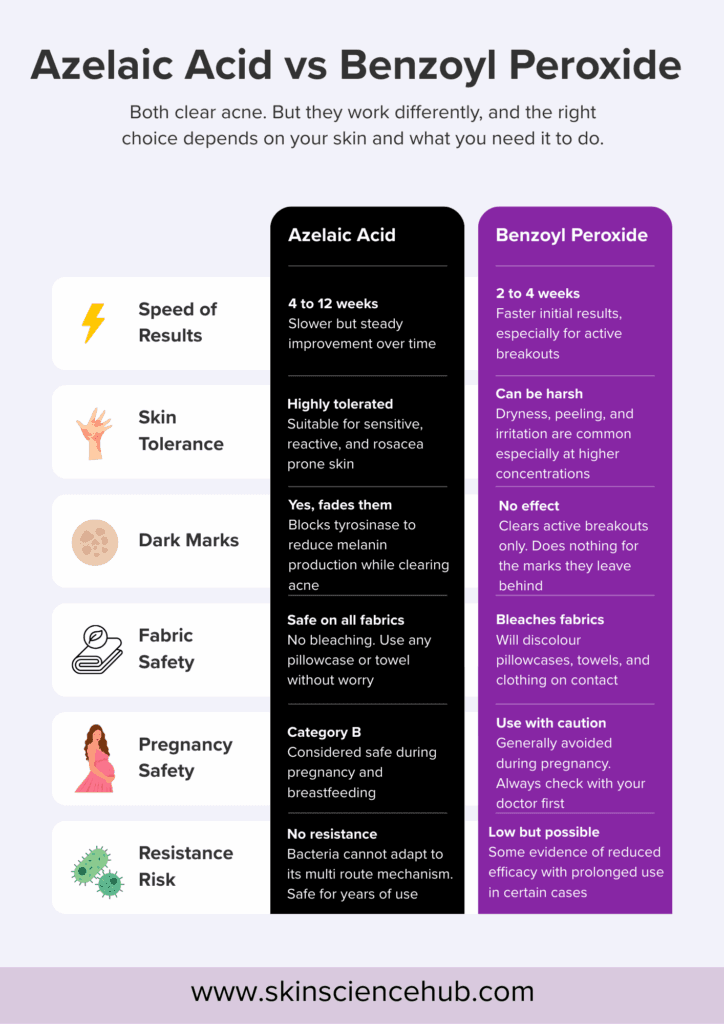
Benzoyl peroxide works faster. It kills P. acnes rapidly and delivers visible results sooner than azelaic acid. But it dries out your skin, causes peeling and irritation especially at higher concentrations, and bleaches pillowcases, towels, and anything else it touches. It also does nothing for the acne scars your breakouts leave behind.
Azelaic acid works at a steadier pace, tolerates sensitive skin well, and doesn’t bleach anything. And because it clears active breakouts while fading acne scars, it covers more ground than benzoyl peroxide does.
Azelaic Acid vs Tretinoin
Studies show that 20% azelaic acid and 0.05% tretinoin produce the same results for acne, and tretinoin is the gold standard topical acne treatment.
Tretinoin works by accelerating cell turnover, and it can be harsh on the skin. It often brings an initial purging phase, dryness, and sun sensitivity. It’s also not safe during pregnancy.
Azelaic acid produces the same results with far less irritation. No purging, no photosensitivity, and it’s safe during pregnancy. It also fades acne scars while clearing breakouts. Many dermatologists combine both, using azelaic acid in the morning and tretinoin at night, because together they cover more ground than either does alone.
If you want to understand how tretinoin works and where it fits in your routine, the article on retinoids goes deeper.
Azelaic Acid vs Salicylic Acid
Salicylic acid is oil soluble, which means it penetrates directly into the pore and clears congestion efficiently. For blackheads specifically, it works fast and effectively.
Azelaic acid clears pores, kills bacteria, calms inflammation, and fades acne scars all at the same time. It’s also better tolerated on sensitive skin and safe during pregnancy, where salicylic acid at higher concentrations is not recommended.
For a detailed side by side comparison, the article on azelaic acid vs salicylic acid goes deeper on both.
How to Use Azelaic Acid for Acne
What Concentration of Azelaic Acid Should You Use
Start at 10%. Over the counter azelaic acid products typically run between 5% and 10%, and that range is enough to build tolerance and see early improvement.
Once your skin adjusts, 15% to 20% is where the strongest results are. In the US those concentrations require a prescription, though many other countries sell them over the counter. If your breakouts are moderate, it’s worth asking your dermatologist about prescription strength because that’s where azelaic acid performs best for acne.
Best Azelaic Acid Products for Acne
All five options below are at 10%, the strongest concentration available over the counter.
The Ordinary Azelaic Acid Suspension 10% The most affordable and most widely used option on this list. It’s a thick suspension formula that sits well under moisturiser and delivers the same active as pricier alternatives.

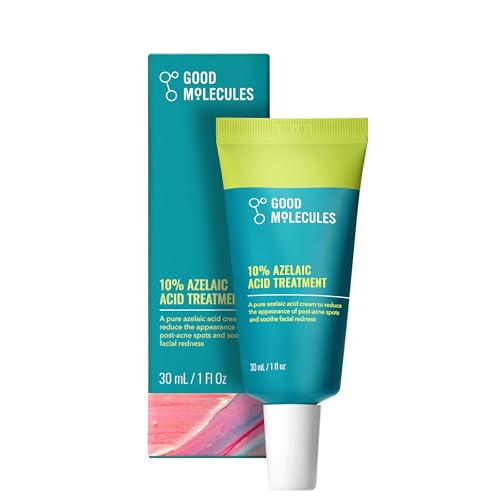
Good Molecules 10% Azelaic Acid A lightweight gel that absorbs quickly and layers cleanly under other products without pilling.
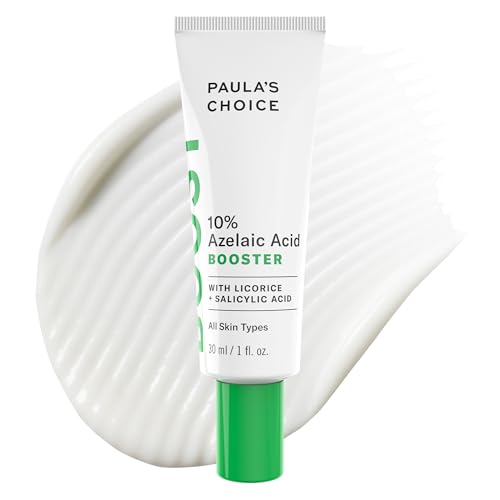
Paula’s Choice 10% Azelaic Acid Booster Contains both azelaic acid and salicylic acid, so it targets blackheads and inflammatory acne at the same time. A strong choice if both are a concern.
Naturium Azelaic Topical Acid 10% Combines azelaic acid with niacinamide, which supports barrier function and targets hyperpigmentation alongside active breakouts. Particularly useful if acne scars are as much of a concern as active acne.

La Roche-Posay Effaclar A.Z. Gel Formulated specifically for acne and reactive skin. The most tolerable option on this list for skin that reacts easily to new actives.

When and How to Apply Azelaic Acid
Apply azelaic acid to clean, dry skin twice daily, morning and evening. Unlike retinoids and AHAs, it doesn’t cause photosensitivity, so morning use fits naturally into any routine.
The one thing most people get wrong is coverage. It’s tempting to dab it only on visible breakouts, but azelaic acid works best applied as a thin layer across your entire acne-prone area. Microcomedones form beneath the surface weeks before they become visible, and treating the whole area means you catch them early.
What to Pair Azelaic Acid With
Azelaic acid works well alongside most skincare ingredients. Niacinamide is a natural pairing because it supports your barrier and helps keep oil production in check. Hyaluronic acid keeps your skin hydrated while the azelaic acid does its work, and a ceramide moisturiser makes sure your barrier stays strong with consistent active use.
Sunscreen every morning is essential, and not for the reason you might think. Azelaic acid doesn’t cause photosensitivity, but UV exposure actively darkens acne scars. Every time you go without SPF, you’re working against what the azelaic acid is trying to do.
Where you need caution is layering multiple exfoliating acids in the same routine. The cumulative irritation builds quickly, even with gentle actives. For more on ingredient pairings, the article on what azelaic acid is and what it does for your skin goes deeper.
Building an acne routine around azelaic acid? My guide lists the best acne ingredients, azelaic acid included, and shows you which combinations to avoid.
How Long Does Azelaic Acid Take to Work for Acne
Azelaic acid is not a quick fix, but it delivers steady, lasting results.
Around four weeks you’ll notice less redness and fewer new breakouts appearing. Visible clearing happens between eight and twelve weeks. Fading acne scars takes three to six months of consistent use.
Consistency matters more than concentration here. Using 10% every single day will outperform 20% used sporadically. If you’re not seeing big changes at four weeks, keep going. Your skin will clear over time.
Azelaic Acid Side Effects
Tingling and Skin Reactions
A mild tingling or stinging right after application is common when you first start using azelaic acid. Studies show up to 10% of users experience this. It typically fades within fifteen to twenty minutes and settles completely within the first few weeks as your skin adjusts.
If the tingling persists or feels uncomfortable, apply azelaic acid over a light moisturiser rather than directly on bare skin. That buffer reduces the intensity and your skin still gets the full benefit.
Does Azelaic Acid Cause Purging
Azelaic acid can cause purging in the first few weeks. It speeds up cell shedding inside the follicle, so congestion that was already building beneath the surface comes up faster. More breakouts before fewer breakouts is normal.
Purging only happens where you already get acne. Those breakouts are temporary and clear faster than usual. If new breakouts are appearing in areas that were previously clear, or nothing is improving after six weeks, reduce how often you apply it or step down to a lower concentration.
Dryness and Peeling
Significant dryness or peeling is uncommon with azelaic acid, but it can happen if you’re using it twice daily from the start. If your skin feels dry or tight, drop back to once daily until it settles, then build back up gradually.
When to Stop Using Azelaic Acid
Tingling, mild dryness, and temporary purging are all normal parts of adjusting to azelaic acid. What isn’t normal is persistent burning, swelling, or a rash spreading beyond your acne-prone areas. If any of those occur, stop using it and see your dermatologist.
The Bottom Line
Azelaic acid kills bacteria without resistance, unclogs pores, calms inflammation, and fades acne scars, all with one ingredient. It’s safe during pregnancy, well tolerated on sensitive skin, and at 15% to 20% it matches the results of the strongest topical acne treatments available.
Give it time and stay consistent. The improvement builds steadily, and your skin will show it.