
What Do Ceramides Do for Your Skin?
Last updated on April 10th, 2026
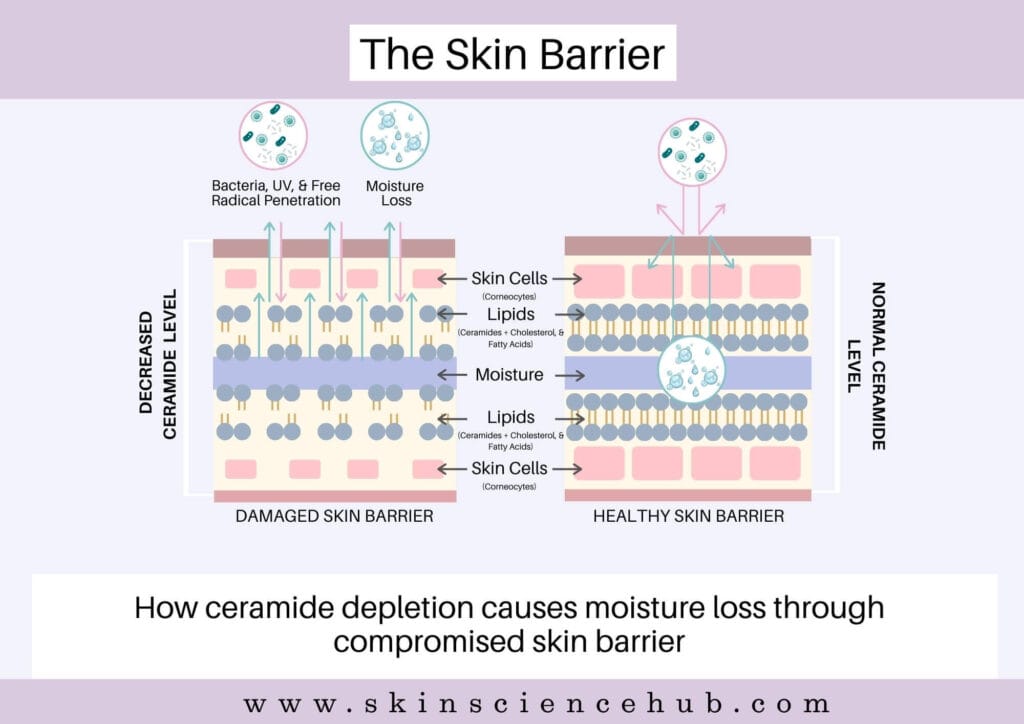
Ceramides are the lipids that hold your skin barrier together, making up roughly 50% of the outermost layer of your skin. They keep moisture in, block out irritants, and form the structural foundation that everything else in your routine depends on. When ceramide levels drop, the barrier weakens and becomes easier to damage.
Ceramides deplete constantly through aging, cold weather, harsh products, and over-exfoliation. In this guide, you’ll learn what ceramides do for your skin, which skin types benefit most, and how to choose products that actually rebuild your barrier.
What Are Ceramides?
Ceramides are waxy lipids found naturally in the outermost layer of your skin, the stratum corneum. They make up about 50% of the lipids in the space between your skin cells, with cholesterol accounting for roughly 25% and fatty acids making up the remaining 15%. Together, these three form the structural foundation of your skin barrier.
Think of your skin like a brick wall. The skin cells are the bricks, and ceramides are the mortar holding everything together. Without enough mortar, the wall develops cracks, moisture escapes, and irritants get in. When ceramide levels are healthy, your skin stays intact, hydrated, and protected.
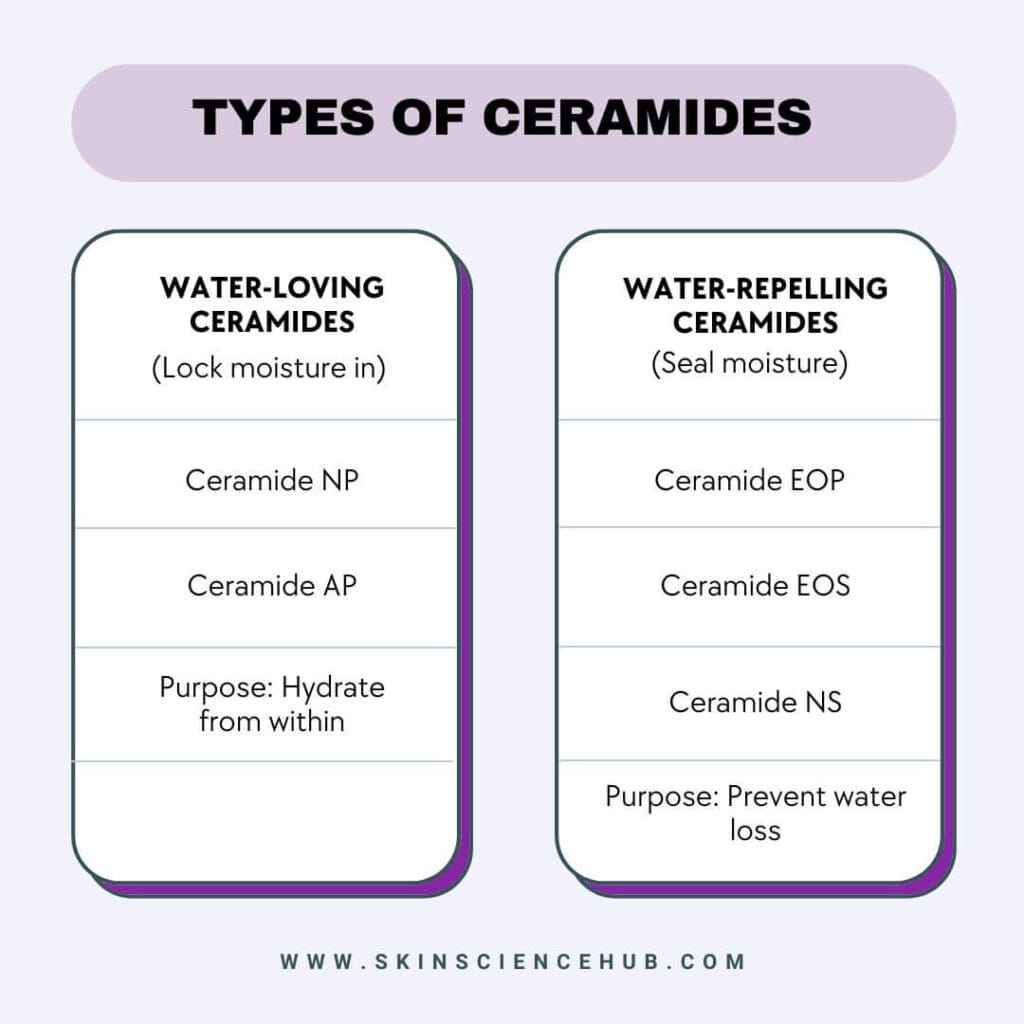
There are nine types of ceramides in human skin, and they fall into two broad categories. Some are water-loving, locking moisture beneath the skin’s surface. Others are water-repelling, sealing on top and preventing that moisture from escaping. Topical ceramides in skincare are either naturally derived or synthetically made to closely mimic your skin’s own lipids, and studies show they penetrate the stratum corneum and integrate into the lipid matrix effectively.
Ceramide Benefits for Every Skin Type
Ceramides aren’t just for dry or sensitive skin. Every skin type depends on a healthy barrier, and that barrier depends on ceramides. Whether you’re oily, acne-prone, aging, or dealing with eczema, ceramides support the same fundamental thing: your skin’s ability to hold moisture in and keep damage out.
1. For Aging skin
Ceramide levels decline naturally after your mid-twenties. Skin becomes drier, thinner, and more prone to fine lines because a weakened barrier loses moisture faster than it can retain it. Replenishing ceramides topically slows that moisture loss, preserving skin integrity and reducing the appearance of fine lines. They also support the production of structural proteins that keep skin firm.
2. For Acne-Prone Skin
Ceramides don’t clog pores, even though they’re lipids. They protect your barrier while you’re using actives like retinoids, benzoyl peroxide, and salicylic acid, all of which temporarily stress the barrier as they work. That stress causes dryness and irritation that makes people quit before they see results. Ceramides reduce that irritation and help you stay consistent long enough for those treatments to work.
3. For Oily Skin
When your barrier is compromised, your skin produces more oil to compensate, which leads to clogged pores and more breakouts. Ceramides restore moisture balance, so your skin stops overproducing oil.
4. For Sensitive Skin and Rosacea
A compromised barrier is at the root of most sensitive skin and rosacea flares. When the barrier has gaps, everyday triggers like weather, fragrance, and temperature changes get through easily, causing redness and inflammation. Ceramides close those gaps, which reduces how often and how strongly your skin reacts.
5. For Eczema
People with eczema have clinically lower ceramide levels, and that deficiency is directly linked to the intense dryness, itching, and inflammation that defines the condition. Ceramides reduce transepidermal water loss, improve hydration, and calm flare-ups. Studies show consistent use extends the time between episodes.
6. For Over-Exfoliated Skin
Acids, retinoids, and physical scrubs strip ceramides faster than your skin can produce them. Pause them and apply ceramides consistently to rebuild the barrier before reintroducing anything stronger.
7. For Winter Dryness
Cold air slows ceramide production, and indoor heating compounds that by pulling moisture out of your skin continuously. The barrier develops tiny cracks and water escapes faster than your skin can replace it. Ceramides seal those cracks and restore the barrier’s ability to retain moisture.
How to Increase Ceramide Levels in Your Skin
Topical application is the most direct and reliable way to raise ceramide levels in your skin. Skincare products deliver ceramides exactly where they’re needed, into the stratum corneum, and studies confirm they penetrate the lipid matrix and integrate effectively. A ceramide moisturizer or serum applied daily produces measurable improvements in barrier function, hydration, and transepidermal water loss within weeks of consistent use.
A few other factors support how well your skin produces and retains ceramides naturally, though none replaces topical application. UV exposure degrades ceramides in the stratum corneum, so daily broad-spectrum SPF slows that loss. Harsh surfactants and hot water strip ceramides with every wash, and a mild low-pH cleanser preserves more between applications.
Diet plays a smaller supporting role. Foods rich in healthy fats like fish, eggs, and plant oils provide the fatty acids your skin needs for ceramide synthesis, and some research suggests wheat and sweet potatoes contain plant-derived ceramides that may support barrier function, though the evidence is still limited.
How to Use Ceramides in Your Skincare Routine
Ceramides work in both your morning and evening routines and are safe to use every day. There’s no adjustment period and no risk of overuse.
Apply them to damp skin, ideally within three minutes of washing your face or stepping out of the shower. Damp skin absorbs ceramides more effectively and helps drive them deeper into the stratum corneum.
If you’re layering multiple products, apply ceramide serums first on clean damp skin, then follow with a moisturizer to seal everything in. At night, adding an occlusive like Vaseline or Aquaphor over your moisturizer gives extra protection, particularly for severely compromised barriers or during harsh winter months.
Ceramides help your skin barrier recover. My guide shows you how they pair with retinol, plus 31 other ingredients.
Ceramide Side Effects and Safety
Ceramides are well tolerated by most skin types, including sensitive and eczema-prone skin. Because they’re identical in structure to the lipids your skin already produces, allergic reactions are rare.
Side effects can still occur. Some people experience mild breakouts when first introducing a new ceramide product, though this is usually caused by other ingredients in the formula rather than the ceramides themselves. If your skin reacts, check the full ingredient list before assuming ceramides are the problem.
Ceramides are safe during pregnancy and suitable for all ages. If you have a diagnosed skin condition like eczema or rosacea, check with your dermatologist before adding new products to your routine.
Ceramides Work With Niacinamide and Hyaluronic Acid
These three ingredients show up together constantly, and they work differently enough that understanding what each one does helps you use them better.
Hyaluronic acid draws water into the skin from the environment and the dermis, keeping skin hydrated and plump. Ceramides form part of the lipid matrix between skin cells, physically holding the barrier together and preventing that water from escaping. Niacinamide is a vitamin B3 derivative that reduces inflammation, regulates sebum, and stimulates your skin’s own ceramide production over time.
None of them replaces the others. Hyaluronic acid hydrates but needs a functional barrier to hold that hydration in. Ceramides build and maintain that barrier but don’t actively attract water. Niacinamide supports both by reducing inflammation and boosting ceramide synthesis from within. Apply a hyaluronic acid serum to damp skin first, follow with a ceramide moisturizer to seal it in, and use niacinamide either layered between or in the same formula.
How to Choose the Best Ceramide Products
Not all ceramide products deliver the same results, and a few things on the label tell you exactly what you’re getting before you buy.
Look for multiple ceramide types – Ceramides are either water-loving or water-repelling, and you need both working together for comprehensive barrier support. Water-loving types like ceramide NP and ceramide AP lock moisture beneath the skin’s surface. Water-repelling types like ceramide EOS, ceramide EOP, and ceramide NS seal on top and prevent water from escaping. Products that list several types perform better than those relying on just one.
Check where ceramides appear in the ingredient list – Products don’t always disclose exact concentrations, but position matters. Ceramides listed in the first half of the ingredient list are present at meaningful levels. Those listed at the very end are likely present at concentrations too low to affect the barrier meaningfully.
Look for supporting ingredients – Ceramides work best alongside cholesterol and fatty acids, which recreate the full lipid structure of your skin barrier. Humectants like glycerin and hyaluronic acid draw moisture in, while niacinamide supports your skin’s own ceramide production over time.
Choose the right packaging – Ceramides break down when exposed to light and air. Opaque bottles, airless pumps, and tubes preserve the formula far better than clear or open jars.
Best Ceramide Products for Every Skin Type
1. Cocokind Ceramide Barrier Nourishing Daily Serum
Best for: dry, sensitive, and over-exfoliated skin

This lightweight serum contains five ceramide types, NP, NS, AP, EOP, and EOS, giving you both water-loving and water-repelling types working together. It also includes plant-derived squalane, which locks in hydration and provides antioxidant protection throughout the day.
The texture is runny but absorbs quickly, making it easy to layer underneath a moisturizer. If you live in a dry climate or find moisturizer alone isn’t enough, this serum reinforces your barrier without heaviness. It’s fragrance-free and works well for most skin types, though very oily skin may find the squalane slightly rich.
2. Aveeno Calm and Restore Skin Therapy Balm
Best for: eczema, rosacea, and severely compromised skin

This balm contains ceramide NP alongside Aveeno’s triple oat complex of oat extract, colloidal oatmeal, and oat oil. Colloidal oatmeal has strong clinical backing for reducing inflammation and relieving itch, which gives this balm genuine soothing properties beyond basic barrier repair.
The texture is thick and occlusive, so it works best as a final step at night or on areas needing serious repair like dry hands, crepey necks, or eczema patches. If heavy textures feel uncomfortable on your face, use it targeted rather than all over. For eczema or severely compromised skin, this is the strongest option on this list.
8. CeraVe Moisturizing Cream
Best for: oily, combination, and acne-prone skin

CeraVe contains three essential ceramides, NP, AP, and EOP, alongside hyaluronic acid and glycerin in a formula developed with dermatologists. Clinical studies support its ability to restore barrier function and reduce transepidermal water loss, which puts it in a different category from most drugstore moisturizers.
The texture is a medium-weight cream that works for most skin types without feeling greasy. It’s fragrance-free, non-comedogenic, and available at most pharmacies for under fifteen dollars, making it the most accessible ceramide moisturizer on this list.
Bottom Line
Ceramides are not a trend. They’re a fundamental component of your skin barrier that depletes with age, harsh weather, and the actives you use every day. Every skin type needs them, and replenishing them consistently is evidence-backed and effective for your skin’s long-term health.