How to Do Chemical Peels at Home Safely
Last updated on August 21st, 2026
Chemical peels get results that most daily skincare products can’t. They work by dissolving the glue that holds dead skin cells together, so your skin cells shed faster and you get a more even skin tone. That’s how they clear dark spots, smooth texture, and improve dullness in a way that serums and moisturizers typically don’t.
But there’s a real risk here and you need to understand it before you start. At-home peel injuries are documented and avoidable, and nearly every case comes down to the same mistake. People focus on concentration when contact time is actually what controls how deep a peel goes. Get that wrong and you can cause burns, scarring, or hyperpigmentation that takes months to reverse.
When you choose a mild acid suited to your skin and follow the right timing, at-home peels are safe and effective for clearing hyperpigmentation, evening skin tone, and smoothing texture. This guide walks you through exactly how to do that.
Chemical Peel Quick Start Guide
Already familiar with peels? This is your quick reference. If you’re a complete beginner, read through the full guide first and come back here. It’ll make a lot more sense.
One thing worth knowing before you even buy a product. If you have never used any acid in your routine before, spend 2 to 3 months using an acid toner regularly first. Going straight to a peel without that foundation increases your risk of irritation significantly.
How Chemical Peels Work
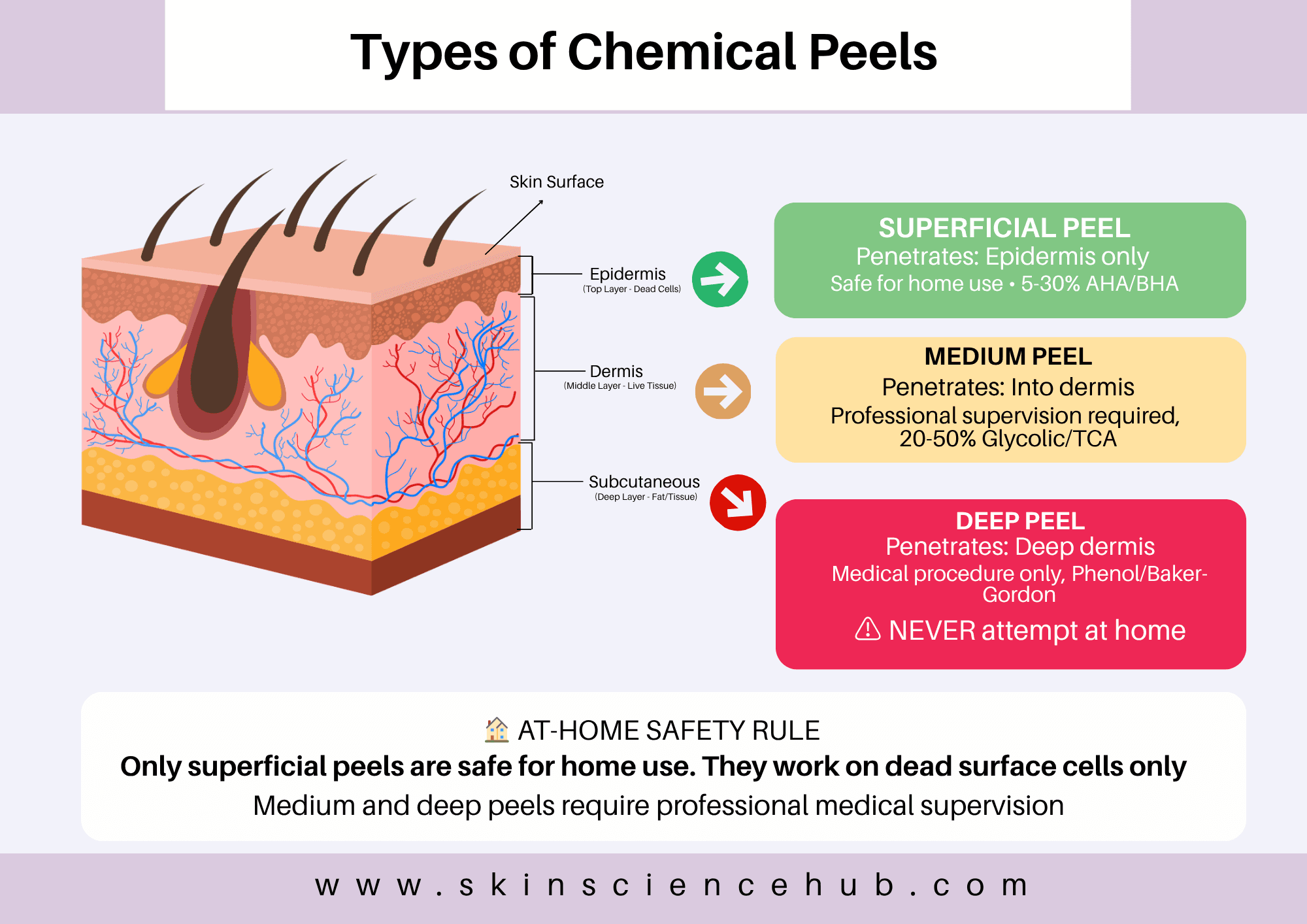
At-home peels work on the epidermis, which is the outermost layer of your skin. The acid dissolves the bonds holding dead skin cells together, so those cells shed faster than they normally would. As that dead layer clears, you get smoother texture, more even skin tone, and less congestion. Dark spots fade because the pigmented surface cells are turning over faster and being replaced.
But peels have limits. They don’t reach the dermis, which is the deeper layer where sagging, deep wrinkles, and severe scarring live. If those are your main concerns, at-home peels won’t fix them. That boundary is also what makes them safe for home use.
Types of Chemical Peels: Superficial, Medium and Deep
Chemical peels are grouped by how deep they go, and that depth determines what they treat, how much downtime you need, and whether you can safely do them at home.
Superficial peels work on the epidermis only. They treat mild acne, hyperpigmentation, fine lines, and dullness using 5-30% AHAs or 2-20% BHAs, with 1-3 days of downtime. When done correctly, they are safe for all skin types. This is your only option for home use.
Medium peels go into the upper dermis and address moderate wrinkles, deeper acne scars, and sun spots. They use 20-50% glycolic acid or 10-35% TCA, with 7-10 days of visible peeling. If you have darker skin, the hyperpigmentation risk is significantly higher. These require a professional.
Deep peels reach the lower dermis and treat severe wrinkles, deep scarring, and significant sun damage using phenol. Because phenol affects cardiac function, these are performed with heart monitoring in a surgical setting. They can also permanently lighten your skin. Never attempt these at home.
Is a Chemical Peel at Home Right for You?
Before you buy anything, make sure at-home peels are actually right for you. Some situations make them genuinely unsafe.
Active Skin Conditions
Don’t do a peel if you currently have cold sores, eczema, psoriasis, rosacea, sunburn, a bacterial skin infection or a damaged skin barrier. The same goes for freshly shaved skin, which has tiny invisible cuts that make it more vulnerable to irritation. Wait until your skin has fully healed before attempting one.
Pregnancy and Nursing
Avoid peels entirely until you have finished nursing. This isn’t the time to experiment with strong acids on your skin.
Medications
If you are currently on Accutane, or finished it within the last 6-12 months, don’t do peels. The same applies if you take any medication that increases sun sensitivity, because your skin’s response to acid will be unpredictable.
Medical Conditions
A history of keloid scarring, heart problems, lupus, very thin skin with visible blood vessels, or severe seborrheic dermatitis all require medical clearance before you attempt any peel.
Darker skin tones
If your skin falls in the Fitzpatrick 3-6 range, talk to a dermatologist first. You have a higher risk of post-inflammatory hyperpigmentation, and getting the acid choice right matters more for you than for anyone else.
Mental Readiness
This one doesn’t get talked about enough. Your skin will look worse before it looks better, and the process is uncomfortable. If you are anxious about temporary changes in your appearance or easily distressed by how your skin looks during recovery, wait until you feel genuinely ready. That’s not a weakness, it’s self-awareness.
Best Acids for At-Home Chemical Peels
You have four safe options for home use, and each one suits different skin types and concerns. The right choice depends on what you’re treating, not just what’s most popular.
Lactic Acid
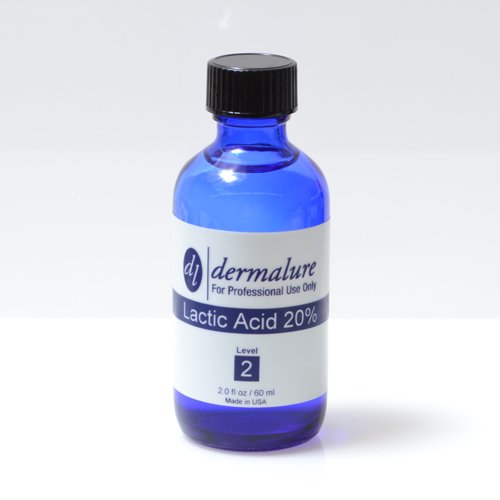
Lactic acid is the gentlest of the four and the best starting point if you have sensitive or dry skin. It exfoliates while also hydrating, and because its molecule is larger than glycolic acid, it penetrates more slowly and causes less irritation. It works well for dullness, mild pigmentation, and uneven texture. Look for MUAC Lactic Acid Peel, Demalure Lactic Gel Peel (30%), or Demalure Lactic Acid Peel (20%). Check that the pH sits between 3.5 and 4.0.