

Over Exfoliated Skin: Signs, How to Fix It & Prevention
Last updated on August 21st, 2026
Over exfoliated skin is more common than most people realise, and it often looks like a completely different problem. Your face is red, tight and stinging. You may have bumps that weren’t there before, or skin that stings the moment any product touches it, including something as gentle as a basic moisturizer. If any of this sounds familiar, you’ve likely over-exfoliated your skin.
The damage isn’t permanent. Your skin will recover, but only if you stop what caused the problem and give it what it actually needs.
This guide covers every sign of over exfoliated skin, including the ones most people miss, and walks you through exactly how to heal your skin barrier, how long recovery takes, and how to prevent it from happening again.

What Is Over Exfoliation?
Over-exfoliation happens when you remove dead skin cells faster than your skin can rebuild its protective barrier. Your skin barrier works like a brick wall, where the cells are the bricks and the mortar is made of lipids and proteins. This structure keeps irritants out and moisture locked in. When you exfoliate too often or too aggressively, you break down both faster than your skin can repair them, and the result is a compromised barrier that lets irritants in while water escapes.

The most common causes are using too many exfoliating products at once, applying acids or retinoids too frequently, and using physical scrubs with rough particles daily. Even gentle exfoliants cause damage when used excessively.
What makes this harder to catch is that exfoliants hide in products you wouldn’t think to question. Your cleanser might contain salicylic acid. Your toner probably has AHAs or BHAs. That brightening serum likely contains acids too. Many people are exfoliating three times a day without realising it, simply because nobody told them to check every label. If you want to understand how each type works, the full breakdown is in the guide to physical vs chemical exfoliation.
Once your barrier is compromised, your skin behaves in very predictable ways, and that’s exactly what the signs below reflect.
8 Signs of Over Exfoliated Skin
Over-exfoliated skin has a specific set of signs, and from a pharmacology standpoint, they’re more recognisable than most people realise. The challenge is that they don’t all appear at once, so it’s easy to dismiss each one individually. But when you know what to look for, the pattern becomes clear.
1. What Does Over Exfoliated Skin Look Like
Over-exfoliated skin has a distinctive appearance that’s worth knowing. The surface may look unusually shiny or waxy, almost polished, because the protective layer has been stripped away. You may notice a tight, thin quality to the skin alongside visible redness. In some cases the skin looks thin and visibly red, with small bumps or uneven texture across the surface. If your skin looks like it’s glowing but stings to touch, that shine is not health. It’s a damaged barrier.
2. Your Skin Stings When You Apply Products
Your moisturizer burns. Your sunscreen stings. Products that never bothered you before suddenly feel like they’re attacking your face. This happens because over-exfoliation thins your barrier, so ingredients that would normally sit on the surface now penetrate deeper layers your skin wasn’t ready for. If basic, fragrance-free products cause stinging, your barrier is compromised.
3. You Have Small Bumps That Weren’t There Before
Over-exfoliated skin often develops small, uniform bumps across the surface. These aren’t breakouts in the traditional sense. They’re a sign of barrier disruption and irritation, and they tend to appear quickly after a period of heavy exfoliation. Many people mistake them for purging and exfoliate more, which makes the problem worse.
4. Your Skin Looks and Feels Dehydrated
This one catches people off guard because they expect over-exfoliation to cause oiliness or breakouts. But stripping your barrier means your skin loses water faster than it can hold onto it. The result is skin that feels tight and looks dull, with fine lines appearing more prominent because there’s less water plumping the surface. No amount of moisturizer seems to help because the barrier can’t hold hydration in place.
5. Over Exfoliating Can Cause Spots and Breakouts
More breakouts despite consistent cleansing is one of the most frustrating signs. Without beneficial bacteria and a healthy barrier to keep harmful ones in check, acne-causing bacteria multiply. Your skin also overproduces oil to compensate for moisture loss, and that excess oil clogs pores. The instinct is to exfoliate more to clear the breakouts, but that’s exactly what makes the cycle worse.
6. You’reYour Skin Is Persistently Red and Itchy
Persistent redness that doesn’t fade on its own points to ongoing barrier damage. Combined with an itchy or irritated feeling, it’s a sign your skin’s inflammatory response is no longer under control. Beneficial bacteria help keep that response in check, and when they’re depleted through over-exfoliation, your skin overreacts to minor triggers and stays inflamed longer than it should.
The itchiness specifically comes from nerve endings becoming more exposed as the stratum corneum thins. If your face looks flushed and feels uncomfortable for hours at a time, the barrier needs repair, not more exfoliation.
7. Your Hyperpigmentation Is Getting Worse
If you’re using exfoliants to fade dark spots but the pigmentation seems to be spreading or darkening, the exfoliation is causing more irritation than it’s treating. This is a particular risk for deeper skin tones, where any inflammation can trigger post-inflammatory hyperpigmentation. The exfoliant isn’t fixing the problem, it’s adding to it.
8. Your Fine Lines Look More Prominent
Over-exfoliation accelerates transepidermal water loss, which means your skin struggles to stay plumped. Fine lines and wrinkles become more visible because the water content that normally fills them out is escaping through a damaged barrier. People often respond by buying stronger actives, which deepens the problem further.
How to Treat Over Exfoliated Skin
When your barrier is compromised, your skin can’t defend itself, hold moisture, or repair efficiently. Recovery works by removing everything that’s disrupting the barrier and giving your skin the conditions it needs to rebuild. The steps below follow that logic.
Skin Barrier Routine for Over-Exfoliated Skin
Check every product you’re currently using and remove anything that exfoliates, including the ones you wouldn’t expect. Salicylic acid hides in cleansers. Lactic acid shows up in moisturizers. Retinol counts as exfoliation too. Even weak exfoliants slow recovery at this stage.
Avoid these ingredients completely until your skin has fully healed: Salicylic acid, lactic acid, glycolic acid and mandelic acid. Urea at concentrations above 5%. Retinol, retinaldehyde and tretinoin. Benzoyl peroxide. Vitamin C in L-ascorbic acid form. Any product that tingles, warms or causes any sensation on application.
Your routine for this week:
Morning: Rinse with lukewarm water or use a gentle cleanser such as Cetaphil Gentle Cleanser or Avene Extremely Gentle Cleansing Lotion. Apply a bland moisturizer like Vanicream. Finish with a mineral sunscreen containing zinc oxide or titanium dioxide. Physical sunscreen is less likely to sting on a compromised barrier than chemical filters.
Evening: Gentle cleanser, then moisturizer. Apply a second layer of moisturizer if your skin still feels tight after the first.
Three things that actively support recovery:
- A cool compress, meaning a clean cloth soaked in cold water, applied for 10 minutes three times daily. Cold constricts blood vessels and reduces the inflammation driving your redness and stinging
- A humidifier in your bedroom at night. Your skin loses more water while you sleep because repair processes increase metabolic activity, and a humidifier reduces that overnight moisture loss.
- A moisturizer with glycerin and ceramides. Ceramides are the same lipids that make up your barrier, so they directly support repair. Glycerin draws water in and helps the barrier hold it there.
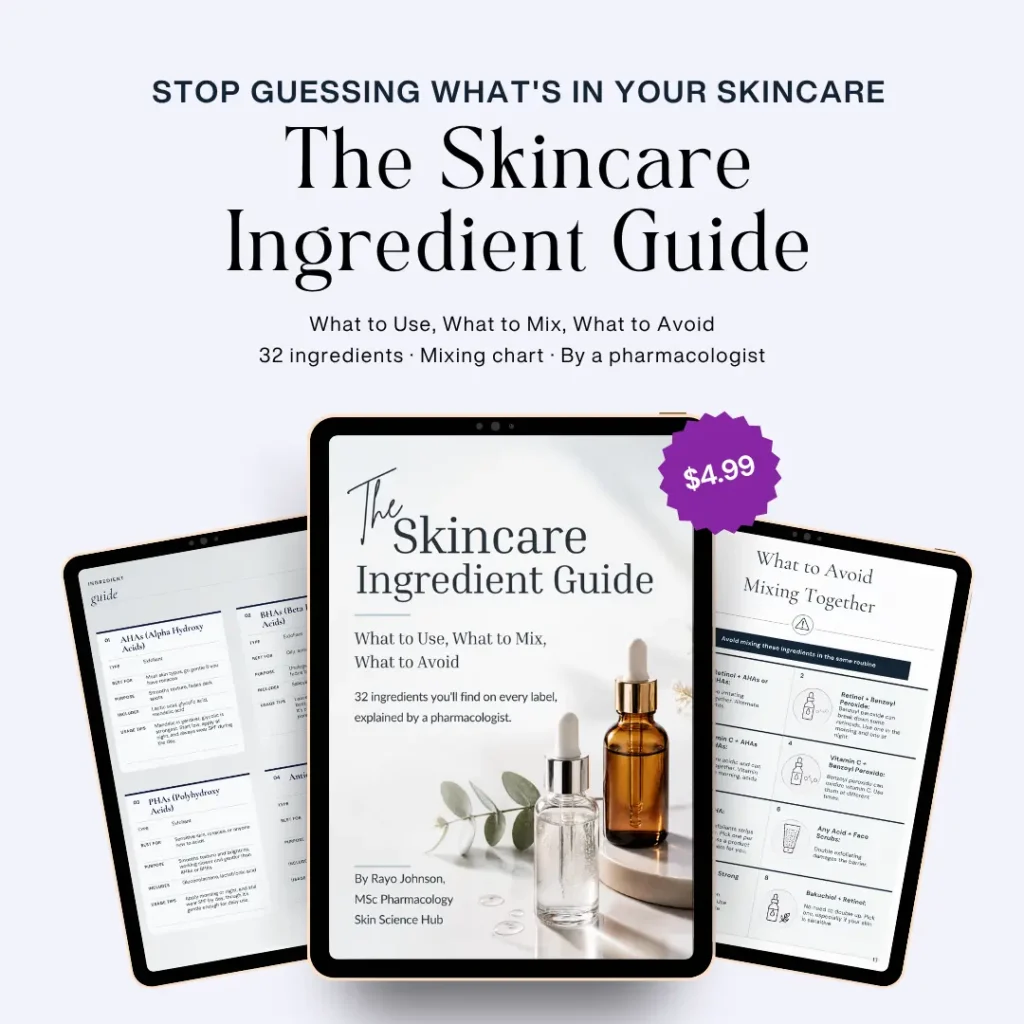
Once your barrier recovers, my guide shows you which exfoliants not to stack, so your barrier doesn’t end up here again.
How Long Does Over Exfoliated Skin Take to Heal
Most people notice reduced redness and less stinging between day 10 and day 14. Your stratum corneum turns over in 2 to 4 weeks and your full epidermis in approximately 30 days, so meaningful improvement within that window is realistic if you stick to the steps consistently.
What to expect based on severity:
- Mild over-exfoliation: Recovery takes 3 to 7 days.
- Moderate over-exfoliation: Recovery takes 1 to 3 weeks, with noticeable improvement by week 2.
- Severe over-exfoliation: Recovery takes 4 to 8 weeks. If you see no improvement after 2 weeks of consistent care, see a dermatologist because something else may be contributing.
When You Can Start Exfoliating Again
Wait until your skin meets all four of these conditions before reintroducing any exfoliant. Products absorb without stinging. Redness is completely gone, not just reduced. Texture feels smooth and consistent. Your skin holds moisture comfortably without feeling tight an hour after moisturizing.
If even one of those conditions isn’t met, wait another week and check again. Your barrier may look normal before it has fully rebuilt its lipid structure, and exfoliating too soon strips away progress your skin has been quietly making.
When you’re ready, start here:
Mandelic acid is the best first option because its larger molecular size means it penetrates slowly and causes less irritation than other acids. Lactic acid is a close second because it hydrates while it exfoliates, which buffers the disruption. Enzyme exfoliants like papain or bromelain are the gentlest option of all if your skin is still on the sensitive side.
Start once a week at the lowest concentration available. Wait two full weeks before increasing frequency. Your tolerance has changed, and what worked before may be too aggressive now. A gentler acid used consistently delivers better results than a stronger one your skin can’t handle.
Preventing Over Exfoliation
How Often Should You Exfoliate
Frequency is where most people go wrong, and the fix is simpler than you’d think.
Dry or sensitive skin does best with once or twice a week. Normal skin can handle two to three times a week. Oily or resilient skin tolerates three to four times a week, but never daily. These are maximums, not goals. More exfoliation does not produce better results.
Warning Signs You Need to Stop Exfoliating
Your skin signals problems early if you know what to look for.
Keep your current routine if your texture feels smooth without tightness, your tone is even, products absorb within 5 to 10 minutes, and you have no unusual sensitivity.
Pull back if you notice mild tightness lasting more than 30 minutes after exfoliating, slight sensitivity to one or two products you normally tolerate, or minor flaking in your T-zone.
Stop everything if any product stings or burns on application, redness lasts more than two hours, you develop sudden sensitivity to products you’ve used for months, or your breakouts increase. These are signs your barrier needs repair, not more treatment.
Bottom Line
Over-exfoliation is easy to do and hard to spot because the signs creep up gradually and the instinct is always to treat more, not less. But your skin has a remarkable ability to repair itself when you stop working against it.
A gentle cleanser, a bland moisturizer, and a mineral sunscreen are enough to get through recovery. Once your barrier is healthy again, exfoliate once a week at most and pay attention to what your skin tells you between sessions.
If you want to understand which exfoliants suit your skin type and how to use them safely going forward, the full guide is in physical vs chemical exfoliation.

