PIE vs PIH: How to Identify Your Mark and Fade It
Last updated on August 20th, 2026
Post-inflammatory erythema, or PIE, and post-inflammatory hyperpigmentation, or PIH, are two of the most common marks a breakout leaves behind. The names are one letter apart, which makes it easy to mix them up, but they’re not the same thing at all. Both start from the same inflammation, and hormonal or cystic acne carries the highest risk of leaving a mark. Yet how you treat them depends completely on which one you actually have.
As a pharmacologist, I’ll show you how to tell PIE and PIH apart, how to fade each one, and how long it usually takes.
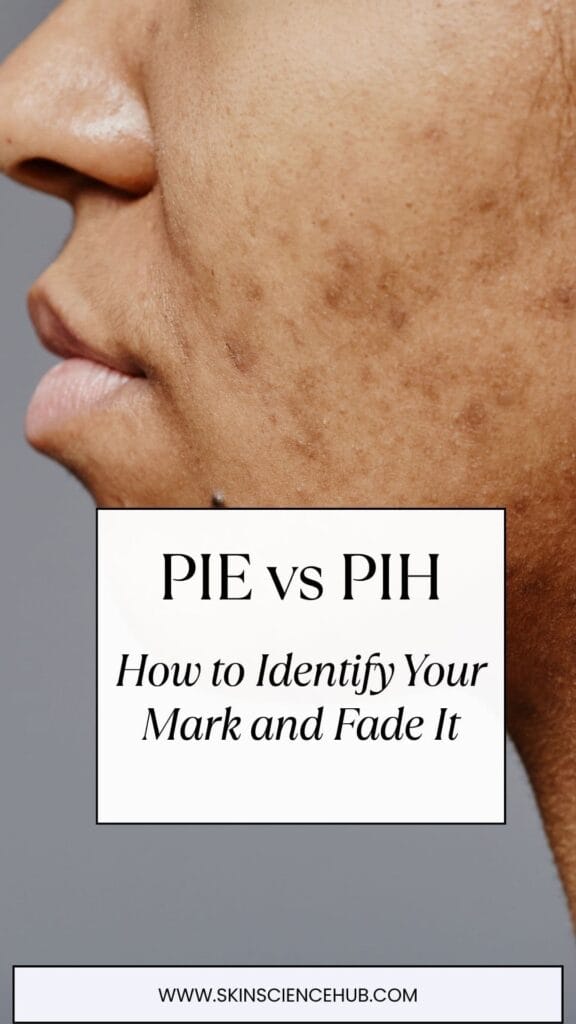
PIE vs PIH: the Difference at a Glance
PIE is red, pink, or purple, and it comes from blood vessels that got damaged or dilated during inflammation. PIH is brown, gray, or black, and it comes from extra melanin your skin produced while it healed.
| PIE | PIH | |
|---|---|---|
| Color | Red, pink, or purple | Brown, gray, or black |
| Cause | Damaged or dilated blood vessels | Extra melanin production |
| More common in | Lighter skin tones | Darker skin tones |
| Blanch test | Fades under pressure | Stays the same |
| Speed to fade | Faster with the right treatment | Slower, even with treatment |
| Treated with | Azelaic acid, niacinamide, vascular laser or IPL | Azelaic acid, retinoids, niacinamide, vitamin C, tranexamic acid, IPL |
Left alone, both can take months to fade. With treatment, PIE usually clears faster than PIH, since a blood vessel calms down quicker than your skin can clear out extra pigment.
What is post-inflammatory erythema (PIE)?
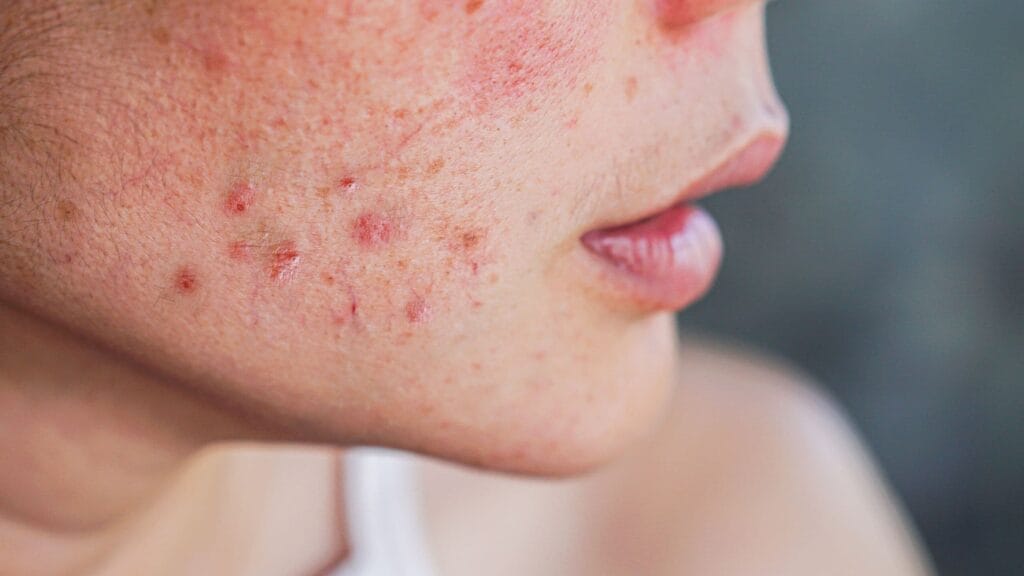
Post-inflammatory erythema, or PIE, is the flat red, pink, or purple mark left after an inflamed pimple heals. The color comes from blood, not pigment. PIE can look slightly raised in the days right after a breakout clears, though it’s usually flat by the time you’re checking a mark that’s lingered a while.
When your skin is inflamed, blood vessels near the surface widen to carry more blood into the area. Prolonged inflammation also thins the epidermis and breaks down some of the collagen underneath, so more light reflects off those widened vessels once they’re sitting closer to the surface. That’s why the mark looks red long after the pimple itself is gone. You’re seeing blood vessels through thinner skin.
Press on a PIE mark and it fades for a moment, because you’re compressing the blood vessels causing the color, then it returns the instant you let go.
PIE shows up more often in lighter skin tones, because less melanin means less masking over the vessels underneath, and PIE usually takes months to fade. For some people, however, it can take over a year, or never fully clear.
What is post-inflammatory hyperpigmentation (PIH)?
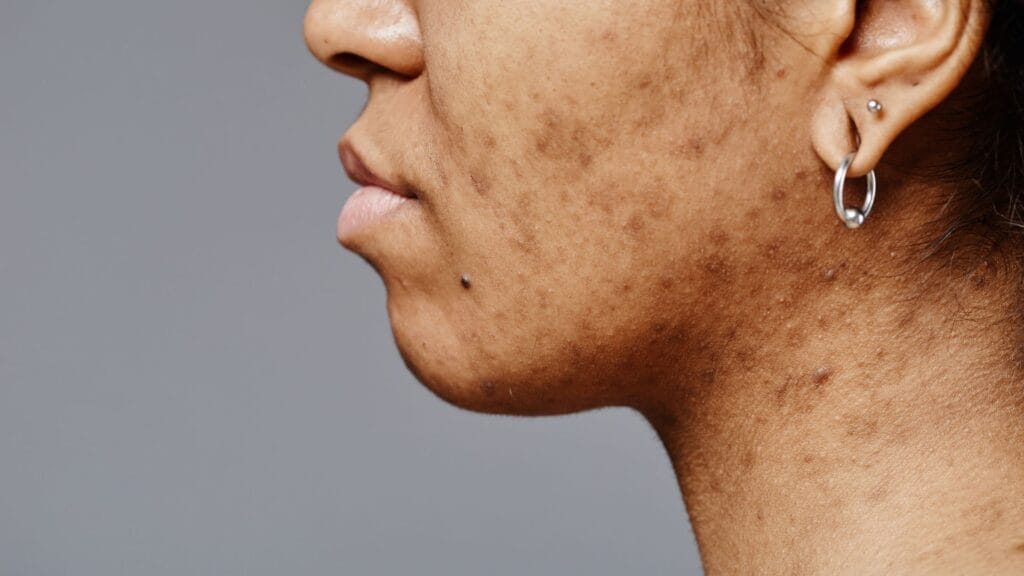
Post-inflammatory hyperpigmentation, or PIH, is the flat brown, gray, or black mark left after an inflamed pimple heals. The color comes from pigment, not blood.
When your skin is inflamed, it signals nearby melanocytes to produce extra melanin, and where that melanin ends up decides how the mark behaves. Melanin that stays in the epidermis shows up brown and clears as skin cells turn over and shed. Melanin that leaks into the dermis gets trapped inside immune cells called macrophages, which is why those marks turn blue-gray and resist fading.
Press on a PIH mark and nothing happens, because there’s no blood vessel underneath to compress, only pigment sitting in the skin.
PIH shows up more often in darker skin tones, because melanocytes there tend to produce more pigment in response to inflammation, and PIH usually takes longer than PIE to fade. In more than half of people who develop it, the mark lasts at least a year, and in 22.3% of cases, it lasts five years or longer.
How to Tell If You Have PIE or PIH
Check the color
Red, pink, or purple points to PIE. Brown, gray, or black points to PIH.
Press on the mark
If color alone doesn’t settle it, press a clean finger against the mark and hold for a few seconds, then let go and watch what happens. If the color fades and rushes back in as you release, that’s PIE. If nothing changes, that’s PIH.
PIE and PIH often show up together on the same mark, as the two conditions commonly present as a set. A combined mark tends to be brown or gray with a persistent reddish or pink cast layered over it, because the pigment from the healing process hasn’t fully cleared while the blood vessels underneath are inflamed. Press on a spot like this, and part of the color fades while the rest holds steady, a good sign you’re looking at both conditions. If you notice both, then you need to treat both.
PIE and PIH Aren’t Scars
People often call these marks acne scars, but PIE and PIH aren’t actually scars. That’s because PIE and PIH are based on color, while scars are based on texture.
That texture change is structural. Collagen gets damaged or lost during healing, leaving behind a pit, a ridge, or a raised patch, whether or not the color changes too.
You can feel that change, even when you can’t always tell by looking. Run a finger over the spot. If you feel any of it, that’s a scar. PIE and PIH don’t change how skin feels, only how it looks.
Beyond how they feel, PIE and PIH fade over time, but a scar doesn’t.
How to fade PIE
1. Azelaic Acid
Azelaic acid at prescription strength, 15%, has been tested directly against PIE. A twelve-week trial found it reduced the size and number of PIE marks compared to a placebo, by calming the inflammation keeping those blood vessels dilated. For product recommendations, read our roundup on the best azelaic acid serums.
2. Niacinamide
Niacinamide almost always gets paired with another active in the research, azelaic acid or otherwise, not tested alone for PIE. It calms the inflammatory signals keeping those blood vessels dilated, which is why it works well alongside a treatment like azelaic acid. Our roundup of the best niacinamide serums is a good place to start.
3. Leave it alone while it heals
Picking, scrubbing, or over-exfoliating disrupts your skin barrier and sets off more redness.
4. Sunscreen
Unprotected UV exposure keeps that redness from settling down, so apply sunscreen daily to protect the progress you’re making.
5. Vascular treatments
Your dermatologist will weigh your skin tone and how severe the redness is before choosing between pulsed dye laser and IPL. Pulsed dye laser targets blood vessels directly, while IPL uses broad-spectrum light that converts to heat in the skin, destroying blood vessels as well as pigment. A retrospective study of 60 patients treated with IPL over 3 to 7 sessions found measurable improvement in PIE, and earlier case reports using pulsed dye laser saw visible fading within a month of treatment.
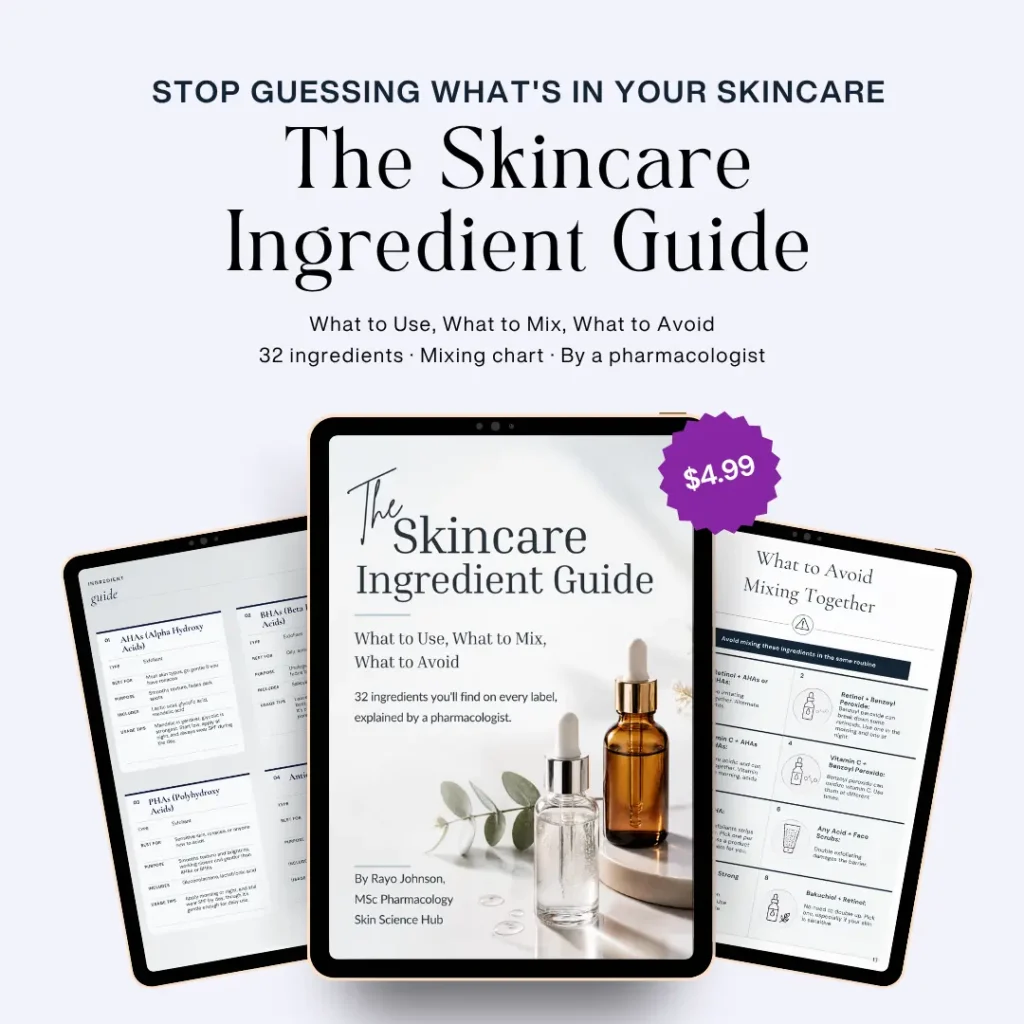
My guide lists the best ingredients for dark marks and shows you how to combine them safely.
How to fade PIH
1. Azelaic Acid
Azelaic acid at prescription strength, 15%, blocks tyrosinase, the enzyme melanocytes need to produce new pigment, so it stops PIH from getting darker while the mark you already have fades through your skin’s own turnover. Because it only targets melanocytes that are overactive, it evens your tone without lightening the skin around the mark. For product recommendations, read our roundup on the best azelaic acid serums.
2. Retinoids
Prescription retinoids have the strongest evidence for fading PIH specifically. A 40-week trial of 0.1% tretinoin found 92% of patients rated their marks lighter or much lighter, against 57% on a vehicle cream alone. Tretinoin works by speeding up how fast pigmented skin cells turn over and shed, and over-the-counter retinol works through that same mechanism, at a fraction of the strength, so expect it to work slower. Retinoids also make skin more prone to sunburn, so sunscreen isn’t optional while you’re using one. For product recommendations, read our roundup on the best retinol serums.
3. Niacinamide
Niacinamide interrupts the transfer of pigment from melanocytes into the skin cells around them, so less new melanin reaches the surface. For product recommendations, read our roundup on the best niacinamide serums.
4. Vitamin C
Vitamin C’s antioxidant effect limits new pigment from forming. On its own, that effect is modest, but a study found it measurably strengthened results when paired with laser treatment, especially in darker skin tones. If you’re adding a vitamin C serum to your routine regardless, our vitamin C guide covers the basics.
5. Tranexamic acid
Tranexamic acid also works for PIH, and a study comparing it directly against azelaic acid found no significant difference between how well the two performed. It blocks plasmin activity, which keeps melanocytes from activating in response to inflammation before new pigment even starts forming.
6. Leave it alone while it heals
Picking, scrubbing, or over-exfoliating restarts the inflammation that triggers melanin production, adding new pigment on top of what you’re already fading.
7. Sunscreen
Unprotected UV exposure deepens existing pigment, so daily sunscreen protects the progress you’ve already made. Look for broad-spectrum SPF 30 or higher. Mineral formulas can leave a visible white cast, a common complaint for the darker skin tones PIH affects most. For product recommendations, read our roundup on the best sunscreens for dark skin that don’t leave a cast.
8. Light-based treatments
IPL treats pigment by targeting excess melanin. The light converts to heat, which breaks the pigment down so it rises to the surface and sheds. A retrospective study using three wavelength filters across 3 to 7 sessions tracked 60 patients photographically, and their brown spots measurably lightened over the course of treatment.