Azelaic Acid for Hyperpigmentation, Melasma and PIH
Last updated on August 21st, 2026
Most explanations of azelaic acid for hyperpigmentation stop at “it inhibits tyrosinase.” That’s true, but it’s only a third of the story. Azelaic acid doesn’t just slow melanin production. It selectively targets the melanocytes that are overproducing pigment, leaves your normal skin tone completely untouched, and cuts the inflammation that keeps signalling your skin to make more.
That combination is what makes it one of the most clinically grounded options for stubborn, recurring pigmentation and melasma.
This post covers the full mechanism, which types of hyperpigmentation respond best, and how to use it for best results.
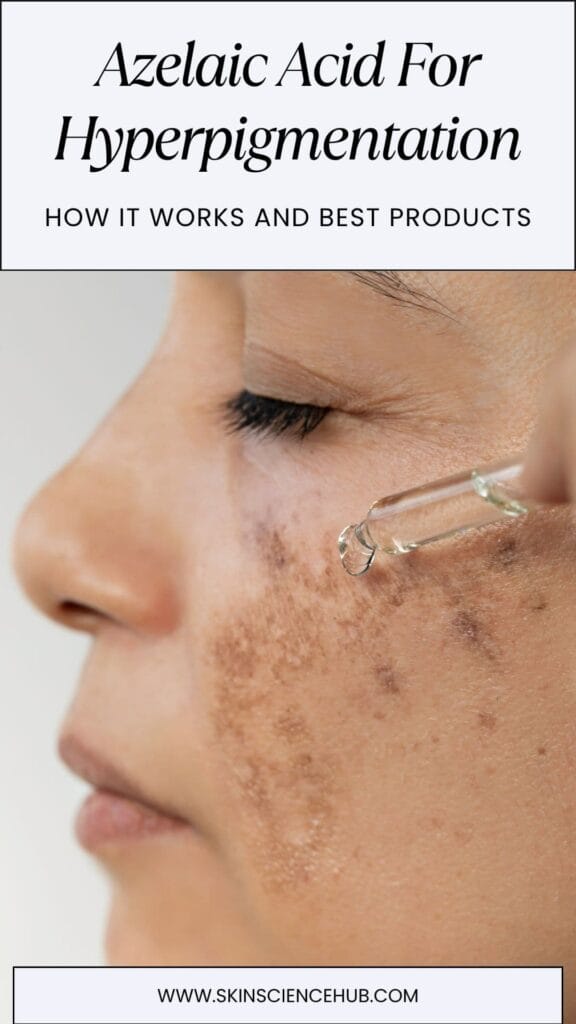
How Azelaic Acid Fades Pigmentation
1. It Competitively Inhibits Tyrosinase
Tyrosinase is the enzyme that controls melanin production. It converts tyrosine, an amino acid naturally present in skin cells, into DOPA and dopaquinone, the direct precursors to melanin. Azelaic acid blocks this by competing directly with tyrosine for the enzyme’s active site. When azelaic acid gets there first, tyrosine can’t bind, and melanin production slows.
This is called competitive inhibition, and it’s concentration-dependent. The more azelaic acid present at the site, the more effectively it blocks tyrosinase. This is why prescription-strength products at 15 to 20% outperform lower-percentage OTC options for stubborn pigmentation. Concentration changes efficacy, not just speed.
All of this happens before pigment ever leaves the melanocyte. Azelaic acid reaches the problem before it becomes visible on your skin.
2. It Only Affects Overactive Melanocytes
Azelaic acid is selectively cytotoxic to melanocytes that are overproducing pigment, leaving normal melanocytes completely untouched. The reason comes down to membrane biology.
Abnormal melanocyte membranes have increased permeability to azelaic acid, so it accumulates inside overactive cells at much higher concentrations than in healthy ones. Once inside, it doesn’t just inhibit tyrosinase. It also disrupts mitochondrial respiration and inhibits DNA synthesis in those cells, suppressing their melanin output and their ability to multiply. Normal melanocytes, with intact membrane function, simply don’t absorb it to the same degree.
The result is that azelaic acid evens out areas of overproduction without touching your natural skin tone. It fades the excess and leaves everything else where it was. For skin that produces melanin readily, this selectivity is what gives it such a strong long-term safety record.
3. It Cuts the Inflammation That Drives More Pigment
Inflammation doesn’t just show up as redness. It also signals melanocytes to produce more pigment, which is exactly how post-inflammatory hyperpigmentation forms. Breakouts, friction, and UV exposure all inflame the skin and push melanocytes into overdrive. Treating dark marks without addressing the inflammation that created them creates a cycle that keeps repeating.
Azelaic acid breaks this at multiple points. It scavenges reactive oxygen species released by neutrophils in the early inflammatory response. It inhibits two key molecular signalling pathways, NF-κB and MAPK, through which inflammation escalates in the skin. And it activates PPARγ, a receptor that dampens inflammatory activity. Collectively, these actions suppress key pro-inflammatory cytokines, including TNFα, reducing the signals that drive melanocyte overactivity.
This is why azelaic acid works particularly well for PIH. It addresses the pigment and the process driving it.
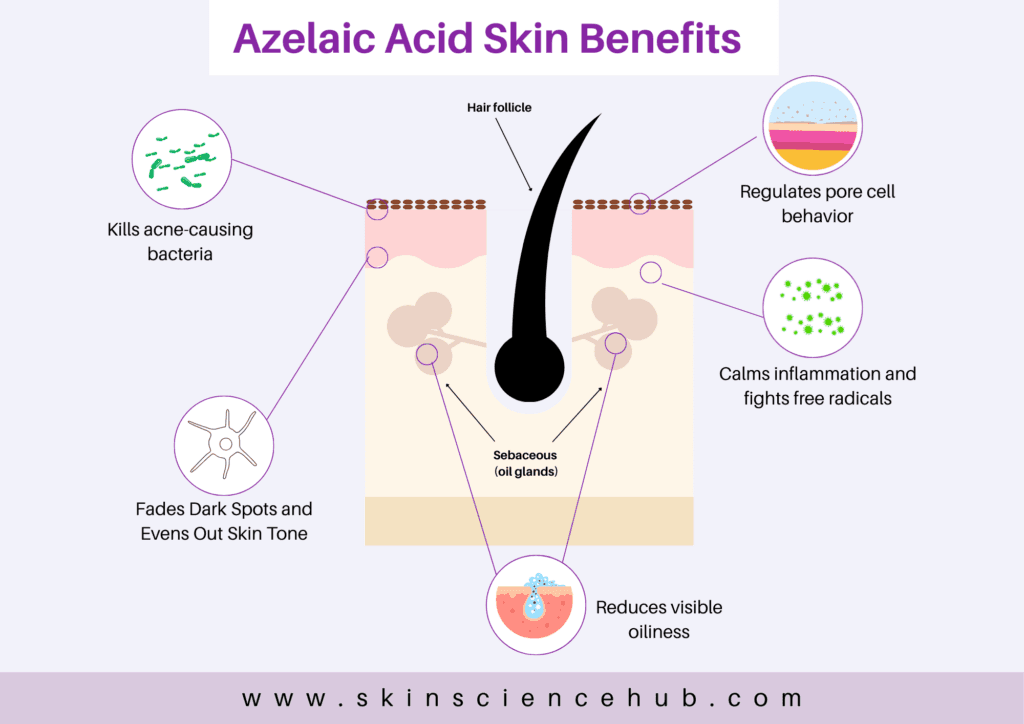
What Types of Hyperpigmentation Does Azelaic Acid Treat
Melasma
Melasma is hormonal and chronic. Sun, heat, and hormonal fluctuations all trigger it, and it responds to consistent, long-term treatment.
A randomised trial of 329 participants compared 20% azelaic acid to 4% hydroquinone over 24 months, long enough to reflect how melasma needs to be treated. Overall improvement came in at 64.8% for azelaic acid and 72.5% for hydroquinone. Clinically, those outcomes are comparable, and azelaic acid produced them with fewer side effects and a cleaner long-term safety record.
Azelaic acid works well for this kind of ongoing management because it targets both the melanin overproduction and the inflammation that keeps flares coming back. Because it’s safe for long term use, you can stay on it consistently.
Post-Inflammatory Hyperpigmentation (PIH)
PIH is the dark spot left behind after skin heals from inflammation, whether from acne, eczema, an ingrown hair, or any inflammation that leaves a mark. It stays long after the original trigger is gone, and for many people it’s more persistent than the breakout or irritation that caused it.
Azelaic acid addresses both the active inflammation causing new pigment and the existing discolouration. For acne sufferers in particular, this means clearing breakouts while fading the dark spots they leave behind, two problems treated with one product.
A randomised clinical trial compared 20% azelaic acid to 5% tranexamic acid for acne-related PIH over 12 weeks. Both treatments produced significant improvement in PIH scores, with no significant difference between them.
Read “Azelaic Acid for Acne” for more on how it works on breakouts and PIH together, and “How to Treat Body Hyperpigmentation” if dark patches on the body are the concern.
Sun Spots and Age Spots
Solar lentigines are the flat brown spots that appear after years of sun exposure. They respond to azelaic acid, though more slowly than PIH or melasma. The reason isn’t that the pigment sits deeper. They are epidermal lesions, at the same skin layer as PIH. The slower response comes from the melanocytes themselves. In sun damaged skin, they’re more numerous and larger, and the pigmentation has accumulated over years of repeated UV exposure.
Six months of consistent use is a realistic minimum before you see meaningful fading. Combining azelaic acid with a retinoid at night accelerates results, because retinoids drive cell turnover and shed pigmented cells faster. Daily sunscreen throughout is essential.
Body Hyperpigmentation
Dark patches on the underarms, inner thighs, knuckles, and knees respond to azelaic acid, though the timeline is longer than for facial treatment. These areas have thicker skin than the face, so the ingredient absorbs more slowly and takes longer to reach the melanocytes driving overproduction. Expect a longer treatment window, and if OTC concentrations plateau, move to prescription strength.
Read How to Treat Body Hyperpigmentation for a fuller guide.
Why Azelaic Acid Works So Well for Darker Skin Tones
Melanated skin produces more melanin and triggers it more readily in response to inflammation. This is why PIH and melasma are more common, more intense, and more persistent in deeper skin tones. A breakout that leaves a faint mark on fair skin can leave a dark spot that lingers for months on melanated skin. The inflammatory trigger is the same. The melanocyte response is much stronger.
This also means the wrong treatment can set skin back significantly. With prolonged use, hydroquinone can cause ochronosis, a permanent bluish-grey discolouration, and carries a documented risk of uneven lightening in darker skin tones. Also, high-strength chemical peels can trigger PIH on skin that pigments easily.
Azelaic acid sidesteps all of this. Because it only targets overactive melanocytes and leaves normal ones undisturbed, there is no risk of uneven lightening or hypopigmentation. Because it suppresses the inflammatory signals that drive melanin overproduction, it addresses one of the main reasons darker skin tones develop pigmentation so readily. And because its safety profile supports long-term use, it suits the ongoing maintenance that melanated skin often needs.
A 24-week double-blind study in patients with Fitzpatrick phototypes IV to VI found significantly greater improvement in the azelaic acid group. Objective colour measurements confirmed a statistically significant reduction in pigment intensity.
Azelaic Acid vs Hydroquinone for Dark Spots
The difference between azelaic acid and hydroquinone is not efficacy. It’s safety over time.
Hydroquinone tends to produce faster results in clinical studies. But PIH and melasma both need consistent, long-term management, and that is where hydroquinone becomes a concern. With prolonged use, it risks causing ochronosis. Stopping treatment can also trigger rebound hyperpigmentation. And regulatory restrictions have made it unavailable without a prescription in many countries.
Azelaic acid delivers comparable long term results. It is safe for extended use, suitable for all skin tones, and safe during pregnancy
Azelaic Acid vs Niacinamide for Pigmentation
Azelaic acid and niacinamide target pigmentation at different points in the same process. Azelaic acid blocks melanin production at the tyrosinase step, inside the melanocyte. Niacinamide works further downstream, blocking the transfer of melanosomes, the pigment-carrying structures, from melanocytes to surrounding skin cells. One stops the pigment forming. The other stops it spreading.
Because they target different steps, combining them gives you broader coverage across the pigmentation pathway. This is particularly useful for PIH and melasma, where both production and transfer need addressing. Niacinamide also has anti-inflammatory properties that complement azelaic acid’s own, which helps when inflammation is part of what’s driving the pigmentation.
Best Azelaic Acid Products for Hyperpigmentation
All four picks here are 10% concentration, the highest available over the counter. For melasma or persistent pigmentation, prescription strength at 15 to 20% is what the research supports. But for PIH, early sun damage, and maintenance, 10% produces clear results with consistent use.
Paula’s Choice 10% Azelaic Acid Booster
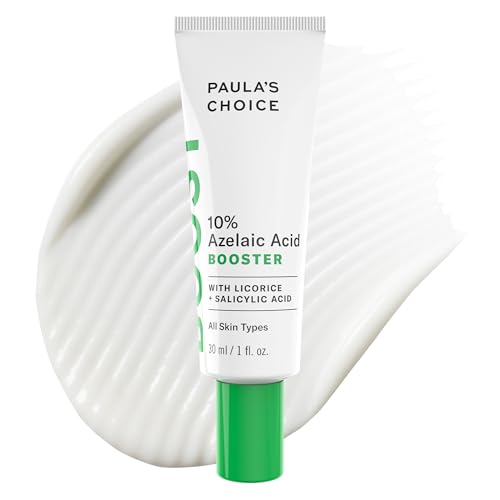
Paula’s Choice adds 0.5% salicylic acid to the 10% azelaic acid, so you get pore clearing and pigment fading working together in one oil free, fragrance free formula. That makes it the most targeted option for PIH tied to active breakouts.
Naturium Azelaic Acid 10%

Naturium combines 10% azelaic acid with niacinamide and vitamin C, hitting the pigmentation process at three separate points in a single formula. It’s the most comprehensive pick here for stubborn or widespread discolouration.
Purito Azelaic Acid 10% and Kojic Acid

Azelaic acid and kojic acid both inhibit tyrosinase, so this serum blocks melanin production through two independent pathways. For dark spots that haven’t shifted with azelaic acid alone, that dual action gives it more reach on stubborn pigmentation.
Anua Azelaic Acid 10 Redness Soothing Serum

Anua pairs 10% azelaic acid with hyaluronic acid, making it the only formula here built for normal to dry skin. For post-inflammatory marks on skin that runs dry, it keeps treatment comfortable through the months it takes to see noticeable fading.
How to Use Azelaic Acid for Hyperpigmentation
What Percentage Actually Works
For mild dark spots and early PIH, 10% works and is available over the counter. For melasma and persistent pigmentation, you need 15 to 20%, which requires a prescription in most countries. At 15 to 20%, you can suppress the kind of melanocyte overactivity that 10% simply can’t reach.
Cream, gel, and serum all deliver it effectively. Cream suits dry or sensitive skin, while gel absorbs faster and suits oily skin. If your OTC product has plateaued, prescription strength is the next step.
How Often to Apply Azelaic Acid
Studies show twice-daily application works, so apply morning and night to clean skin across the entire affected area. Do not spot treat. Pigmentation spreads beyond what you can see, and treating only the visible dark spots means missing where new pigment is forming. Unlike retinoids, azelaic acid does not cause photosensitivity, so morning use is completely fine.
Sunscreen Is Half the Treatment
UV exposure directly stimulates melanocytes. Without daily broad-spectrum sunscreen, you can produce new pigment faster than azelaic acid suppresses existing pigment, which means the treatment stalls regardless of how consistent you are.
For melasma and darker skin tones, standard sunscreen is not enough. Visible light and long-wave UVA1 also drive melanin production, particularly in melasma. Tinted mineral sunscreens with iron oxide protect against visible light, which regular chemical and untinted mineral sunscreens don’t cover.
For sunscreen options suited to darker skin tones, read the best sunscreens for dark skin tones.
What to Pair With Azelaic Acid
Vitamin C in the morning works well alongside azelaic acid. It also inhibits tyrosinase, but through a different pathway, so together they block melanin production more thoroughly than either does alone.
Retinoids at night complement azelaic acid by accelerating cell turnover. Retinoids push pigmented cells to the surface and shed them faster, while azelaic acid prevents new pigment forming underneath.
Niacinamide stops pigment from spreading between skin cells. It adds another way to control pigmentation and layers safely at any point in your routine.
Tranexamic acid is worth adding for melasma specifically. It works through a completely different mechanism to azelaic acid, which makes it a strong complement.
Don’t use strong AHAs or BHAs in the same step as azelaic acid. The combined acidity can trigger the inflammation that drives more pigment.
Azelaic acid is one of eight dark spot fighters in my guide, with notes on which ones work well together.
How Long Does Azelaic Acid Take to Fade Dark Spots
Azelaic acid takes time. In the first few weeks, nothing looks different, and that’s expected.
The changes are happening at the melanocyte level before anything shows on the surface. By weeks eight to twelve, most people notice the first visible shifts, subtle brightening, less redness around dark spots, and a more even base tone overall. The shift builds gradually, not overnight.
At sixteen weeks, the clinical data shows clear improvement. PIH is noticeably lighter, melasma is more even, and overall skin tone looks more uniform. That’s the realistic before and after window for most people.
You need to use azelaic acid for three to six months to see full improvement, especially for melasma and stubborn sun spots.
Melasma will come back if you stop treatment. Pigmentation returns gradually, especially with sun exposure and hormonal changes. Long term consistent use is what keeps it under control.
Why Azelaic Acid Stops Working for Some People
Azelaic acid works. If it isn’t delivering results, one of these is usually why.
Are you applying it consistently? Azelaic acid needs daily application to keep melanin production suppressed. Skipping days gives melanin production time to ramp back up, and the pigmentation starts returning.
Are you wearing sunscreen every day? Without it, UV exposure keeps triggering your skin to produce more pigment, and azelaic acid can’t keep up.
Have you given it enough time? Results take twelve to sixteen weeks. Most people stop at week six, which is right before things change.
Is your concentration strong enough? A 10% product will not fade stubborn melasma. If results have stalled, prescription strength is the next step.
Are you treating the cause, not just the result? Melasma keeps coming back if the hormonal trigger isn’t managed. PIH from acne keeps forming if the acne isn’t treated.
Are you layering too many actives? When you do, your skin gets inflamed, and inflamed skin produces more pigment. If your skin is consistently red or reactive, scale back.
The Bottom Line
Azelaic acid works for hyperpigmentation. It targets the cells causing the overproduction, suits all skin tones, and is safe to use long term.
Give it time. Most people stop at week six, which is right before results show up.