

Which Vitamin C Serum Works Best? L-Ascorbic Acid vs Derivatives
Last updated on September 1st, 2026
Vitamin C has decades of clinical research behind it. It builds collagen, fades dark spots, and protects your skin from the free radical damage that drives premature aging. But not all forms work the same way, and the one sitting in most bathroom cabinets is often inactive before it’s even halfway used.
L-ascorbic acid is the purest, most potent form. It has one serious flaw though. It oxidizes fast. Once your L-ascorbic acid serum turns yellow or orange, the active molecule has broken down completely and can’t deliver any of the benefits you paid for. And if you’ve switched to a gentler derivative to sidestep that problem, most of them are about half as potent, so you’re waiting twice as long for results that may never fully match.
As a pharmacologist, I look at these ingredients at the formulation level, not just what brands claim on the label. This guide covers the best L-ascorbic acid serums worth buying, an honest look at which derivatives are worth trying, and a clear answer on which form suits your skin.

What to Look for in a Vitamin C Serum
Most vitamin C serums fail not because the ingredient doesn’t work, but because the formulation can’t keep it stable. Three things determine whether a product delivers or quietly degrades in your cabinet.
Packaging – Opaque bottles block light and airless pumps limit air exposure. Clear glass with a dropper cap looks elegant but accelerates breakdown.
Supporting ingredients – Ferulic acid stabilises the formula and doubles the antioxidant protection of both vitamin C and vitamin E together. Products that include both stay potent longer and work harder.
Concentration and pH – For L-ascorbic acid, look for 10 to 20% at a pH between 3 and 3.5. That’s where penetration is optimal. For THD ascorbate, the concentration target is higher, and the reason why is covered below.
How L-Ascorbic Acid Works and What It Does to Your Skin
L-ascorbic acid and ascorbic acid are the same thing. Both names refer to pure vitamin C in its active form, and you’ll see both used interchangeably on ingredient labels and in research. The “L” simply refers to the molecular orientation that your skin can actually use.
It works directly on your skin without needing to be converted first, which is why it delivers faster and stronger results than any derivative.
Studies show it stimulates collagen production, fades dark spots by inhibiting melanin synthesis, and neutralizes free radicals from UV exposure and pollution. It also enhances the photoprotective effect of sunscreen when applied underneath it, though it doesn’t replace SPF.
One thing worth knowing. Oral vitamin C supplements don’t deliver these benefits to your skin. Your body can’t efficiently transport vitamin C from your digestive system to your skin, so topical application is the only route that works.
It does have one real limitation. L-ascorbic acid works at a pH between 3 and 3.5, which is significantly lower than your skin’s natural pH of 5.7. That acidity drives penetration, but it also causes stinging, redness, or irritation for some people, particularly if your skin is dry or sensitive.
You’ll notice initial brightening in four to six weeks. Significant changes to dark spots take eight to twelve weeks, and collagen improvements closer to three months. If your skin reacts badly to low pH products, the derivatives we cover below are worth considering.

How Vitamin C Derivatives Work and Which Ones Are Worth It
Derivatives are modified forms of vitamin C. They need to convert into active vitamin C once absorbed, and that conversion process is what makes them gentler and more stable than L-ascorbic acid. But you’re waiting longer for results that may not fully match pure vitamin C.
THD Ascorbate
THD ascorbate is the strongest derivative available. It’s oil-soluble, penetrates deeply, and stays stable without needing a low pH, which makes it a good fit for dry or sensitive skin. The limitation is potency. You need roughly 60% THD ascorbate to match a 10% L-ascorbic acid serum. Most products don’t come close to that concentration, so results are gentler and take longer.
Ascorbyl Glucoside
Ascorbyl glucoside converts to active vitamin C once your skin absorbs it. It’s stable, well tolerated, and the studies are encouraging. But most of that research is from lab testing rather than human trials, so we don’t have as much real world evidence as we do for L-ascorbic acid.
MAP and SAP
Magnesium Ascorbyl Phosphate and Sodium Ascorbyl Phosphate are gentler, water-soluble derivatives that work more slowly than L-ascorbic acid. Where pure vitamin C shows changes in four to six weeks, MAP and SAP take eight to twelve weeks. MAP is hydrating and well tolerated on dry skin. SAP has antimicrobial properties, so it works particularly well if you have acne-prone skin.
L-Ascorbic Acid vs Vitamin C Derivatives, How They Compare
L-ascorbic acid is pure, active vitamin C. It works immediately on your skin, has the strongest research behind it, and delivers the fastest results for brightening, collagen, and photoprotection. The downside is stability. It oxidizes quickly, requires a low pH that can irritate sensitive skin, and needs careful storage to stay effective.
Derivatives like THD ascorbate, ascorbyl glucoside, MAP, and SAP are modified forms that convert into active vitamin C after absorption. They’re more stable, gentler on sensitive skin, and easier to formulate. But that conversion process makes them slower and less potent than pure vitamin C.
If your skin tolerates L-ascorbic acid, it’s the stronger choice. If it doesn’t, derivatives give you a real, if more gradual, alternative.
Best L-Ascorbic Acid Serums
L-ascorbic acid is the gold standard of vitamin C, the form with the deepest research and the strongest results. These are the serums that actually deliver on that promise, chosen based on formulation quality, packaging, and concentration rather than marketing.
SkinCeuticals CE Ferulic
This is the benchmark. SkinCeuticals pioneered the research behind the vitamin C, ferulic acid, and vitamin E combination, and most studies on this ingredient trio reference their formula. It uses 15% L-ascorbic acid, 1% vitamin E, and 0.5% ferulic acid at the right pH. The results are well documented and it is well formulated. The price is over $150, which is a real barrier, but you’re paying for a formula that has earned its reputation.
Timeless 20% Vitamin C + E Ferulic Acid

Timeless tries to replicate the SkinCeuticals formula at a fraction of the cost, and the packaging makes a strong case for it. The airless pump limits air exposure every time you dispense, which is exactly what L-ascorbic acid needs. The 20% concentration is on the higher end, so if your skin is sensitive to acids, start with a lower concentration first.
CeraVe Skin Renewing Vitamin C Serum

CeraVe uses an oil suspension format rather than a water base, which improves stability because water accelerates oxidation. It’s a smart formulation decision, and CeraVe’s pharmaceutical background means the execution is competent. A solid drugstore option if you want L-ascorbic acid without the premium price.
L’Oreal Revitalift Vitamin C Serum

Same oil suspension approach as CeraVe, same pharmaceutical formulation background. L’Oreal has been making active skincare for decades and the Revitalift line reflects that experience. Another strong drugstore pick if budget is a consideration.
Best THD Ascorbate Serums for Dry and Sensitive Skin
If L-ascorbic acid is too harsh for your skin, THD ascorbate is the stronger derivative option. These two serums are the ones worth considering.
Revision Skincare C+ Correcting Complex 30%

This uses 30% THD ascorbate in a lotion base, which gives you better stability than any water-based L-ascorbic acid serum. The lotion format suits dry or mature skin well. The concentration is high enough to drive real results, and with THD ascorbate that concentration matters more than it does with pure vitamin C.
Medik8 C-Tetra
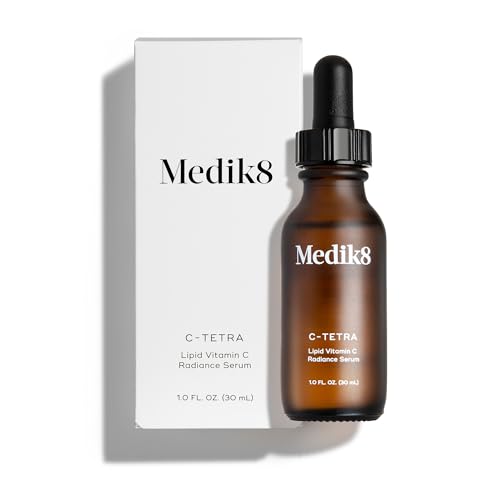
Medik8 has a strong formulation reputation and the C-Tetra reflects that. It combines THD ascorbate with squalane, which makes it deeply nourishing without feeling heavy, and the oil-based format keeps the vitamin C stable. A good option if you want a lighter texture than the Revision lotion but still need something gentle enough for sensitive skin.
Shopping specifically for dark spots? Our list of the 12 best vitamin C serums for hyperpigmentation includes multi-active formulas built for pigmentation.
How to Tell If Your Vitamin C Serum Has Gone Bad
Light, air, and heat break down vitamin C. Every time you open the bottle, oxidation begins. You can slow it down, but first you need to know when it’s already happened.
Signs your serum has oxidized
Color is your clearest signal. Fresh L-ascorbic acid serums are clear or very pale yellow. As oxidation progresses, the color shifts to deeper yellow, then orange, then brown. Pale yellow means use it soon. Orange or brown means the active ingredient is gone and the serum won’t do anything for your skin.
Smell is the second signal. Oxidized vitamin C develops a metallic or sour odor. If it smells off, toss it.
Texture is the third. If your serum becomes thicker, stickier, or starts separating, the formula is breaking down.
How to keep it stable longer
Store it in a cool, dark, dry place away from direct sunlight and heat. If you have a skincare fridge, even better since consistent cool temperatures slow oxidation more effectively than room temperature storage.
Choose better packaging. Opaque bottles block light and airless pumps limit air contact every time you dispense. Clear glass bottles with dropper caps look elegant but they accelerate oxidation.
Finish it within three months of opening. If that feels ambitious, buy a smaller size. A fresh small bottle will always outperform a large bottle that’s been sitting open for six months.
Vitamin C works best with the right partners. Find them all in my Skincare Ingredient Guide.
Which Vitamin C Is Best for Your Skin Type
Not every form of vitamin C suits every skin type. The right choice depends on what your skin can tolerate and what you’re trying to fix.
For hyperpigmentation
Vitamin C is better at preventing new dark spots than fading existing ones. The most effective formulas for pigmentation often pair it with a second brightening ingredient like niacinamide or tranexamic acid. Our guide to the best vitamin C serums for hyperpigmentation and dark spots covers the top picks, including gentler options for deeper skin tones.
For acne-prone skin
SAP is worth considering because its antimicrobial properties help with breakouts while still delivering vitamin C benefits. If your skin tolerates L-ascorbic acid, that works too, but start at a lower concentration since acne-prone skin can be reactive.
For anti-aging
L-ascorbic acid leads here because collagen stimulation is where it performs best and the research is most robust. If your skin is too sensitive for it, THD ascorbate is the next best option since it penetrates deeply and works well in a lotion format suited for mature skin.
For sensitive or dry skin
THD ascorbate is the right starting point. It doesn’t require a low pH, so it’s far less likely to cause irritation, and the oil-soluble format is nourishing rather than stripping. If even that feels too much, ascorbyl glucoside is the gentlest option available.
Vitamin C Serum Alternatives for Sensitive and Reactive Skin
Vitamin C is a great addition if your skin tolerates it, but it’s not essential for healthy skin. If it consistently irritates you regardless of which form you try, these three ingredients deliver similar brightening and antioxidant benefits.
Niacinamide
Niacinamide brightens skin, fades hyperpigmentation, strengthens the skin barrier, and provides antioxidant protection. It’s gentle enough for daily use on even the most sensitive skin, and it works well alongside other actives without causing irritation. If vitamin C isn’t for you, niacinamide is the most practical replacement.
Alpha Arbutin
Alpha arbutin inhibits melanin production without irritation, making it a strong option if brightening is your main goal and your skin is reactive. It works more slowly than vitamin C, but it’s very well tolerated and consistent use pays off.
Azelaic Acid
Azelaic acid brightens, fights acne, and calms inflammation at the same time. It’s particularly well suited for rosacea or acne-prone skin because it addresses several concerns at once without causing the irritation that L-ascorbic acid can.
When to Apply Vitamin C Serum
Morning is ideal. Vitamin C is an antioxidant that protects your skin from free radical damage caused by UV exposure and pollution, and applying it before sunscreen gives you an extra layer of defense.
Evening works too, especially if you’re using other actives in the morning. But if photoprotection is your main goal, morning is the better choice since vitamin C works with sunscreen to defend your skin throughout the day.
The Bottom Line
If your skin tolerates acids well, go with 10 to 15% L-ascorbic acid. It has the strongest research behind it for brightening, collagen, and photoprotection.
If your skin is dry or sensitive, start with THD ascorbate. It’s gentler, more stable, and doesn’t need a low pH to work.
And if vitamin C irritates your skin regardless of which form you try, niacinamide, alpha arbutin, or azelaic acid deliver similar brightening and antioxidant benefits without the irritation.

