Tranexamic Acid for Skin: Benefits, Side Effects, and How to Use It
Tranexamic acid (TXA) is a synthetic compound based on lysine, an amino acid, and it helps fade melasma, dark spots and acne marks. It was first developed as a medicine to control heavy bleeding. Then in 1979, a doctor treating a patient with TXA for hives noticed their melasma fading too. Today, TXA is a gentle brightener that works well for most skin types and complements other dark spot treatments.
In this guide to tranexamic acid for skin, you’ll discover how TXA works, what the research shows, how topical and oral TXA differ, what side effects to watch for, and how to choose and use it.
What Is Tranexamic Acid?
Tranexamic acid is an antifibrinolytic, a type of medicine that keeps blood clots from breaking down too quickly. That’s why hospitals use it to reduce bleeding after surgery, injury, and childbirth. In skincare, you’ll find it in serums, creams, and toners, and dermatologists also prescribe TXA tablets for melasma.
Even though it has “acid” in its name, TXA is part of the brightening group, just like niacinamide and vitamin C. If you’re interested in acids that exfoliate, like glycolic and salicylic acid, my guide on chemical exfoliation will show you how they work.
What Does Tranexamic Acid Do for Skin?
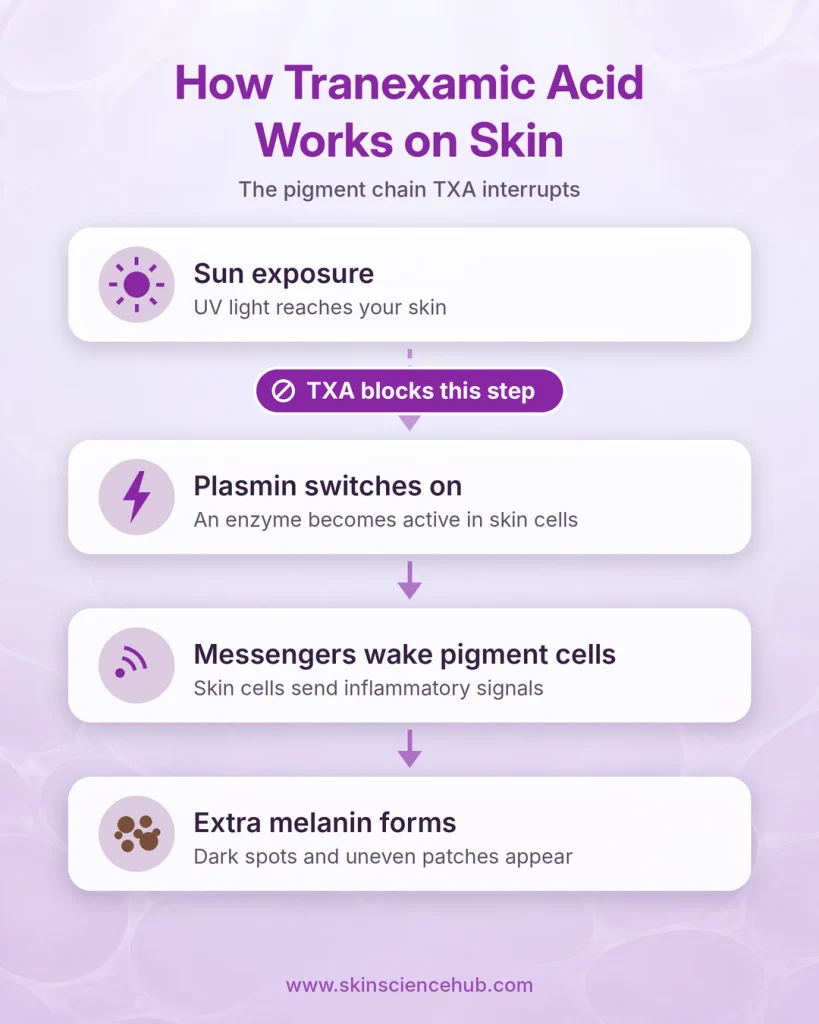
TXA works by quieting the signals that tell your skin to make melanin, the pigment responsible for skin color. Scientists think these signals begin with an enzyme called plasmin. When you’re in the sun, more plasmin switches on in your skin cells, and those cells release inflammatory messengers that wake up your pigment cells. Your pigment cells then make more melanin than usual, which leads to dark spots and uneven patches over time.
TXA prevents plasmin from activating, so your pigment cells receive fewer wake-up calls. As a result, dark spots fade gradually, and your skin tone becomes brighter and more even.
TXA also reduces inflammation and decreases the number of extra blood vessels that add to redness, which is why researchers study it for red acne marks and rosacea.
Tranexamic Acid Benefits for Skin
In skincare, tranexamic acid is mainly used to treat hyperpigmentation, especially melasma and dark spots from acne. It also offers some benefits for redness and rosacea.
Melasma
Melasma is the most studied use of TXA. It causes brown or gray-brown patches, often on the cheeks, forehead and upper lip, and it’s most common in women with medium to brown skin tones. Sun exposure, pregnancy and hormonal birth control can all set it off, and it often resurfaces even after treatment.
Dermatologists can use TXA in tablet, injection, or cream or serum form, and all 3 can help fade melasma patches. A 2024 review of 22 trials with 1,280 people showed that tablets were the most effective, followed by injections and then topical TXA.
Dark Spots After Acne (PIH)
After a breakout clears up, it might leave behind a flat brown spot, or an even darker one. This is known as post-inflammatory hyperpigmentation (PIH), and it’s more likely to happen in people with medium to dark skin.
In a 2023 study involving 60 people with dark spots from acne, a 5% TXA solution was just as effective as 20% azelaic acid cream. This is quite impressive, because azelaic acid is a well-known dark spot treatment, which I discuss in my guide to azelaic acid for hyperpigmentation. Both treatments were used twice a day for 12 weeks, and TXA caused fewer side effects in the first month, which means a gentler start for your skin.
Red Marks After Acne (PIE)
Sometimes, after a breakout, you might notice a red or pink mark. This is known as post-inflammatory erythema (PIE), and it’s caused by inflammation that lingers and tiny blood vessels that stay widened as your skin heals.
TXA works on both of these causes, so it can help those red marks fade. In a small 2022 study, 18 people with acne used a 10% TXA serum on one side of their face and a placebo on the other for 8 weeks. The TXA side showed less redness and fewer active breakouts, which also meant fewer new red and brown marks. If you’re unsure about the type of mark you have, my guide to PIE vs PIH can help you tell them apart.
Rosacea and Redness
Rosacea can lead to long-lasting redness on the cheeks and nose, and it often weakens the skin barrier, which makes skin feel sensitive. Research suggests TXA can ease rosacea by soothing the redness and helping repair that barrier. In a small study from 2018, 20 women with redness-prone rosacea were treated with TXA in a clinic every 2 weeks. All of them saw improvements, and the effects lasted for over 4 months.
Since there aren’t many studies on TXA specifically for rosacea yet, it’s a good idea to use it along with treatments that have been proven effective. My guides on how to calm rosacea symptoms and using azelaic acid for rosacea can help you with those treatments.
Body Hyperpigmentation
Acne, ingrown hairs, or bug bites can leave dark marks on your body, which are also considered PIH. So, using a TXA serum or body lotion can be a good idea for those areas. While most TXA studies look at the face, these marks happen because of the same inflammation, so the same treatment is likely to help.
Darker patches on your underarms, knees, and elbows often come from friction or an underlying condition. My guide to body hyperpigmentation can help you find the best treatments for those spots.
Topical vs Oral Tranexamic Acid for Melasma
If you’re using TXA to treat melasma, you’ll be choosing between a serum and a tablet, with injections available at a clinic. Tablets have the most research supporting them and require a prescription, whereas serums are easy to buy and suitable for most skin types.
| Serum or cream | Tablet | Injection | |
|---|---|---|---|
| Results for melasma | Smallest improvement | Biggest improvement | Second biggest improvement |
| Prescription needed | No | Yes, for melasma | Yes, given at a clinic |
| Main side effects | Mild redness or flaking | Stomach upset, headaches, lighter periods, and a rare risk of blood clots | Sting at the injection site |
| How often | Once or twice a day | Twice a day | Every few weeks |
| Best for | Mild melasma | Moderate to severe melasma | Moderate to severe melasma |
Topical TXA
When it comes to topical TXA, the research is a bit mixed. In a 2012 study, 23 women used a 5% TXA gel on one side of their face and a plain gel with no active ingredient on the other for 12 weeks. Surprisingly, both sides got better, probably because everyone was using sunscreen every day, but the TXA side didn’t show any extra improvement.
A more encouraging 2015 trial tested a 5% TXA liposome formula, which helps TXA soak into the skin. One side of the face got the TXA, and the other got 4% hydroquinone, the usual dark spot treatment. The TXA side faded melasma just as well, and while hydroquinone irritated 3 people’s skin, TXA didn’t cause any major side effects.
Oral TXA
Most studies on oral TXA use 250 mg twice daily. In a US trial, people with moderate to severe melasma took TXA tablets or a placebo (a pill with no medicine) for 3 months while using sunscreen daily. Melasma severity decreased by 49% in the TXA group, compared to 18% in the placebo group. A larger study of 561 people in Singapore found that about 9 in 10 saw their melasma improve, usually within 2 months.
Melasma can come back after you stop taking the tablets. When researchers checked 3 months after the US trial ended, the TXA group had only a 26% improvement, close to the placebo group’s 19%. In the Singapore study, about 1 in 4 people saw their melasma return. Using TXA tablets with a prescription melasma cream works better than the cream alone and helps reduce the chance of melasma returning.
TXA tablets need a prescription for melasma because they prevent blood clots from breaking down. As a pharmacologist, I can tell you this rarely causes problems, but in someone who is already prone to clotting, it can increase the risk of a dangerous clot. In the Singapore study, one woman developed a blood clot in her leg and later discovered she had an inherited clotting disorder. That’s why your doctor will ask about your personal and family history of blood clots, whether you smoke, and whether you use hormonal birth control before prescribing TXA.
Injected TXA
Dermatologists can also treat melasma patches by injecting a tiny amount of TXA into the skin. A study from 2017 looked at 100 people and found that injections every 4 weeks were just as effective as taking TXA tablets twice a day, with both treatments lasting 12 weeks. Besides a quick sting at the injection site, the treatment was well tolerated, and you only need a clinic visit every few weeks.
Serum, Tablet, or Injection: Which Should You Choose?
If your melasma is mild, a TXA serum combined with daily sunscreen is a great starting point, because it’s low risk and easy to add to your routine. If your melasma is moderate to severe, or if it hasn’t improved after about 3 months, chat with a dermatologist about TXA tablets or injections, which can offer stronger results.
Tranexamic Acid vs Other Dark Spot Ingredients
Most brighteners slow down the enzyme that creates melanin, but TXA acts a bit earlier, targeting the signals that turn on your pigment cells. Because they work at different points, TXA gets along nicely with most of them. My guide to the best ingredients for fading hyperpigmentation will give you the lowdown on the other options.
TXA vs hydroquinone
Hydroquinone has been a popular dark spot treatment for decades, and in many places, it’s only available by prescription. It works, but it can irritate your skin, and with long-term use, it can lead to exogenous ochronosis, a rare condition that results in blue-black patches, especially in people with darker skin.
A couple of small studies showed that TXA can fade melasma just as well as 4% hydroquinone. One study used a 5% liposomal TXA formula, and another in 2024 used a 3% TXA cream on people with skin of color. That makes TXA a gentler choice if hydroquinone feels too harsh for your skin.
TXA vs vitamin C
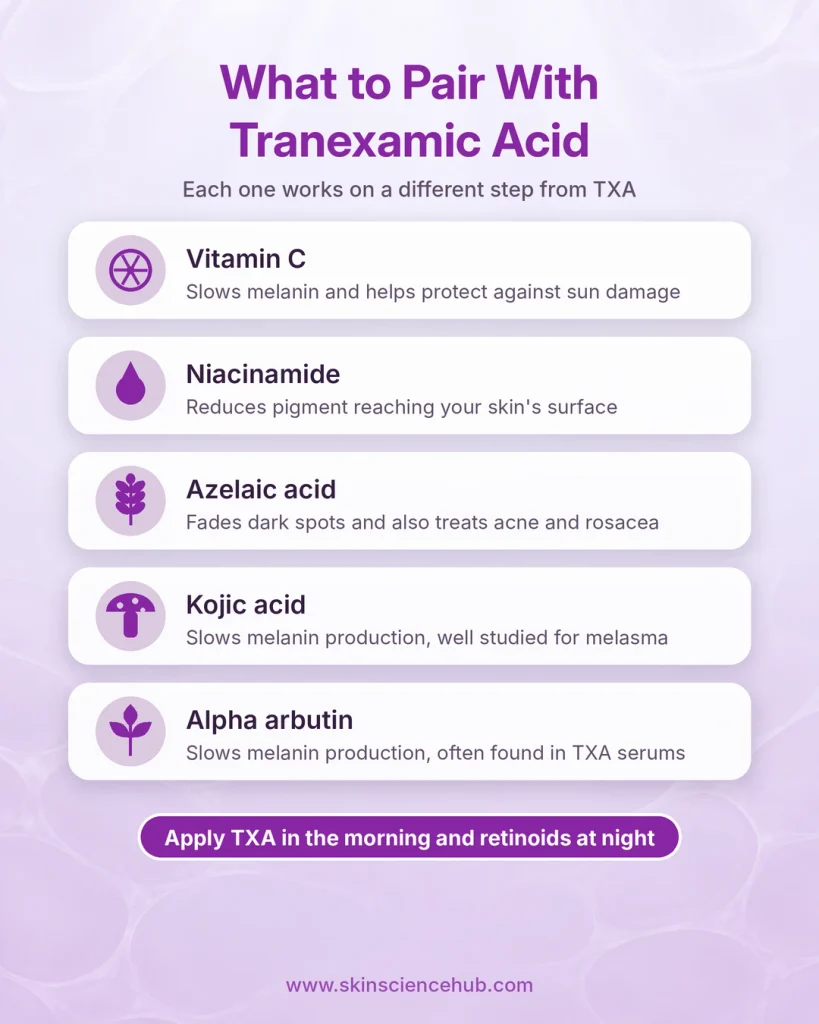
Vitamin C slows down tyrosinase, the enzyme your pigment cells use to create melanin. Plus, as an antioxidant, it helps protect your skin from some sun damage, although it doesn’t replace sunscreen. TXA works a step earlier, so the two complement each other in a brightening routine. I’ve got a vitamin C guide that shows you how to add it to your skincare.
TXA vs niacinamide
Niacinamide reduces how much pigment moves from your pigment cells to the surface, where it can show up as dark spots. TXA works by reducing the amount of pigment that gets made in the first place, which is why they’re often used together in serums. In a 2025 study run with the skincare brand Vichy, 60 women with melasma used either a serum with 5% niacinamide, 1% TXA, vitamin C, and hydroxy acids or 4% hydroquinone. The serum showed similar results to hydroquinone but was gentler on the skin. If you’re looking for a serum that combines these two ingredients, check out my niacinamide guide and the best niacinamide serums roundup.
TXA vs azelaic acid
Azelaic acid is great for fading dark spots and tackling acne and rosacea, while TXA helps soothe redness and reduce pigment. If you’re dealing with breakouts, dark marks, and redness, using both can help you address all 3 issues. You can find a comprehensive guide on my azelaic acid page.
Tranexamic Acid With Kojic Acid and Alpha Arbutin
Kojic acid and alpha arbutin work by slowing down the enzyme that produces melanin, which is a different step from the one TXA targets. That’s why you often see all 3 in the same brightening serum. Alpha arbutin has less research to back it up compared to kojic acid, which is well studied for melasma. A 2022 review that looked at many melasma studies showed that both kojic acid and topical TXA faded melasma about as well as hydroquinone.
Tranexamic Acid Side Effects and Downsides
The main downsides: TXA works slowly, so you might not see results for a few months. Serums are the least effective form of TXA, but they also cause the fewest side effects. Melasma also often comes back once you stop treatment.
Topical TXA: Serums rarely irritate the skin, affecting under 1% of people in melasma studies. When they do, it’s usually mild redness or flaking that clears up with a moisturizer. Do a patch test on a small area before putting a new product on your face.
Oral TXA: Tablets can cause stomach upset, headaches, and lighter periods, though these are usually mild. A blood clot is the rare but serious risk, which is why doctors check your clotting risk before prescribing tablets for melasma.
Pregnancy and breastfeeding: Doctors don’t prescribe TXA tablets during pregnancy or breastfeeding. Melasma often appears during pregnancy, but TXA serums haven’t been well studied in pregnant women, so check with your doctor before using one. My guide to pregnancy-safe skincare covers options with more safety research behind them.
How to Choose a Tranexamic Acid Serum
Check the label: Keep an eye out for “tranexamic acid” on the ingredient list. Some products use cetyl tranexamate mesylate, which is a similar ingredient but has only one small study to back it up, done by the company that makes it. Since it’s a bigger molecule, a 2% label on these products doesn’t mean you’re getting 2% TXA.
Aim for 2% to 5%: Most studies on tranexamic acid for dark spots have used the 2% to 5% range, so that’s the range you should be focusing on.
Match the formula to your skin: Many TXA serums include other brighteners, like niacinamide or kojic acid. If your skin is sensitive, a fragrance-free option with a lower dose of niacinamide is the gentlest choice. If your skin tolerates actives well, a formula with multiple brighteners can tackle pigment production at several steps in one go.
Best High-Strength Pick: Naturium Tranexamic Topical Acid 5%

Naturium combines 5% TXA, the highest strength of these picks, with kojic acid, niacinamide, and licorice root extract. Plus, it’s fragrance-free, and the 2 oz bottle is double the standard size, so it lasts you longer.
Best Multi-Brightener Pick: Anua Niacinamide 10% + TXA 4% Serum

Anua’s serum mixes 4% TXA with 10% niacinamide, arbutin, and alpha arbutin, making it the most heavily loaded brightening serum of the 3. If your skin is sensitive, start using it every other day to avoid tingling. The hyaluronic acid in the formula keeps your skin hydrated while the brighteners get to work.
Best Gentle Pick: Paula’s Choice Clinical Discoloration Repair Serum

This fragrance-free serum mixes 3% TXA with a moderate 5% niacinamide and 0.5% bakuchiol, a plant-based ingredient that’s often used as a gentler retinol alternative. This combination makes it a great choice for sensitive skin that’s looking for consistent brightening.
How to Use Tranexamic Acid in Your Skincare Routine
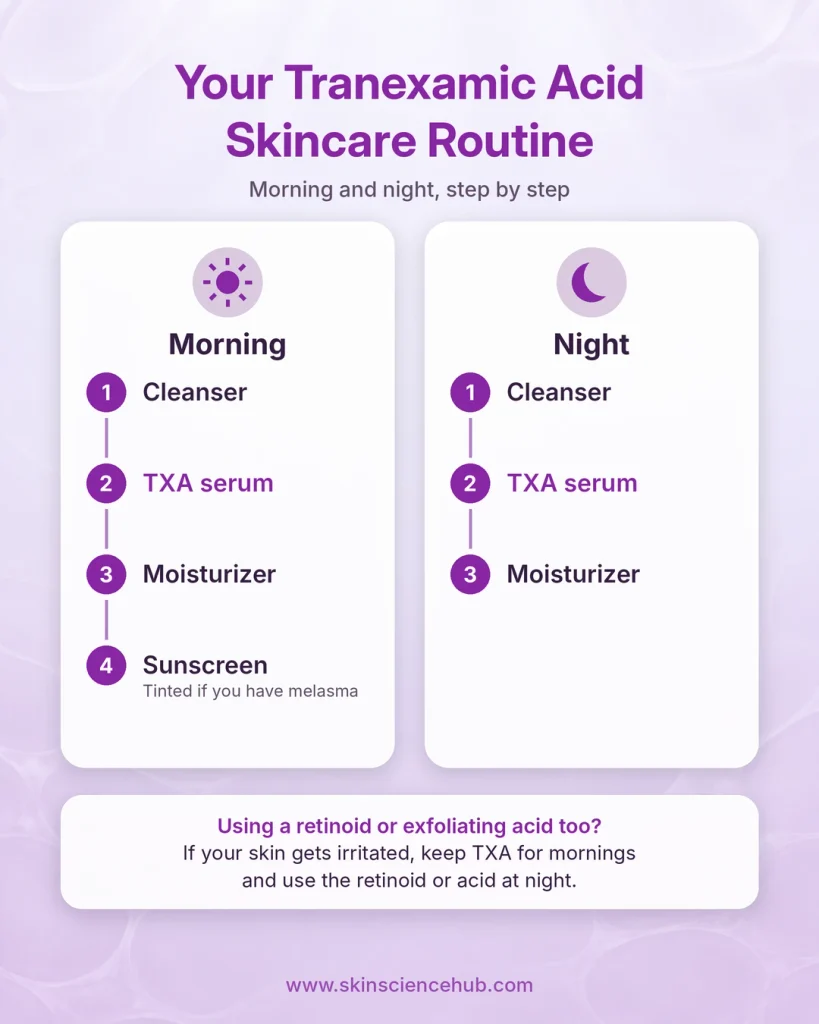
When to apply: Use your TXA serum once or twice a day. Most studies applied it twice daily, in the morning and evening.
Where it goes in your routine: Apply TXA after cleansing and before moisturizer. If you’re using more than one serum, layer them from the thinnest to the thickest. My layering guide will walk you through the full order.
Wear sunscreen every morning: Sun exposure activates the pigment signals that TXA helps block, so daily broad-spectrum sunscreen is essential to keep the sun from reversing your results. In one melasma trial, even the side of the face treated with a plain gel showed improvement, likely because everyone wore sunscreen daily. If you have melasma, a tinted sunscreen also protects against visible light, which can darken patches. My sunscreen guide has options that won’t leave a white cast.
What Not to Mix With Tranexamic Acid
Topical TXA has no known clashes with common skincare ingredients, so feel free to use it with vitamin C, niacinamide, azelaic acid, and retinoids. However, combining multiple strong active ingredients, like retinoids with glycolic or salicylic acid, in the same routine can irritate your skin. If your skin becomes red or irritated, try using TXA in the morning and your retinoid or acid at night. For more combinations, check out my guide to using retinol with niacinamide, vitamin C, and AHAs.
If you’re taking TXA tablets, tell your doctor if you use hormonal birth control or blood thinners. TXA helps prevent blood clots from breaking apart, and hormonal birth control already increases your chances of clots, so combining them could be risky. People who take blood thinners often have a higher risk of clots, and TXA works to counteract the protective effects of those medications.
How Long Does Tranexamic Acid Take to Work?
To see whether TXA is working for you, use it daily for 8 to 12 weeks, since that’s when most studies have shown their results. Changes usually happen slowly, but one 2024 trial found that melasma started to fade significantly by week 4, and most people who take TXA tablets notice improvement within about 2 months. Taking a before and after photo, starting in your first week, can really help you see how much your skin has improved.
After you notice some improvements, continue using TXA and applying sunscreen daily to help maintain those results, especially if you have melasma.
Bottom Line
TXA is a gentle ingredient that can help fade melasma and acne marks, and it can also soothe redness and rosacea. Melasma has the most research, and for melasma, tablets tend to be the most effective.
For most people, a TXA serum is a great starting point because it’s easy to find, works well on most skin types, and complements niacinamide and vitamin C nicely. Try using it daily with sunscreen for about 8 to 12 weeks, and keep using it to help stop melasma from returning. If your melasma is moderate to severe, ask a dermatologist if tablets are a good option for you.