

Chemical vs Physical vs Enzyme Exfoliation: Which One Should You Use?
Last updated on August 21st, 2026
Most people searching for chemical vs physical exfoliation expect a simple answer. One is gentle, one is harsh, pick the right one and move on. But there are actually three distinct methods, and picking the wrong one for your skin type can cause more damage than you started with.
As a pharmacologist, I’ve spent years studying how exfoliants work at a cellular level. Chemical exfoliation dissolves the bonds holding dead cells to your surface. Physical exfoliation scrubs them away with friction. Enzymatic exfoliation uses fruit proteins to break them down without touching your living skin at all. Three completely different mechanisms, three different risk profiles, and three different sets of results.
Which one is better depends entirely on your skin type, your specific concerns, and how much disruption your barrier can handle right now. This guide covers all three so you can choose based on what your skin actually needs.

Which Exfoliation Method Is Right for Your Skin Type?
Your skin type determines which exfoliation method actually works for you, and more importantly, which one causes damage if you get it wrong.
Acne and Oily Skin
Salicylic acid is the right call for acne. It dissolves in oil, so it travels through sebum and reaches inside your pores where breakouts actually start. It also reduces inflammation while clearing clogs, which means it works on existing breakouts and prevents new ones at the same time.
Physical scrubs can’t reach inside pores, so they only clear surface buildup. Avoid them entirely if you have active breakouts, because the friction spreads bacteria across your face and worsens inflammation.
Sensitive and Reactive Skin
Physical scrubs damage sensitive skin through friction. Even light pressure creates micro-irritation that builds up over time, leaving your skin red, tight, and more reactive than before.
Polyhydroxy acids (PHA) are a better fit. Their larger molecules move slowly into your skin, which means you get exfoliation with far less irritation. They also don’t increase sun sensitivity, so you can use them year round without adding extra sunscreen stress to your routine.
If even PHAs feel like too much, enzymatic exfoliation is your gentlest option. Papaya and pineapple enzymes break down dead cells by dissolving specific protein bonds without disrupting your living skin or shifting your pH. Start once weekly and watch how your skin responds.
Aging and Sun Damaged Skin
Alpha hydroxy acids are your strongest at-home option for aging concerns. They go deeper than scrubs can reach and create changes that improve collagen production, cell renewal, and skin texture. No scrub touches any of that. Glycolic and lactic acid are the two worth knowing, and we cover exactly how to use both in the acids section below.
Darker Skin Tones
Post-inflammatory hyperpigmentation is a more serious concern with darker skin because any inflammation triggers additional darkening that can persist for months. This makes gentleness non-negotiable.
Mandelic acid is the right choice here, and physical scrubbing is worth avoiding on your face if hyperpigmentation is a concern. We cover why mandelic works and how to use it in the acids section below. And if you want to go deeper on fading existing dark spots, we have a full guide on the best ingredients for hyperpigmentation and one specifically on how to treat body hyperpigmentation.
When Physical Exfoliation Works Better Than Acids
Physical exfoliation, also called mechanical exfoliation, gets a bad reputation for facial use, and mostly for good reason. But there are specific situations where it genuinely works better than any acid.
Your body is the clearest example. Body skin is thicker and more resilient than your face, so scrubs handle that tougher texture effectively without the barrier disruption you’d see on your cheeks or forehead.
Keratosis pilaris on your arms and legs also responds well to physical exfoliation, because the bumpy buildup sits right on the surface where scrubs can reach it easily. Chemical acids sometimes struggle to penetrate thick body skin consistently. If you’re dealing with body KP specifically, we have a full guide on how to treat keratosis pilaris.

AHA vs BHA vs PHA: Which Chemical Exfoliant Should You Use?
If you’ve decided chemical exfoliation is right for your skin, the next question is which acid to choose. They don’t all work the same way, and the differences matter. Before you start, apply a small amount of any new product to your inner forearm or behind your ear and wait 24 to 48 hours. This one step prevents widespread reactions that take weeks to calm down.
| Feature | AHA | BHA | PHA |
|---|---|---|---|
| Best For | Texture, fine lines, dullness | Acne, blackheads, oily skin | Sensitive skin, rosacea |
| Water Soluble | Yes | No (oil soluble) | Yes |
| Sun Sensitivity | Increases | Minimal | None |
| Starting % | 5-7% | 0.5-1% | 8-10% |
Alpha Hydroxy Acids (AHAs)
AHAs dissolve in water and work on your skin’s surface layers, smoothing texture and fading dark spots. Glycolic acid has the smallest molecules, so it penetrates deepest and works fastest on fine lines and rough texture. Start with 5 to 7% and you may see smoother skin within 4 to 6 weeks, though everyone responds differently. Lactic acid gives similar results with less irritation, and it hydrates while it exfoliates because it’s naturally part of your skin’s moisture system. Mandelic acid is the gentlest of the three, moving slowly into your skin and making it a reliable option for anyone prone to irritation.
All AHAs increase sun sensitivity, so SPF 30 or higher daily is non-negotiable while you’re using them.
Beta Hydroxy Acid (BHA)
Salicylic acid is the only BHA used in skincare, and it works differently from AHAs because it dissolves in oil rather than water. That lets it travel through sebum directly into your pores, which is why nothing beats it for acne and blackheads. Start at 0.5 to 1% and apply every other evening. Once your skin adapts, you can move up to 2%.
Polyhydroxy Acids (PHAs)
PHAs work like AHAs but their larger molecules move more slowly into your skin, making them the gentlest chemical exfoliants available. They also protect against environmental damage and help your skin hold onto moisture. The biggest practical advantage is that PHAs don’t increase sun sensitivity, so you can use them year round without adjusting your sun protection routine. Start with 8 to 10% once or twice weekly and expect visible results in 6 to 8 weeks rather than the 2 to 4 weeks you’d see with a traditional AHA.
If you’re pregnant or nursing, PHAs and enzyme exfoliants are generally considered the safest options, but check with your healthcare provider before starting anything new.
How to Use Physical Exfoliants Safely on Face and Body
Technique and product choice determine whether you get smoother skin or barrier damage. Getting both right matters more than which brand you buy.
Choosing Safe Scrub Products
Particle shape is what separates a safe scrub from a damaging one. Safe scrubs use round particles between 100 and 300 micrometers, because round particles roll across your skin without creating tears. Irregular particles like crushed walnut shells create microscopic damage even when you use them gently, so avoid those entirely. Look for jojoba beads, sugar, or synthetic spheres on the ingredient list instead.
How to Apply Scrubs Safely
Wet your skin slightly before scrubbing, because damp skin reduces friction and prevents micro-tears. Use light pressure with small circular motions and let the particles do the work. Your scrubbing time should stay between 30 and 60 seconds, because too much manipulation creates irritation even with gentle particles. Rinse with lukewarm water and pat dry.
How often to exfoliate
Your face tolerates physical exfoliation once or twice weekly at most. More frequent scrubbing strips your protective barrier faster than it can repair, and you’ll notice tightness or increased sensitivity if you push past that.
Body skin is more resilient, so two to three times weekly is fine. Areas like elbows and knees can handle more frequent treatment than your torso.
Stop immediately if any area looks red or feels irritated.
When Home Methods Aren’t Enough
Professional microdermabrasion uses medical-grade crystals with controlled suction, removing more surface buildup than any home scrub can reach. Schedule treatments every 4 to 6 weeks if home methods aren’t delivering the results you want, and you can combine them with at-home chemical exfoliation on alternating schedules.
What Is Enzyme Exfoliation and How Does It Work?
Enzyme exfoliants do something neither acids nor scrubs can. They break down dead skin cells by dissolving specific protein bonds in keratin, while leaving your living skin completely untouched. They work at your skin’s natural pH, so there’s no barrier disruption and no adjustment period.
Two enzymes dominate skincare formulations. Papain, derived from papaya, targets the bonds holding dead keratin together and provides mild anti-inflammatory benefits alongside exfoliation. Bromelain, from pineapple, is actually a cluster of enzymes working together, and studies show it calms inflammation and supports healing while breaking down dead cells.
The tradeoff is speed. Enzyme exfoliants work more slowly than chemical acids because the mechanism is gentler, so expect visible results in 6 to 8 weeks rather than the 2 to 4 weeks you’d see with a traditional AHA. Apply once to three times weekly and look for papain or bromelain listed in the ingredients.
If you want faster texture improvement and your skin can handle acids, chemical exfoliation will get you there quicker. But if your barrier is compromised or you’re recovering from a treatment, enzymes are the right tool for the job.
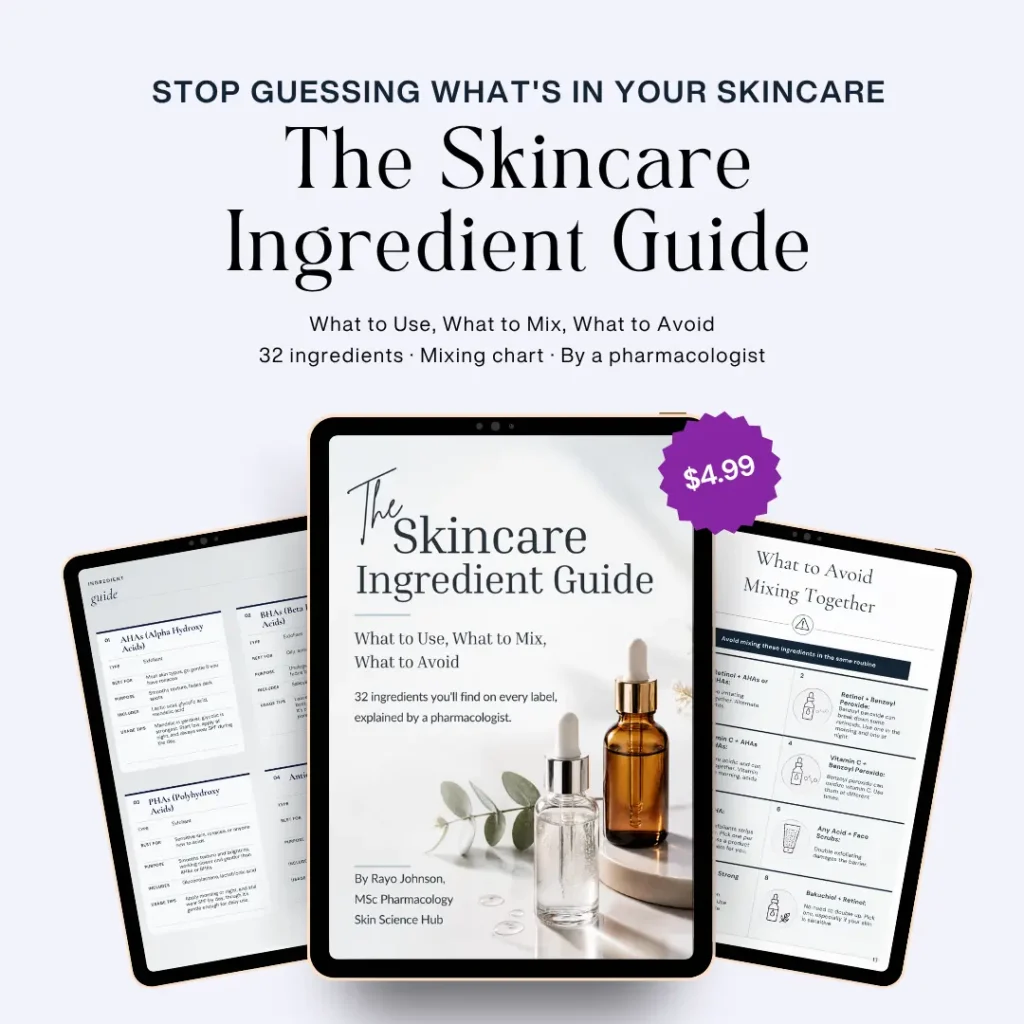
Acids and retinol don’t belong in the same night. My guide shows you which exfoliants to keep apart and when to use each one.
How to Exfoliate Without Irritating Your Skin
When to Avoid Exfoliation Completely
Skip all exfoliation if you have active eczema, dermatitis, or a rosacea flare, because your compromised barrier cannot handle additional disruption right now. If you’re managing rosacea and need guidance on what your skin can actually tolerate, our guide on calming rosacea symptoms covers that in detail. The same rule applies to broken, wounded, or sunburned skin. Wait until your skin fully heals before restarting.
Warning Signs to Stop Immediately
Persistent stinging from products that normally feel comfortable is your barrier telling you it’s damaged. Stop all exfoliation, switch to a gentle moisturizer, and give your skin at least two weeks to recover before reintroducing anything active. If you’re not sure whether you’ve overdone it, read our guide on over-exfoliated skin and check your symptoms against our breakdown of damaged skin barrier signs and how to heal.
After Professional Treatments
Wait at least two weeks after lasers, chemical peels, or microneedling before resuming any exfoliation at home. Your skin is rebuilding itself and doesn’t need additional disruption. If you’re considering at-home chemical peels specifically, we have a full guide on how to do chemical peels at home safely before you start.
Sun Protection Is Non-Negotiable
All exfoliation increases your skin’s vulnerability to UV damage, whether you’re using acids, scrubs, or enzymes. Use SPF 30 or higher every day. Skipping it can worsen the exact concerns you’re trying to fix.
The Bottom Line
Chemical exfoliation works better than physical scrubbing for most skin concerns because it goes deeper and creates changes that improve texture, tone, and barrier function. Physical methods only clear surface buildup. Enzymatic exfoliation sits in its own category, gentler than both, and genuinely useful when your skin needs a break from actives.
Start with the method that matches your skin type. Use low concentrations first, increase frequency gradually as your skin adapts, and give it at least 4 to 8 weeks before drawing conclusions. Everyone responds differently.
And if you want to take your routine further, skin cycling is worth understanding. It builds exfoliation into a structured rotation with dedicated recovery nights, which protects your barrier while keeping results consistent. We have a full guide on how to do skin cycling.

