
How to Double Cleanse the Right Way
Last updated on June 23rd, 2026
Double cleansing solves a problem most skincare routines quietly ignore. Your skin picks up two fundamentally different types of residue throughout the day. Oil-based substances like makeup and sunscreen. Water-based substances like sweat and dirt. Your regular cleanser tackles one type but redistributes the other, and that leftover film blocks your serums and moisturizers from absorbing properly.
As a pharmacologist, I can tell you this works because of basic chemistry, and once you understand why, the whole method clicks. This guide walks you through the how to double cleanse your face step by step, the timing, which products work, and whether your routine genuinely needs this extra step.

What Is Double Cleansing?
Double cleansing uses two cleansers in sequence. First, an oil-based cleanser dissolves makeup, sunscreen, and sebum. Then a water-based cleanser removes everything else, including dirt, sweat, and any remaining traces from the first step.
The reason it works comes down to basic chemistry. Oil attracts oil, so when you massage an oil cleanser onto your skin, it binds directly to that oily film. Add a few drops of water and the emulsifiers in the formula transform everything into a milky white mixture that rinses away cleanly. Your water-based cleanser then handles what’s left.
That milky texture is your confirmation the method is working. If you don’t see it, you either need more water or a better formulated oil cleanser.
Benefits of Double Cleansing
One cleanser was never designed to handle everything your skin accumulates in a day. Double cleansing fills that gap, and the difference shows up quickly.
Your serums absorb the way they’re supposed to. Residue left by single cleansing sits on the surface and blocks everything you apply after. Remove it properly and your actives actually reach your skin.
Breakouts around your jawline and hairline become less frequent. These areas trap the most makeup and sunscreen residue, and that residue is often the reason congestion keeps coming back despite consistent cleansing.
Your skin feels genuinely clean, not stripped. Two gentle cleansers working together cause less damage than one cleanser used aggressively to compensate.
Morning skin is smoother and easier to work with. Properly cleansed skin the night before means a more even surface for makeup and sunscreen application the next day.
When You Need Double Cleansing (And When to Skip It)
Whether you need double cleansing comes down to what actually accumulates on your face each day.
You need it if you wear makeup, even tinted moisturizer counts. You need it if you use water-resistant sunscreen, live in a polluted urban area, or notice your serums sitting on top of your skin instead of absorbing. All of these leave oil-based residue that a single water-based cleanser redistributes rather than removes. A 2020 Journal of Cosmetic Dermatology study confirmed this directly, finding that people who double cleansed removed residue significantly more effectively than those who single cleansed.
Skip it if you rarely wear makeup or sunscreen, or if single cleansing already leaves your skin feeling clean. And if you have very sensitive or compromised skin, the extra step may cause more irritation than it resolves.
The honest answer is this: double cleansing solves a specific problem. If you don’t have that problem, you don’t need the solution.
How to Double Cleanse Your Face
The whole process takes 2 to 3 minutes. Faster than scrubbing off waterproof mascara with wipes, and far more effective.
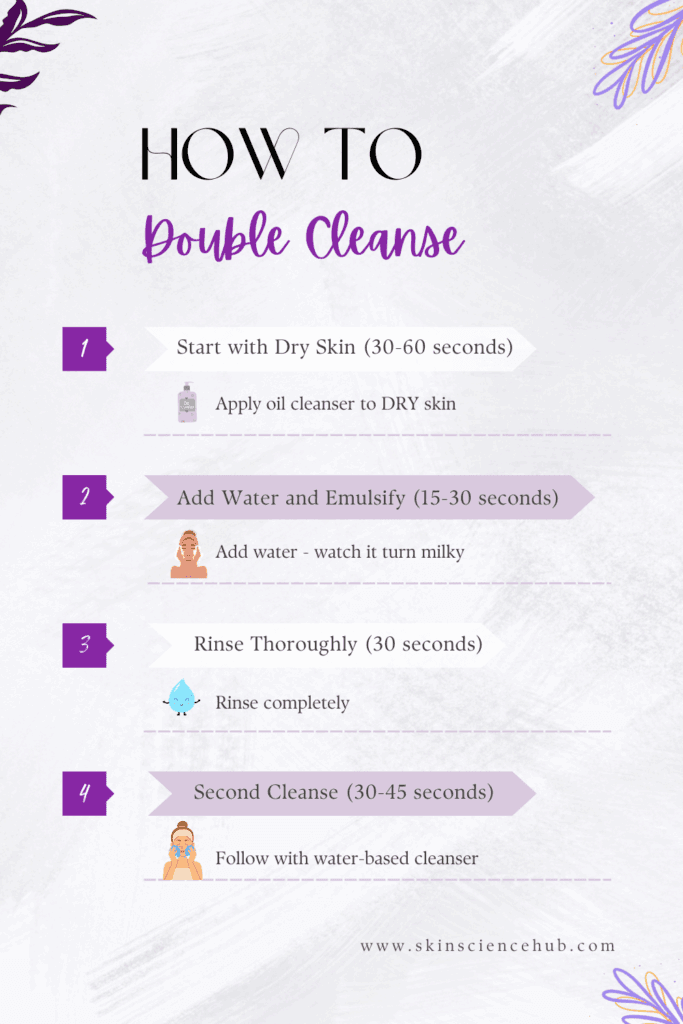
Step 1. Start with dry skin – Apply your oil cleanser to a completely dry face. Wet skin dilutes the formula and reduces how well it binds to residue.
Step 2. Massage for 30 to 60 seconds – Work the oil cleanser across your entire face with gentle circular motions. 30 to 60 seconds is enough time for the formula to bind with makeup, sunscreen, and sebum. Don’t go longer because it won’t improve results and can irritate your skin.
Step 3. Emulsify with water – Add a few drops of water and keep massaging for another 15 to 30 seconds. The formula turns milky white. That’s your sign everything is ready to rinse.
Step 4. Rinse thoroughly – Rinse for a full 30 seconds. Any oil residue left on your skin will interfere with the second cleanse.
Step 5. Apply your water-based cleanser – Massage for 30 to 45 seconds on damp skin. This step removes whatever the oil cleanser loosened, along with sweat, dirt, and any remaining traces. Don’t skip it. The oil cleanser loosens residue but doesn’t remove it. Your second cleanser does that. If you’re not sure which water-based cleanser works best for your skin type, my guide on how to wash your face without damaging your skin barrier covers exactly what to look for.
Step 6. Do this at night only – Morning skin hasn’t accumulated makeup, sunscreen, or pollution overnight. A single gentle cleanse handles sebum and cellular debris perfectly well. Double cleansing every morning strips your barrier and triggers reactive oil production.
Double Cleansing for Different Skin Types
Double cleansing works across skin types, but the approach shifts depending on what your skin needs.
Oily and acne-prone skin – Oil cleansing is safe here, and the whole process takes 2 to 3 minutes, which is short enough that the oil cleanser won’t clog pores. Single cleansing leaves sunscreen and sebum residue behind, and that residue is what clogs pores and causes breakouts. The research cited earlier backs this up specifically for acne-prone skin, showing that double cleansing removes residue significantly more effectively than single cleansing alone. Keep your pressure light throughout because scrubbing hard triggers excess oil production, which works against everything you’re trying to achieve.
Dry and sensitive skin – Double cleanse only on nights when you’ve worn heavy makeup or waterproof sunscreen. On lighter days, a single gentle cleanser is enough. Choose a balm over a liquid oil because balms tend to be gentler, and follow with the most hydrating water-based cleanser you own.
Combination skin – Focus the oil cleanser on your T-zone where congestion and sunscreen residue tend to build up, and use lighter pressure on drier areas.
Mature skin – Double cleansing means your serums and treatments reach your skin rather than sitting on top of leftover residue, so it’s worth the extra step.
Best Double Cleansing Products
From a formulation standpoint, price tells you very little about how well a cleanser actually works. What matters is the chemistry. Your oil cleanser needs emulsifiers that transform oil into water-soluble droplets so everything rinses away completely. Your second cleanser needs gentle surfactants that clean without stripping your barrier. These are the two things I look for, and they’re what these recommendations are based on.
For Sensitive Skin
For sensitive skin – Sensitive skin tends to react to botanical extracts and essential oils, so a mineral oil base is the safer choice. Kose Softymo Speedy Cleansing Oil uses mineral oil alongside olive, sunflower, and jojoba oils with no fragrance or botanicals. It dissolves makeup thoroughly without causing redness or stinging..

For Normal to Dry Skin
For normal to dry skin – Hada Labo Gokujyun Oil Cleansing uses olive and jojoba oil in a thicker consistency. The heavier texture dissolves waterproof mascara without aggressive rubbing, and that protects the delicate skin around your eyes.

Balm Option
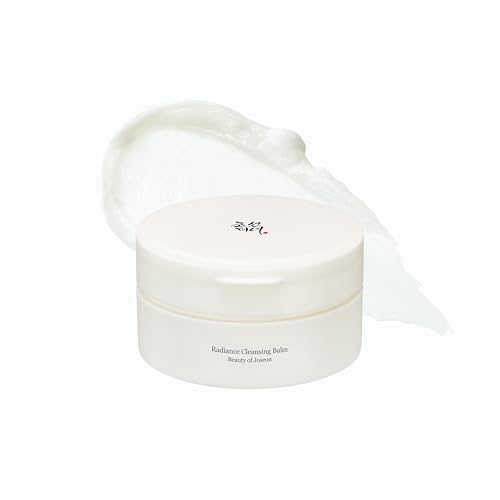
Balms work exactly like oil cleansers but start solid and melt on contact with your skin. Beauty of Joseon Radiance Cleansing Balm uses lactobacillus soybean ferment, where fermentation produces smaller molecules that penetrate residue more efficiently. Sea buckthorn oil and rice bran oil add antioxidants, and the formula is fragrance-free so sensitive skin tolerates it well.
Your Second Cleanser
Your second cleanser matters just as much as your first because harsh surfactants can strip away the work your oil cleanser just did. Isntree Yam Root Vegan Milk Cleanser uses yam root extract with sunflower seed oil and soybean extract. Most cleansers sting reactive skin. This one soothes while it cleanse.

None of these contain niacinamide, which is a deliberate choice. A small percentage of people react to it, and these recommendations avoid that variable entirely.
Bottom Line
Double cleansing works because one cleanser cannot handle two chemically different types of residue. That leftover film is what keeps your serums from absorbing properly.
But you don’t need it every night. Wore sunscreen and makeup today? Double cleanse. Kept your face bare? A single gentle cleanse is enough.
Two to three minutes, two cleansers, and your skin will do the rest.