Azelaic Acid vs Salicylic Acid for Acne: Which One Is Better?
Last updated on September 5th, 2026
When it comes to azelaic acid vs salicylic acid for acne, these two ingredients are often compared but rarely explained well. They work through completely different mechanisms and solve different problems.
Azelaic acid targets bacteria, inflammation, and the cell behaviour inside the follicle that triggers breakouts. Salicylic acid goes directly into the pore and clears the blockage that is already there. One addresses the conditions that cause acne. The other clears the congestion once it has formed.
As a pharmacologist, the most useful place to start is with the mechanism, because once you understand what each acid actually does, the right choice becomes obvious. This guide covers how each one works, which skin concerns they handle best, how to use them together, and how they compare to other actives you may already be using.
How Azelaic Acid and Salicylic Acid Treat Acne
How Azelaic Acid Treats Acne
Azelaic acid works through three mechanisms. It kills acne-causing bacteria without triggering antibiotic resistance, normalises how skin cells shed inside the follicle so blockages do not form, and reduces inflammation by inhibiting the immune pathways that drive redness and swelling in active lesions.
For the full breakdown, read up on How Azelaic Acid Clears Acne, Blackheads and Acne Scars.
How Salicylic Acid Treats Acne
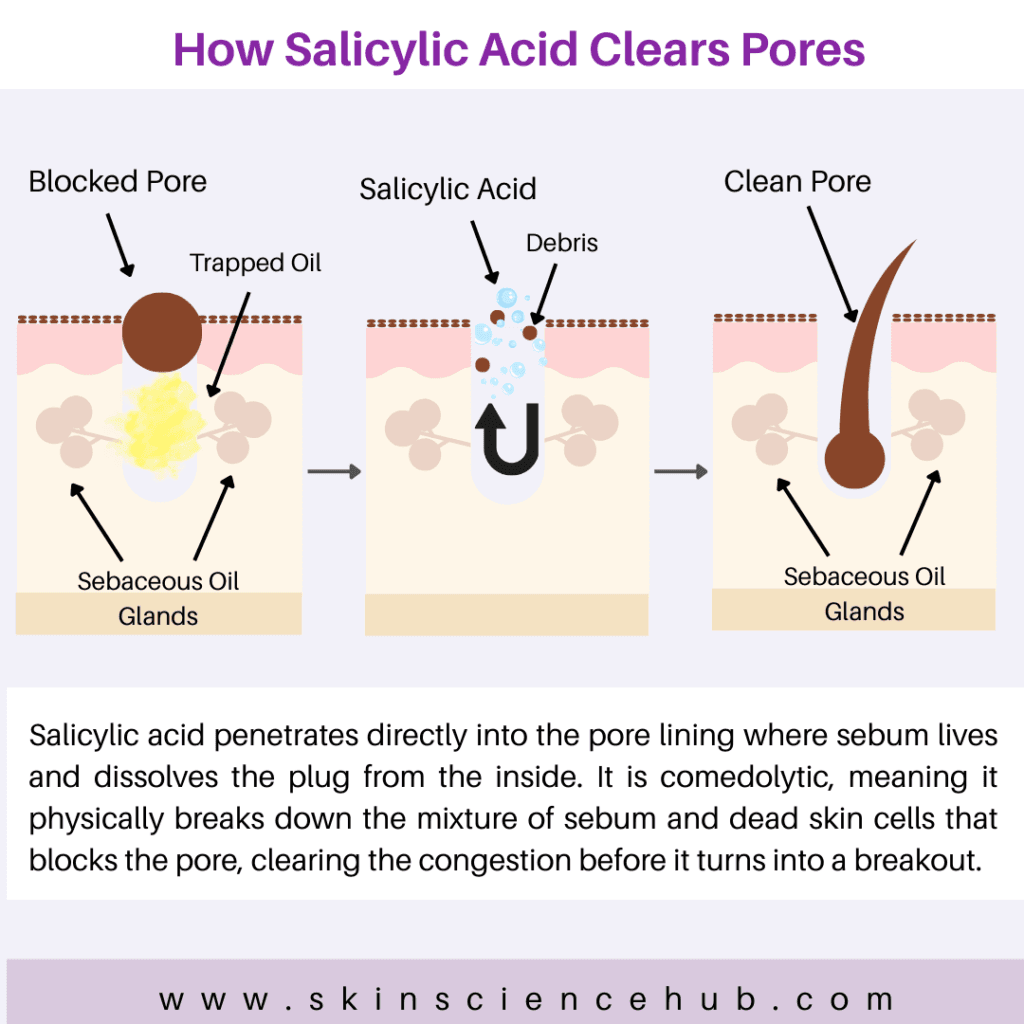
Salicylic acid works because it is oil-soluble. That means it can travel through sebum and reach the pore lining directly, where it dissolves the mixture of dead cells and oil that forms the blockage. This is called comedolytic activity. It also has mild antibacterial and anti-inflammatory properties, though these are secondary to its exfoliating action. Leave-on formulas work best at concentrations between 0.5 and 2 percent.
The Difference Between Azelaic Acid and Salicylic Acid
What They Target
Azelaic acid works inside the follicle, correcting the bacterial, inflammatory, and cellular processes that trigger acne. Salicylic acid works inside the pore, dissolving the physical blockage that is already there.
Best For
Azelaic acid is the stronger choice for inflammatory acne, hormonal breakouts, post-acne dark spots, sensitive skin, and rosacea. Salicylic acid is the stronger choice for blackheads, whiteheads, oily skin, and congested pores.
Speed of Results
Salicylic acid works faster. A spot treatment can show visible improvement within a couple of days. Azelaic acid builds results over six to eight weeks of consistent use.
Skin Type Fit
Azelaic acid suits sensitive, dry, and rosacea-prone skin well. Salicylic acid suits oily and acne-prone skin best.
Pregnancy Safety
Azelaic acid is considered safe during pregnancy and breastfeeding. Salicylic acid requires caution, and dermatologists typically advise avoiding it during pregnancy.
When Azelaic Acid Is Better Than Salicylic Acid for Acne
Azelaic Acid for Sensitive and Reactive Skin
Azelaic acid is one of the few acne treatments that works without irritating the skin in the process. It does not strip or aggressively exfoliate, so dryness, peeling, and stinging are unlikely even at effective concentrations. And because it actively reduces inflammation, it calms the skin while it clears it, which makes it a strong choice if your skin is reactive or already inflamed.
Azelaic Acid for Hormonal and Inflammatory Acne
For red, swollen, angry breakouts, azelaic acid is particularly effective because it targets inflammation directly, taking the heat out of active lesions in a way that pore-clearing ingredients cannot.
For hormonal acne along the jawline and chin that keeps returning every month, it also works preventively. It keeps the follicular environment stable between breakouts, so the cycle is less likely to repeat. The hormonal acne section in Azelaic Acid for Acne goes deeper on building it into a long-term routine.
For red, inflamed breakouts, benzoyl peroxide is another strong option, and our benzoyl peroxide vs salicylic acid guide compares the two.
Azelaic Acid for Post-Acne Dark Spots
When dark marks linger after a breakout clears, azelaic acid is the stronger choice. Those marks, known as post-inflammatory hyperpigmentation or PIH, tend to be more pronounced and slower to fade on medium to deeper skin tones.
Azelaic acid directly inhibits tyrosinase, the enzyme responsible for melanin overproduction, so it targets PIH at the source. And because it treats active acne and dark spots at the same time, you get two benefits from one ingredient.
For more on fading hyperpigmentation, 10 Best Ingredients to Fade Hyperpigmentation and How to Get Rid of Hyperpigmentation on the Body are worth reading.
Azelaic Acid for Acne and Rosacea
Rosacea and acne can look similar, and they can coexist. If you are dealing with rosacea, choosing the wrong acid can make it worse.
Salicylic acid can aggravate rosacea symptoms, particularly persistent facial redness and flushing. Azelaic acid treats both conditions effectively and is FDA-approved for papulopustular rosacea, so it is the safer option when acne and rosacea are both involved.
If you are building a routine around rosacea, How to Build a Rosacea Skincare Routine covers exactly how to do that.
Azelaic Acid During Pregnancy and Breastfeeding
Most acne treatments are not safe to use during pregnancy. Salicylic acid requires caution because high concentrations used over large areas carry a risk of salicylate toxicity, and safety data in pregnant populations is limited. Dermatologists typically advise avoiding it altogether.
Azelaic acid is different. It is safe at all concentrations during pregnancy and breastfeeding, and it is clinically proven to work. If you are pregnant and dealing with acne, it is the treatment most dermatologists reach for first.
When Salicylic Acid Is Better Than Azelaic Acid for Acne
Salicylic Acid for Blackheads and Whiteheads
Blackheads and whiteheads form when sebum and dead skin cells block the pore. Salicylic acid clears that blockage directly, which is why it is the go-to ingredient for comedonal acne. If clogged pores are your main concern, start here. For a full routine, including how salicylic acid works alongside a retinoid, see our guide to clearing closed comedones.
Salicylic Acid for Oily Skin and Congested Pores
Oily skin is prone to congestion, and congestion leads to breakouts. Salicylic acid keeps the pores clear consistently, so excess oil has less chance of triggering a breakout. It is one of the most practical daily actives for oily skin because it works directly where the problem starts.
Salicylic Acid as a Spot Treatment
When you need a breakout cleared fast, reach for salicylic acid. You can apply it directly to a blemish as a targeted spot treatment, and it can show visible improvement within a couple of days.
Learn more about salicylic acid
Can You Use Azelaic Acid and Salicylic Acid Together?
Yes, and the research supports it. A 2019 RCT by Abdel Hay et al. found that combining both acids outperformed either ingredient alone for inflammatory lesions, with patients reporting greater satisfaction with the combination.
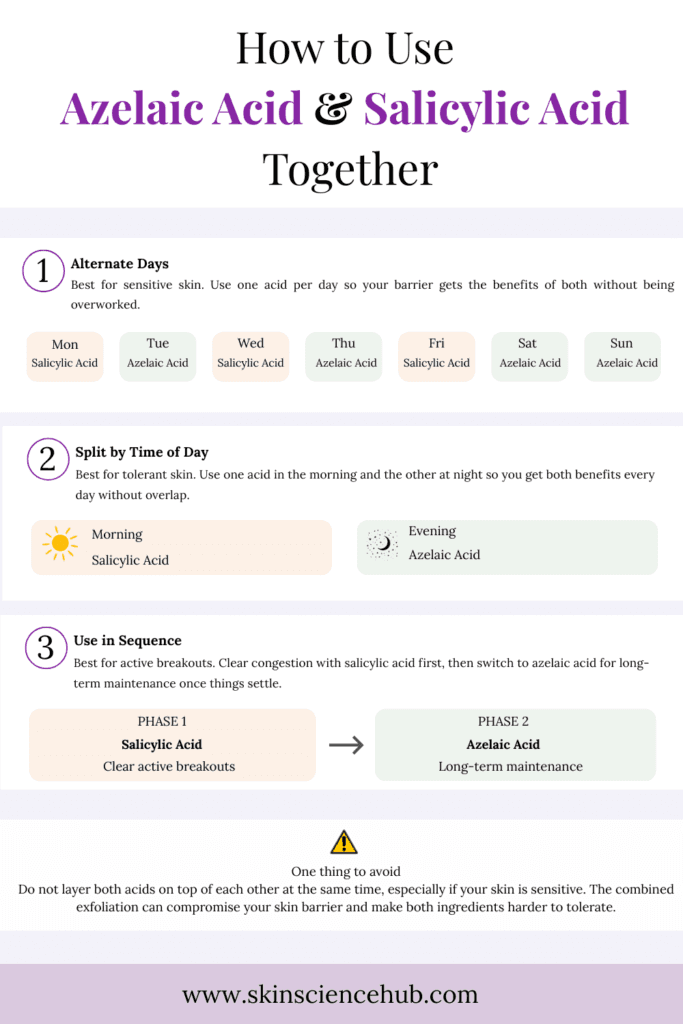
The simplest approach is to alternate days, using one acid one day and the other the next. This works well if your skin is sensitive and you want the benefits of both without using them too frequently.
If your skin tolerates both comfortably, split them by time of day instead. One in the morning, the other at night. That way you get the benefits of both every day.
A third option is to use them in sequence. Start with salicylic acid to clear active breakouts, then transition to azelaic acid for long-term maintenance once your skin clears.
The one thing to avoid is applying both at the same time. The combined exfoliation can compromise your skin barrier and leave skin dry and reactive.
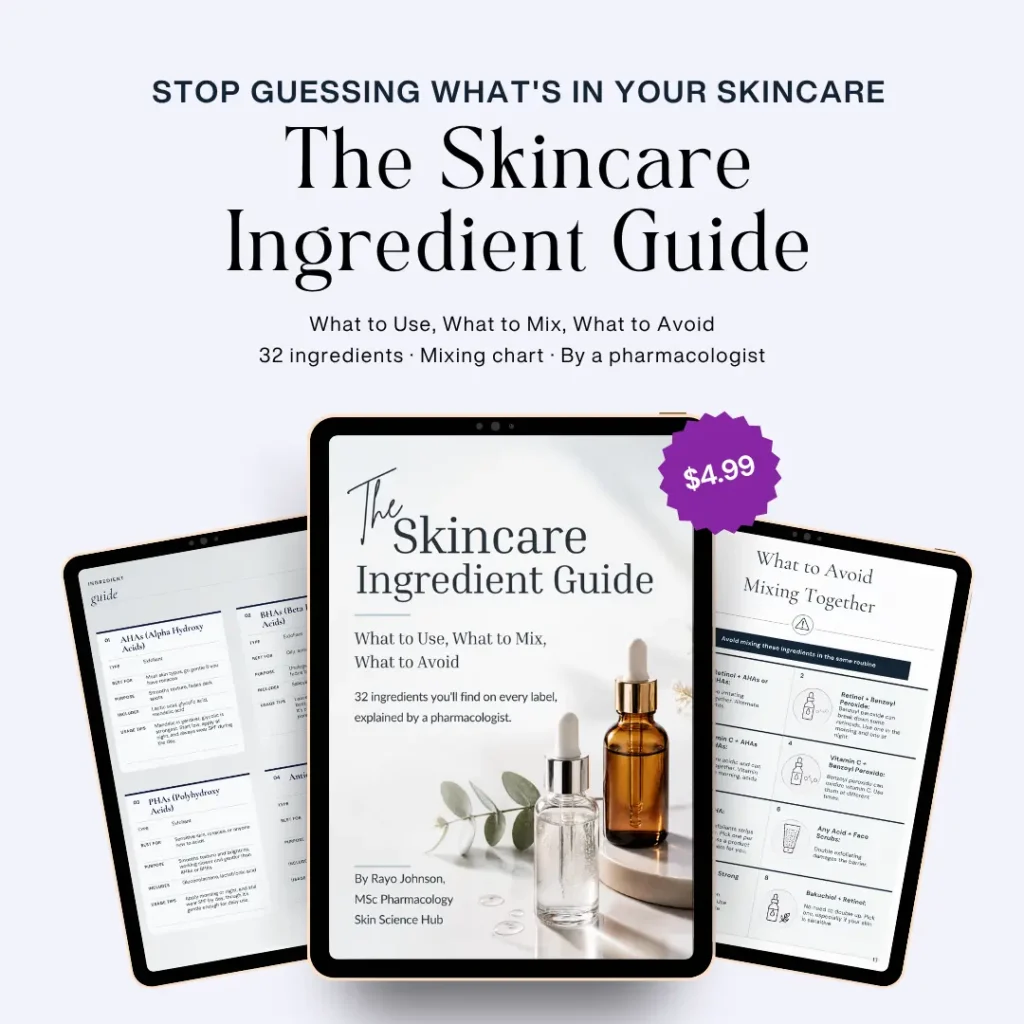
Want to use both? My guide shows you which acne ingredients work together and which ones to keep apart.
How Azelaic Acid and Salicylic Acid Compare to Other Actives
Azelaic Acid vs Niacinamide
Azelaic acid and niacinamide target overlapping concerns but through different routes. Azelaic acid is the stronger acne treatment, working directly against bacteria, inflammation, and pigmentation. Niacinamide regulates sebum production and strengthens the skin barrier, supporting clearer skin over time. The two pair well together, with niacinamide working as a complementary ingredient alongside azelaic acid.
Azelaic Acid vs Benzoyl Peroxide
Benzoyl peroxide is more aggressive than azelaic acid, and that makes it effective for stubborn inflammatory acne when you need faster results. Azelaic acid builds results more gradually, without the dryness, peeling, or bleaching that benzoyl peroxide can cause. For sensitive skin or long-term use, azelaic acid is the more sustainable option.
Azelaic Acid and Salicylic Acid vs Retinol
Retinol targets a broader range of skin concerns than either acid, including fine lines, texture, and uneven tone, which makes it a popular choice for anti-aging alongside acne treatment. But it carries a higher risk of irritation, particularly in the first few weeks of use. Azelaic acid pairs more comfortably with retinol because both work through non-exfoliating pathways. Salicylic acid can be combined with retinol too, though using both on the same night increases the risk of irritation and barrier disruption, so alternating nights is the safer approach.
Salicylic Acid vs Glycolic Acid
Both are exfoliants but they work differently. Glycolic acid works on the skin surface, dissolving the bonds between dead cells to improve overall texture and brightness. Salicylic acid works inside the pore, making it the more targeted choice for blackheads and congestion. For clogged pores specifically, salicylic acid reaches where glycolic acid cannot.
Bottom Line
Choose azelaic acid for inflammatory acne, hormonal breakouts, dark spots, sensitive skin, or rosacea. Choose salicylic acid for blackheads, congested pores, and oily skin. And if your skin has overlapping concerns, the two work well together. Most people find they need both at some point.