10 Best Ingredients to Fade Hyperpigmentation and Dark Spots
Last updated on August 21st, 2026
Melanin gives your skin its color. But when your skin produces too much of it in one area, you get hyperpigmentation. Dark patches form and stay because nothing in a basic routine stops your skin from making and depositing excess melanin.
As a pharmacologist dealing with this myself, I know which ingredients actually interrupt it. Some block the enzymes that create melanin. Others speed up cell turnover to clear pigmented cells faster. One stops melanin from transferring into your skin cells before dark spots become visible.
These 10 ingredients have strong evidence behind them.

Understanding Your Hyperpigmentation
The type you have determines which ingredients will actually work for you. There are three main types.
Melasma appears as symmetrical dark patches on the cheeks, forehead, and upper lip. Hormones drive it, which is why it’s common during pregnancy and with hormonal contraceptives, and sun exposure makes it significantly worse. Tranexamic acid, hydroquinone, and azelaic acid work best here because they target both melanin overproduction and the inflammation behind it.
Post-inflammatory hyperpigmentation is the dark mark left after acne, a wound, or any skin irritation. The mark stays long after the original injury clears. Niacinamide, azelaic acid, and alpha arbutin are your best options because they’re gentle enough for consistent long-term use without triggering further irritation.
Sun damage shows up as flat, defined spots on areas with the most sun exposure, typically your face, hands, and shoulders. Vitamin C prevents new pigment from forming, while tretinoin and glycolic acid accelerate shedding of already-pigmented cells. You often need both prevention and correction working together.
If you’re looking specifically for an acid to treat hyperpigmentation, glycolic acid, kojic acid, and azelaic acid are the strongest options on this list. Each works differently, and the right one depends on your skin type and hyperpigmentation type.
If you’re unsure which type you have, a dermatologist can confirm it. Some hyperpigmentation overlaps, and getting the diagnosis right saves you months of using the wrong ingredients.
Quick Comparison Table
| Ingredient | What It Does | Concentration | Best For |
|---|---|---|---|
| Hydroquinone | Directly shuts down melanin production | 2-4% | Stubborn melasma and severe dark spots |
| Tretinoin | Accelerates cell turnover to shed pigmented layers | 0.025-0.1% | Post-acne marks and sun damage |
| Azelaic Acid | Blocks melanin and calms the inflammation driving it | 10-20% | Acne-related dark spots and sensitive skin |
| Niacinamide | Stops melanin from reaching the skin surface | 2-10% | Any skin type, any hyperpigmentation type |
| Vitamin C | Prevents UV-triggered pigment and fades existing spots | 10-20% | Sun damage prevention and brightening |
| Tranexamic Acid | Targets both melanin overproduction and blood vessel activity | 2-5% | Hormonal melasma |
| Kojic Acid | Starves tyrosinase of the copper it needs to make melanin | 1-4% | Hydroquinone alternative without cycling |
| Glycolic Acid | Sheds pigmented surface cells and smooths texture | 5-10% | Dark spots with uneven texture |
| Alpha Arbutin | Gently blocks melanin production without harming pigment cells | 1-2% | Long-term maintenance after active treatment |
| Licorice Root | Disperses pigment and calms inflammation simultaneously | 0.5-2% | Inflammation-driven pigmentation and redness |
The 10 Best Ingredients to Fade Hyperpigmentation and Dark Spots
1. Hydroquinone
Hydroquinone is the strongest option on this list. It directly blocks tyrosinase, the enzyme your skin needs to produce melanin, and nothing over the counter shuts down pigment production as effectively. That’s why dermatologists call it the gold standard for stubborn hyperpigmentation.
You can buy 2% over the counter or get 4% by prescription. Apply once nightly directly on dark spots, starting at the center and feathering outward. If your skin tolerates it well after two weeks, increase to twice daily.
Use it for three to six months then take a break. Prolonged continuous use causes rebound darkening, which undoes your progress. Ochronosis is rare but it can happen. It’s a blue-black discoloration that develops after years of misuse, so cycling off as directed protects you from that outcome.
If you have darker skin like me, work with a dermatologist. Irritation on deeper skin tones can darken your skin further, and prescription combinations with tretinoin work faster for stubborn cases. A dermatologist who understands darker skin tones will guide you on safe concentrations and combinations that a general skincare routine won’t cover.
Ambi Fade Cream is a solid affordable starting point at 2%.

2. Tretinoin
Tretinoin is the fastest-working ingredient on this list. It’s a prescription retinoid that speeds up cell turnover and blocks tyrosinase activity at the same time, so your skin sheds pigmented cells while bringing fresh unpigmented ones to the surface. Clinical data confirms 40% improvement in post-inflammatory hyperpigmentation after six months of consistent use.
I use 0.05% tretinoin cream myself, just a pea-sized amount using the sandwich method. You apply moisturizer first, wait a few minutes, apply tretinoin, then seal with moisturizer again. I built up to that concentration slowly over several months, and that buffer made the difference in tolerating it.
Start with 0.025% twice per week at night and build slowly toward nightly use. That’s where I started too. If you live in a hot, humid climate, stay at the lowest concentration longer because heat amplifies the irritation. Apply to clean, dry skin.
Expect dryness, peeling, and increased sun sensitivity in the first few weeks. Some people purge where breakouts temporarily worsen before clearing. Both happen because tretinoin is accelerating your skin’s turnover, not because something is going wrong. Sun protection is especially important while using tretinoin because it increases your skin’s sensitivity to UV damage.
Once your skin adjusts, niacinamide pairs well with it and the combination fades dark spots faster than either ingredient alone. Avoid tretinoin completely if you’re pregnant or breastfeeding.
If you want a gentler starting point, Differin Gel gives you adapalene over the counter. It works through a similar mechanism and builds your tolerance before you move to prescription strength.

3. Azelaic Acid
Azelaic acid is one of the gentlest effective brighteners available, and unlike hydroquinone, it doesn’t harm healthy pigment cells or cause ochronosis with prolonged use. You can use it long term without cycling or taking breaks.
It inhibits tyrosinase and reduces inflammation at the same time. That dual action makes it particularly useful if your hyperpigmentation is tied to acne or rosacea, because it treats the underlying inflammation while fading the dark spots it leaves behind.
Research shows 20% azelaic acid performs as well as 4% hydroquinone. That’s a strong result for an ingredient this gentle.
Use 10% over the counter or get 15% to 20% by prescription for stronger results. Apply twice daily to affected areas. You might feel tingling or mild burning at first, but this fades as your skin adjusts.
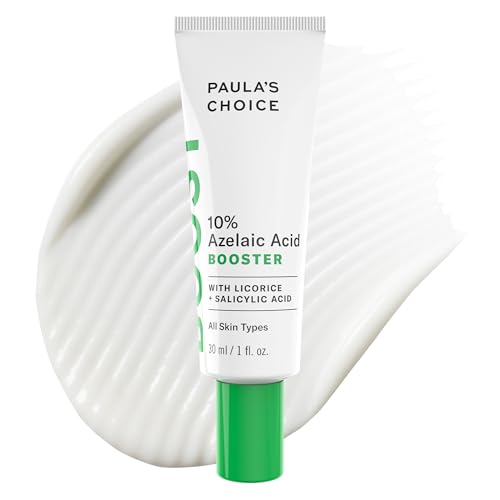
The Ordinary Azelaic Acid Suspension 10% and Paula’s Choice 10% Azelaic Acid Booster both work well at a fraction of prescription cost. Start with nighttime application and increase to twice daily once your skin adapts.
I recommend this one particularly for darker skin tones. Stronger ingredients carry a risk of irritation-triggered darkening, and azelaic acid doesn’t carry that risk.