Can Stress Cause Skin Rashes, Spots and Breakouts?
Last updated on July 24th, 2026
Stress is your body’s response to pressure, driven by a hormone called cortisol. When cortisol rises, it directly disrupts how your skin functions.
The effects are visible. Cortisol increases oil production, weakens your skin barrier, and triggers inflammation, and this shows up as spots, rashes, hives, and flares of eczema, psoriasis, and rosacea. Both stress and anxiety drive this response, and your skin often shows the signs before anything else does.
But stress and skin reactions don’t look the same for everyone. Some people get a stress skin rash. Others break out in spots or deal with relentless itching. Knowing which reaction you’re having helps you treat it correctly.
This article covers what cortisol does to your skin, what stressed skin looks and feels like, and how to treat it.
Why Stress Causes Skin Problems
When you’re stressed, your brain activates the HPA axis, your hypothalamus, pituitary gland, and adrenal glands working together as your body’s alarm system. As a pharmacologist, what I find most significant about this pathway is how it keeps cortisol flowing continuously under chronic stress, because that sustained elevation is what drives the skin damage, not the initial spike.
In short bursts, cortisol helps you. It releases glucose for energy, sharpens focus, and prepares you to respond to threats. But ongoing stress keeps cortisol elevated constantly, and your body never gets the signal to stand down.
Your skin is where this shows up first.
What Cortisol Does to Your Skin
Cortisol binds to receptors in your skin and sets off a chain of problems.
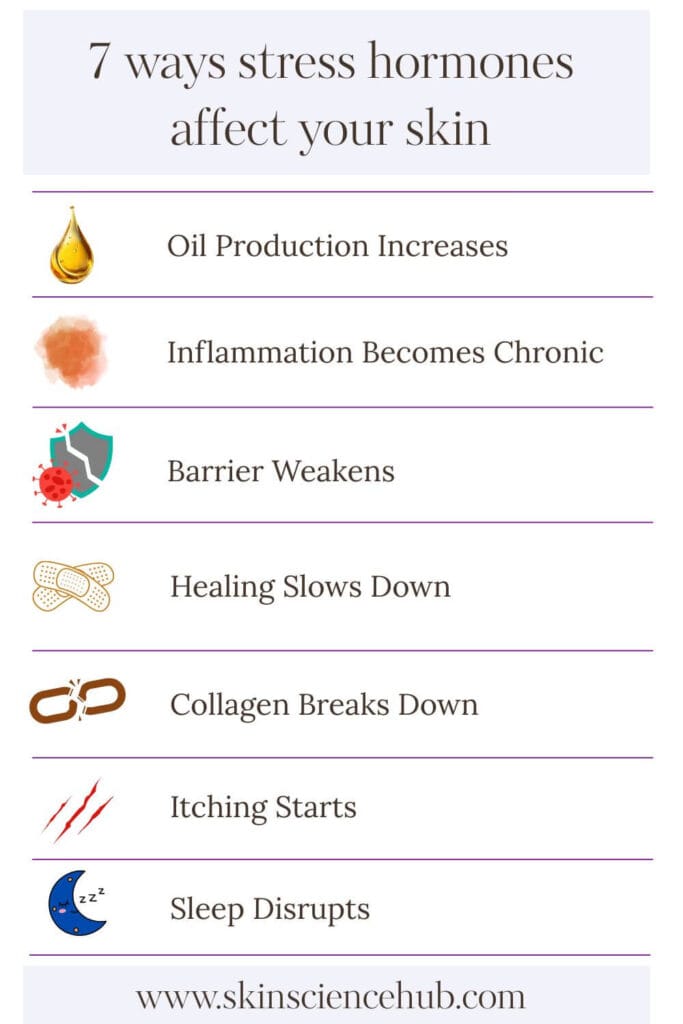
Oil production increases – Cortisol activates your sebaceous glands, producing more oil. That oil mixes with dead skin cells and bacteria, clogs your pores, and causes breakouts.
Inflammation becomes chronic – Cortisol triggers low-grade inflammation throughout your body. In your skin, this reddens your complexion, weakens your barrier, and drives flares of acne, eczema, and rosacea.
Your barrier weakens – Your skin barrier protects you against bacteria, environmental damage, and moisture loss. Cortisol compromises it, so you lose water faster and your skin becomes dry, dull, and sensitive.
Healing slows down – Cortisol suppresses immune function and reduces repair cell activity. Cuts, breakouts, and post-procedure skin all take longer to recover, and your risk of hyperpigmentation and scarring increases.
Collagen breaks down – Cortisol interferes with collagen production while accelerating its breakdown. Less collagen means more wrinkles, sagging, and loss of firmness over time.
Itching starts – Cortisol activates mast cells in your skin, which release histamine and other inflammatory chemicals. This triggers itching even when there’s no visible rash.
Sleep gets disrupted – Cortisol interferes with melatonin release, making deep restorative sleep harder to get. Poor sleep shows on your skin immediately. It looks duller and drier, your barrier weakens further, and inflammation increases. Because poor sleep raises cortisol even higher, you end up in a loop where stress disrupts sleep and poor sleep amplifies stress.
What Does Stressed Skin Look Like?
Stressed skin shows consistent signs when cortisol is chronically elevated. These range from dullness and dryness to visible skin eruptions like hives, spots, and rashes, though how they appear depends on your skin tone and baseline.
Dullness – Your skin loses its brightness because cortisol slows cell turnover and impairs circulation, so fresh cells aren’t reaching the surface fast enough.
Blotchiness and uneven tone – Inflammation from cortisol causes patchy redness and uneven pigmentation. On deeper skin tones, this often appears as dark patches rather than visible redness.
Dryness and tightness – A weakened barrier loses moisture faster than it can retain it. Your skin feels tight, looks flaky, and becomes less tolerant of products it handled fine before.
Increased sensitivity – Stinging, irritation, and reactivity increase because your compromised barrier lets irritants in more easily.
Puffiness – Cortisol-driven inflammation increases fluid retention, particularly around the eyes and cheeks.
Breakouts in the T-zone – Excess oil collects on your forehead, nose, and chin, where oil glands are most concentrated.
If several of these appear together, chronic stress is likely a factor. A dermatologist can confirm and rule out other causes.
Skin Conditions Caused by Stress
Both stress and anxiety trigger skin conditions, and which one you develop depends on your skin type and how your immune system responds to cortisol.
Stress Hives
Hives appear suddenly and disappear just as fast, often within hours and leaving no trace behind.
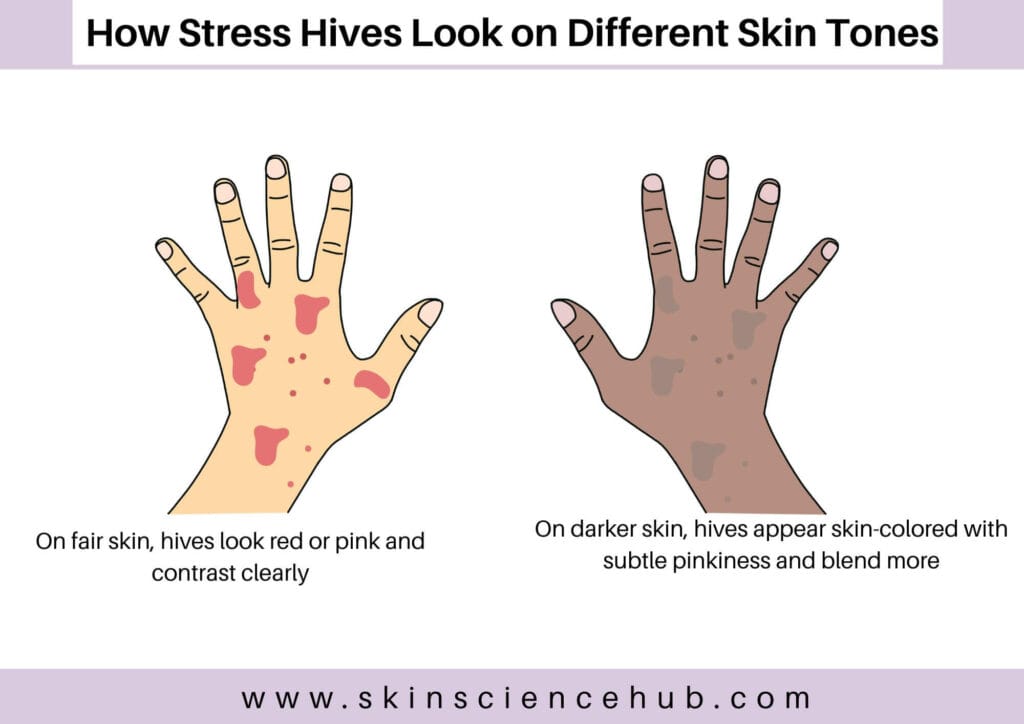
You’ll see raised, swollen patches that feel smooth but itch intensely. On fair skin they look red or pink. On darker skin they appear skin-colored with subtle pinkness. Press on a hive and it briefly turns white before the color returns, which confirms you’re dealing with hives and not another rash.
Size varies quite a bit. Some are tiny like mosquito bites, while others grow as large as your palm. They can appear on your face in the morning and your chest by afternoon. Most resolve within one to two days once your body calms down. But if yours persist beyond six weeks, you may have chronic hives and should see a dermatologist.
Stress Acne
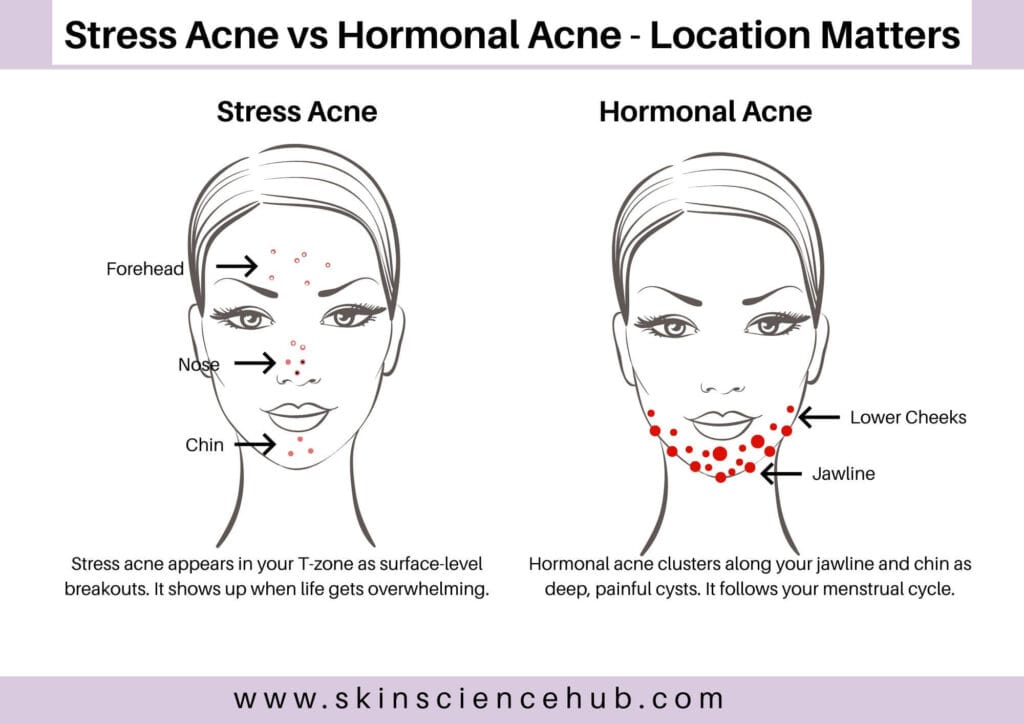
Stress acne shows up as whiteheads, blackheads, and small red bumps across your T-zone, sitting on the surface rather than forming deep underneath.
This differs from hormonal acne in two ways. Hormonal acne forms deep, painful cysts along your jawline and chin, while stress acne spreads across your forehead and nose. Hormonal acne follows your menstrual cycle and worsens before your period, while stress acne appears whenever life gets overwhelming, regardless of where you are in your cycle.
Stress-Related Itching
Stress can trigger intense itching without any visible rash. Your skin looks normal or shows only slight redness, but the itch is relentless and comes back worse after scratching.
The timing usually reveals the trigger. The itching starts when stress ramps up and you haven’t changed products, detergents, or fabrics. There’s no new allergen. The itch just appears alongside the stress.
How Stress Affects Existing Skin Conditions
If you already have a chronic skin condition, stress will make it worse. Eczema patches become more inflamed and itchy, and new patches can appear in previously clear areas. Psoriasis plaques thicken and spread while silvery scales multiply. Rosacea flares with deeper redness, more visible blood vessels, and increased burning and stinging. Seborrheic dermatitis, which causes flaky, greasy patches on your scalp and face, also worsens under stress because cortisol disrupts the skin’s microbial balance and accelerates inflammation in oil-rich areas.
You may also notice excessive hair shedding three to six months after a period of major stress. This is telogen effluvium, a stress-related hair loss that reverses once cortisol levels normalize. Most people don’t connect the shedding to stress because the hair loss happens months after the trigger.
How to Treat Stress Skin Reactions
Quick Relief for Hives and Itching
Antihistamines work well when you take them at the first sign of hives or itching. Talk to your pharmacist about which option suits you, because some cause drowsiness and others don’t. If the itching is more localized, hydrocortisone cream at one percent strength calms inflammation and stops itching fast. Apply a thin layer to affected areas twice daily, but avoid using it on your face for more than a few days without seeing a dermatologist, because prolonged use thins facial skin.
For immediate swelling and itch relief, cold compresses help a lot. Wrap ice in a cloth and apply it for ten to fifteen minutes at a time, and never apply ice directly to your skin because it damages tissue. Cool baths with colloidal oatmeal are another option, especially when the reaction is widespread. Add one cup to lukewarm bathwater and soak for fifteen to twenty minutes. Baking soda in the bath provides extra relief from hives.
While you’re managing the reaction, avoid things that make it worse. Scratching feels instinctive but breaks your barrier and intensifies the itch cycle. Hot showers increase inflammation, so keep water cool. Harsh soaps and fragranced products aggravate reactive skin further, and loose cotton clothing is much kinder than tight or scratchy fabrics.
Daily Skincare During Stress
Your skincare routine needs the most consistency when you’re overwhelmed, because that’s exactly when your barrier is most vulnerable. Start with a gentle, non-foaming cleanser that won’t strip your skin, and choose fragrance-free products throughout your routine because stressed skin reacts more easily to irritants. Apply moisturizer while your skin is still damp to seal in hydration before water evaporates.
Right now, your skin needs ingredients that actively repair and protect it. Ceramides, cholesterol, and fatty acids work together to restore what cortisol breaks down, reinforcing your skin’s protective layer. Niacinamide calms inflammation, strengthens your barrier, and controls excess oil, while hyaluronic acid draws moisture in and keeps it there.
Adaptogenic ingredients go a step further by countering cortisol’s effects directly. Centella asiatica, ginseng, licorice root, and reishi mushroom all appear in calming and stress-defense formulations. One or two products with these ingredients, used consistently, help your skin stay resilient when stress is high.
How to Lower Cortisol for Better Skin
You can’t eliminate stress entirely, but you can reduce how much cortisol your body carries day to day. Lower baseline cortisol means less oil production, less inflammation, and a stronger barrier.
Move your body regularly – Exercise reduces baseline cortisol levels and you don’t need intense workouts to see a difference. Walking more throughout your day is enough. Physical activity releases endorphins, improves sleep quality, and helps your body clear stress hormones more efficiently.
Prioritize sleep consistency over sleep quantity – Eight hours of disrupted sleep does less for your skin than six hours of deep, restorative sleep. Keeping the same sleep and wake times, even on weekends, trains your circadian rhythm and keeps cortisol patterns stable.
Give yourself at least an hour to wind down before bed. Shut off screens because blue light suppresses melatonin and keeps your mind active when it needs to slow down.
Eat to keep blood sugar stable – When blood sugar crashes, your body triggers a cortisol response. Eating regular meals with protein prevents those spikes and crashes. Focus on anti-inflammatory foods like fatty fish, leafy greens, berries, and walnuts. Choose whole grains and sweet potatoes over refined carbohydrates. Limit excess sugar, alcohol, and processed foods because all three drive inflammation and compound what cortisol is already doing to your skin.
When to See a Dermatologist
Most stress-related skin reactions respond to home treatment within two weeks. If yours don’t, see a dermatologist. Getting the right diagnosis early means you’re treating the right thing.
Go if over-the-counter treatments aren’t helping, if flares are disrupting your daily life, or if you’re simply not sure what you’re dealing with. Your dermatologist can prescribe stronger antihistamines, topical or oral corticosteroids, prescription retinoids for acne, or hormonal treatments where appropriate. For chronic hives, omalizumab injections are an option. For severe eczema, topical immunomodulators work well.
If you develop difficulty breathing, throat swelling, or rapid facial swelling, seek emergency care immediately. These signal a severe allergic reaction and need urgent treatment.
The Bottom Line
Stress affects your skin through measurable biological pathways. Cortisol increases oil production, triggers inflammation, weakens your barrier, and slows healing. This shows up as hives, spots, itching, blotchy skin, and flares of existing conditions.
Each of these reactions has a clear treatment path. Antihistamines and cold compresses calm hives quickly. Barrier-supporting ingredients protect your skin during ongoing stress. Lowering your baseline cortisol through movement, consistent sleep, and stable blood sugar keeps your skin more resilient over time.
Your lifestyle choices affect your skin more than most products ever will.
If symptoms persist beyond two weeks or you’re unsure what you’re dealing with, see a dermatologist. They can confirm your diagnosis and prescribe stronger treatments when needed.