

Benzoyl Peroxide vs Salicylic Acid for Acne: Which One Do You Need?
Benzoyl peroxide and salicylic acid are the two most popular over the counter acne ingredients, and the FDA recognizes both as safe and effective for treating breakouts. You’ll find them in washes, toners, leave on treatments, gels, spot treatments, and masks. However, they work through completely different mechanisms, which is why each one suits a different type of breakout. Salicylic acid works best on blackheads and whiteheads, while benzoyl peroxide works best on red, inflamed pimples.
This guide breaks down which one fits your acne. It also covers whether you can use both together and when it’s time to see a dermatologist.
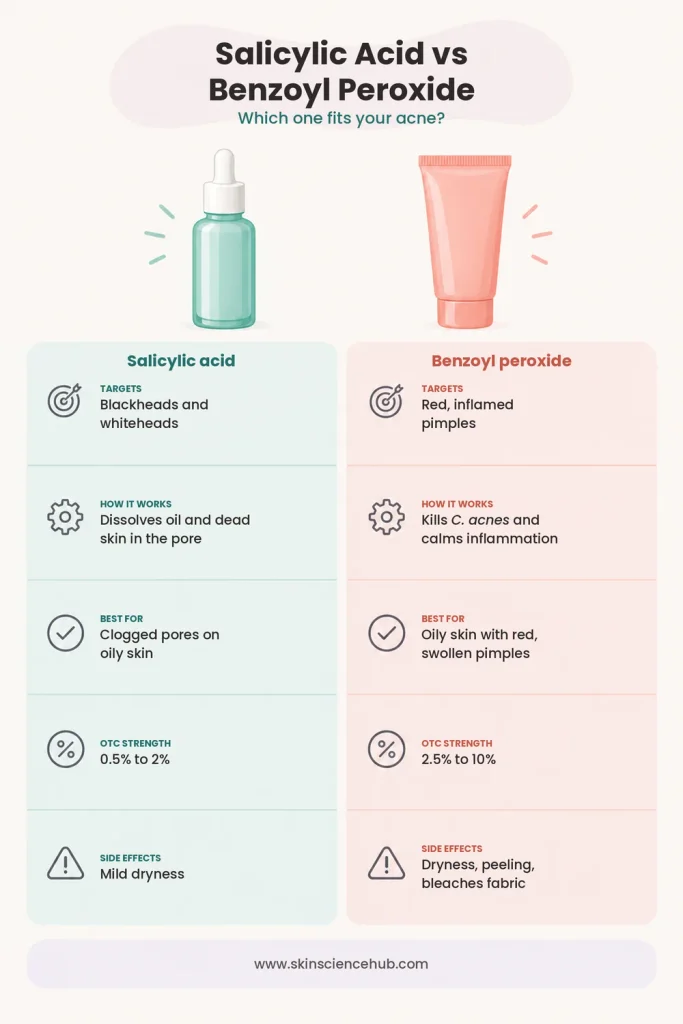
What Is the Difference Between Salicylic Acid and Benzoyl Peroxide?
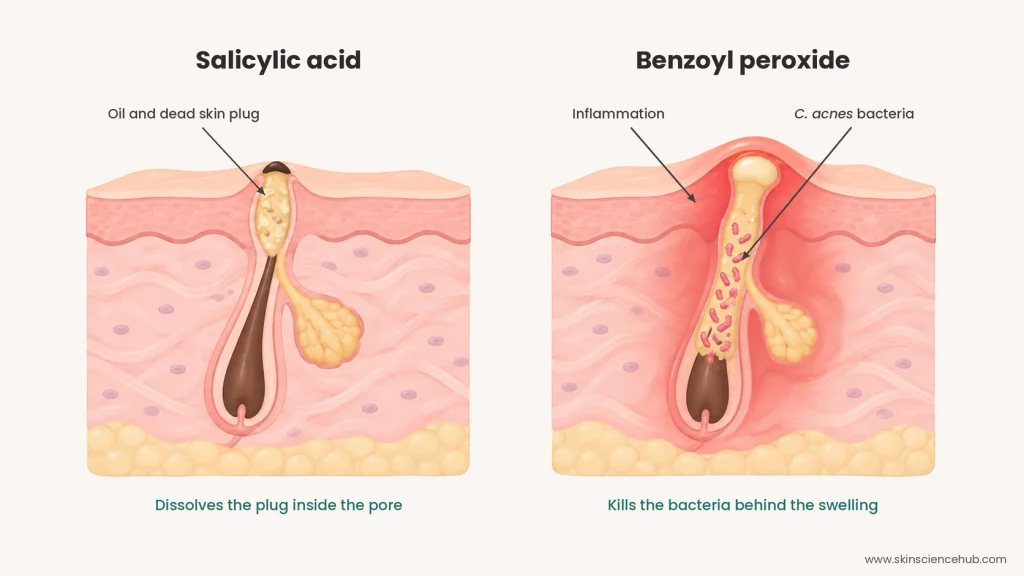
Salicylic acid is a beta hydroxy acid (BHA), a type of exfoliating acid, while benzoyl peroxide is an antibacterial ingredient. They treat acne in two different ways, and the table below breaks both down side by side.
As a pharmacologist, I want you to know one key difference: salicylic acid clears what’s already clogging your pores, while benzoyl peroxide kills the bacteria causing your inflammation.
| Salicylic acid | Benzoyl peroxide | |
|---|---|---|
| Primary target | Blackheads and whiteheads | Red, inflamed, and pus filled pimples |
| How it works | Dissolves in oil to clear out the dead skin and buildup inside the pore | Kills C. acnes, the bacteria that fuel acne, and calms inflammation |
| Best for | Oily or acne prone skin dealing with clogged pores | Oily, acne prone skin with red, swollen pimples |
| Strengths available over the counter | 0.5% to 2% | 2.5% to 10% |
| Side effects | Mild dryness and irritation | Dryness, redness, and peeling, plus possible bleaching of hair or fabric |
The right choice for you comes down to your acne type, so let’s look at that next.
Salicylic Acid vs Benzoyl Peroxide: Which Is Better for Your Acne Type?
Not sure which type you’re dealing with? Our Acne 101 guide walks you through how to tell them apart.
- Blackheads and whiteheads – Salicylic acid is the first choice here, because it dissolves the oil and dead skin plugging your pores. Benzoyl peroxide also helps, since it speeds up how fast your skin sheds dead cells.
- Red, inflamed pimples – Benzoyl peroxide works better than salicylic acid here because it kills the bacteria that cause redness and swelling. It also works on pus filled pimples.
- Hormonal and cystic acne – Neither ingredient touches the hormones driving hormonal acne, and deep, painful cysts usually need a dermatologist. Between the two, though, benzoyl peroxide is the better fit, as it calms the inflamed breakouts that often come with hormonal acne. For prescription treatments that target hormones directly, check our hormonal acne guide.
- Fungal acne – It comes from yeast, so neither ingredient treats the root cause, and it needs an antifungal treatment to clear. Salicylic acid can still support that treatment by keeping your pores clear while the antifungal works on the yeast. Because fungal acne often gets mistaken for bacterial acne, a dermatologist can confirm which one you have, and our guide on fungal vs bacterial acne can help you spot the signs before that visit.
Which Is Gentler on Sensitive Skin?
If you have sensitive skin, you can still use either ingredient, as long as you start gently. Of the two, salicylic acid is the gentler one. Benzoyl peroxide is more likely to cause dryness, peeling, and sometimes burning or itching.
With salicylic acid, start by using it every other night, since even a gentle acid can irritate if you use it too often too soon.
For inflamed pimples, benzoyl peroxide is still an option, but start at 2.5%. In clinical trials, 2.5% reduced the number of inflamed pimples just as well as 5% and 10%, and it caused less irritation than 10%. A wash is also a gentler starting point than a leave on product, and our benzoyl peroxide guide shows you how to ease into it. The FDA label warns against using benzoyl peroxide on highly sensitive skin, so check with a dermatologist first if you’re unsure.
Acne products can leave dark marks when they irritate your skin, especially on deeper skin tones. If your skin stings or peels, cut back on how often you use the product, and switch to a lower strength if you’re on a higher one.
Safety Checks Before You Start: Allergies, Pregnancy, and Benzene
Patch test any new acne product first by applying it to one or two small patches of skin for three days. If you ever have trouble breathing or notice swelling in your face, lips, or tongue, stop right away and get medical help.
If you’re allergic to aspirin, check with your doctor before using salicylic acid, because the two are chemically related.
If you’re pregnant, check with your ob-gyn before starting either one, as direct research in pregnancy is limited. The American College of Obstetricians and Gynecologists does list over the counter benzoyl peroxide and salicylic acid among the acne ingredients you can use during pregnancy.
Benzoyl peroxide bleaches fabric and hair, so switch to white towels and pillowcases, and keep it away from your hairline and eyebrows.
You may have seen headlines about benzene in benzoyl peroxide products. When the FDA tested 95 of them in 2025, more than 90% had very low or undetectable levels. The agency also says the cancer risk from these products is very low, even with daily use for decades. Some of the products with higher levels were close to their expiration dates, so throw out anything past its date. Our benzoyl peroxide guide covers the details.
Face Wash, Leave On, or Spot Treatment? How to Choose
Both ingredients come in three main formats: washes, leave on products, and spot treatments. The right one depends on where your acne shows up and how much of your skin it covers.
- Leave on products – Gels, toners, and serums stay on your skin, giving the ingredient hours to work.
- Washes – They rinse off quickly, making them easy to use over large areas.
- Spot treatments – These go on a single pimple, so they’re useful if you only get the occasional breakout.
Benzoyl peroxide face wash vs. salicylic acid cleanser
A benzoyl peroxide wash is a good pick for inflamed pimples. It kills bacteria fast on contact, and dermatologists say washes work about as well as leave on formulas.
A salicylic acid cleanser rinses off before it has much time to work inside your pores, so for blackheads and whiteheads, a leave on salicylic acid toner or serum does more. The cleanser still makes a gentle daily option, especially for sensitive skin.
If you’re choosing a wash, our roundup of the best face washes for oily, acne prone skin includes picks with each ingredient.
Benzoyl Peroxide vs Salicylic Acid for Back and Body Acne
A benzoyl peroxide wash is usually the easiest place to start for acne on your chest, back, and shoulders. Let it sit on your skin for up to five minutes before rinsing, as that gives it more time to work. Salicylic acid also comes in body washes and sprays, and a spray helps with spots you can’t reach on your own.
If the bumps on your back or chest are small, all the same size, and itchy, especially when you’re hot or sweaty, they may be fungal acne, which neither ingredient treats on its own. Our fungal vs bacterial acne guide can help you tell the difference.
Can You Use Benzoyl Peroxide and Salicylic Acid Together?
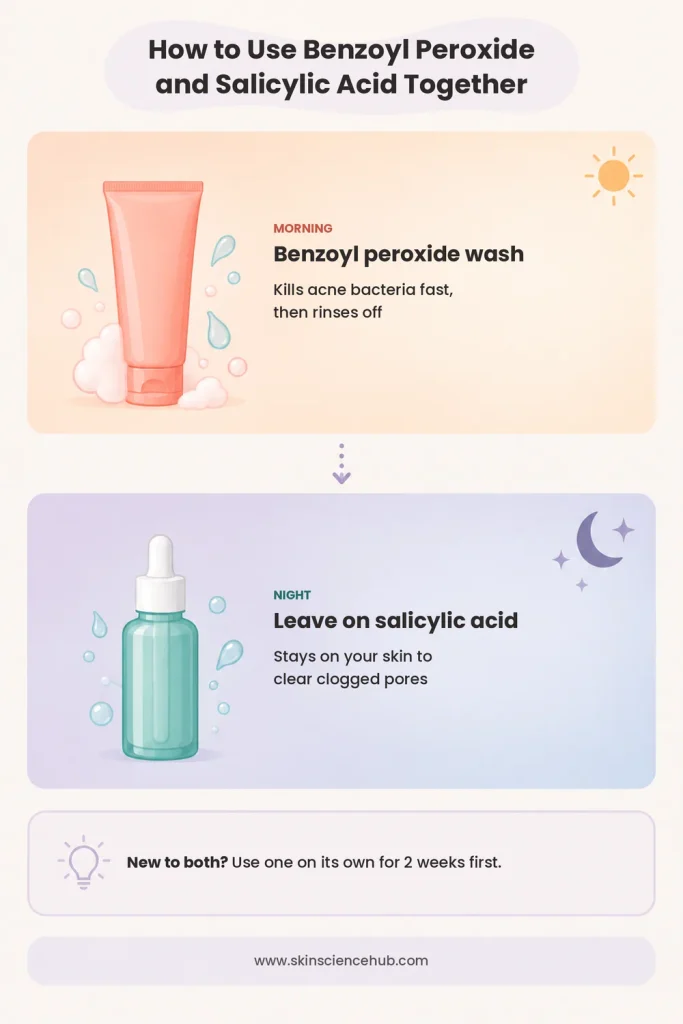
Yes, and if you have blackheads and inflamed pimples at the same time, using both makes sense. They clear acne in different ways, and the American Academy of Dermatology recommends combining treatments that work through different mechanisms. The main risk is irritation, so to avoid it, don’t layer them on the same skin at once. If you’re new to both, use one on its own for at least two weeks, and only add the second once your skin no longer feels dry or stings. Then choose one of these three approaches.
- Split them by time of day. In the morning, use a benzoyl peroxide wash. At night, use a leave on salicylic acid product. This way, each ingredient is used in the format where it works best.
- Alternate by day. Use one ingredient today and the other tomorrow.
- Split them by area. Apply benzoyl peroxide to inflamed pimples and salicylic acid to blackheads and whiteheads.
If your skin feels irritated, drop back to one ingredient until it settles.
How Long Do Benzoyl Peroxide and Salicylic Acid Take to Work?
Most acne treatments take 6 to 8 weeks to show results, so give either ingredient 12 weeks of steady use before deciding it isn’t working. New bumps in the first few weeks don’t always mean it’s failing, as they can be purging or irritation. Our purging vs breakout guide walks through how to tell them apart.
If nothing has changed after 12 weeks, the ingredient may be the wrong fit for your acne type. For example, benzoyl peroxide may work better if you’ve been using salicylic acid on red, inflamed pimples. If neither one suits your skin, azelaic acid is worth a look, since it treats breakouts and fades dark marks. Our azelaic acid vs salicylic acid guide compares the two.
Neither benzoyl peroxide nor salicylic acid fades the dark or red marks that breakouts leave behind, and neither can repair true acne scars, which need professional treatment. For marks, our guide to the best ingredients for fading hyperpigmentation covers what works.
See a dermatologist if over the counter products haven’t helped after 12 weeks, or if you have cysts or nodules that could scar. A dermatologist can pinpoint what’s causing your acne and prescribe stronger treatments.