

Hydrating vs Moisturizing: Which Does Your Skin Need?
Last updated on September 28th, 2026
No, hydrating and moisturizing are not the same thing, although product labels often use the words as if they were. Hydrating draws water into your skin, while moisturizing keeps that water from escaping, and your skin needs both to stay soft and comfortable.
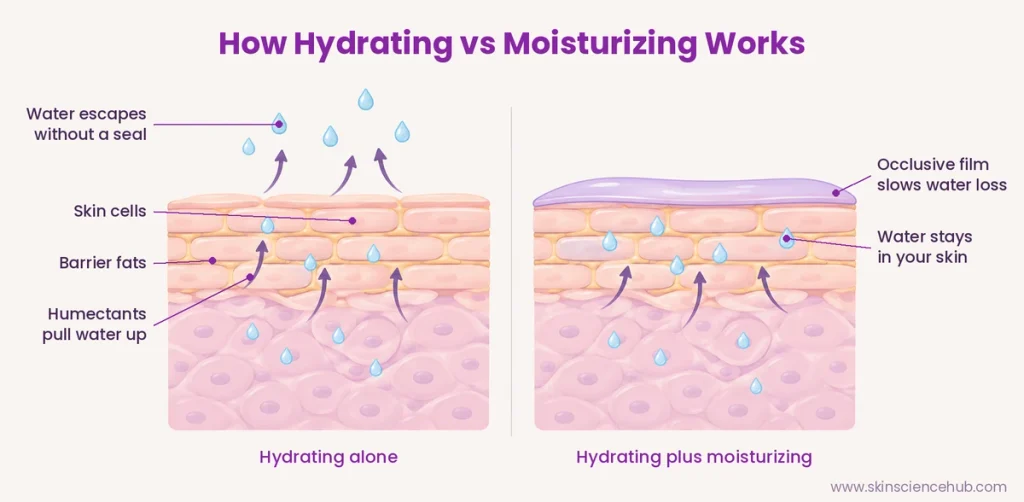
Think of hydrating as watering a plant and moisturizing as the mulch around it that stops the soil from drying out. As a pharmacologist, I see the same logic in the chemistry. Humectants draw water from the deeper layers of your skin into the outer layer, and occlusives form a film on the surface that slows water loss.
In this guide to hydrating vs moisturizing, you will find the key differences, the signs your skin needs more of one, which products and ingredients do each job, and the order to apply them.
The Difference Between Hydrating and Moisturizing at a Glance
Many moisturizers contain hydrating ingredients too, so this table sorts each ingredient by the job it does best
| Hydrating | Moisturizing | |
|---|---|---|
| Main job | Draws water into the outer layer of your skin | Slows water loss from the surface of your skin |
| Ingredient types | Humectants | Emollients and occlusives |
| Common ingredients | Glycerin, hyaluronic acid, sodium PCA, urea, panthenol | Ceramides, squalane, fatty alcohols, petrolatum, dimethicone |
| Typical products | Serums, hydrating toners, essences | Lotions, creams, gel creams, balms, facial oils |
| Best match for | Dehydrated skin, including oily skin | Dry skin and a weakened barrier |
| Signs your skin may need it | Tightness, dullness, fine lines that look deeper than usual | Flaking, rough patches, skin that feels uncomfortable hours after your routine |
| Order in your routine | Before your moisturizer | After your hydrating products |
What Does Hydrating Your Skin Mean?
Hydrating your skin means raising the water content of its outer layer, called the stratum corneum. When this layer runs low on water, your skin looks dull and feels tight, even after a good night’s sleep.
Each cell in this outer layer holds natural moisturizing factor, a mix of amino acids, salts, and other small molecules that bind water. Harsh cleansers wash this supply away.
Hydrating products top it back up. Humectants such as glycerin and hyaluronic acid pull water from the deeper layers of your skin into the outer layer. Once those cells have enough water, they stay flexible, so your skin feels soft and fine lines look less noticeable. The enzymes that shed old cells also need water, so hydrated skin sheds evenly and looks smooth.
Oily skin can be dehydrated too. Your glands can make plenty of oil while the outer layer still lacks water. My guide to dry vs dehydrated skin explains how to tell the difference.
What Does Moisturizing Your Skin Mean?
Moisturizing your skin means slowing down the water it loses through its surface. When your skin can’t hold on to its water, it turns rough and flaky and feels uncomfortable a few hours after your routine.
The cells in your outer layer stack like bricks, and fats called ceramides, cholesterol, and fatty acids fill the spaces between them like mortar. Together, they form a seal that keeps water inside your skin. Harsh cleansers strip away these fats, and hot water makes your skin lose water faster.
Moisturizing ingredients work in 2 ways. Emollients, such as squalane and ceramides, fill the rough spaces between surface cells, so your skin feels smooth and soft. Occlusives, such as petrolatum and dimethicone, form a thin film on top that slows water loss.
In dermatology, humectants count as moisturizing ingredients too, and most moisturizers include them.
Which Is Better, Hydrating or Moisturizing?
Neither is better. Your skin needs water and a way to keep it, so hydrating and moisturizing work best together.
If you only want to use one product, choose a moisturizer. Most contain humectants such as glycerin, so a single cream can hydrate your skin and seal that water in at the same time.
A separate hydrating serum helps when your skin needs extra water, such as in dry weather or when your skin feels tight despite your usual moisturizer.
How Do You Know If You Need Hydration or Moisturizer?
Dehydration is a lack of water, while dryness is a lack of the fats that hold water in. Your skin can have one or both, and each shows different signs.
Your skin may need more hydration if it
- Feels tight after cleansing, even with a gentle cleanser
- Looks dull, even after a good night’s sleep
- Shows fine lines that look deeper than usual
- Makes your makeup look patchy
- Feels oily on the surface yet tight underneath
Your skin may need more moisture if it
- Feels rough to the touch
- Has flaky or scaly patches
- Feels uncomfortable a few hours after your routine
Oily skin often shows only the first list. Dry skin often shows both, because its weaker seal lets water escape faster.
If your skin leans toward the first list, add a hydrating serum under a light lotion or gel moisturizer. If it leans toward the second, choose a richer cream with ceramides or petrolatum, and add a hydrating serum underneath whenever your skin feels tight.
If flaking, redness, or stinging continue after a few weeks of gentle care, see a dermatologist, because conditions like eczema or rosacea can look similar.
Hydrator vs Moisturizer: Which Products Do What
A hydrator adds water to your skin, and a moisturizer keeps that water in. The format usually tells you which one you have.
Hydrators
- Hydrating serums pack a high dose of humectants into a light, watery base.
- Hydrating toners add a first layer of humectants right after you cleanse.
- Essences sit between toners and serums in texture and give your skin extra humectants before heavier products.
Moisturizers
- Lotions contain more water and less oil than creams, so they feel light and spread easily.
- Creams are thicker, with more emollients and occlusives for a stronger seal.
- Gel creams feel light and contain plenty of humectants, so they hydrate as well as seal.
- Balms are mostly occlusive, so they protect very dry or chapped areas.
- Facial oils soften and seal, and they work best over a hydrating layer.
Names like “hydrating cream” and “moisturizing cream” come from marketing, so check the ingredient list when you shop. Water usually comes first, so look at the next few ingredients. Glycerin or sodium hyaluronate high on the list means the product leans hydrating, while petrolatum, dimethicone, shea butter, or plant oils high on the list mean it leans moisturizing.
Hydrating vs Moisturizing Ingredients
Hydrating and moisturizing ingredients fall into 4 groups, based on the job each one does.
Humectants: The Hydrating Ingredients
Humectants attract water from the deeper layers of your skin and, in humid weather, from the air. Some of that water escapes through the surface. That’s why humectants work best when you layer a moisturizer over them.
- Glycerin is the most effective humectant, and you’ll find it in most moisturizers.
- Hyaluronic acid holds large amounts of water, which makes your skin feel softer and look smoother soon after you apply it. Labels often list it as sodium hyaluronate.
- Sodium PCA is one of the water binding molecules your skin already makes, so applying it tops up your natural supply.
- Urea hydrates your skin and softens rough, flaky patches.
- Panthenol, a form of vitamin B5, improves hydration and calms redness.
Emollients: The Smoothing Ingredients
Emollients fill the rough spaces between flaking surface cells, making your skin feel soft and smooth right away.
- Ceramides are the same fats that fill the spaces between your skin cells, so applying them helps rebuild a weakened barrier.
- Squalane is a stable form of squalene, an oil your skin makes naturally, and it feels light and rarely clogs pores.
- Fatty alcohols such as cetyl and stearyl alcohol are gentle, waxy fats that soften your skin and give creams their smooth texture.
Occlusives: The Sealing Ingredients
Occlusives form a film on your skin that physically slows water loss, and they work best on slightly damp skin.
- Petrolatum is the most effective occlusive available. At just 5%, it cuts water loss by more than 98%, which makes it a strong choice for very dry or damaged skin.
- Dimethicone is a silicone that forms a light, silky film, which feels comfortable on oily and combination skin.
Barrier Supporters: The Rebuilding Ingredients
Niacinamide helps your skin make more of its own ceramides and other barrier fats, and a study found it lowers water loss in dry skin. With regular use, your skin gets better at holding water on its own.
My guide sorts every hydrator and moisturizer by what it does, from hyaluronic acid to ceramides and urea.
Should You Hydrate or Moisturize First?
Hydrate first, then moisturize. Your hydrating serum or toner goes directly onto your skin so its humectants can pull water in, and your moisturizer goes on top to seal that water inside.
Apply the rest of your routine from the most watery product to the most oily. Facial oils go on after your moisturizer, and in the morning, sunscreen goes on last.
Apply your hydrating serum to damp skin, then smooth on your moisturizer before the serum fully dries, because moisturizers seal in the most water on slightly damp skin.
For the full order with actives like vitamin C and retinol, read my skincare layering guide. If your skin needs extra water, my guide to skin flooding shows you how to layer several hydrating products at once.
How Climate and Seasons Affect Hydration and Moisture
Your skin holds more water in warm, humid weather than in cold, dry weather. That’s why your routine works best when it shifts with the seasons.
In summer and humid climates, humectants have plenty of water in the air to draw from, and your skin makes more oil. A hydrating serum under a light lotion or gel cream usually covers what your skin needs.
Winter brings the opposite. One study found that cheek skin held the least water and lost it fastest in winter, as cold air and indoor heating both dry the air around you. At night, seal your moisturizer with a thin layer of petrolatum, a technique known as slugging, and wash with lukewarm water, because hot water speeds up water loss. The same routine suits dry climates all year. For more cold weather advice, read my winter skincare tips for dry skin.
Air conditioning dries indoor air as well. On long office days, a hydrating mist with glycerin tops up your skin, and a thin layer of moisturizer afterwards keeps that water in.
The Bottom Line
Hydrating and moisturizing do 2 different jobs. Hydrating adds water to the outer layer of your skin, while moisturizing seals that water in.
Most people get the best results from both, so use a hydrating serum first, then a moisturizer over it. If you prefer a single product, a moisturizer that contains glycerin can do both jobs. In summer, or if your skin is oily, choose a lighter texture. In winter, or if your skin is dry, choose a richer cream. Matching your products to the season helps keep your skin comfortable all year.

