
Collagen Treatments and Supplements That Actually Work
Last updated on June 23rd, 2026
Collagen supplements are all over the place. You see them at the drugstore, in your Instagram feed, and from influencers who swear they fixed their skin. Professional treatments make even bigger promises, and they come with a much bigger price tag.
Most supplements on shelves right now don’t hold up well against the research, because they usually use the wrong type of collagen or don’t include enough of it to make a difference. Professional procedures do better. For example, microneedling, red light therapy, and a few other treatments have solid research behind them. None of this means collagen itself is useless. It means most companies oversell what their product can do. As a pharmacologist, I dug into the clinical evidence on both sides. The oral supplement research includes a 2025 review of 23 studies and nearly 1,500 people.
Below, you’ll find which professional treatments are worth your money, and which collagen supplements have evidence behind them. You’ll also get a realistic timeline for results from either.

What’s Damaging Your Collagen
Collagen is the protein that holds your skin together, keeping it firm and elastic.
From age 25, you lose about 1% of your collagen every year. By 50, you’ve lost roughly a quarter of what you started with. But time isn’t the only culprit.
Sun exposure activates enzymes that break down collagen. Stress does the same. Poor sleep and environmental pollution speed up the breakdown further, so you end up losing collagen faster than your body can replace it.
You’ll see this show up as wrinkles, thinner skin, and a loss of firmness. To boost collagen, you need to know what damages it and how to support it, whether through diet and lifestyle or the right skincare products. Collagen treatments and supplements can take things further, and collagen supplements are debated, so we’ll cover the evidence on both next.

Professional Collagen Stimulating Treatments
Professional treatments work differently from anything you eat or apply to your skin. They don’t add collagen from outside. Instead, they stimulate your skin to make more of its own, which is why these six options are grouped together as collagen stimulating treatments.
1. Microneedling (Collagen Induction Therapy)

Professional microneedling uses tiny needles to create thousands of small wounds in your skin. This triggers your body’s healing response, flooding the area with growth factors that tell your skin to make more collagen. That is why the procedure is also called collagen induction therapy, or CIT. Those same growth factors boost elastin production too. The needles also create small channels that let serums sink in deeper.
Professional devices are set to the right depth for your specific concern, whether that’s acne scars, wrinkles, or stretch marks. Most people see some redness for 1 to 3 days, which is the only downtime involved.
At-home devices can’t reach the same depth as professional tools. They also carry a higher risk of improper sterilization. So stick with a professional instead of trying this yourself.
2. RF Microneedling (Morpheus8)

RF microneedling combines two treatments into one. The needles look like standard microneedling pins, but they’re insulated so they can also deliver radiofrequency energy to a set depth once they’re in your skin. You get the wound-healing collagen response from the needling, plus the RF’s own effect: the heat tightens existing collagen right away and signals your skin to make more of it over the following weeks.
Morpheus8 is the best-known device in this category, though other brands offer the same combination. Because the RF energy reaches deeper than needling alone and adds a tightening effect that plain microneedling doesn’t have, this treatment works especially well for skin laxity, along with wrinkles and scarring.
RF microneedling comes with more downtime than standard microneedling, because the added heat means more redness and swelling. Expect three to five days, and plan on a series of three sessions spaced 4 to 6 weeks apart for full results.
3. Red Light Therapy
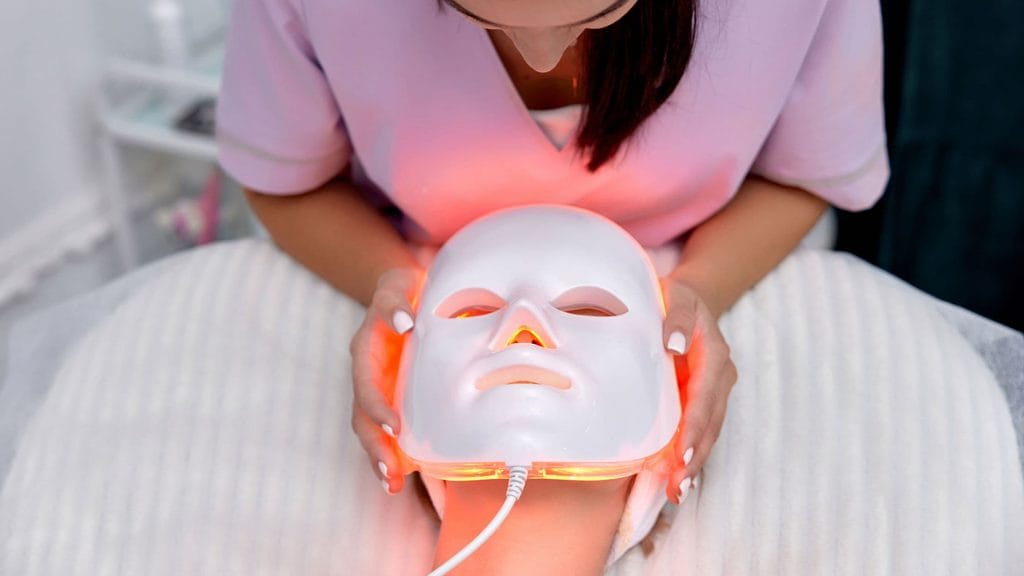
Red light therapy uses two wavelengths: red light around 660 nanometers and near-infrared light around 850 nanometers. Both penetrate your skin and power up your cells, giving them more energy to produce Type I collagen while reducing an enzyme that breaks collagen down.
Red light reaches a few millimeters into your skin, where it hits the collagen-producing cells in the upper dermis. Near-infrared goes deeper, so together the two treat fibroblasts throughout the full depth of your skin, not just the surface layer.
Professional treatments deliver stronger results, though at-home LED masks work too if you use them consistently.
4. Radiofrequency

Plain radiofrequency treatments send heat through your skin’s surface to reach the dermis underneath, with no needles involved. Devices like Thermage heat the dermis enough to make existing collagen fibers contract and tighten right away, then trigger a wound-healing response that builds fresh collagen over the following 3 to 4 months.
Most people find it comfortable, closer to a warm massage than a medical procedure, with no downtime. It works well for firming your jaw and neck.
5. Chemical Peels
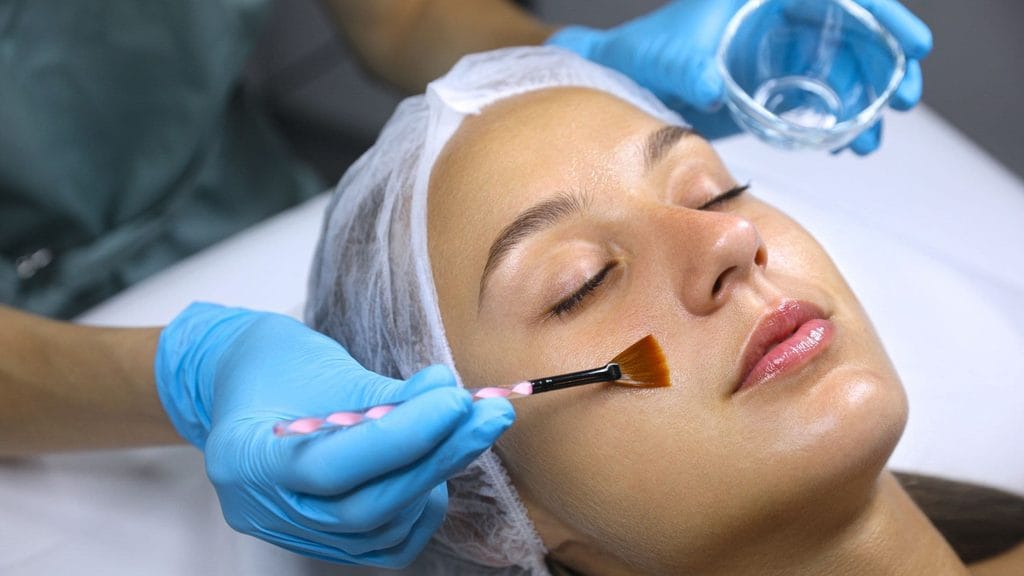
Chemical peels use acids to remove your skin’s outer layers. This starts a wound-healing response that builds new collagen.
Superficial peels use acids like glycolic or salicylic acid, leaving your skin red for a few days, like a mild sunburn. If you’d rather start at home, I’ve got a full guide on doing chemical peels safely yourself. Medium peels use a stronger acid, TCA, which goes deeper into your skin to treat sun spots, acne scars, and moderate wrinkles, with roughly a week of downtime. Deep peels use phenol and take weeks to heal. Even so, they can smooth severe wrinkles and scarring.
6. Injectable Collagen Stimulators
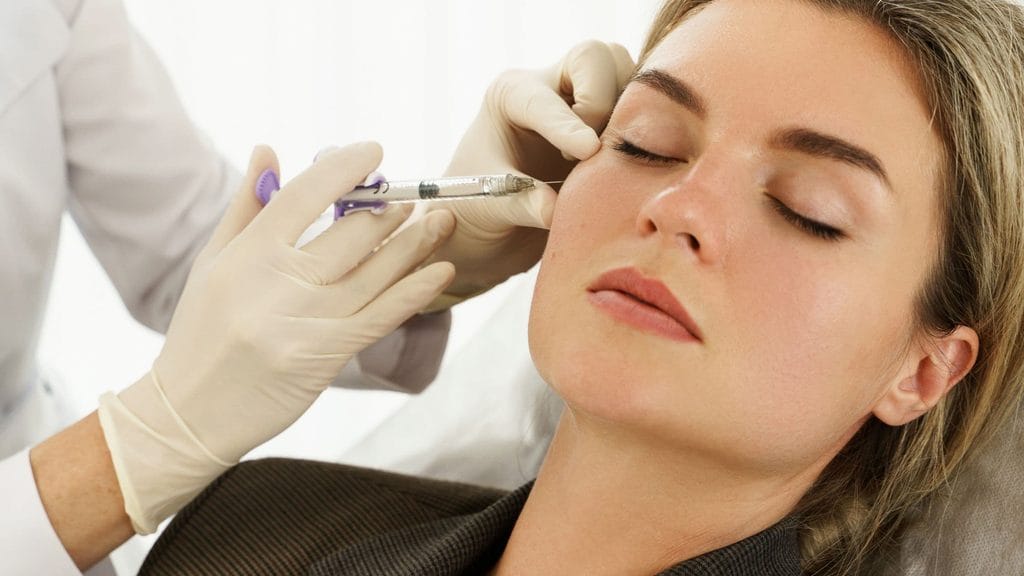
Sculptra and Radiesse both work by getting your body to build new collagen around the injected material, but they don’t behave the same way. Radiesse gives you immediate volume from its own gel base, in addition to the collagen it triggers over the following months, while Sculptra doesn’t plump your skin right away. Any plumpness right after the injection comes from the fluid itself and fades within days. The lasting improvement builds gradually over 2 to 3 months as your body produces new collagen around it.
Radiesse’s results typically last about 12 months. Sculptra results can last up to 24 months.
Sculptra requires a series, typically 2 to 3 sessions spaced weeks apart, because its effect builds gradually with each treatment. Radiesse usually needs just one or two. Either way, find an injector who truly understands facial anatomy. Their skill makes a big difference in how natural your results end up looking.
Do Collagen Supplements Work?
Collagen supplements can help, but the research is still limited.
When you take collagen supplements, you’re not swallowing regular collagen. You’re taking hydrolyzed collagen peptides, which are pre-digested fragments small enough for your body to absorb. Most proteins break down completely in your stomach, but some collagen-derived peptides survive digestion and reach your bloodstream. What happens after that isn’t as clear. Researchers still can’t fully explain how, or even whether, these peptides make their way to your skin and tell it to produce more collagen.
But even without knowing exactly how it works, researchers have tested its effects on people. A 2025 review in The American Journal of Medicine looked at 23 studies with 1,474 people. Most individual studies gave people between 0.5 and 10 grams of hydrolyzed collagen daily for 8 to 12 weeks. Together, they showed improvements in skin hydration, elasticity, and wrinkles.
That combined result isn’t spread evenly, though. It depends a lot on which type of collagen you take, and how you take it. For instance, fish collagen showed improvements in hydration, elasticity, and wrinkles, while bovine and chicken collagen didn’t show the same effect, though only a handful of studies tested them. The form made a difference too: drinks improved hydration and elasticity but not wrinkles, while pills and powder only improved elasticity.
The Problems With Current Research
Studies used different methods, so it’s hard to draw one clear conclusion. Dosages ranged from 0.5 to 10 grams a day. The type of collagen varied too: some studies used fish, others used bovine or chicken, and a few didn’t name a source. Delivery method varied as well, with some giving people liquid drinks and others using pills or powder.
The sample itself also has limits. Seventeen of the 23 studies came from just three countries: Korea, Japan, and China.
Marine vs Bovine vs Chicken: The Best Type of Collagen for Your Skin

The type of collagen you choose changes your results. The studies covered earlier showed fish collagen improving hydration, elasticity, and wrinkles, while bovine and chicken collagen didn’t show the same effect.
Marine collagen, which comes from fish, has a smaller molecular structure than bovine or chicken collagen, which makes it easier for your body to absorb. Fish collagen is mostly Type I, the type your skin needs to stay firm and elastic. It’s also less likely to be contaminated than collagen from land animals.
Bovine collagen contains both Type I and Type III, so it works better for joints and bones than for skin. Chicken collagen is mostly Type II, which helps cartilage but doesn’t do much for your skin.
If you want collagen for your skin, look for hydrolyzed marine collagen and aim for 2.5 to 10 grams per serving. Timing doesn’t seem to matter much, so don’t worry about taking it on an empty stomach. What counts is taking it consistently every day for 8 to 12 weeks before you decide if it’s working.
A few example products that meet that bar are:


One tablespoon of collagen powder is about 10 grams. You can mix it into smoothies, shakes, soups, coffee, or tea.
Common Collagen Myths
- Myth: Collagen creams can rebuild your skin’s collagen. Truth: collagen molecules are too large to absorb into your skin, so these products mostly just moisturize. They can’t deliver collagen where you need it.
- Myth: Gelatin and hydrolyzed collagen are the same thing. Truth: your body absorbs hydrolyzed collagen faster and more completely than gelatin. Gelatin’s larger molecules take longer to break down, so less of it reaches your bloodstream.
- Myth: Bone broth has way less collagen than supplements. Truth: it doesn’t necessarily have less, it’s just inconsistent. A good homemade batch can contain 6 to 12 grams per cup, close to a supplement dose. Store-bought versions vary widely, sometimes dropping to just 1 gram. It’s also gelatin, so the same absorption difference from Myth 2 applies here.
- Myth: Any collagen supplement works as long as it lists collagen on the label. Truth: many cheap ones use inadequate doses or forms your body can’t absorb well. You need at least 2.5 grams of hydrolyzed peptides, not 500 milligrams of random collagen powder.
Does Collagen Help Hair and Nails?
We don’t have much research on collagen for hair and nails, and the little that exists comes with caveats.
For nails, there’s one specific finding. A 25-person trial gave women 2.5 grams of hydrolyzed collagen daily for 24 weeks. It found a 12 percent increase in nail growth rate and a 42 percent drop in broken nails. However, this was an open-label study with no placebo group. That means we can’t rule out how much of that improvement would have happened without the supplement.
Hair is trickier to figure out, because hair is made of keratin, not collagen. Collagen supports the tissue around your hair follicles, but it’s not clear whether supplements help. One study on women with telogen effluvium, a hair-shedding condition, found that a mix of hydrolyzed collagen, amino acids, vitamins, and minerals improved hair density and also improved the ratio of growing to shedding hair. The study also tested a collagen-only product. That full mix still worked better, which suggests the other nutrients helped too, not just the collagen.
If you’re losing hair, you’re better off addressing the root cause, whether that’s stress, missing nutrients, or hormones. Collagen supplements alone won’t do much for that.
Safety and Side Effects
Supplements
Collagen supplements are safe for most people, with few side effects. Some people get an upset stomach, heartburn, or headaches. If you’re allergic to fish, beef, or pork, check the source of your supplement carefully before you start.
We don’t have safety data for pregnant or breastfeeding women, so talk to your doctor first.
Supplements aren’t regulated like medications, so quality varies widely. Look for third-party certified products that verify what’s in the bottle.
Treatments
Most treatments are low-risk with a qualified professional, but there are a few things to know.
Avoid microneedling if you have active acne, cold sores, or keloid-prone skin, since needling can worsen any of these. Also avoid it if you take blood thinners, which raises your bleeding risk during the procedure.
Avoid RF and RF microneedling if you have a pacemaker, another electronic implant, or metal in the treatment area. The energy can interfere with implants or cause burns near metal.
Medium and deep chemical peels can cause post-inflammatory hyperpigmentation, which means dark patches that form as skin heals. This happens more often in darker skin tones. If that’s you, ask your provider about a lower-strength option, and see the peel guide linked earlier for more.
Injectable collagen stimulators have one rare but serious risk: vascular occlusion, which happens when filler enters a blood vessel instead of the surrounding tissue. This can cause tissue damage or, rarely, vision loss. Watch for unusual pain, paleness, or skin that doesn’t return to color after you press on it, and get medical attention right away.
Bottom Line
To boost collagen effectively, start with the basics: daily sunscreen, good sleep, less stress, and a vitamin C or retinoid in your routine. This is the foundation.
Afterwards, you can add a supplement, hydrolyzed marine collagen, at 2.5 to 10 grams a day. When you’re ready for more, professional treatments like microneedling, chemical peels, or injectables are the next step.
Collagen care builds over months, not days.