Winter Skincare Routine for Dry Skin
Last updated on April 9th, 2026
Cold weather can cause real barrier damage if you don’t take your winter skincare routine seriously. When cold air settles in and humidity drops, water gets pulled right out of your skin through transepidermal water loss, and your protective barrier starts breaking down, leaving you with dry, tight, and reactive skin.
As a pharmacologist, I want to help you get ahead of that. What your skin needs in winter is a proper routine built around barrier repair, not a shelf full of new products. This guide walks you through exactly that.
And if your skin is combination or oily with dry patches in winter, this routine works for you too. The product recommendations cover a range of skin types throughout, so you can adjust as needed.

How Cold Weather Breaks Down Your Skin Barrier
Your winter skincare routine for dry skin starts with understanding why cold weather does what it does to your barrier. It’s made up of cells held together by natural fats called lipids, and that structure needs water to stay functional. Cold weather attacks it from two directions at once.
Outside, cold air holds almost no moisture, so water escapes from your skin faster than normal through a process called transepidermal water loss. Inside, central heating warms the air but strips it of humidity, so your skin keeps losing water even after you’ve come indoors. You’re moving between these two environments all day, and your barrier takes the hit each time.
As those lipids break down, your skin loses water even faster, and irritants that would normally be blocked start slipping through. That’s what causes the tightness, flaking, cracking, and sensitivity that show up every winter.
Barrier damage is reversible, but you need to stop the things that are making it worse before repair can actually happen. That’s what this routine does.
The first step has nothing to do with products because the damage starts before you even reach for your cleanser.
Step 1: Shower Smart
The most important thing you do after your shower is apply your moisturizer while your skin is still slightly damp. Water starts evaporating the moment you step out, and moisturizing at that point traps it before it escapes. If you wait until your skin is completely dry, you’ve already lost that window.
But what happens inside the shower affects how much moisture you have left to trap. Hot water melts away the lipids that hold your skin barrier together, and winter is already doing that. I’ll be honest with you, I don’t always follow this advice because standing under scalding hot water when it’s freezing outside feels wonderful. But keep your showers under 10 minutes, use warm water instead of hot, and a quarter-sized amount of body wash is enough.
Product recommendations:
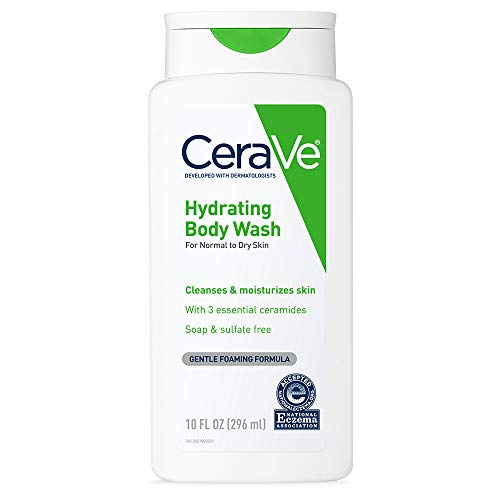
For body wash, CeraVe Hydrating Body Wash has ceramides and hyaluronic acid that cleanse without stripping, so your skin holds onto moisture from the moment you step out.
For a damp-skin moisturizer, Eucerin Advanced Repair Body Lotion absorbs quickly on damp skin and has ceramides and natural moisturizing factors that lock in moisture before it escapes, so your body stays hydrated throughout the day.