Retinoids vs Retinol: Which Should You Use?
Last updated on July 16th, 2026
You’ve probably been hearing about retinol for months, maybe years. Your dermatologist recommends it. Your favorite influencer swears by it. But then someone mentions “retinoids” and suddenly you’re not sure if they’re talking about the same thing or something completely different.
They’re not the same, and understanding the difference before you buy anything can save you real time and money. Most people grab one without really understanding what they’re holding or how it works, and that costs them results.
As a pharmacologist, I get asked this constantly, and the answer changes what you buy and how you use it. So let me walk you through what retinoids vs retinol actually are, where tretinoin, retinaldehyde, and adapalene fit in, and how to choose the right option for your skin.
What Are Retinoids?
Retinoid is the umbrella term for all vitamin A derivatives used in skincare. Think of it like the word “car.” Cars include sedans, SUVs, and sports cars, all different in power and purpose but still cars. Retinoids work the same way. They all come from vitamin A, but they vary widely in strength, formulation, and how your skin processes them.
What do retinoids do for your skin?
1. They speed up cell turnover. Your skin naturally sheds dead cells every 28 to 40 days, but after age 30 that process slows down. Retinoids bring it back up to speed, which is why they improve so many different skin concerns at once.
2. They build collagen and elastin, the proteins that keep your skin firm and elastic. Retinoids signal your cells to produce more of both, and that’s why they reduce fine lines and wrinkles more effectively than most ingredients you can buy without a prescription.
3. They clear acne. Retinoids work at the root of the problem by preventing dead skin cells from sticking together inside pores, which stops blockages before they form. They also consistently outperform most OTC acne treatments in clinical studies, which makes them worth considering even if you’ve tried other things without much success.
4. They fade dark spots. Retinoids fade hyperpigmentation from sun damage, melasma, and old acne marks by speeding up cell turnover. Studies consistently back this up, and people with significant pigmentation concerns often notice results early on, sometimes before the anti-aging effects become visible. Read more on Retinol for hyperpigmentation.
5. They protect existing collagen by blocking the UV-triggered enzymes that break it down. So you’re not just building new collagen, you’re preserving what you already have.
Why Tretinoin Is the Gold Standard
It started in the 1960s with Dr. Fulton and Dr. Kligman, who were treating acne patients with tretinoin. Beyond clearing acne, they noticed something unexpected. Patients were reporting fewer wrinkles, firmer skin, and smoother texture overall. They brought these findings to the FDA, which has since acknowledged that tretinoin reverses signs of aging and photodamage. Tretinoin remains the only ingredient the FDA approves as an active for reversing signs of aging. That distinction has held for decades, and no other ingredient has come close to challenging it.
Today, retinoids are the gold standard for treating acne, wrinkles, sun damage, and dark spots.
What Is Retinol?
Retinol is a specific type of retinoid. That’s where the confusion starts.
All retinols are retinoids, but not all retinoids are retinol. Think of it this way: retinoid is the family name, and retinol is one member of that family. An important member, but still just one of several.
Retinol is what you find in over-the-counter products at drugstores, Sephora, or online. Browse any skincare aisle and you’ll recognise it in products from Neutrogena, CeraVe, The Ordinary, and La Roche-Posay.
So why is retinol so popular? It’s accessible because you don’t need a prescription to buy it. It works because when formulated properly, retinol improves wrinkles, sun damage, and texture. And it’s gentler than prescription retinoids, which makes it easier to tolerate, especially when you’re just starting out.
Retinol is classified as a cosmetic ingredient, not a medication. So if you’re dealing with acne, rosacea, or melasma, over-the-counter retinol may not be enough. Those conditions often need prescription-strength options, and a dermatologist can point you in the right direction.
Differences Between Retinoids and Retinol
Four things separate retinoids from retinol. Understanding each one helps you choose the right option and set realistic expectations before you start.
1. Conversion Process and Potency
Every retinoid works the same way. Your skin converts it into retinoic acid, which is the form your cells can actually use. The difference is how many steps that conversion takes.
Retinyl esters → Retinol → Retinaldehyde → Retinoic acid
The diagram above shows the full pathway. Tretinoin skips it entirely because it is already retinoic acid. Fewer steps means faster results but more irritation. More steps means slower, gentler, and easier to tolerate.
| Type | Strength | Available Without Prescription | Best For |
|---|---|---|---|
| Retinyl esters | Weakest | Yes | Maintenance, sensitive skin |
| Retinol | Mild | Yes | Beginners, prevention |
| Retinaldehyde | Moderate | Yes | Those who need more than retinol |
| Adapalene | Moderate to strong | Yes (0.1%) | Acne-prone skin |
| Tretinoin | Strongest | No | Severe acne, deep wrinkles, sun damage |
2. Over-the-Counter vs Prescription
Retinol is over the counter. You can pick it up at any pharmacy, drugstore, or online without a prescription.
Prescription retinoids need a dermatologist visit. The main options are tretinoin (Retin-A, Renova), the gold standard, tazarotene (Tazorac), used for acne and psoriasis, and trifarotene (Aklief), which is newer and FDA-approved for acne.
Adapalene (Differin) sits in its own category. It’s available over the counter at 0.1% strength, yet it’s an FDA-approved medication for acne that also improves collagen production. It’s less irritating than tretinoin and more effective than standard retinol, which makes it a genuinely useful option if you’re not ready for a prescription.
3. Types From Weakest to Strongest
The table above gives you the overview. But a few of these deserve more context because the label alone won’t tell you everything you need to know.
Retinyl esters are weaker than most people realise. If retinyl palmitate or retinyl propionate is the only vitamin A ingredient on a label, the product is unlikely to deliver meaningful results.
Retinaldehyde is the one most people overlook, and that’s a shame because it sits right between retinol and tretinoin in terms of potency. It needs only one conversion step to become retinoic acid, compared to retinol’s two, which means your skin processes it faster and more efficiently. Studies show retinaldehyde is equally effective as tretinoin for reducing wrinkles and skin roughness, but with significantly less irritation and better patient compliance. If retinol has stopped delivering results but you’re not ready for a prescription, retinaldehyde is worth trying next. Look for it in products from Medik8 and Avene.
Tretinoin remains the most studied and most proven option across acne, sun damage, and dark spots. You do need a prescription to get it, and based on the evidence, that prescription is worth pursuing.
4. Strength, Timeline, and Side Effects
Prescription retinoids work faster, but faster doesn’t always mean better for your skin.
With retinol, expect 3 to 6 months before seeing visible improvements in wrinkles and texture. With tretinoin, you may notice improvements in acne within 6 to 12 weeks, although anti-aging benefits still take several months.
Starting too strong is the most common mistake I see. People jump straight to tretinoin, get overwhelmed by irritation, and quit within two weeks. Consistency is what gets results, and you can’t be consistent if your skin is too irritated to tolerate what you’re using. Starting lower and building up is almost always the smarter path.
Which One Should You Use?
Choosing between retinoids and retinol comes down to your skin type, your concerns, and how much irritation you’re willing to work through.
Which Retinoid Suits Your Skin Type
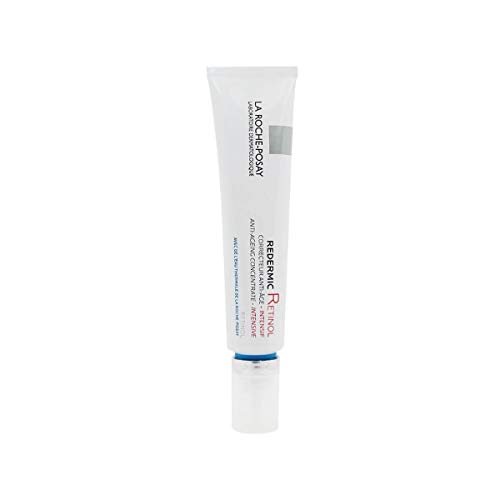
Sensitive or dry skin. Start with retinol. Look for formulations that pair it with hydrating ingredients like hyaluronic acid or ceramides, because these help buffer the irritation while your skin adapts. CeraVe Resurfacing Retinol Serum is a good starting point because the ceramide base actively supports your skin barrier as it adjusts. La Roche-Posay Redermic R works well too, particularly if your skin is dry.
If your skin is too sensitive even for standard retinol, there’s a dedicated guide on how to use retinol safely on sensitive skin that walks you through gentler approaches and alternatives worth considering.