What Is Retinaldehyde and How Does It Work on Skin
Last updated on July 16th, 2026
Retinaldehyde is a vitamin A derivative that sits one metabolic step away from retinoic acid, the active compound your skin uses to build collagen, accelerate cell renewal, and repair damage. Most retinoids need two or three conversion steps to reach retinoic acid. Retinaldehyde needs one.
As a pharmacologist, that single conversion step explains a lot. It becomes active faster than retinol, works at lower concentrations, and carries a direct antibacterial action that no other retinoid in this family has.
It fades dark spots, clears acne, firms skin, and smooths texture, and this guide covers everything you need to use it well, from how it works at a cellular level to what to realistically expect in the first few months.
What Is Retinaldehyde
You will see this ingredient listed two ways on product labels. Retinaldehyde is the full scientific name and retinal is the shortened version. They are the same molecule, and both names are correct.
Despite the similar name, retinal has nothing to do with your retina. They share a Latin root but are completely different things. The retina is tissue at the back of your eye. Retinaldehyde is a vitamin A molecule in your skincare.
Retinaldehyde took decades to reach store shelves because it degrades quickly in light, air, and heat. Encapsulation technology and airless opaque packaging solved that problem, and a well-formulated retinaldehyde serum now stays potent from the first use to the last.
How Retinaldehyde Works in Your Skin
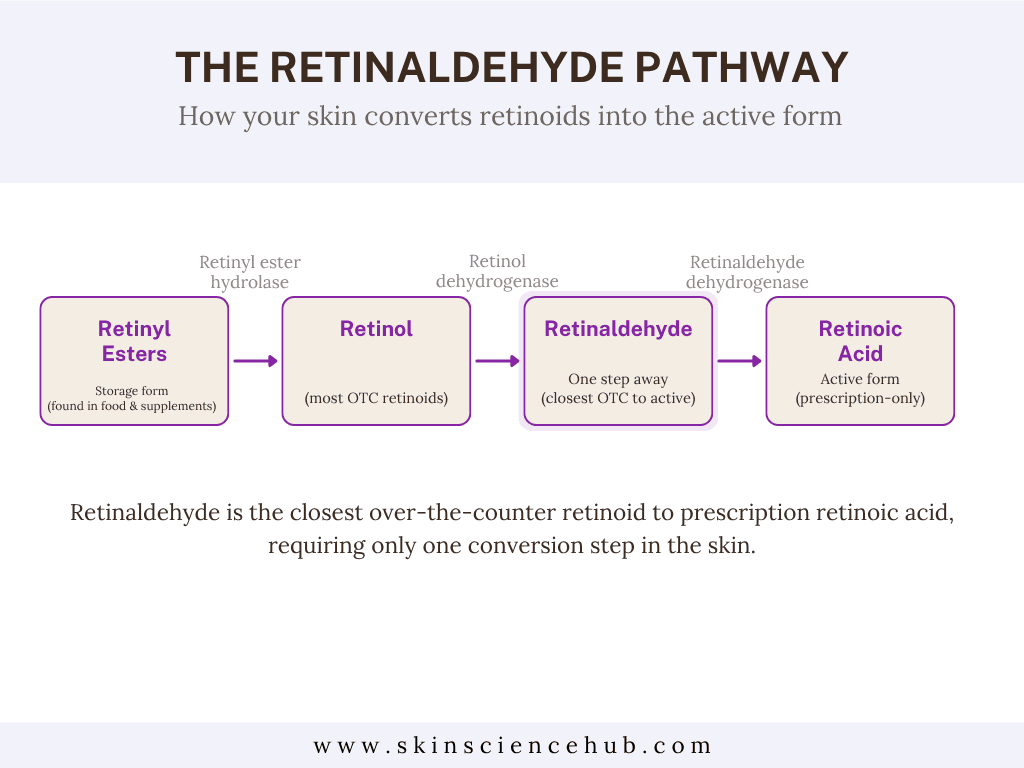
Your skin cells contain receptors that only respond to retinoic acid. When retinoic acid binds to these receptors, it switches on the genes responsible for collagen production and cell turnover. And every retinoid you apply must convert into retinoic acid first before any of that can happen.
Retinyl esters → Retinol → Retinaldehyde → Retinoic acid
Each arrow represents a conversion step inside your skin. The further a retinoid sits from retinoic acid, the more steps it needs, and the longer it takes for your skin to respond.
Retinyl esters, found in many basic moisturisers, sit furthest from the finish line and need three conversions. Retinol needs two. Retinaldehyde needs one.
Tretinoin skips the pathway entirely because it is already retinoic acid, which is why it acts fastest and requires a prescription.
Retinaldehyde sits one step away. That single conversion means your skin reaches its active state faster, and your results come sooner.
What Retinaldehyde Does for Your Skin
Retinaldehyde works on multiple skin concerns at once because it converts efficiently to retinoic acid, activating the cellular pathways responsible for collagen production, cell renewal, oil regulation, and inflammation control. Each benefit below reflects a different part of that mechanism.
1. Speeds Up Cell Turnover
Retinaldehyde accelerates the rate at which your skin sheds old, damaged cells and replaces them with new ones, so your complexion looks smoother, brighter, and more even with consistent use.
2. Builds Collagen and Firms Skin
It stimulates fibroblasts, the cells in your dermis responsible for producing collagen and elastin. With consistent use, fine lines soften and skin firms up noticeably.
3. Fades Dark Spots and Hyperpigmentation
By bringing fresh cells to the surface faster, retinaldehyde fades post-acne marks, sun damage, and uneven pigmentation. Give it two to three months and the difference becomes visible.
4. Reduces Sebum and Controls Oil
Retinoic acid signals your oil glands to slow down, and because retinaldehyde converts efficiently, it delivers that signal reliably. Your skin produces less oil over time.
5. Calms Inflammation
Retinaldehyde regulates immune cell activity in the skin, reducing the inflammatory response behind acne, rosacea, and other reactive conditions.
6. Fights Acne Bacteria
This one is unique to retinaldehyde. Its molecular structure gives it a direct antibacterial action that retinol and retinoic acid do not share. For acne-prone skin, that combination of cell turnover, oil control, inflammation reduction, and direct antibacterial action means retinaldehyde works on acne through multiple pathways at once.
How Retinaldehyde Compares to Other Retinoids
Retinaldehyde occupies a specific position in the retinoid family, and that position shapes how it performs and who it suits.
Retinaldehyde and Retinol
Both are vitamin A derivatives that follow the same conversion pathway to retinoic acid. The difference is how many steps each one needs. Retinol requires two conversions. Retinaldehyde requires one, which means it reaches its active form faster and works at lower concentrations. In a 12-week study, retinaldehyde achieved approximately 25 percent higher skin penetration than retinol, a 35 percent greater reduction in wrinkle depth, and a 22 percent improvement in skin elasticity.
Retinaldehyde and Tretinoin
Tretinoin is already retinoic acid and needs no conversion, which is why it works fastest and causes the most irritation. It also requires a prescription. Retinaldehyde sits one step behind it in the pathway and still delivers meaningful anti-aging and acne results, accessible without a prescription.
Retinaldehyde and Bakuchiol
Bakuchiol is a plant-derived ingredient that produces some retinoid-like effects through a different mechanism. It does not bind retinoic acid receptors or follow the vitamin A conversion pathway, so the cellular-level changes it drives are less direct. For skin that genuinely cannot tolerate any vitamin A derivative, you can use Bakuchiol instead.
What Concentration of Retinaldehyde Should You Use.
Most retinaldehyde products sit between 0.01 and 0.3 percent. Where you start depends on your skin’s history with retinoids, not the highest number available.
If you are new to retinoids or have sensitive skin, start at 0.01 to 0.05 percent. Your skin needs time to adjust to accelerated cell turnover, and a lower concentration gives it that time without unnecessary irritation.
Once your skin has settled in, 0.05 to 0.1 percent is the natural next step. Most people reach this range within a few months and notice visible changes in skin texture and tone without the irritation of starting too high.
Experienced retinoid users can move up to 0.1 to 0.3 percent for stronger outcomes. Build your tolerance first, and the higher concentrations will give you stronger, faster results.
In theory, a lower percentage of retinaldehyde is doing more work than the same percentage of retinol because it sits one step closer to retinoic acid, though human skin studies have not yet isolated the conversion step as the definitive reason for that difference.
How to Use Retinaldehyde in Your Routine
Retinaldehyde is an evening ingredient. It breaks down in sunlight and increases your skin’s sensitivity to UV damage, so save it for your night routine.
Before you apply, make sure your skin is completely dry. Damp skin absorbs retinaldehyde faster, which drives up irritation, so wait a few minutes after cleansing before you apply.
Once your skin is dry, use two to three drops or a pea-sized amount across your whole face, then follow with your moisturiser. Retinaldehyde speeds up cell turnover, which can leave skin temporarily drier than usual, and moisturiser keeps that dryness manageable while supporting your skin barrier.
When you are starting out, two or three nights a week is enough. Your skin needs time to build tolerance, so starting slowly gives it the adjustment period it needs. Increase gradually and move to nightly use when your skin feels comfortable.
And every morning, regardless of the weather, apply sunscreen. Retinaldehyde increases your skin’s UV sensitivity, and skipping it undoes what the retinaldehyde is working to build.
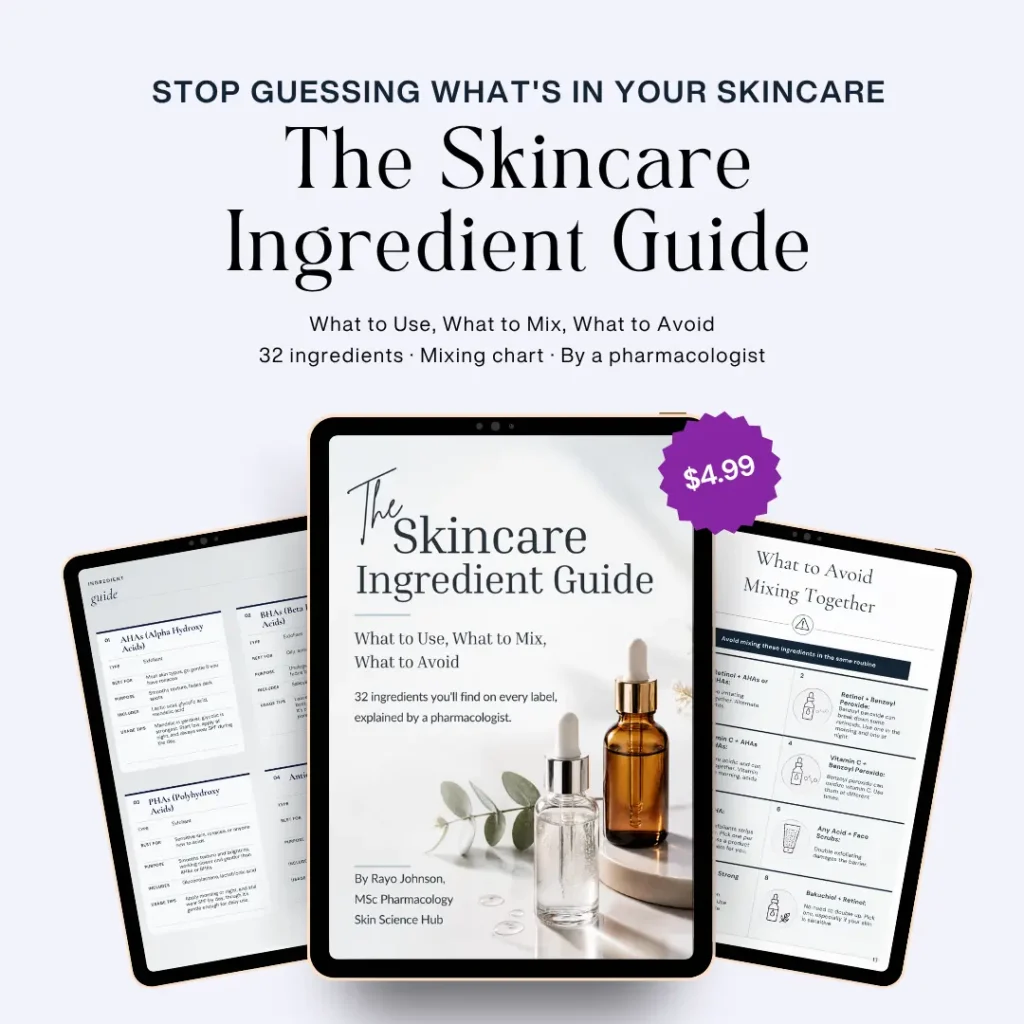
Whichever retinoid you choose, my guide shows you what to pair it with and what to split up.
How Long Does Retinaldehyde Take to Work
The first two weeks are quiet. Your skin is adjusting beneath the surface, and you may not notice much change yet. Some dryness or light flaking is normal during this period, and both are signs that cell turnover is picking up.
Around weeks four to six, the first visible changes begin. Texture starts to smooth out and skin looks more even. Some people notice a brief spike in breakouts at this point, and that is purging, not irritation. Retinaldehyde is accelerating cell turnover and pushing existing congestion to the surface. It clears.
By the two to three month mark, pigmentation starts to respond. Post-acne marks lighten and skin tone becomes more consistent as fresher cells continue reaching the surface.
By three to six months, the collagen-building work starts to show. Fine lines soften and the improvement builds steadily. Skin that looks good at three months looks noticeably better at six.
Your results depend on your concentration, consistency, and skin type, but this timeline holds for most people.
Retinaldehyde Side Effects, Safety and Who Should Avoid It
Most side effects from retinaldehyde are mild and temporary. In the first few weeks, you may notice redness, dryness, light flaking, or a brief tingling after applying, and these usually resolve within the first month as your skin adjusts.
Severe reactions are rare. If you experience persistent burning, intense peeling, or a worsening of an existing skin condition, stop and reassess your concentration or frequency. Starting at a lower concentration and building slowly prevents most of this.
Although retinaldehyde is more potent than retinol, it tends to cause less irritation for most people, likely because the more direct conversion pathway means fewer enzymatic steps and less opportunity for reactive byproducts. So if retinol has been too harsh for you, retinaldehyde is worth trying.
Some people, however, should avoid retinaldehyde entirely, regardless of concentration or how slowly they introduce it.
Pregnant and breastfeeding women – Avoid all retinoids, including retinaldehyde, during pregnancy and while breastfeeding. Vitamin A derivatives carry a risk of birth defects, primarily at the high doses used in oral retinoids. Topical use carries much lower risk, but the recommendation is still to avoid retinaldehyde entirely. Azelaic acid is effective for many of the same concerns and safe to use during pregnancy.
People with a compromised skin barrier – If your skin barrier is severely damaged, retinaldehyde will likely cause more irritation than benefit. Heal your barrier first, then introduce retinaldehyde once your skin can handle an active ingredient.
People already on prescription retinoids – If you are already using tretinoin or another prescription retinoid, adding retinaldehyde does not increase the benefit. You are already getting retinoic acid delivered directly, and layering retinaldehyde on top adds irritation without adding results
Best Retinaldehyde Products
Finding a well-formulated retinaldehyde product is harder than it sounds. The ingredient needs proper encapsulation and protective packaging to stay potent, and not every brand gets that right. These three consistently do.
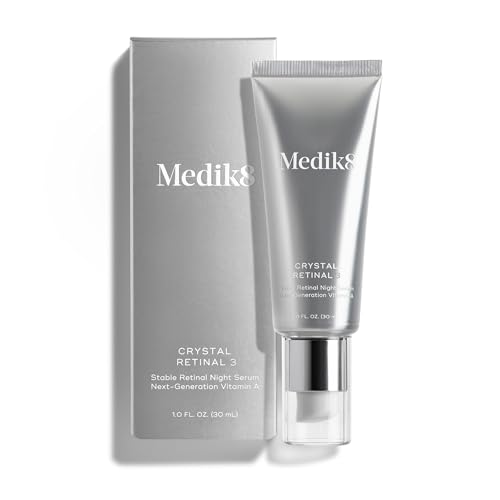
Medik8 Crystal Retinal 3 At 0.03 percent, this is where most people should begin with retinaldehyde. Medik8’s slow-release encapsulation and airless pump keep the molecule stable and potent from first use to last. Your skin builds genuine tolerance while still seeing real improvement in texture and tone.
Prequel Skin Retinal Renew Prequel pairs 0.1 percent retinaldehyde with ectoin and cica, two ingredients chosen specifically to keep inflammation low while the retinaldehyde works. The gel format suits oily and combination skin, and the barrier-supporting formulation means you stay consistent long enough to see results.

The Ordinary Retinal 0.2% Emulsion At 0.2 percent, this suits skin that is already tolerant to retinaldehyde. The lightweight emulsion layers easily, and for experienced users, it accelerates cell turnover and fades hyperpigmentation better than lower concentrations can.

Why Your Retinaldehyde Is Not Working
Most of the time, retinaldehyde is not the problem. How you use it is.
Using it inconsistently
Retinaldehyde keeps your skin in active cell turnover, but only when you use it regularly. Stopping and starting resets that process. Pick your nights, commit to them, and your skin stays on track.
The wrong packaging
If your product does not come in an opaque airless pump, it may be losing potency before you finish the bottle. Retinaldehyde degrades quickly in light and air, and no amount of consistent use compensates for an unstable product. Look for opaque, airless packaging every time you buy.
Layering too many actives
Combining retinaldehyde with strong acids or benzoyl peroxide on the same night drives up irritation enough to force you to stop entirely. Use retinaldehyde on its own at night and rotate your other actives to different evenings.
Giving up too early
Most people stop using retinaldehyde right before results begin to show. The first visible changes take four to six weeks, and meaningful improvement in pigmentation and firmness takes longer. Give it at least six weeks before deciding whether it is right for you.
Bottom Line
Retinaldehyde is one step from the active compound your skin uses to build collagen, renew cells, and fade pigmentation. That single conversion step is why it works faster, absorbs more efficiently, and drives more visible change than retinol.
Start at the right concentration, use it consistently, and wear sunscreen every morning. Give it six weeks before you judge it. Most people who stay consistent see exactly why it has become one of the most talked about retinoids available without a prescription.