
How to Calm a Rosacea Flare Up Fast

Last updated on April 27th, 2026 at 05:26 pm

Rosacea is a chronic inflammatory skin condition that causes persistent redness, visible blood vessels, and sometimes small pus-filled bumps on the face. It affects around 5% of adults worldwide and gets frequently mistaken for acne, which means many people spend years treating the wrong thing. Knowing how to calm a rosacea flare up changes that.

The condition runs in cycles, where calm periods get interrupted by flares that intensify rosacea redness, increase burning, and make the skin visibly reactive. There is no cure, but the inflammation responds well to the right combination of treatments and habits. To calm a rosacea flare up fast, apply a cold compress immediately to constrict blood vessels and reduce redness, then pull back on all active ingredients until the flare settles. From there, a consistent routine with a gentle cleanser, barrier-repairing moisturizer, daily sunscreen, and actives like azelaic acid and niacinamide reduces how often flares happen and how severe they get.

As a pharmacologist, I’ve looked carefully at the research behind each of these approaches. This article starts with what to do during an active flare, then moves into the daily habits and ingredients so your rosacea stays calm with fewer flares.

How to Calm a Rosacea Flare Up Fast
  • This post contains affiliate links. All recommendations based on ingredient research and formulation analysis. Purchasing from this link helps this site at no additional cost to you. Please read our affiliate disclosure for more information

1. What to Do When a Rosacea Flare Hits

woman applying a gel face mask to calm rosacea flare ups

When a rosacea flare up hits, your first move is cooling the skin down. Cold compresses reduce rosacea redness quickly, and you feel the difference within seconds. They constrict dilated blood vessels and numb the burning nerve endings driving that heat sensation. Wrap ice in a soft cloth or soak a clean washcloth in cold water, then hold it gently against the affected areas for 10 to 15 minutes. Gel face masks kept in the freezer work particularly well because they stay cold longer and conform to your face more evenly.

At the same time, pull back on all actives. Azelaic acid, niacinamide, and even your regular moisturizer can sting when your barrier is this compromised, so reduce your routine to lukewarm water and a thin layer of plain petroleum jelly or Aquaphor until the worst passes, usually within one to three days.

When the burning starts to ease and the redness begins to fade, colloidal oatmeal can take the inflammation further down. The beta-glucan compounds in oatmeal reduce inflammatory signaling directly at the skin surface, which is why the relief feels almost immediate. Mix plain colloidal oatmeal powder with water into a paste and apply it to affected areas for 10 minutes, or use Aveeno Calm and Restore Oat Repairing Lotion if you want something ready to apply.

Pure aloe vera gel from the refrigerator is worth keeping on hand for the same reason. It combines physical cooling with genuine anti-inflammatory activity, so apply a thin layer to red burning areas and let it absorb fully. Pure aloe only, because added fragrance or alcohol will aggravate the flare.

Once the acute phase passes, reintroduce your routine one product at a time, starting with your gentlest cleanser and moisturizer before adding anything active.

2. Find Your Rosacea Triggers

woman writing to identify all her triggers to calm rosacea flare ups

Rosacea triggers vary significantly from person to person, and that variability is what makes the condition feel so difficult to predict. The only reliable way to find your specific triggers is to track them systematically.

Start with a simple notes app or journal. After each flare, write down what you ate, drank, did, and how you felt in the hours before it started. Patterns emerge within a few weeks that you simply cannot see day to day. You might discover that stress affects your skin far more than food does, or that cold wind triggers worse reactions than heat.

The most common rosacea triggers are sun exposure, hot and cold weather, wind, stress, hot beverages, alcohol, spicy foods, and intense exercise. Certain skincare ingredients trigger flares too, particularly fragrances, high alcohol formulas, and harsh exfoliants. Some people also react to specific foods like tomatoes, citrus, or dairy, though food triggers tend to be highly individual.

Once you know your specific triggers, you can avoid them deliberately. You stop cutting out everything randomly and start making targeted changes that actually reduce how often your rosacea flares.

3. Choose the Right Cleanser for Rosacea

woman applying a face cleanser to calm rosacea flare ups

Cleansing is where a lot of rosacea routines go wrong, and it usually comes down to water temperature and product choice.

Hot water feels soothing but it dilates blood vessels and triggers the exact flushing you’re trying to avoid. Cold water seems like it should help, but rapid temperature shifts cause just as much reactive redness as heat does. Lukewarm water works because your skin doesn’t have to react to temperature at all.

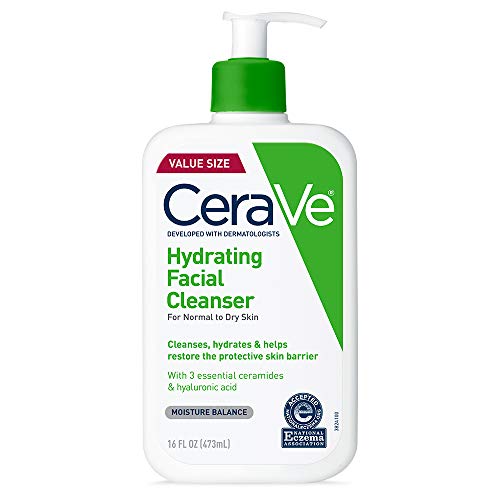
The cleanser itself needs to clean without stripping your barrier. Mild creamy formulas work best for rosacea-prone skin because they remove the day’s buildup without disrupting the lipid layer your skin depends on for protection. CeraVe Hydrating Cleanser adds ceramides that actively support barrier repair while you cleanse. La Roche-Posay Toleriane Hydrating Gentle Cleanser suits extremely sensitive skin that reacts to seemingly everything.

Cleanse with your fingertips only. Washcloths, spin brushes, and exfoliating tools damage a compromised barrier and set back everything else your routine is working to achieve.

Most people with rosacea do well with one proper cleanse per day, in the evening to remove sunscreen, sweat, and buildup. In the morning, lukewarm water alone is sufficient because nothing has accumulated on your skin overnight. Pat dry with a soft towel, because rubbing creates friction that can trigger immediate redness.
4. Moisturize Your Skin Barrier

woman applying a moisturizer to calm rosacea flare ups

Rosacea compromises your skin barrier, and that’s why products that would normally sit fine on skin start to sting or burn. Water escapes constantly, irritants penetrate easily, and your skin becomes reactive in ways it wouldn’t be if the barrier were intact. Moisturizer addresses this directly by reinforcing the barrier so water stays in and irritants stay out.

Three ingredients do the most work for rosacea-prone skin. Ceramides fill the structural gaps in your barrier where moisture escapes. Niacinamide reduces inflammation while stimulating your skin’s own ceramide production. Hyaluronic acid draws water into the skin without adding heaviness or greasiness. Together they give you barrier repair and active inflammation control in one step.

CeraVe PM Facial Moisturizing Lotion combines all three in a lightweight formula that absorbs quickly and layers well under sunscreen. La Roche-Posay Toleriane Double Repair Face Moisturizer offers similar benefits with prebiotic thermal water, which works particularly well during reactive phases. If heavier creams trap heat and worsen your redness, Aveeno Calm and Restore Oat Gel Moisturizer gives you the same barrier support in a gel texture that sits lightly on the skin.

Apply morning and evening. Morning application prepares your skin for sunscreen and daily environmental exposure. Evening application supports the repair processes that happen during sleep, when skin rebuilds its barrier and replenishes the ceramides lost throughout the day.

5. Wear Sunscreen Every Day

woman applying a mineral sunscreen to calm rosacea flare ups

Sun exposure is the most consistent rosacea trigger. UV radiation doesn’t just damage your skin on the surface. It triggers inflammation deep in the dermis and causes blood vessels to dilate, which drives the persistent flushing and redness that’s hardest to calm down.

SPF 30 or higher with both UVA and UVB protection gives you adequate coverage for daily life. Apply it every morning after your moisturizer absorbs, and reapply every two hours when you’re outside for extended periods. Most people apply once in the morning and forget about it, then wonder why their skin still flushes after time outdoors. Reapplication is what makes sun protection actually effective.

Mineral sunscreens with zinc oxide work best for rosacea-prone skin because zinc sits on the surface and reflects UV rays rather than absorbing into the skin the way chemical filters do. EltaMD UV Clear Broad Spectrum SPF 46 combines zinc oxide with niacinamide, so you get UV protection and active inflammation control in one product. La Roche-Posay Anthelios Mineral Tinted Sunscreen SPF 50 adds a subtle tint that eliminates the white cast older mineral formulas were known for.

Physical protection beyond sunscreen helps too. Wide-brimmed hats create shade and keep your skin temperature down, and staying out of direct sun between 10 AM and 4 PM reduces your UV exposure during the hours it’s most intense.

6. Use Azelaic Acid for Redness and Bumps

applying azelaic acid to calm rosacea flare ups

Azelaic acid reduces inflammation, kills the bacteria that contribute to acne-like bumps, and unclogs pores without the irritation that typical acne treatments cause on sensitive skin. Both redness and bumps improve with consistent use.

Products with 10% azelaic acid are available without a prescription, and two work particularly well for rosacea-prone skin. The Ordinary Azelaic Acid Suspension 10% gives you pharmaceutical-strength treatment at drugstore prices. Paula’s Choice 10% Azelaic Acid Booster has a smoother cream texture that layers more easily under other products. If neither delivers visible results after 12 weeks, prescription formulations at 15% or 20% work better for stubborn symptoms.

Start with once-daily evening application after cleansing, since your skin needs time to adjust before you increase frequency. Once it does, you can add a morning application. Some tingling or mild itching is normal in the first few weeks and fades as your skin acclimates.

Because azelaic acid can feel drying, apply your moisturizer after it absorbs. Some people do better applying moisturizer first and waiting a few minutes before the acid, so let your skin’s response guide you.

You may see improvements in 8 to 12 weeks with consistent use. Azelaic acid causes less irritation than most other rosacea treatments and doesn’t increase sun sensitivity.

7. Add Niacinamide to Your Routine

applying niacinamide to calm rosacea flare ups

Niacinamide reduces the inflammatory signaling that drives redness and stimulates ceramide production, which strengthens the barrier that rosacea keeps breaking down. A stronger barrier means your skin becomes less reactive to the triggers that set it off.

Most people with rosacea tolerate niacinamide well, even when their skin reacts to almost everything else. Serums or moisturizers with 2% to 5% concentration work well for rosacea-prone skin. Good Molecules Niacinamide Serum offers a gentle 4% concentration in a lightweight formula that absorbs quickly. Paula’s Choice 10% Niacinamide Booster has a thicker consistency that you can mix directly into your moisturizer if you prefer.

Check your moisturizer and sunscreen ingredient lists before buying a separate serum, because both often contain niacinamide already. If neither does, apply a dedicated serum morning and evening before moisturizer. If one already contains it, that’s enough. Stacking niacinamide across multiple products doesn’t increase the benefit.

You may experience mild flushing when you first start, but this fades within a few weeks. With consistent use, reduced redness and less irritation follow after 8 to 12 weeks.

8. Adjust Your Diet to Reduce Rosacea Flares

Eat omega rich fatty acid foods and Avoid Common Rosacea Food Triggers to calm rosacea flare ups

What you eat affects your rosacea more directly than most people expect. Certain foods and drinks trigger inflammation that leads to flushing and redness, while others help calm it.

Hot beverages cause immediate flushing because they raise your core body temperature. Coffee, tea, and soup all trigger this response, but you don’t need to give them up. Letting them cool to warm reduces flushing, and iced versions eliminate it entirely.

Spicy foods activate the same heat sensors in your skin that respond to actual temperature changes. Cayenne, chili peppers, hot sauce, and curry all cause this reaction, though how much depends on the individual.

Alcohol dilates blood vessels more dramatically than almost any other dietary trigger. Red wine tends to cause the worst reactions, though white wine, beer, and liquor all contribute. How much you can tolerate is something only your own skin can tell you.

Histamine-rich foods are worth paying attention to as well. Aged cheeses, fermented foods like sauerkraut and kimchi, and cured meats all trigger histamine release that produces flushing in some people, though not everyone reacts to these.

Omega-3 fatty acids from salmon, sardines, walnuts, and flaxseed reduce systemic inflammation and directly lower flushing frequency. Colorful vegetables and berries provide antioxidants that protect against oxidative damage. Probiotic-rich foods like yogurt and kefir support gut health, and the gut-skin connection is well established enough that improving one significantly influences the other.

9. Manage Stress and Sleep to Prevent Rosacea Flares

woman doing yoga to reduce stress to calm rosacea flare ups

Stress triggers rosacea flares through a direct biological pathway. Your body releases cortisol and other stress hormones that increase inflammation and dilate blood vessels, producing the flushing and redness you’re trying to avoid.

You don’t need an elaborate stress management routine. Small consistent practices work better than ambitious ones you can’t maintain. Ten minutes of deep breathing in the morning reduces cortisol before the day builds it up. A short walk during lunch gives your nervous system a genuine reset. Five minutes of stretching before bed releases the physical tension that accumulates throughout the day.

Sleep is equally important, because your skin uses those hours to rebuild its barrier, replenish ceramides, and clear the inflammatory load that builds during the day. Poor sleep disrupts all of that, and the result is a more compromised barrier and more reactive skin the next morning.

Seven to nine hours is what your skin needs for complete repair cycles. Your skin’s repair processes follow your circadian rhythm, so consistent sleep and wake times matter more than most people realise. A cool bedroom temperature prevents nighttime flushing, and sleeping on your back reduces direct pressure on your face.

10. Exercise Without Triggering a Rosacea Flare

woman doing exercise to calm rosacea flare ups

Exercise reduces systemic inflammation and benefits rosacea long term, but the immediate flushing that comes with an elevated heart rate needs managing. Heat dilates facial blood vessels, and rosacea-prone skin responds more aggressively to heat than healthy skin does.

Controlling your environment makes the biggest difference. Working out in an air-conditioned gym or exercising outside during cooler morning or evening hours prevents the overheating that triggers the worst flares. Keep a fan pointed directly at your face throughout your workout to keep your skin temperature down, and sip ice water consistently to lower your core temperature from the inside. During rest periods, holding a cold compress against your neck brings your skin temperature down quickly between sets.

Intensity matters just as much as environment. High intensity workouts spike your heart rate and cause more flushing than moderate steady-state cardio. Swimming in a cool pool gives you cardiovascular benefits while keeping your skin temperature down continuously. Walking, cycling at a comfortable pace, and yoga all work well without driving the level of facial blood flow that running or interval training does.

11. Consider Prescription Treatments When Needed

Consider Prescription Treatments for rosacea to calm rosacea flare ups

Over-the-counter treatments work well for mild to moderate rosacea, but some cases need more than a good skincare routine can deliver. If your redness, bumps, or flushing persist after three months of consistent treatment, a dermatologist can assess what’s driving your symptoms and prescribe options that address the condition more directly.

Topical ivermectin targets the Demodex mites that contribute to rosacea inflammation in some people, while topical metronidazole reduces bacteria and calms inflammation directly at the skin surface. Both are well-established first-line prescription options for rosacea.

When topicals aren’t enough, oral doxycycline is commonly prescribed. It isn’t used for its antibiotic properties but for its anti-inflammatory effects, which at low doses are significant enough to calm persistent redness and bumps without the side effects of full antibiotic doses.

For persistent vascular rosacea that doesn’t respond to topical or oral treatments, laser and light therapies are the next step. IPL photofacial treatments reduce diffuse redness and broken capillaries, and vascular lasers target specific visible blood vessels. Both require multiple sessions, but they produce results that topical treatments cannot.

If your symptoms persist after consistent use of prescription topicals, your dermatologist can assess whether oral treatment or laser therapy is the right next step for you.

12. Track Your Rosacea Progress

Track Your Rosacea Progress Over Time

Rosacea improves slowly, and the timeline is longer than most people expect. Flares become less frequent, redness fades, and your skin becomes more resilient with consistent effort.

Rosacea has good days and bad days, even when you’re doing everything right. A trigger you haven’t identified yet, a stressful week, or a forgotten sunscreen application can cause a flare, and that doesn’t mean your routine has failed. Rosacea is a chronic condition, and consistency through the setbacks is what counts.

Photos are the most reliable way to track what’s actually changing. Looking in the mirror every day makes gradual improvement almost invisible, because your brain adjusts to each small change before registering it. Taking photos in consistent lighting every two weeks gives you an objective record that shows what daily observation misses.

The progress becomes clear when you look back. The burning becomes less intense. The redness fades gradually. Flares happen less often and settle more quickly when they do. You notice it when you compare where your skin is now to where it was two months ago.

Bottom Line

Rosacea is a chronic condition, but it responds well to the right combination of treatments and habits. Start with a gentle cleanser, a barrier-repairing moisturizer, and daily sunscreen. Add azelaic acid or niacinamide once your skin is stable, and adjust your diet and stress habits as you learn your specific triggers. The most effective way to calm rosacea fast is understanding what drives it in the first place, and with consistent effort, rosacea redness and flushing reduce significantly over time.

FAQ

Most flares last anywhere from a few days to a few weeks. The duration depends on the trigger and your rosacea subtype. Rosacea with acne-like bumps tends to take longer to settle than rosacea that mainly causes redness and flushing.

Rosacea is a chronic condition, so it doesn’t disappear permanently. Many people reach a point where flares are infrequent and mild with consistent management, but the underlying sensitivity remains. The goal is long-term calm, not a cure.

Research shows a clear genetic component. If a close family member has rosacea, your risk is higher, though genetics alone don’t determine whether you develop it. Environmental triggers and skin barrier health play a significant role too.

Rosacea primarily affects the face, but it can appear on the neck, chest, and scalp in some people. Eye involvement, known as ocular rosacea, causes redness, dryness, and irritation in the eyes themselves. It develops independently of skin symptoms and needs its own assessment and treatment from a dermatologist.

Yes, with the right products. Mineral based foundations with zinc oxide provide coverage and additional UV protection without irritating reactive skin. Green tinted primers help neutralise redness before foundation. Avoid products with fragrance, alcohol, or heavy silicones, as these aggravate inflammation.

Similar Posts

Leave a Reply

Your email address will not be published. Required fields are marked *