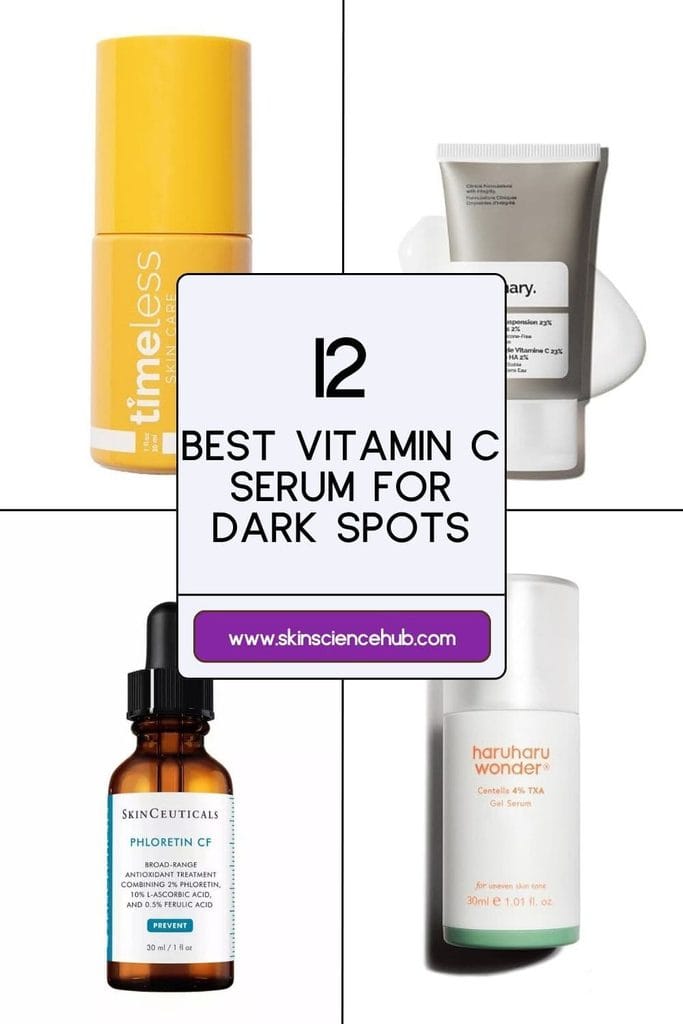
12 Best Vitamin C Serums for Hyperpigmentation and Dark Spots in 2026
Do you have dark spots that will not fade, whether they came from old breakouts, sun exposure, or aging skin? Call them brown spots, sun spots, age spots, or hyperpigmentation. Vitamin C serum can help regardless of which term you use. It fights free radicals that cause new pigment, and it blocks the enzyme that makes melanin in your skin. Because of that vitamin C prevents new spots better than it fades existing ones.
Not every vitamin C serum works the same way. Some serums use plain L-ascorbic acid, while others use gentler derivatives. Which one suits you depends on your skin’s sensitivity and tone.
In this article, you will find the 12 best vitamin C serums for fading hyperpigmentation and dark spots. You will also find guidance on choosing the safest formula if you have a deeper skin tone.
What to Look For in a Vitamin C Serum for Dark Spots
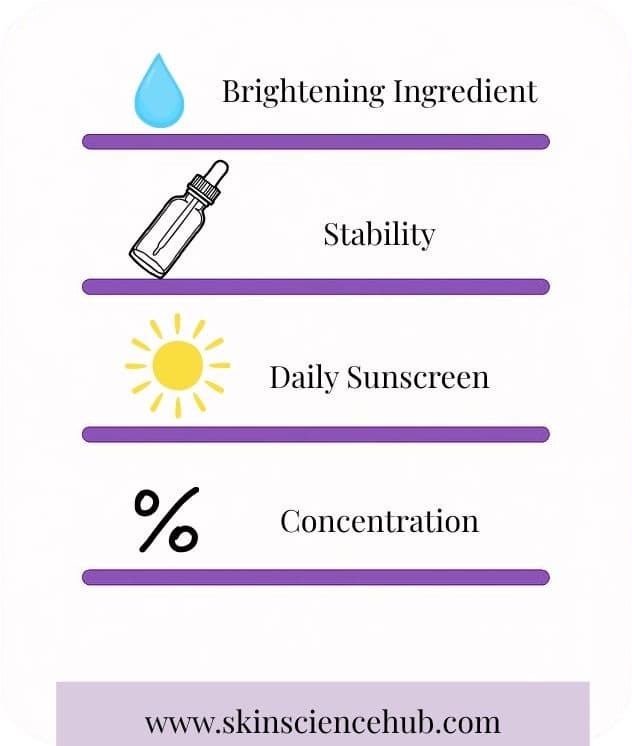
- A second brightening ingredient – Many vitamin C serums pair vitamin C with niacinamide or tranexamic acid. Each one targets pigmentation through a different pathway.
- Stability – Vitamin C breaks down when exposed to light and air. So choose opaque or airless packaging with stabilizers like vitamin E and ferulic acid, or a serum with encapsulated vitamin C. If your serum has already turned orange or brown, it has already gone bad.
- Daily sunscreen – Wear sunscreen daily. Without SPF, sun exposure creates new dark spots while your serum is working to fade the ones you have.
- Concentration – Aim for 10 to 20% L-ascorbic acid. Anything higher tends to irritate the skin, which can cause more pigmentation. Skin tolerates higher percentages of THD ascorbate than pure L-ascorbic acid. It can also handle pure L-ascorbic acid above 20% when paired with soothing ingredients like panthenol or hyaluronic acid. Always check the full ingredient list before assuming a high percentage alone is a problem.
1. Best Overall: SkinCeuticals Phloretin CF
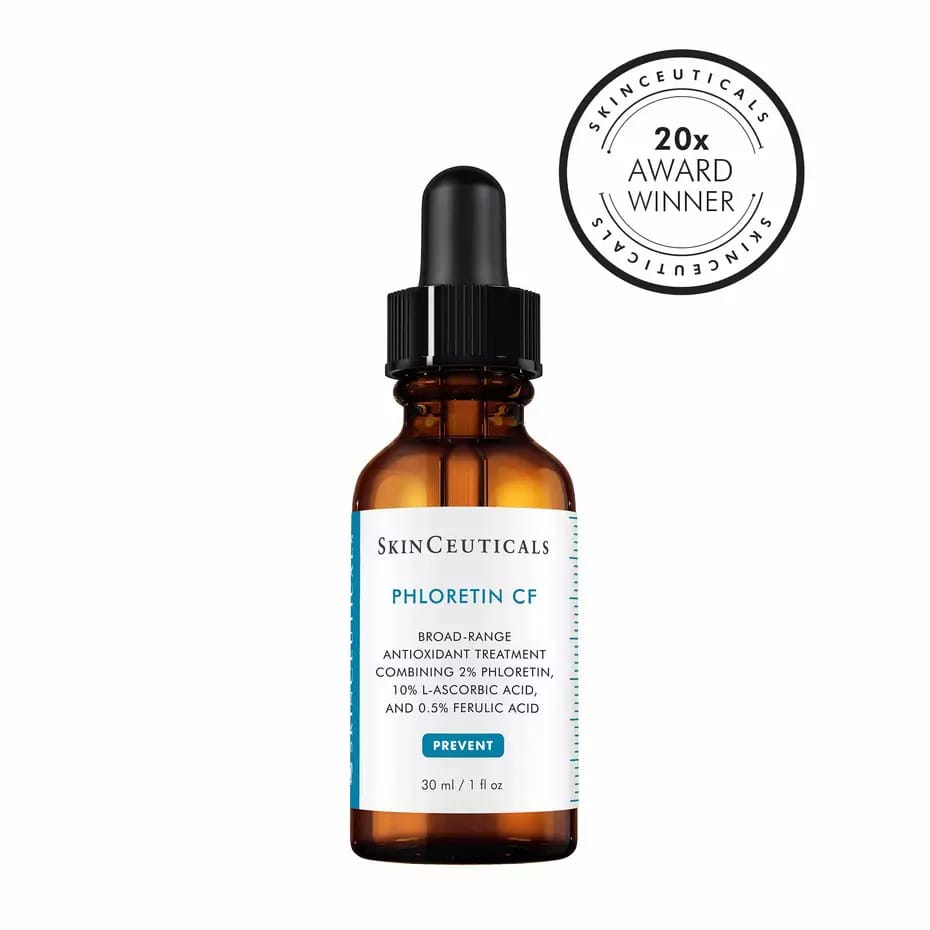
SkinCeuticals Phloretin CF features 10% L-ascorbic acid, 2% phloretin, and 0.5% ferulic acid. It’s designed to tackle hyperpigmentation, while its sister serum, C E Ferulic, focuses on fine lines and antioxidant protection.
Phloretin stops new pigment from forming, and ferulic acid keeps the formula stable, so it stays effective longer. Lab research shows that phloretin binds to and blocks tyrosinase, which happens to be the same enzyme vitamin C targets to reduce pigmentation. The serum is lightweight, absorbs fast, and leaves no sticky or greasy feeling. It has a natural yellow-orange tint from the start, so don’t confuse this color with the oxidation warning above. That is simply how it looks.
This is the priciest serum on the list. If cost is your main concern, the next two picks offer a similar multi-active approach at a better price.
2. Best Value: Dr. Althea Vitamin C Boosting Serum

Dr. Althea’s Vitamin C Boosting Serum combines 4 brightening ingredients: niacinamide, tranexamic acid, alpha arbutin, and 2 forms of vitamin C. Of every serum on this list, it packs the most active ingredients aimed at hyperpigmentation.
Each ingredient tackles pigmentation from a different angle. Niacinamide stops pigment from spreading into the skin cells around it, and tranexamic acid interrupts the signal that tells melanocytes to make more pigment. Alpha arbutin and the serum’s 2 vitamin C forms (3-O-ethyl ascorbic acid and ascorbic acid), slow the enzyme responsible for that pigment.
The texture is light and watery, absorbs quickly, and feels non-sticky. It also comes in an amber glass bottle, which shields the vitamin C from light and helps it stay potent.
This serum has more active ingredients to combat pigmentation than SkinCeuticals’ serum, our top choice. Plus, it comes at a friendlier price.
3. Best C E Ferulic Dupe: Timeless 20% Vitamin C + E Ferulic

Timeless 20% Vitamin C + E Ferulic is a dupe for SkinCeuticals’ famous serum, C E Ferulic. It uses the same core ingredients as C E Ferulic: vitamin C, vitamin E, and ferulic acid. But it offers a higher vitamin C concentration at a much lower price.
The texture sits somewhere between watery and oily, unlike most other serums on this list, and it carries a light scent that fades quickly.
A slight tingle during your first few uses is normal at this concentration. It may also stain your pillowcase yellow, so keep that in mind if you apply it at night.
4. Best Minimal Formula: The Ordinary Vitamin C Suspension 23% + HA Spheres 2%

The Ordinary Vitamin C Suspension 23% + HA Spheres 2% has a simple ingredient list with about 15 items. It provides an authentic 23% concentration of pure L-ascorbic acid.
This formula suspends vitamin C in an oil base made of squalane and light emollients. That oil base is what keeps the vitamin C stable. It has a gritty texture when you apply it because of the vitamin C particles in the oil base. Due to the high concentration, you can experience a tingling sensation.
Apply it once daily, ideally at night, and give it a few seconds to settle in. If the concentration feels too strong, mix a little of it into your regular moisturizer, which will help you build tolerance slowly. Don’t mix this with niacinamide, direct acids, or retinoids in the same routine, as The Ordinary advises keeping these ingredients separate.
5. Best for Sensitive Skin: Haruharu Wonder Centella 4% TXA Dark Spot Go Away Serum

Haruharu Wonder Centella 4% TXA Dark Spot Go Away Serum has a simple ingredient list. It contains 4% niacinamide and 4% tranexamic acid with centella asiatica at its base. Plus, it has vitamin C in 2 forms: ascorbic acid and sodium ascorbyl phosphate.
Tranexamic acid blocks signals that tell melanocytes to create more pigment. Niacinamide stops that pigment from moving into nearby skin cells. Vitamin C targets the enzyme directly, slowing new pigment at the source. Centella soothes the underlying skin. That’s why this choice is great for sensitive skin.
The texture is lightweight and gel-like, absorbing quickly without any stickiness. It is housed in an airless pump too, which keeps the vitamin C stable for longer.
6. Best for Post-Acne Marks: Abib Glutathiosome Dark Spot Serum Vita Drop

Abib Glutathiosome Dark Spot Serum Vita Drop Abib Glutathiosome Dark Spot Serum Vita Drop contains glutathione, 5% niacinamide, and vitamin C. The vitamin C is in 3 forms: ascorbic acid, 3-O-ethyl ascorbic acid, and ascorbyl glucoside. It also contains lactic acid as a mild AHA, and the whole formula is safe for fungal acne.
The gel contains small glutathione capsules that burst when you apply it, then absorbs fast and feels non-greasy.
Lactic acid is what makes this serum stand out for post-acne marks, as it speeds up how quickly skin sheds those pigmented cells. Niacinamide and vitamin C work alongside it to keep new pigment from forming. Glutathione takes an entirely different route, acting as an antioxidant that reacts with what tyrosinase produces to help even out skin tone. Because most glutathione studies focus on oral and IV use, the effect from a topical serum alone is likely smaller.
Vitamin C is stronger with the right brighteners beside it. My guide shows you which ones and when to use them.
7. Best for All-Around Brightening: Glow Recipe Guava Vitamin C Dark Spot Treatment

Glow Recipe’s Guava Vitamin C Dark Spot Treatment contains 5 forms of vitamin C: tetrahexyldecyl ascorbate, 3-O-ethyl ascorbic acid, ascorbyl glucoside, magnesium ascorbyl phosphate, and sodium ascorbyl phosphate. It also contains tranexamic acid and ferulic acid.
Tetrahexyldecyl ascorbate is oil-soluble while the other four are water-soluble, which makes the serum effective for oily, dry, and combination skin alike, and that same versatility means it addresses sun-induced hyperpigmentation, acne-related marks, and general unevenness
The texture is milky and gel-like with a soft pink tint. The scent comes from the guava, not from added fragrances or oils, and it absorbs quickly while feeling non-greasy.
8. Best for Vitamin C Beginners: Naturium Vitamin C Complex Serum

Naturium’s Vitamin C Complex Serum blends sodium ascorbyl phosphate, a gentler vitamin C form, with L-ascorbic acid and glutathione to boost antioxidant support. The formula has a pH between 5.5 and 6.5, higher than the pH 3.5 needed for pure L-ascorbic acid formulas to remain active, and that lower acidity makes this a good fit for beginners.
The texture is lightweight and watery with a golden tint, and it absorbs quickly with little to no scent.
9. Best for Dry Skin: Revision C+ Correcting Complex 30%

Revision C+ Correcting Complex 30% feels rich and cream-like, more lotion than serum. It has 30% THD ascorbate, a form of vitamin C that dissolves in oil. This allows it to pass easily through the skin’s lipid layers. L-ascorbic acid, by contrast, needs to dissolve in water first. The oil solubility reduces irritation, even at high concentrations. That’s why this formula is great for dry skin.
It spreads easily and leaves no greasy residue once it settles in. It is fragrance-free too, though it carries a faint natural scent that fades quickly.
10. Best K-Beauty Pick: Goodal Green Tangerine Vita C Dark Spot Serum
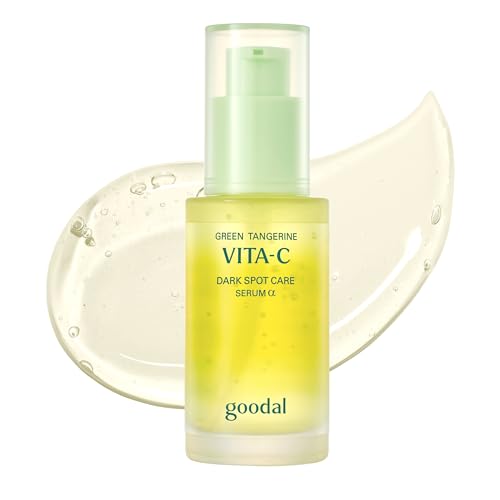
Goodal Green Tangerine Vita C Dark Spot Serum Goodal Green Tangerine Vita C Dark Spot Serum is from a Korean skincare brand. It has four active ingredients: 70% green tangerine extract, a natural vitamin C source, plus 4% niacinamide, arbutin, and ascorbyl glucoside, another form of vitamin C. Arbutin and ascorbyl glucoside interfere with the enzyme that produces pigment. Niacinamide keeps that pigment from spreading to nearby skin cells.
The gel texture feels slightly sticky right after you apply it. So, patting it in for a few extra seconds clears the stickiness as the product fully absorbs. This formula has fragrance, including citrus and floral oils. It is also not safe for fungal acne. If you have sensitive skin or fungal acne, the Haruharu pick above is the gentler choice.
11. Best Potency Pick: CosRx Advanced Vitamin C 23% Serum
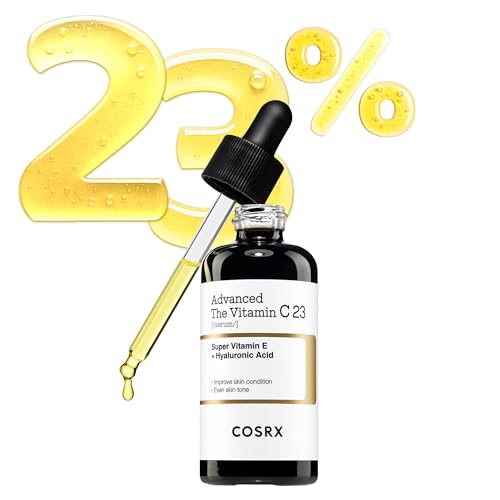
CosRx Advanced Vitamin C 23% Serum contains 23% pure ascorbic acid, 3-O-ethyl ascorbic acid, niacinamide, and glutathione. Niacinamide helps reduce pigment transfer to surrounding skin cells. Glutathione acts as an antioxidant, helping neutralize compounds involved in melanin production. Together, these ingredients help even out skin tone.
A concentration this high can still irritate the skin, so the formula pairs it with panthenol, allantoin, and hyaluronic acid to soothe and hydrate, while caffeine helps calm any redness.
The texture is a smooth, water-based gel that absorbs without leaving residue behind.
12. Best for Turnover: Ole Henriksen Banana Bright 15% Vitamin C Dark Spot Serum

Ole Henriksen Banana Bright contains 15% vitamin C, in the form of 3-O-ethyl ascorbic acid. It also contains 5% gluconolactone, a type of PHA. PHA speeds up skin cell turnover. This helps fade existing pigmentation while vitamin C prevents new pigment from forming. The formula includes hyaluronic acid for hydration, vitamin E for stability, and mica for a glowing effect.
The texture sits somewhere between smooth and slightly tacky. This product contains fragrance derived from citrus oils and extracts. It might not be right for you if you have sensitive skin.
Choosing the Right Formula for Black Skin and Other Darker Skin Tones
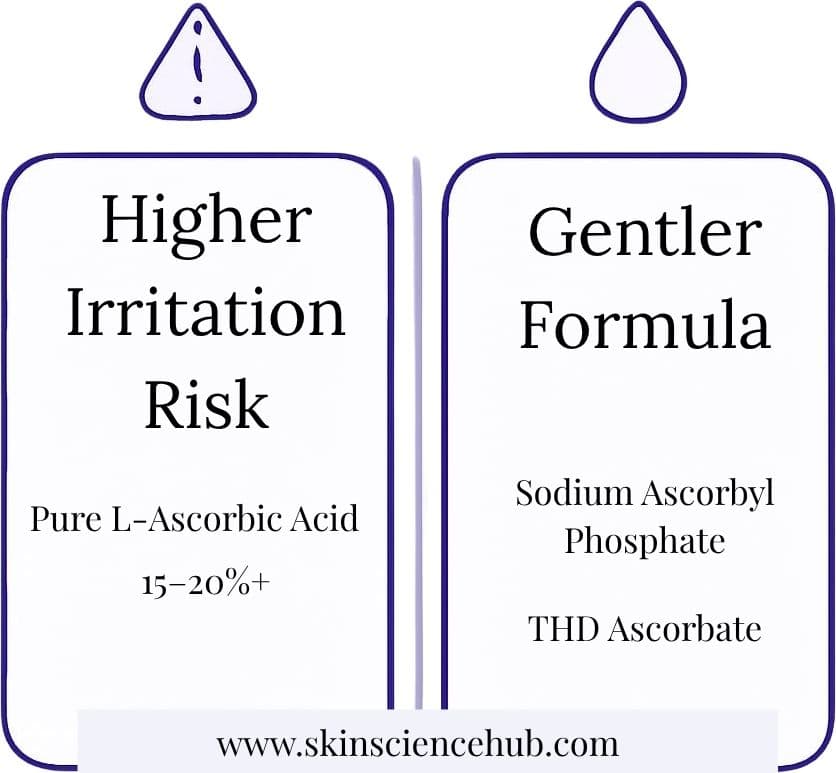
If you have a deeper skin tone, look for the right formulation before the percentage on the label. A high percentage vitamin C can irritate the skin, and as a pharmacologist, I can confirm that irritation triggers post-inflammatory hyperpigmentation more readily in melanin-rich skin. That means a formula too strong for your skin can create the very spots you are trying to fade.
Choose gentler derivatives, such as sodium ascorbyl phosphate, and pick a formula with soothing ingredients like centella asiatica to calm any reactions. Among the picks above, Naturium, Haruharu Wonder, and Revision C+ all lean gentler than a typical high-strength L-ascorbic acid formula. Patch test on your inner arm for a few days before your face, so you catch any reaction before it becomes visible.
When Vitamin C Isn’t Enough
If you’ve used a good vitamin C serum every day for 3 to 4 months and worn sunscreen regularly, but your hyperpigmentation hasn’t improved, you may benefit from trying a different ingredient.
That is where azelaic acid, tranexamic acid, and retinol come in. Azelaic acid competes with vitamin C for the same enzyme. It also targets overactive melanocytes but spares the normal ones. Tranexamic acid takes a different route. It disrupts a signal earlier, before it gets to the pigment-producing cells. Retinol speeds up cellular turnover to fade the hyperpigmentation you already have.
Thus, knowing what type of hyperpigmentation you are dealing with helps you choose the right treatment. Melasma responds better to azelaic acid or tranexamic acid. It needs stronger suppression than what vitamin C can provide. Azelaic acid is great for post-acne marks. It treats active acne and the marks that acne leaves behind at the same time. For sun spots and age spots, reach for retinol, retinal, or an exfoliating vitamin C formula.
If you’re unsure which one works for you, combining ingredients can help. Any of these 3, when paired with vitamin C, outperforms vitamin C on its own. Use vitamin C in the morning. At night, apply azelaic acid, tranexamic acid, or retinol. This split lets each ingredient work through its own mechanism without piling too many strong actives into one application. For more details, check out our azelaic acid guide and our retinol guide for hyperpigmentation.
How to Use Vitamin C for Dark Spots
Apply your vitamin C serum in the morning, on clean and dry skin. Water dilutes the formula and raises its pH, which makes it less effective, so avoid applying it to damp skin. Our vitamin C guide covers that chemistry in more depth if you are curious.
Wait 60 seconds before layering on moisturizer, and if you are building this into a full routine, check our layering guide. Apply it across your entire treatment area, not just the visible spots. Because vitamin C works by preventing new pigment from forming, it needs to reach the skin that still looks clear, not only the discoloration you can already see.
Store your vitamin C serum somewhere cool and dark, with the cap secured tightly between uses. Use it within 3 months of opening it too, as vitamin C tends to oxidize once exposed to air.