
The Dermatologist vs The Internet: Who’s Actually Right About Fungal Acne Products
Searching for fungal acne safe products sends most people in three different directions at once. Ingredient checkers, thousand-product spreadsheets, and dermatologists arguing the whole framework is wrong. Everyone sounds confident. Nobody quite agrees.
What’s actually happening is that both sides are working from real science about Malassezia, the yeast behind fungal acne. They’re just solving for different parts of the same problem, and that’s why one approach works for some people and not others.
As a pharmacologist who has worked through the research on Malassezia and lipid metabolism, I can tell you the answer sits somewhere in the middle. This guide covers proven antifungal treatments, the best fungal acne safe products organized by category and skin type, and an honest explanation of when avoiding certain ingredients makes a difference and when it won’t.

What Makes a Product Fungal Acne Safe?
Back in 2016, a researcher known as f.c. was digging through studies on Malassezia, the yeast behind fungal acne, and found something that would change how a lot of people thought about their skincare. Malassezia, unlike most organisms, cannot produce its own fatty acids. It has to get them from somewhere else, and it’s picky about which ones it uses, specifically fatty acids with carbon chains between 11 and 24 atoms long.
That finding spread quickly. If Malassezia feeds on specific fatty acids, then avoiding products that contain them should starve it out. f.c. published the framework on Simple Skincare Science, ingredient checkers appeared, product databases grew, and thousands of people documented real improvements. For the first time, those stubborn bumps that wouldn’t budge with regular acne treatments had a concrete explanation.
Which Ingredients Are Not Fungal Acne Safe
Most plant oils are problematic, including coconut, olive, and argan oil. Esters are also flagged, and these are ingredients ending in “-ate” on the label, things like isopropyl palmitate, glyceryl stearate, and cetearyl ethylhexanoate. Fatty alcohols like cetyl and stearyl alcohol, polysorbates, and certain fermented ingredients also feed Malassezia. All of these contain the specific fatty acid chains, between 11 and 24 carbon atoms long, that Malassezia breaks down and feeds on.
Safe alternatives are fewer but reliable. Mineral oil, squalane, purified MCT oil, and lightweight gel formulations don’t contain those fatty acid chains, so Malassezia can’t metabolize them. That’s why you’ll see them appear repeatedly across fungal acne safe product recommendations.
But knowing which ingredients are theoretically problematic is only half the picture, because whether they actually cause problems on your skin is a different question entirely.

Do Skincare Ingredients Actually Cause Fungal Acne
Lab studies on Malassezia are done in controlled conditions, one ingredient at a time. Your skin works completely differently. You have dozens of bacterial and fungal species competing for resources, an immune system actively responding, sebum production shifting with your hormones, and weather changing everything week to week. What happens in a lab and what happens on your face are two different things.
This is why dermatologists like Dr. Dray push back on the ingredient framework. Malassezia folliculitis is a medical condition, and it responds to antifungal medication. The real triggers are environmental, heat, humidity, sweat, tight clothing, and prolonged antibiotic use. Ketoconazole, zinc pyrithione, and selenium sulfide reduce yeast populations directly, and that’s backed by clinical studies on actual patients, not petri dish experiments.
The Florida versus Colorado example makes this concrete. Someone in humid Florida who exercises daily and uses a heavy coconut oil moisturizer is dealing with multiple stressors at once. Removing that oil can shift the balance because it eliminates one variable from an already overwhelmed system. Someone in dry Colorado using the same product may see zero change because the conditions for overgrowth simply aren’t there. Same product, completely different outcomes.
Both positions are working from legitimate science. They’re just solving for different parts of the problem.
Who Benefits Most From Fungal Acne Safe Products
Fungal acne safe products work best in specific situations. If your breakouts are mild and recurring rather than severe, lighter Malassezia-safe alternatives can reduce how often flares happen. The same goes if you live in a hot or humid climate where sweat and heat are already stressing your skin, or if your skin cleared with antifungal treatment but the bumps keep returning.
If your breakouts are widespread, inflamed, and severely itchy, you may be dealing with an active Malassezia infection, and antifungal treatment will clear it far faster than any product swap. If you’ve spent a month avoiding problematic ingredients with no improvement, a dermatologist can help you figure out what’s driving it.
The most effective approach combines both. Antifungal treatments to clear active overgrowth, and thoughtful product choices to avoid recreating the conditions that brought it back.
Best Fungal Acne Safe Products by Category
1. Best Antifungal Treatments for Fungal Acne
If you have an active flare, these are the products that actually clear it. Every one of them has clinical evidence behind it, not just ingredient theory.
The most effective options are:
- Nizoral Anti-Dandruff Shampoo (1% Ketoconazole)
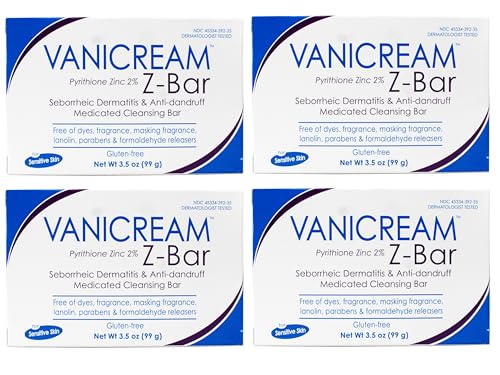
- Vanicream Z-Bar (Zinc Pyrithione)
- Selsun Blue (Selenium Sulfide)
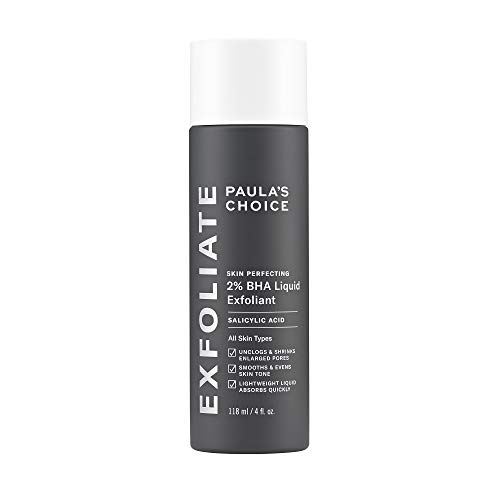
- Paula’s Choice 2% BHA Liquid Exfoliant or CeraVe SA Lotion (Salicylic Acid)
- Lotrimin (Clotrimazole Cream)
Here’s what each one does and how to use it.
Nizoral Anti-Dandruff Shampoo (1% Ketoconazole)
Ketoconazole is the strongest over-the-counter antifungal for fungal acne. Use it as a mask. Lather it onto affected areas, leave it on for 5 to 10 minutes, then rinse. Use it daily during active flares, then drop to 2 to 3 times weekly once your skin clears. It’s a shampoo, but it outperforms most dedicated acne treatments when Malassezia is the cause.

Vanicream Z-Bar (Zinc Pyrithione)
Zinc pyrithione is gentler than ketoconazole, which makes it a better fit for sensitive skin. Vanicream Z-Bar is formulated for facial skin rather than scalp, so it cleanse without stripping your moisture barrier. Lather it on, wait a few minutes, then rinse. It’s antifungal, antibacterial, and anti-inflammatory, which makes it effective for both fungal and bacterial acne.
Selsun Blue (Selenium Sulfide)
Selenium sulfide is an effective antifungal, but it’s more drying than the other two options, which makes it better suited for body use than the face. Use it as your primary treatment for chest, back, and shoulder breakouts, or as a backup for your face if ketoconazole and zinc pyrithione aren’t giving you results. Lather it on, leave it for a few minutes, then rinse.

Paula’s Choice 2% BHA Liquid Exfoliant or CeraVe SA Lotion (Salicylic Acid)
Salicylic acid isn’t antifungal, but it supports treatment by unclogging follicles where Malassezia accumulates and reducing the sebum buildup that lets yeast thrive. Both work well as leave-on treatments. Start every other night rather than daily because salicylic acid can irritate skin that isn’t used to it yet.