

Dry vs Dehydrated Skin: How to Tell Which One You Have
Last updated on October 7th, 2026
Dry skin lacks oil, while dehydrated skin lacks water. Dry skin is a skin type, which means your skin naturally produces less sebum, so it can feel rough and flaky most of the time. Dehydrated skin, on the other hand, is a temporary condition that can affect anyone, even people with oily skin, and it shows up as tightness, dullness, and fine lines.
It’s easy to mix them up because they share signs like tightness and dullness, and they’re also linked through your skin barrier. When your barrier is low on fats, water escapes more easily, which is why dry skin often feels dehydrated too. Once you figure out which one you have, you’ll know if your skin needs water, oil, or both, and it’ll be much easier to pick the right products.
In this article, you’ll find a clear comparison of dry and dehydrated skin, 5 signs that help you tell them apart, what the pinch test can and can’t show, and the ingredients and simple routine that can help each one recover.

What Is the Difference Between Dry and Dehydrated Skin?
Think of dry skin as your skin’s natural type, and dehydrated skin as a temporary condition your skin might be going through.
Dry skin tends to produce less oil and fewer of the natural fats, like ceramides, that keep your skin cells connected and hold in moisture. Genetics can influence this, and aging, cold weather, and certain medications can make it worse. If your skin feels rough and flaky most days, dryness is probably the culprit.
Dehydrated skin, however, is lacking water in its outer layer, regardless of how much oil your skin makes. This is why it can affect anyone, even people with oily skin. The symptoms also fluctuate, so your skin might feel great one week and tight and dull the next. Once you find what’s causing it, cut it out, and add hydrating ingredients to your routine, it usually improves.
| Dry Skin | Dehydrated Skin | |
|---|---|---|
| What’s missing | Oil and barrier fats like ceramides | Water |
| Type or condition | Skin type | Temporary condition |
| Who gets it | People born with drier skin, and more people as they age | Anyone, including people with oily skin |
| Biggest giveaway | Roughness and flakes that stay most days | Signs that come and go from week to week |
| How it looks | Flakes, rough patches, and cracks when severe | Dull and tired with fine lines, and sometimes shiny at the same time |
| What makes it worse | Cold weather, aging, some medications | Harsh cleansing, hot water, dry air, too much exfoliation |
| What helps | Rich creams with ceramides, shea butter, squalane, or petrolatum | Glycerin, hyaluronic acid, or urea, sealed in with a moisturizer |
Why Dry Skin Often Feels Dehydrated Too?
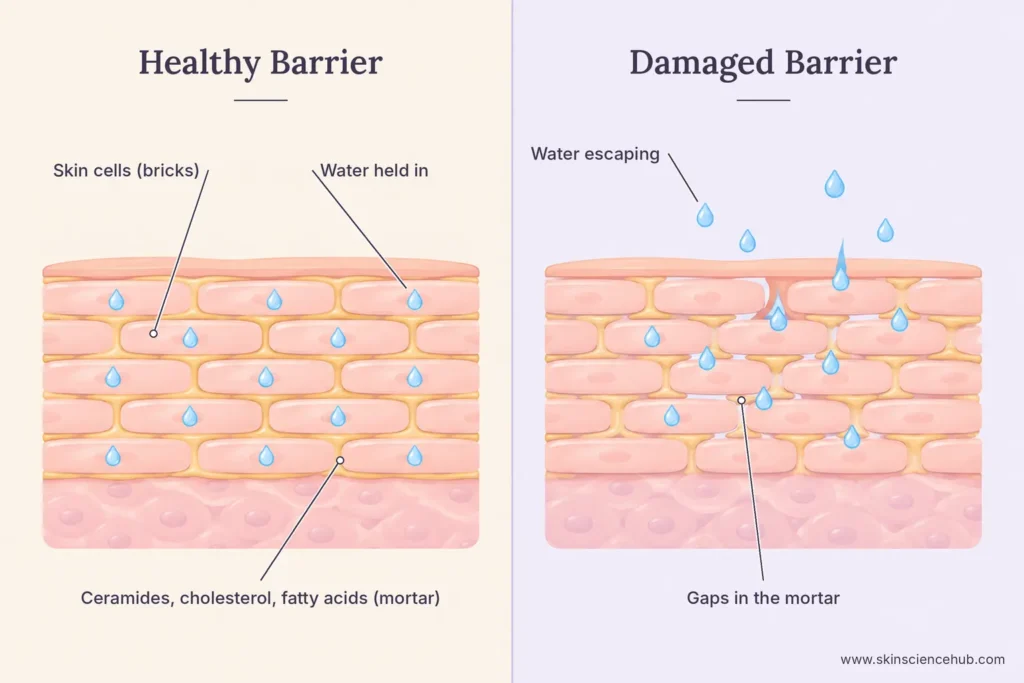
Your skin barrier is the outermost layer of your skin, a protective shield that keeps you hydrated in 2 ways. It holds on to water using natural moisturizing factors, which are water-loving compounds inside your skin cells. Plus, it keeps that water from escaping, thanks to the fats between your cells, like ceramides, cholesterol, and fatty acids. Think of your skin cells as bricks, and those fats as the mortar that holds them together.
When the mortar gets low, water slips out through the gaps faster. This is called transepidermal water loss, and research links lower ceramide levels to faster water loss. So, the same lack of fats that makes skin dry also lets water escape, and that’s how the two conditions end up overlapping.
As a pharmacologist, I find this part especially helpful: the fats between your cells do most of the work of keeping water in, while the oil on your skin’s surface plays a smaller role. That’s why oily skin can still lose water. When harsh cleansers or too much exfoliation wear down those fats, your skin can look shiny yet still feel tight and dehydrated.
Stress can also play a part. In one study of 27 students, their skin barrier repaired itself more slowly during exam weeks, when stress was highest, and recovered once exams were over.
Once you understand how your barrier works, the solution becomes clear. Dehydrated skin needs ingredients that draw water in, dry skin needs fats that keep it there, and if you have both, your skin needs a little of each.
How to Tell If Your Skin Is Dry or Dehydrated
If your skin feels tight, it could be due to either dry or dehydrated skin, so it’s not always easy to tell which one you have. Here are 5 signs that can help you figure out what your skin needs:
1. How your skin looks after cleansing
- Wash your face with a gentle cleanser, pat it dry, and leave it bare for 30 minutes.
- If your skin feels rough and tight all over without any shine, you probably have dry skin.
- If your forehead, nose, or chin turn shiny while your cheeks still feel tight and look dull, that suggests dehydration, especially if you have oily or combination skin.
2. Whether the rest of your body feels dry too
- Dry skin is a skin type, so it often affects areas beyond your face, like your shins, arms, and hands.
- If only your face feels tight and dull while the rest of your skin feels comfortable, dehydration is more likely.
3. Flakes or fine lines
- Dry skin tends to flake, especially around your nose, eyebrows, and cheeks, and it can feel rough under your fingertips.
- Dehydrated skin shows fine, crisscross lines, often on your cheeks and forehead, which soften quickly when you apply a hydrating serum.
4. Whether it comes and goes
- Dry skin feels pretty consistent most days, even if cold weather makes it worse.
- Dehydrated skin changes with your routine and surroundings, so you might notice it after using a new cleanser, sitting in air conditioning all day, or taking a long flight.
5. What your skin responds to
- For a week, add a hydrating serum with glycerin or hyaluronic acid to damp skin under your usual moisturizer, and keep everything else the same.
- If your skin looks plumper and feels more comfortable within a few days, dehydration was likely the cause.
- If the roughness and flakes persist, your skin probably needs richer fats like ceramides or shea butter, which suggests dry skin.
Does the Pinch Test Work for Dehydrated Skin?

You’ve probably seen the pinch test: pinch the skin on your cheek or the back of your hand, let go, and watch how fast it bounces back. A quick bounce supposedly means you’re hydrated, while a slow one means you’re dehydrated.
The problem is that this test checks skin turgor, which doctors use to look for dehydration in the whole body, and even for that job it doesn’t work well in adults. A systematic review found no consistent, reliable way to measure skin turgor, and in a study of older hospital patients, physical signs including poor skin turgor missed most cases of dehydration. The bounce also depends on your skin’s elasticity, which naturally drops with age and sun exposure. On top of that, the dehydration you see in skincare happens in the outermost layer of your skin, while the pinch test reflects the deeper layers.
So a slow bounce doesn’t prove your skin is dehydrated, and a quick one doesn’t rule it out. Watching how your skin feels, looks, and responds over a week gives you a much clearer answer. And if you feel very thirsty, dizzy, or unwell, that’s your whole body asking for fluids, so drink water and see a doctor if it doesn’t ease.
Hydrated vs Dehydrated Skin: What It Looks Like on Your Face
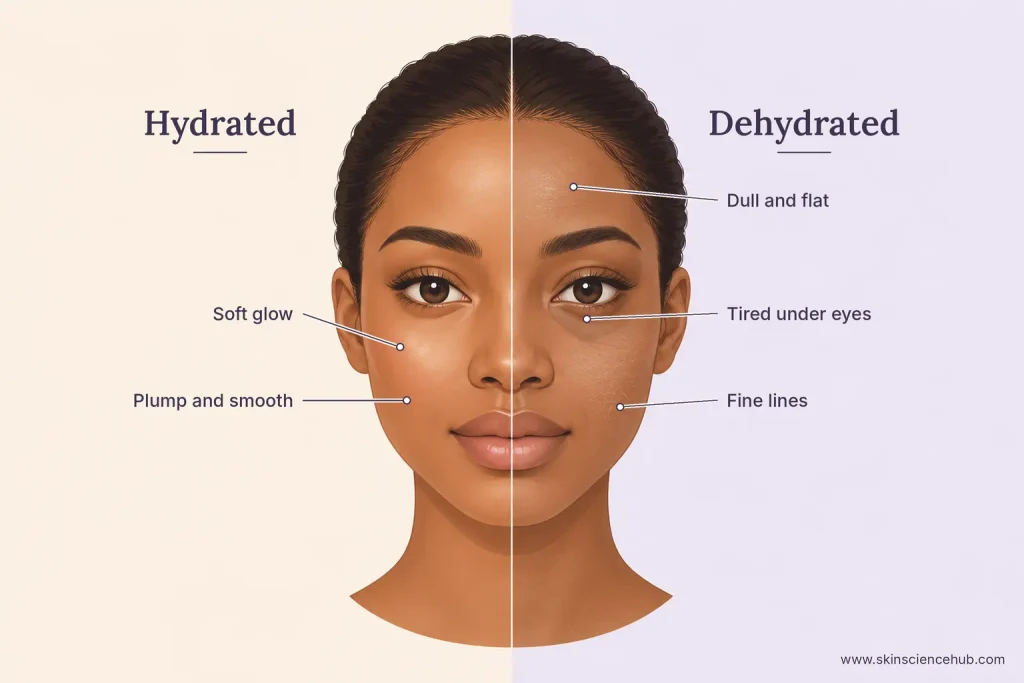
Hydration refers to how much water your skin retains, so whether you have oily, dry, or combination skin, your skin can be either well hydrated or dehydrated. The difference is often most apparent in the mirror.
What hydrated skin looks and feels like
Hydrated skin appears plump and smooth, with a soft, radiant glow. The water in the outer layer helps keep the surface smooth, allowing it to reflect light well. It still feels comfortable a few hours after cleansing, and your makeup stays smooth throughout the day.
What dehydrated skin looks and feels like
Dehydrated skin looks dull and a bit flat, even if your forehead or nose are shiny. Fine lines become more noticeable, especially around your cheeks and under your eyes, and your face can appear tired even after a good night’s sleep. Foundation often clings to dry spots or settles into lines by midday. If your barrier is damaged, products you’ve used for months may suddenly sting.
Can You Have Both Dry and Dehydrated skin?
Yes, dry skin has fewer of the fats that help retain moisture, so it tends to lose water more quickly.
When you have both dry and dehydrated skin, your skin often feels rough and flaky, and it can also look dull, with fine lines that come and go.
To help, give your skin both water and fats. A hydrating serum applied under a rich moisturizer is a great option, or you could use a cream that contains both glycerin and ceramides.
Can Oily Skin Be Dehydrated?
Yes, your skin can produce a lot of oil but still be dehydrated, which is why your face might look shiny and feel tight at the same time.
This often happens because of the products you use to treat breakouts. Strong foaming cleansers, frequent exfoliating, and acne treatments like benzoyl peroxide, salicylic acid, and retinoids can all weaken your skin’s protective barrier. Using multiple treatments together can make it even worse. Also, going without moisturizer because your skin feels greasy can slow down its recovery.
You might have oily, dehydrated skin if:
- Your face looks shiny by midday but feels tight after washing
- You see flaky patches under the oil
- Your foundation separates around your nose and cheeks
To help your skin recover, use a gentle cleanser and only one acne treatment at a time. Then, add a lightweight gel moisturizer with glycerin or hyaluronic acid. It gives your skin water without feeling heavy and helps your barrier hold on to it.
How to Fix Dehydrated Skin
To help your skin feel better, start by figuring out what’s pulling water out of it and ease off that trigger. Wash your face with a gentle cleanser and lukewarm water, and use only one retinoid or exfoliating acid at a time.
Add humectants
Now, let’s add some humectants to the mix! These are like little water magnets that pull moisture into your skin’s outer layer. Glycerin, hyaluronic acid, urea, and panthenol all work as humectants. Apply them when your skin is just a bit damp, then follow up with a moisturizer to lock in that extra water.
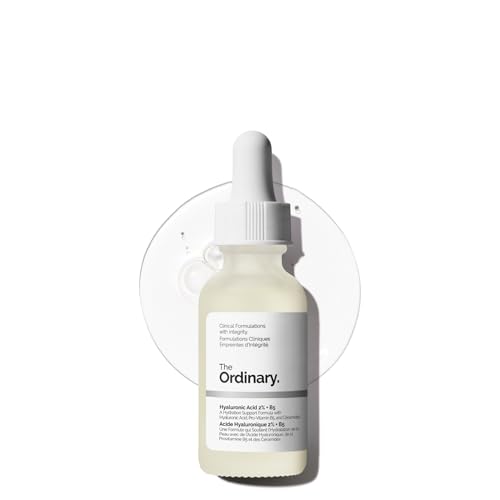
Example product: The Ordinary Hyaluronic Acid 2% + B5 is a light, watery serum that combines 2 types of hyaluronic acid with panthenol and glycerin. A few drops on damp skin can make your face feel plumper and more comfortable, and it blends nicely with any moisturizer you use.
Once you’ve removed what’s causing the dehydration and humectants are part of your daily routine, your skin often starts to feel softer and less tight within a few days
How to Fix Dry Skin
Since dry skin is your skin type, it’s best to keep it soft by replenishing the fats it needs every day. According to a 2025 review, the go-to treatment for dry skin is a moisturizer that mixes water-loving ingredients like glycerin with sealing ingredients like petrolatum. Plus, shorter, lukewarm showers can be a great help!
Replace barrier fats
Ceramides, cholesterol, and fatty acids are the same fats your skin barrier is made of, and they work best when they’re all together. In lab studies on barrier repair, using just 1 or 2 of these fats slowed recovery, while a balanced mix of all 3 allowed the barrier to heal normally. The same research also found that plant oils can replace fatty acids, so look for a cream that includes ceramides, cholesterol, and either fatty acids or oils.
Example product: CeraVe Moisturizing Cream has 3 ceramides, cholesterol, and plant oils, plus glycerin and hyaluronic acid to attract water. It softens rough areas and helps your skin retain moisture longer, and you can use it on your face and body.

Seal it in with an occlusive
Occlusives create a thin seal over your skin that helps keep water from escaping. Petrolatum is one of the most effective, and it’s gentle enough for very dry or cracked skin. Use it as the final step at night, or on dry spots like your hands, elbows, and lips. You can learn more about slugging in our guide.
Example product: Vaseline Original Healing Jelly is pure petrolatum. A thin layer over your moisturizer at night locks in hydration, so you wake up with softer, smoother skin.

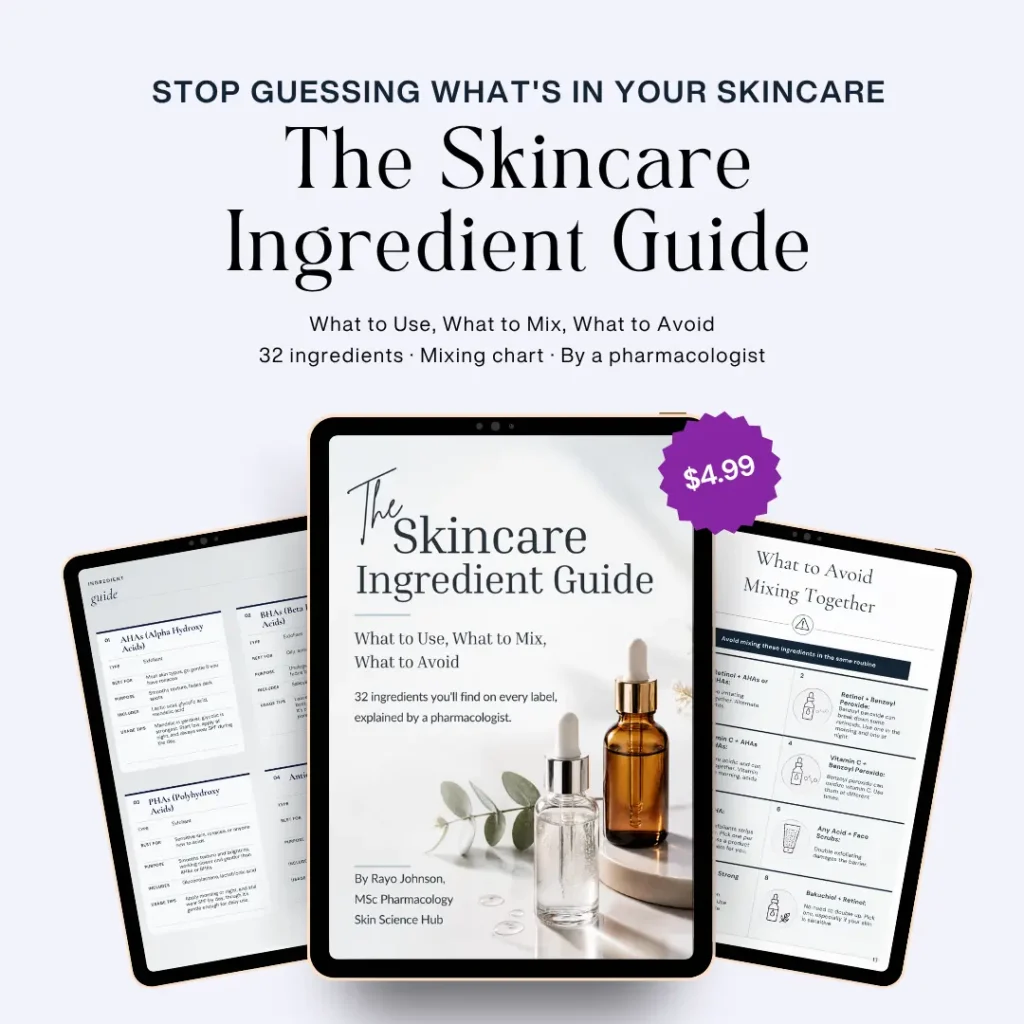
My guide lists the best ingredients for dry and dehydrated skin, and how to layer them.
A Simple Daily Routine for Dry and Dehydrated Skin
No matter if your skin is dry, dehydrated, or a bit of both, this simple routine should work for you. Just tweak a few steps to match your skin’s needs.
Morning
- Start with a gentle cleanser, or if your skin feels tight when you wake up, rinse with lukewarm water.
- If your skin is dehydrated, apply a hydrating serum while it’s still damp.
- Follow with a moisturizer. For dehydrated or oily skin, a lightweight gel is a good fit. If your skin is dry, a richer cream works well. If you’re dealing with both, a rich cream over your serum is the way to go.
- Don’t forget sunscreen to protect your skin from sun damage.
Evening
- Wash with a gentle cleanser and lukewarm water to remove sunscreen, oil, and dirt from your day.
- If you use a retinoid or exfoliating acid, apply it now, and use it less often while your skin recovers.
- If you use a hydrating serum, apply it to damp skin.
- Seal it in with your moisturizer.
- If your skin is very dry or flaky, add a thin layer of petrolatum on top.
Stick to this routine for a couple of weeks to give your skin a chance to recover, and it’ll be easier to see what works best before you add anything new.
The Bottom Line
Dry skin is a skin type that doesn’t have enough oil and protective fats, while dehydrated skin is a temporary lack of water. They often show up together because they both affect your skin’s protective layer.
To tell which one you have, pay attention to how your skin looks, feels, and reacts over a week. Then, give it what it needs: hydrating ingredients like glycerin or hyaluronic acid for dehydration, creams with ceramides for dryness, and a combination of the two if you have both. With a gentle, consistent routine, your skin can feel softer, smoother, and more comfortable.

