

What Is Slugging Skincare? Who Should Try It (And Who Shouldn’t)
Last updated on August 29th, 2026
Slugging sounds like something out of a bad skincare joke, and honestly, it kind of is. The technique comes from Korean beauty routines built around “glass skin.” That idea is simple: you seal your face in a thin layer of petroleum jelly before bed. You wake up with soft, plump, hydrated skin. The term “slugging” goes back to a 2014 Reddit post, long before TikTok turned it into one of its stickiest skincare trends.
Dermatologists call it the gold standard for post-procedure healing. However, clean beauty circles call that same jar of petroleum jelly toxic and pore-clogging. Everyday people trying it split right down the middle too, as some wake up glowing while others break out. So who’s right? It starts with what slugging is doing to your skin.

What Is Slugging and How Does It Work?
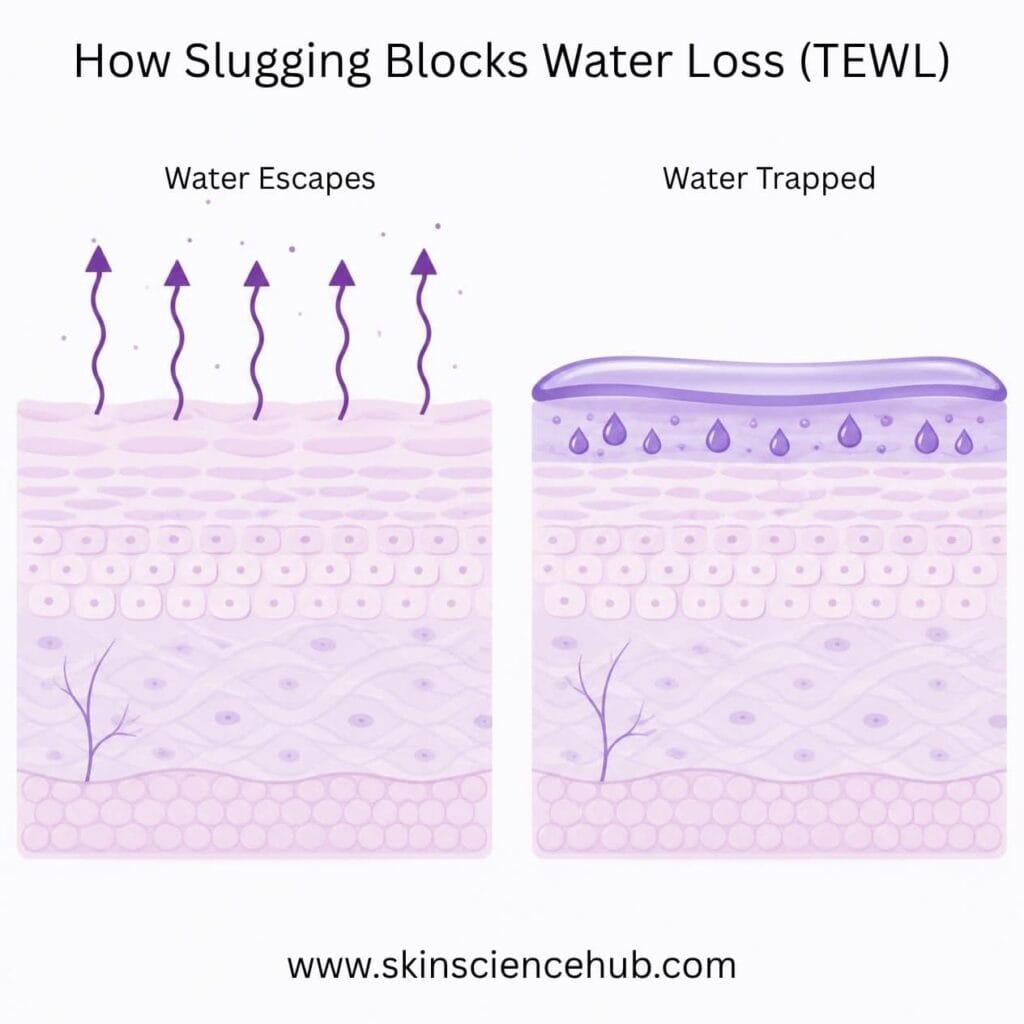
Face slugging involves using a petroleum-based ointment as the last step in your nighttime skincare routine. The term “slugging” comes from how your skin looks afterward: shiny and slick, much like a slug.
Your skin loses moisture all the time through transepidermal water loss (TEWL). This process speeds up at night due to indoor heating, air conditioning, and dry air, which pull water from your skin more rapidly. As a pharmacologist, I see slugging as a direct solution to this issue. Petrolatum creates a barrier on your skin, blocking TEWL at the source. This is why the effect lasts all night, unlike regular moisturizers that fade after a few hours.
Who Should Try Slugging (And Who Should Avoid It)
1. Slugging for Dry Skin
Slugging works especially well for dry skin. You might finish your whole nighttime routine and still wake up with tight, uncomfortable skin. That means your moisturizer just isn’t sealing in enough moisture. Winter makes this worse because indoor heating and cold air strip moisture away faster than any moisturizer can replace it.
2. Slugging for Damaged Skin Barriers
Slugging also helps when your skin barrier is damaged, whether from over-exfoliating, harsh weather, or professional procedures like microneedling and laser treatments. Freshly treated skin loses water fast through TEWL, which is why dermatologists have used petrolatum for post-procedure care for decades. If you’ve had a professional treatment, though, check with your practitioner first, because everyone has their own aftercare preferences.
3. Slugging for OILY SKIN
Avoid slugging if you have oily skin, since you likely already deal with a greasy feeling. Thick ointment on top just makes it worse. However, some people have oily but dehydrated skin. In other words, their skin lacks water even though it still produces oil. If that sounds like you, light slugging can keep your skin hydrated without making it greasy.
4. Slugging for Acne-Prone Skin
If you’re acne-prone, the situation gets a bit more nuanced. Petrolatum is non-comedogenic, and a 2023 dermatology review confirmed it doesn’t clog pores or cause acne. It does trap everything underneath against your skin, though. If you don’t cleanse properly before slugging, or you produce excess oil, you may break out. Even so, many people with acne-prone skin do well with petrolatum-based products, especially when acne medications leave their skin dry and irritated. Test carefully, and watch how your skin responds.
5. Slugging for Rosacea and Humid Climates
Humid climates and night sweats make slugging miserable. That’s because when the air is already moist or you sweat while sleeping, occlusive ointment traps heat against your skin. Rosacea-prone skin feels this too, as trapped heat can trigger redness and flushing.
Is Petroleum Jelly Safe for Your Face?
Clean beauty advocates often claim petrolatum is carcinogenic, but this simply isn’t true. Unrefined petroleum does contain carcinogenic compounds called polycyclic aromatic hydrocarbons (PAHs), but the refining process removes these PAHs completely, producing cosmetic-grade petrolatum. Think of the difference between drinking water straight from a gutter versus filtered, bottled water. Cosmetic petrolatum goes through that same kind of purification, and it comes out safe.
Pure petrolatum won’t trigger allergic reactions, because it can’t bind with the skin proteins that cause sensitivity. That’s rare among skincare ingredients, because preservatives, fragrances, and plant extracts all risk triggering a reaction. And because petrolatum is anhydrous, it stays stable on its own. As a result, if you react to parabens or phenoxyethanol in your other products, this gets around that problem entirely.
Best Slugging Products for 2026
All slugging products work through occlusion. The differences come down to petrolatum concentration and what else is in the formula.
1. Vaseline
Vaseline is 100% pure petrolatum, making it the thickest and most sealing option out there. It’s been used safely for more than 150 years. A large tub costs less than $5 and lasts months. That makes it a good pick if you have very dry skin or a badly damaged barrier.

2. Aquaphor
Most people’s biggest complaint about pure Vaseline is that it feels too thick. Aquaphor fixes that, with 41% petrolatum plus mineral oil and lanolin that help it spread more easily. Some post-surgical practices prefer it over Vaseline for its panthenol, which may support healing. Its lanolin can trigger allergies, though, and since it comes from sheep, anyone following a vegan routine will want a different pick. Still, it costs a little more than Vaseline, spreads smoothly, and keeps your skin comfortable through the night.

3. CeraVe Healing Ointment
CeraVe Healing Ointment goes a step further if you need more than occlusion. It has 46.5% petrolatum plus ceramides, panthenol, and hyaluronic acid. Each ingredient does its own job: ceramides support barrier repair, panthenol helps prevent irritation, and hyaluronic acid adds hydration. It costs more than Aquaphor. However, that higher price gets you real repair ingredients alongside the occlusion. Reach for this one when your skin needs active repair.

4. La Roche-Posay Cicaplast Baume B5
La Roche-Posay Cicaplast Baume B5 takes a different approach. It contains panthenol, madecassoside, copper, zinc, and manganese, added to calm inflamed, irritated skin. Madecassoside comes from centella asiatica and helps speed up wound healing. The brand markets this formula for post-procedure skin that’s also inflamed and needs extra calming. It costs the most of the four, but it feels noticeably lighter than pure petrolatum. That makes it the pick for inflamed skin that needs calming.

5. FutureWise Slug Balm

FutureWise Slug Balm takes a plant-based route to the same result. Its formula is built on hydrogenated vegetable oil and plant-derived sterols, which form a moisture-sealing barrier overnight. It’s also vegan, cruelty-free, fragrance-free, and paraben-free, making it the pick on this list for readers who avoid animal-derived or petroleum-based ingredients. Research comparing vegetable oils directly against petrolatum found that petrolatum still blocks water loss more effectively, though plant oils reduce it too. Either way, skin is noticeably less dry by morning.
How to Do Slugging Correctly
Building an effective slugging routine starts with clean skin. Anything you slug over gets trapped against your face all night; therefore, only use beneficial ingredients underneath it.
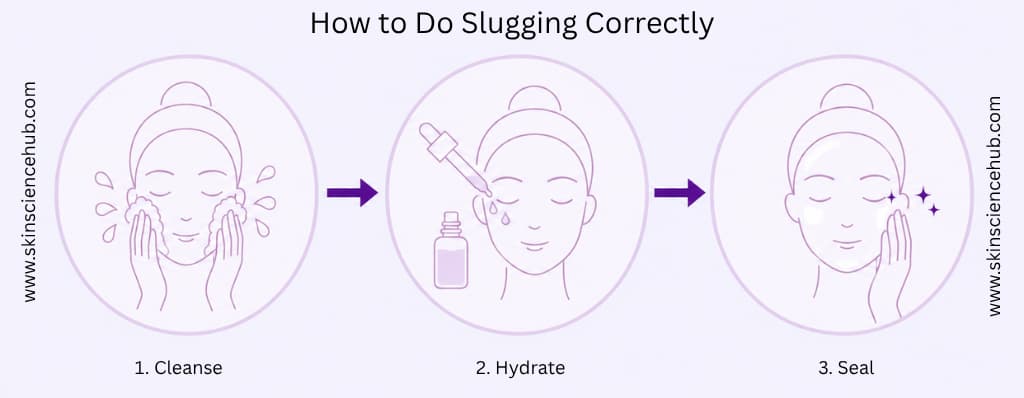
Your approach depends on your skin’s current state. If you’re recovering from a procedure or have irritated, flaking skin, apply petrolatum to damp skin right after cleansing. Leave out all other products. Your skin heals better when you keep things simple and avoid ingredients that might irritate it further. If you have dry or sensitive skin and want to boost your regular routine, apply your hydrating serums and moisturizer first. Let them absorb. Then finish with the ointment as your final occlusive step.
How often you slug depends on your skin type. Start small and build from there. If you’re new to this, begin with once a week and check in on how your skin feels the next morning. If it’s hydrated with no new breakouts, work your way up from there. Very dry skin or a damaged barrier can usually handle slugging nightly. Acne-prone skin tends to do best at once or twice a week. Most other skin types land somewhere around 2 to 3 times a week for maintenance.
The amount of slugging product you use counts too. Start with a pinky nail’s worth for your entire face and neck. This seems small, but petrolatum spreads much further than you’d expect. You can always add more if needed.
Timing prevents wasted product, so apply your slug at least 30 minutes before bed. An hour works even better, because the product won’t absorb quickly. If you climb into bed right after applying it, most of it ends up on your pillowcase before it can work on your skin.
What to Slug With (And What to Avoid)
Slugging boosts whatever sits underneath it. If your serums and treatments aren’t working as expected, it’s worth trying. The occlusive layer traps them against your skin, helping them penetrate deeper and stay active all night. But that same effect can damage your skin with strong actives.
Avoid retinoids and exfoliating acids on slugging nights if your skin is sensitive. These ingredients can be highly irritating when you slug over them. The occlusive barrier pushes them too deep into your skin, which can lead to redness, burning, and peeling.
If you have resilient skin, you can slug over these actives for maximum results. But building that tolerance takes years. For most people, slugging over actives does more harm than good. Save slugging for your rest nights, when you’re not using strong treatments.
Hydrating ingredients work well under slugging and get a real boost from it. Hyaluronic acid and peptides both work better under occlusion. The barrier helps them absorb without the irritation risk that actives bring.
What Results Look Like (Before and After)

The first night usually shows a fast, visible change. Slugging keeps water from escaping your skin overnight. Most people wake up with plumper, softer-looking skin right away, though that alone won’t repair your skin’s barrier.
Real change takes longer to show up, and what you’ll see by then depends on your skin type. Dry or barrier-damaged skin usually looks calmer and less flaky within 2 to 3 weeks. Acne-prone skin can see the same improvement, but breakouts in that window are usually fixable, not a sign that slugging can’t work for you.
By the 1-month mark, you’ll know if slugging works for you or not.
Troubleshooting Your Slugging Routine
A few breakouts when you start your slugging routine don’t mean you need to stop completely. The most common causes are using too much product, poor cleansing, or layering irritating actives that become too potent when trapped. Give your skin a few days to settle. Then try again with less product, cleaner prep, and no actives underneath.
Pilling happens when a product rolls off your skin in little balls or clumps as you apply it. 3 things usually cause this: over-applying product, not waiting long enough between skincare steps, or using silicone-based products that don’t layer well with petroleum jelly. Let your moisturizer absorb for 5 to 10 minutes before slugging. Use less product. Check your serums and moisturizers for silicones, since ingredients ending in “cone” or “siloxane” can cause pilling when you layer petrolatum on top.
You’ll know you’re using too much if your pillow gets greasy or you leave residue on everything you touch. The goal is a thin protective layer, and it should take about 1 hour for the product to settle into your skin.
You’ll know your slugging routine is working when you wake up with skin that feels soft and plump, not tight and dry. Over the following weeks, you should also see less flaking and better hydration building up. If you’re not seeing that by the 1-month mark, work back through the causes above.
The Bottom Line
Slugging won’t work for every skin type. That’s fine, given how different everyone’s skin is. But for the right skin type, done the right way, it’s a useful tool that locks in moisture overnight. Try it one night this week, and let your own skin tell you whether it stays in your routine.

