
Retinol vs Tretinoin: Which One Do You Actually Need?
Last updated on August 21st, 2026
Retinol and tretinoin are not the same thing, although people use the terms interchangeably all the time. Both are vitamin A derivatives that eventually produce the same active molecule in your skin, but how they get there is very different.
Tretinoin is already in its active form, so it works immediately. Retinol has to be converted first, through two separate steps, before your skin can use it. That gap in how they work is what creates all the other differences, from potency to prescription requirements to how your skin responds.
Both are proven for acne, aging, and hyperpigmentation. Where they differ is how fast they get you there, how much your skin has to adjust along the way, and whether you actually need a prescription to treat what you are dealing with.
What Is the Difference Between Retinol and Tretinoin?
Retinol is available over the counter, typically in concentrations from 0.025% to 1%. When you apply it, your skin converts it first into retinaldehyde, then into retinoic acid. That slower, stepwise delivery is what makes retinol easier to tolerate.
Tretinoin, sold under brand names including Retin-A, has been used in dermatology since the late 1960s and was the first retinoid to receive FDA approval for acne in 1971. Given its potency, it is prescription only. It comes in three concentrations, 0.025%, 0.05%, and 0.1%, and is available as a cream, gel, or microsphere gel. The microsphere version releases tretinoin gradually into the skin and was developed to reduce the irritation that came with earlier formulas. If you tried tretinoin years ago and found it too harsh, the microsphere version is worth knowing about.
| Retinol | Tretinoin | |
|---|---|---|
| Access | Over the counter | Prescription only |
| Potency | Lower | About 10x higher |
| Speed | Slower | Faster |
| Skin adjustment | Mild | More significant |
| Best for | Mild to moderate concerns | Moderate to severe concerns |
Those differences come down to one root cause more than anything else, and that is potency.
Retinol vs Tretinoin Strength and Potency
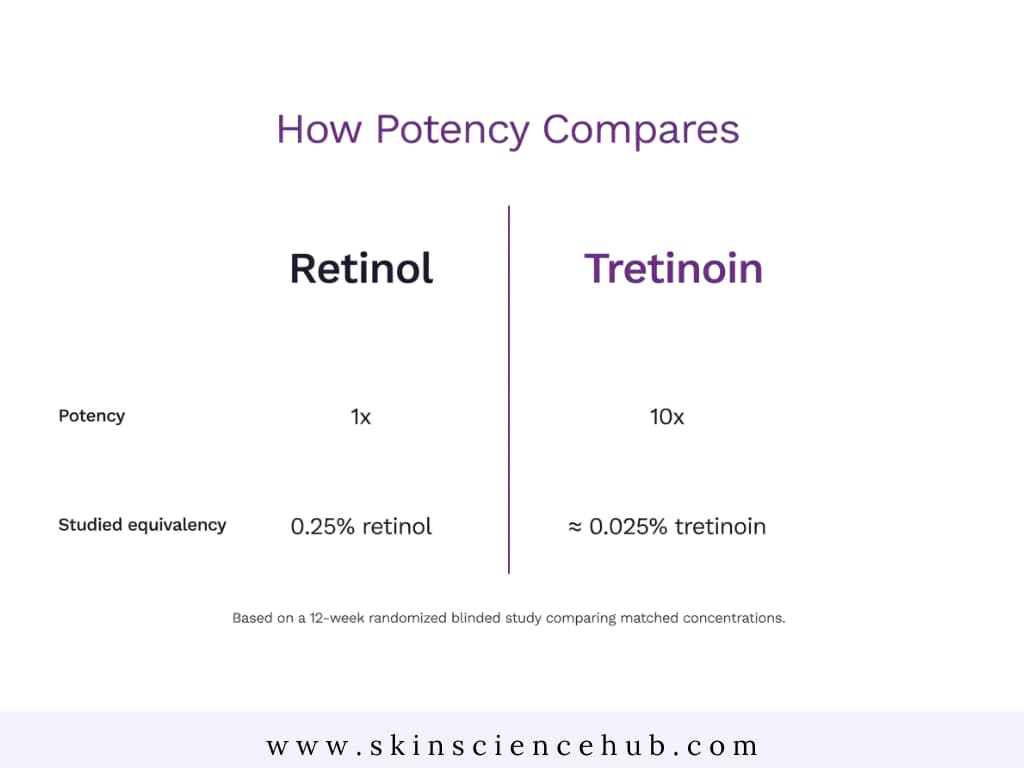
Tretinoin is approximately ten times more potent than retinol at the same concentration, because nothing is lost to conversion. But that gap narrows when retinol is used at a higher concentration. A 0.25% retinol is roughly equivalent to 0.025% tretinoin, and as a pharmacologist, the 1% to 0.1% comparison follows the same conversion logic, though this specific equivalency has not been formally studied. A randomized, blinded study comparing matched concentrations found no statistically significant difference in efficacy over twelve weeks.
The one advantage tretinoin holds that concentration cannot fully close is speed. Results come faster, and if you have been using retinol consistently for months without the progress you expected, that speed gap is usually the reason tretinoin is worth considering.
For a full breakdown of how retinoids compare as a family, read retinoids vs retinol post.
Is Tretinoin More Effective Than Retinol?
The short answer is yes. Tretinoin is more potent and gets there faster. But retinol, used consistently at the right concentration, closes that gap and delivers comparable results.
Tretinoin vs Retinol for Acne
If acne is your main concern, particularly moderate to severe forms, tretinoin is your strongest option. It works by normalizing skin cell turnover, which clears pores before blockages can form, and it remains the first-line acne treatment in dermatology. For mild to moderate acne, retinol works well and is worth trying before going the prescription route.
Retinol vs Tretinoin for Wrinkles and Anti-Aging
For wrinkles and significant photoaging, tretinoin is the most effective topical option available. With decades of research behind it, it improves skin texture, fine lines, and collagen production, and because it works faster, the results are more visible sooner.
Retinol improves the same outcomes, and for early fine lines and mild photoaging, it is an effective place to start.
Tretinoin vs Retinol for Hyperpigmentation and Dark Spots
Tretinoin fades pigment and dark spots by speeding up cell turnover. A 40-week study in adults with moderate to severe post-inflammatory hyperpigmentation found that 92% of patients saw measurable skin lightening with tretinoin 0.1%, compared to 57% with a placebo. Retinol works through the same mechanism and, used consistently, lightens dark spots and evens out skin tone. Learn more on how retinol works for hyperpigmentation
Retinol vs Tretinoin Side Effects and What to Expect
Both tretinoin and retinol can cause redness, peeling, dryness, and sensitivity, especially in the first few weeks. With tretinoin this adjustment phase even has a name, retinization, and irritation typically peaks in weeks one and two before easing with continued use.
The strongest retinoid is the one you can keep using. A retinol you use every night for a year will outperform a tretinoin prescription you stopped after six weeks because your skin could not tolerate it.
Both retinoids increase photosensitivity, so daily SPF is essential. If your skin is reactive or your barrier is compromised, read how to use retinol for sensitive skin and how to repair a damaged skin barrier before starting either ingredient.
Retinol vs Tretinoin for Different Skin Types
Your skin type affects how well you tolerate either ingredient, and it is worth factoring in alongside your concern.
Oily skin generally handles tretinoin’s adjustment period better. Sebum provides some buffer during the initial weeks, so the redness and peeling tend to be less intense and shorter lived.
Dry and sensitive skin types do better starting with retinol. It releases retinoic acid gradually, which gives your skin time to adjust without overwhelming the barrier, and for skin that is already prone to redness, flaking, or tightness, that gentler pace is what makes consistent use possible.
Combination skin depends on how reactive your sensitive areas are. If your cheeks are dry or easily irritated, starting with retinol and building up is the safer approach.
Do You Need a Prescription Retinoid?
Not always. If you have never used a retinoid before, starting with retinol at the lowest concentration is the smarter move regardless of your concern. Your skin needs time to adjust and build tolerance before moving to something stronger.
Tretinoin is worth pursuing if you have moderate to severe acne, deep-set wrinkles, or hyperpigmentation that has not budged after six consistent months of retinol. At that point your skin has already tolerated retinol well enough to handle a prescription retinoid.
If retinol is too slow and you are not ready for a prescription yet, retinal is a useful middle ground. It sits between retinol and tretinoin, needs only one conversion step to retinoic acid, and is generally better tolerated than tretinoin.
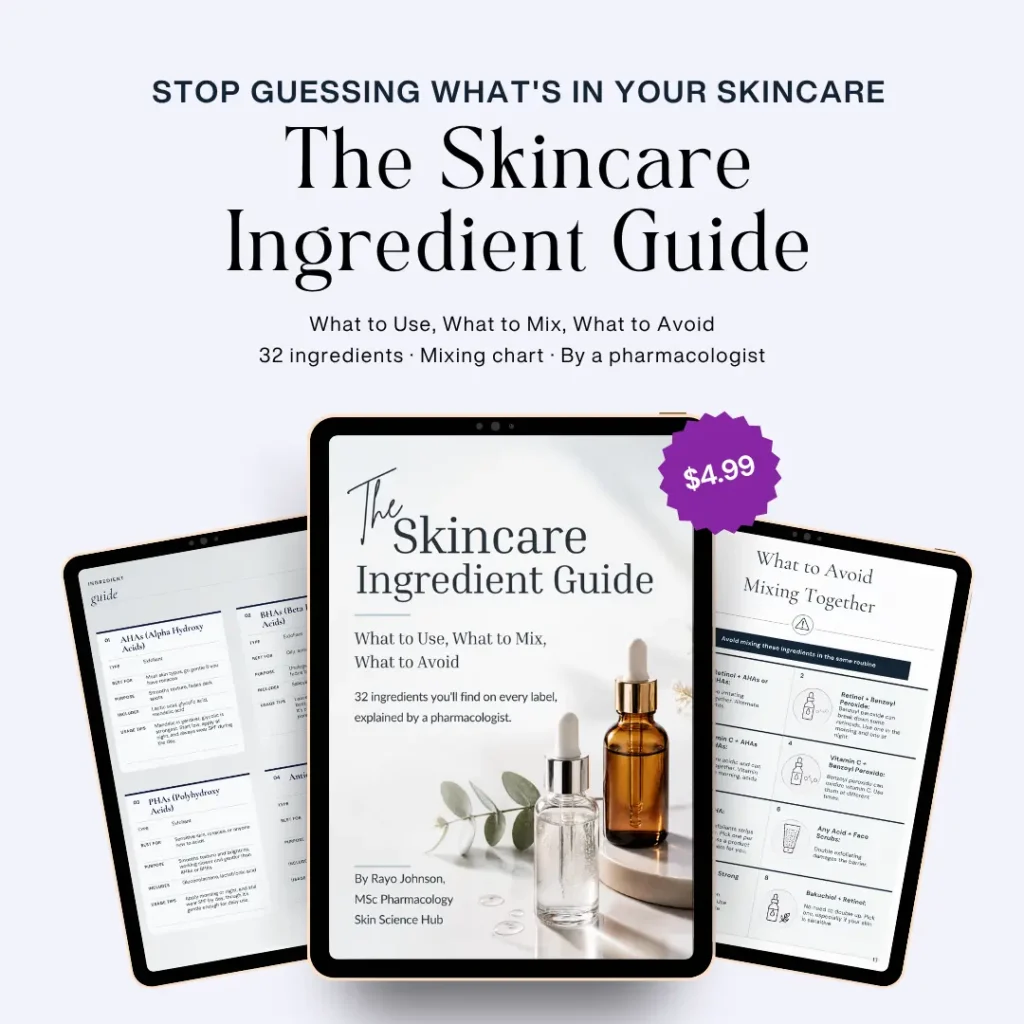
Whichever you use, my guide shows you what to keep apart from it and what to use for your skin concern
Can You Switch from Retinol to Tretinoin?
Yes, and it is straightforward. Start tretinoin at 0.025%, the lowest concentration available, and apply it once a week. As your skin adjusts, increase frequency before moving to a higher concentration, because going slowly is what keeps irritation manageable. It also helps to pause retinol for a few days before introducing tretinoin, so your skin is not already sensitised when you begin.
Moving in the other direction, from tretinoin to retinol, is much easier. People do this when tretinoin proves too harsh or when prescription access becomes difficult, and because retinol is gentler, any adjustment is minimal.
As for using both at the same time, there is no reason to. They produce the same active molecule in your skin, so layering them only adds irritation. Use one or the other.
The Bottom Line
Tretinoin is the stronger option and the research backs that up. But most people do not need to start there, and many never need to. Retinol, used consistently at the right concentration, resolves more than most people give it credit for. If you have been consistent and your skin is still not responding, that is when the prescription conversation becomes worth having.