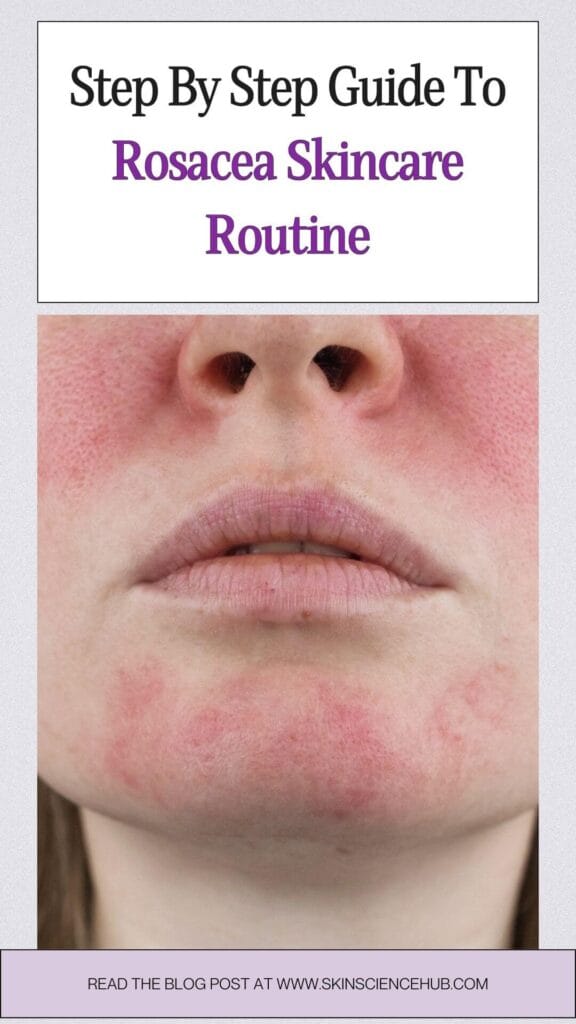
How to Build a Rosacea Skincare Routine Step by Step

Last updated on February 23rd, 2026 at 01:20 pm

Finding skincare that doesn’t irritate rosacea or sensitive skin is exhausting. Products sting the moment they touch your face. Redness spreads from things that don’t affect anyone else. You read reviews, you try gentle formulas, and nothing works without triggering a reaction.

This happens because your skin barrier is damaged, and that’s why everything irritates you. The barrier can’t keep irritants out or hold moisture in, so products penetrate too easily and your nerve endings overreact. Some people damage their barrier temporarily by overdoing harsh actives, while others manage chronic rosacea that needs lifelong attention. The root problem is the same though. Your protective barrier is compromised.

I’m going to walk you through building a rosacea skincare routine that repairs this barrier without making it angrier. You’ll learn which steps are essential and which ones to skip when your skin is flaring. You’ll get product recommendations at different price points. And you’ll understand how to add other treatments once your barrier is strong enough to handle them.

How to Build a Rosacea Skincare Routine Step by Step
  • This post contains affiliate links. All recommendations based on ingredient research and formulation analysis. Purchasing from this link helps this site at no additional cost to you. Please read our affiliate disclosure for more information

Essential Rosacea Skincare Rules

Less is more with rosacea. Your compromised barrier cannot handle the same product load that normal skin tolerates. Start minimal and add only when your skin stays calm. Introduce one new product at a time and wait at least a week before adding another. This way if something causes irritation, you know exactly what triggered it.

Every product I recommend is fragrance free because fragrance irritates sensitive skin whether synthetic or natural. Check ingredient lists and skip anything listing fragrance or parfum. Patch test new products on your inner forearm or jawline for 24 hours before applying to your whole face. This simple step saves you from discovering a problem across your entire face.

Rosacea has common triggers beyond skincare. Heat from hot showers dilates blood vessels. Spicy foods and alcohol trigger flushing. Sun exposure worsens everything. While skincare protects your barrier, avoiding your personal triggers prevents flares. For comprehensive guidance on identifying and managing triggers along with other calming strategies, read my post on proven ways to calm rosacea symptoms.

Morning Skincare Routine for Rosacea

Step 1: Cleanse Gently or Skip Morning Cleansing

Morning cleansing is optional. You might not need it when you wake up. If you have no excess oil or heavy residue from the night before, just splash your face with lukewarm water or spritz it with thermal spring water from Avene or La Roche Posay. Damp skin absorbs moisturizer and sunscreen better than dry skin, and you avoid disrupting your barrier unnecessarily.

But if you applied thick products overnight or you wake up with noticeable oil, cleanse gently. VaniCream Gentle Facial Cleanser is one of my longtime favorites because it actually lives up to the gentle promise. It’s soap free, oil free, and approved by the National Eczema Association. The formula lathers well without stripping your skin. I use this to wash my hands in winter because it cleans effectively while being kind to skin.

Cetaphil Redness Relief Foaming Face Wash offers another excellent option if you want calming ingredients in your cleanser. This includes allantoin, licorice extract, and caffeine alongside hydrating glycerin. The foam rinses clean without leaving residue, and it removes sebum and basic makeup without irritation.

Apply cleanser to damp skin, massage gently for thirty seconds, and rinse with lukewarm water. Hot water dilates blood vessels and can trigger flushing, so keep the temperature comfortable. Your skin should feel clean but not tight afterwards. If it feels stripped or uncomfortable, you’re either using the wrong cleanser or cleansing too aggressively.

Step 2: Apply Calming Serum (Optional)

Serums are optional for rosacea. If your skin is flaring with redness or burning, skip this step entirely and go straight to moisturizer. But if your skin is stable and you want extra calming support beyond moisturizer, these serums suit sensitive skin.

Patch test any new serum on your inner forearm or jawline for 24 hours before using it on your whole face. If you see redness, burning, or irritation in that test spot, the product will react badly on your face.

The Ordinary Azelaic Acid 10% provides gentle calming benefits at an affordable drugstore price point. This concentration soothes rather than targets hyperpigmentation like prescription strength does. It contains squalane and glycerin for barrier support. The texture feels slightly silicone based and can be gritty, so patch test first.

Paula’s Choice Calm Repair Serum is one I reach for when my own skin gets irritated during winter. This lightweight formula layers well under moisturizer without feeling heavy. It contains hyaluronic acid, ceramides, feverfew extract, and beta glucan, all working together to hydrate, calm, and strengthen your barrier. This one helps reactive skin.

Introduce only one new product at a time and wait at least a week before adding another. This way if something causes irritation, you know exactly what triggered it. If you want to try serums but find these irritating, split your serum use between morning and evening instead of layering multiple products at once. This minimizes the total product load on your skin while still giving you benefits. Listen to your skin. If it burns or stings, that serum is not for you regardless of how many people online love it.

Step 3: Moisturize Your Skin

Moisturizer is essential after cleansing or dampening your skin. You need it twice daily without exception. This step replenishes water, supports barrier recovery, and prevents moisture loss through your compromised skin barrier.

Avene created their Redness Expert Soothing Moisturizing Concentrated Cream specifically for redness prone skin. It reduces visible redness while strengthening your barrier and providing hydration. The lightweight texture absorbs quickly, which makes it perfect for layering under sunscreen in the morning. I love how it sits on my skin without feeling heavy or greasy.

Althea 147 Barrier Cream offers an even lighter option if you have oily sensitive skin or live in a warm climate. This Korean formula supports your barrier through ceramides and hyaluronic acid while plant extracts and chamomile calm irritation. It absorbs fast and sits well under sunscreen without pilling.

Apply your moisturizer to damp skin immediately after cleansing or spritzing with water. Use about a nickel sized amount for your whole face. Pat it in gently rather than rubbing, because friction can trigger flushing in reactive skin. Your skin should feel comfortable and hydrated, not greasy or suffocated.

Step 4: Protect With Sunscreen

UV radiation triggers rosacea flares, worsens redness, and permanently dilates blood vessels over time. You need sunscreen every day, even indoors, because UV rays penetrate windows.

Mineral sunscreens with zinc oxide or titanium dioxide work best for rosacea because they sit on your skin rather than absorbing into it. This makes them less likely to sting or burn. They feel thicker than chemical sunscreens and sometimes leave a white cast, but formulations have improved dramatically.

Green tinted sunscreens offer a bonus for rosacea. The green pigment cancels out redness while protecting your skin from UV damage.

EltaMD UV Recovery Red Correcting SPF 50 is my top recommendation. The green tint neutralizes redness without looking ashy or unnatural on most skin tones, and it contains zinc oxide with ceramides for barrier support. The lightweight texture blends in easily.

ColorScience All Calm Clinical SPF 50 delivers mineral protection with green tint plus niacinamide to calm inflammation. This one excels at redness correction if you need extra coverage.

Apply about a quarter teaspoon for your face as the last step in your morning routine. Let your moisturizer absorb for a minute first so the sunscreen glides on smoothly without pilling. If the green tint looks off on your skin tone, try applying less or blending more thoroughly.

Evening Skincare Routine for Rosacea

Step 1: Remove Sunscreen and Makeup

Evening cleansing is essential to remove sunscreen and makeup. Use the same gentle cleanser from your morning routine, whether that’s VaniCream or Cetaphil. Your skin doesn’t need different products morning and night. Consistency minimizes irritation.

Double cleanse only if you wear waterproof makeup or very resistant sunscreen. Start with micellar water on a cotton pad to break down the makeup and sunscreen first. Press the pad gently against your skin for a few seconds to let the micellar water dissolve the products, then wipe softly without dragging or rubbing. Follow with your regular gentle cleanser to remove any remaining residue.

If you don’t wear much makeup or your sunscreen rinses easily, skip the double cleanse. A single wash with your gentle cleanser removes the day’s buildup without overdoing it. Your skin doesn’t need aggressive cleansing at night, especially when your barrier is already compromised.

Massage the cleanser for thirty seconds, rinse thoroughly with lukewarm water, and pat dry gently. Your face should feel clean but not stripped or tight. If it feels uncomfortable, you’re either cleansing too harshly or using too much product.

Step 2: Add Treatment Serum (Optional)

Evening serums are optional. Use the same calming serum from your morning routine if you found one that works for you, or skip serums entirely and go straight to moisturizer. Your skin doesn’t need multiple treatment products to stay healthy.

If your skin is stable without burning or flaring and you want to address other concerns like fine lines or texture, you can cautiously add gentle actives here. But only when your barrier is strong enough to handle them. You’ll know you’re ready when products stop stinging and your redness stays calm for several weeks.

Retinol formulated for sensitive skin helps with fine lines but requires the lowest concentration used only twice a week at first. Polyhydroxy acids exfoliate more gently than other chemical exfoliants. Peptides provide anti aging benefits without irritation.

Introduce one active at a time and wait three to four weeks before adding another. If your skin burns or turns red, that product is not for you right now. Your barrier needs more time to strengthen before you try actives again. Rosacea prone skin does better with fewer actives used less frequently, and that’s perfectly fine.

Step 3: Apply Night Moisturizer

Night moisturizer is essential for barrier repair. Your skin repairs itself while you sleep, and you lose more water overnight through your damaged barrier. This is why a richer creamier moisturizer works better at night than the lightweight options you might prefer during the day.

Cetaphil Redness Relieving Night Moisturizer is the one I recommend most often because it actually works without burning. When my own skin was severely reactive and everything stung, this was one of the only moisturizers I could tolerate. It reduces redness, calms irritation, and supports barrier repair with niacinamide, ceramides, and licorice root. The texture feels nourishing without being greasy or heavy.

Eucerin Redness Relief Night Cream offers another solid option with similar benefits. It provides extended overnight hydration with licorice root and evening primrose oil to restore barrier function. Creamy but not suffocating, fragrance free, and gentle enough for very sensitive skin.

Apply your night moisturizer generously after any treatment serums. Use about a grape sized amount for your whole face and pat it in gently. Your skin should feel comfortable and nourished, not greasy.

For very dry skin or harsh winter weather, layer a thin amount of petroleum jelly over your moisturizer to seal everything in overnight. This technique called slugging prevents water loss while you sleep. You’ll wake up with softer more hydrated skin.

Prescription Treatments for Persistent Rosacea

The skincare routine I outlined forms your foundation, but rosacea is a medical condition that often needs prescription treatments or office procedures to truly improve. These work alongside your daily routine rather than replacing it.

Two FDA approved topical medications target persistent facial redness directly. Oxymetazoline sold as Rhofade works gradually over three hours by constricting blood vessels to reduce redness. The results look natural and it doesn’t cause rebound worsening when it wears off. Brimonidine sold as Mirvaso acts faster within thirty minutes but can create an unnatural pale appearance and causes rebound redness for some people. Both medications are expensive and insurance coverage varies. Interestingly, oxymetazoline is the same active ingredient in over the counter Afrin nasal spray, which some people use as a more affordable option.

For the inflammatory bumps and papules, prescription azelaic acid at 15 to 20 percent, topical ivermectin, or topical metronidazole effectively clear breakouts. These target the papules and pustules while reducing inflammation around them, though they don’t address background redness.

When visible broken blood vessels develop around your nose and cheeks, topical medications can’t fix them. You need light based treatments like intense pulsed light, pulsed dye laser, or KTP laser to seal those vessels permanently. These procedures also help reduce background redness.

See a dermatologist if your rosacea worsens despite consistent gentle skincare or if persistent redness impacts your quality of life. Combining medical treatments with the protective routine you’ve built gives you the best chance of controlling your rosacea long term.

Bottom Line

Three steps form the foundation of your rosacea routine. Moisturize twice daily. Wear sunscreen every day. Cleanse at night. These basics repair your barrier and prevent worsening.

Everything else is optional. Serums and actives help when your barrier is strong but irritate when it’s compromised. The products I recommended help many people with rosacea and sensitive skin, but your skin might need something different. Listen to your skin above everything else. If something burns, stop using it regardless of reviews or recommendations.

Give your routine four to six weeks before expecting visible improvement. Barrier repair takes time. Your skin will feel more comfortable within days but redness reduces gradually over weeks to months. Start with the basics and build slowly. See a dermatologist when your routine alone isn’t enough. You deserve skin that feels comfortable and lets you live without constant irritation.

Frequently Asked Questions About Rosacea Skincare

Yes, but choose mineral foundations with zinc oxide or titanium dioxide because these calm redness while providing coverage. Avoid products with fragrance, alcohol, or menthol. Remove makeup gently with micellar water before cleansing at night.

Avoid alcohol, witch hazel, menthol, peppermint, fragrance, and essential oils because these trigger flares. Skip physical scrubs and high concentrations of acids. You can use niacinamide, ceramides, hyaluronic acid, and azelaic acid.

Avoid physical exfoliants like scrubs and brushes because friction damages your barrier. Chemical exfoliants work only if your skin is stable, and only polyhydroxy acids because these are gentlest. Skip exfoliation entirely during flares.

No, rosacea is not contagious. You cannot catch it from others or pass it through contact. Rosacea develops from genetics, damaged skin barrier, and abnormal immune response, not from infection.

Similar Posts

One Comment

  1. Skin irritations can be so tough to deal with and there are so many products out there that just compound the problems. Thanks for sharing!

Leave a Reply

Your email address will not be published. Required fields are marked *