

Different Types of Acne (With Pictures) and How to Treat Each One
Last updated on August 21st, 2026
A blackhead and a cyst are both forms of acne. But they don’t look the same, they don’t form the same way, and they don’t need the same treatment. Two pimples can even look nearly identical and still come from different causes. That’s why telling them apart takes more than a glance in the mirror.
This guide breaks down the different types of acne with photos, so you can see exactly which one you’re dealing with. From there, you’ll learn what’s driving your particular pattern and which treatments work for it. You’ll also see how to tell acne apart from the handful of conditions that look like it.
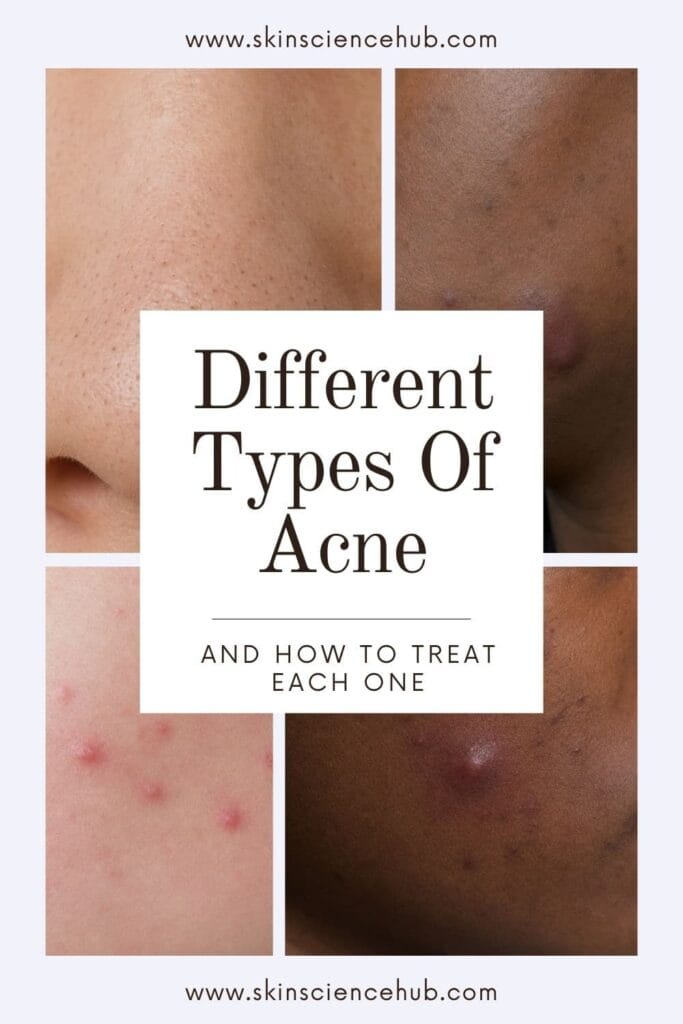
Types of Acne
Acne breaks down into two broad categories, non-inflammatory and inflammatory, and figuring out which type of pimple you have is the first step toward treating it right.
1. Non Inflammatory Acne
Non-inflammatory acne is the mildest type, and it shows up as blackheads and whiteheads.
a. Blackheads (Open Comedones)
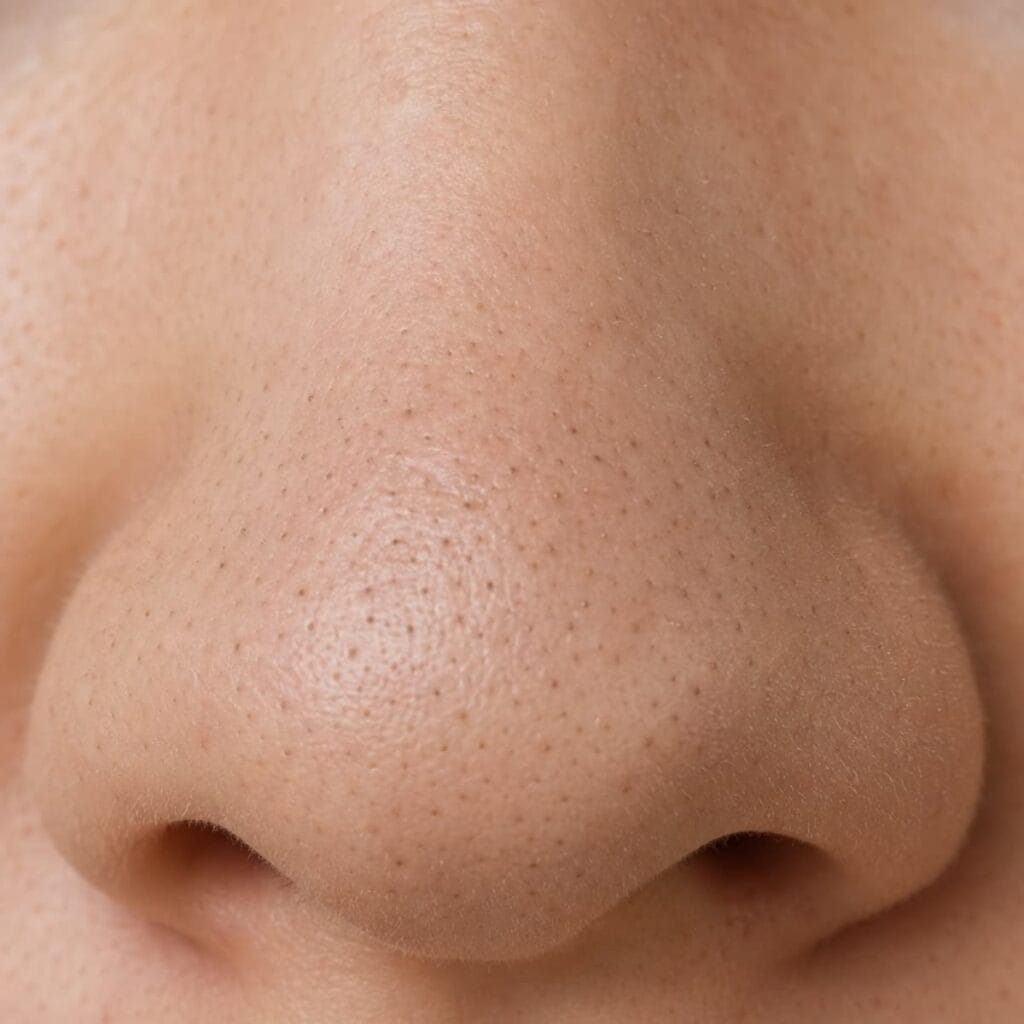
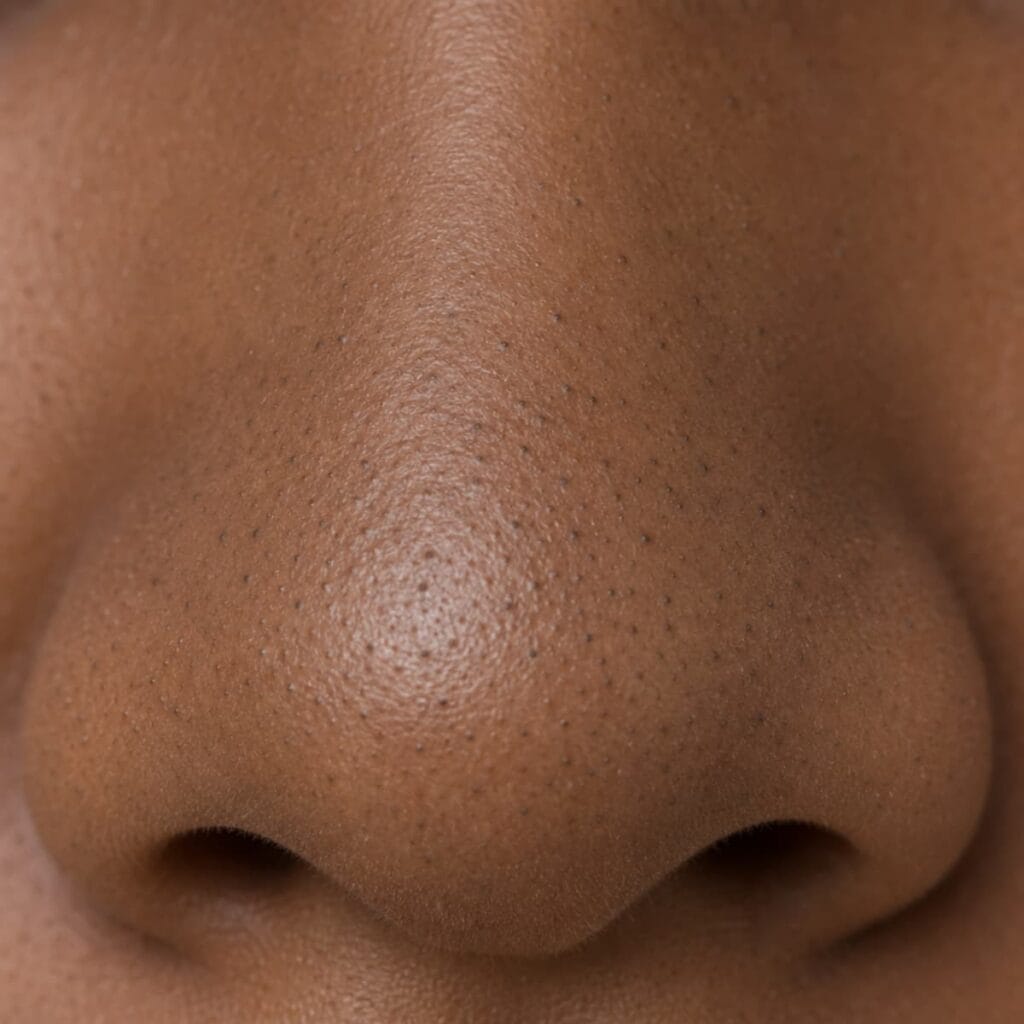
A blackhead is a clogged pore that stays open at the surface. Melanin pigment inside the follicle oxidizes when exposed to air, which is what turns it dark, not dirt.
- Appearance: a tiny dark or black dot sitting right at the pore opening
- Location: most common on the nose, chin, and forehead
- Feel: not painful, and not raised into a bump
- Common mistake: assuming the dark color comes from dirt, when it’s oxidized melanin reacting to air
b. Whiteheads (Closed Comedones)
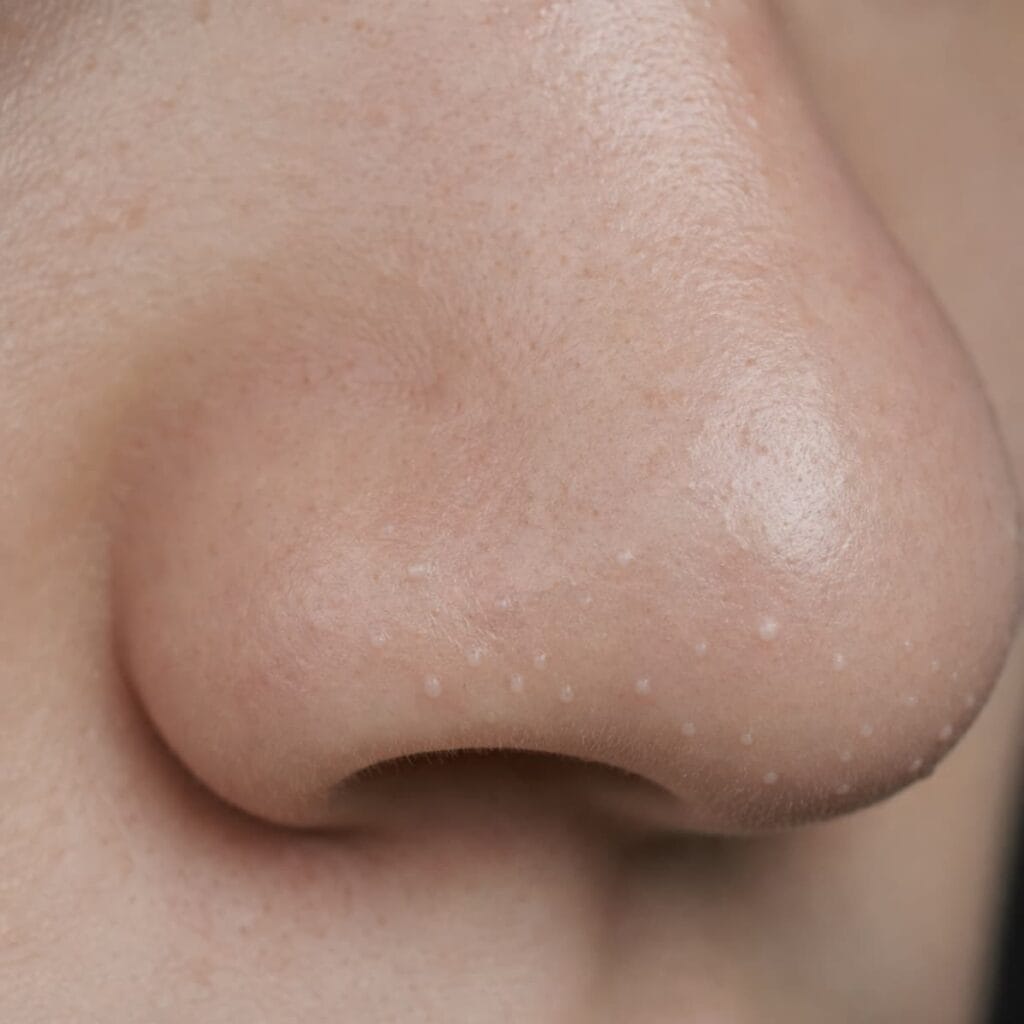
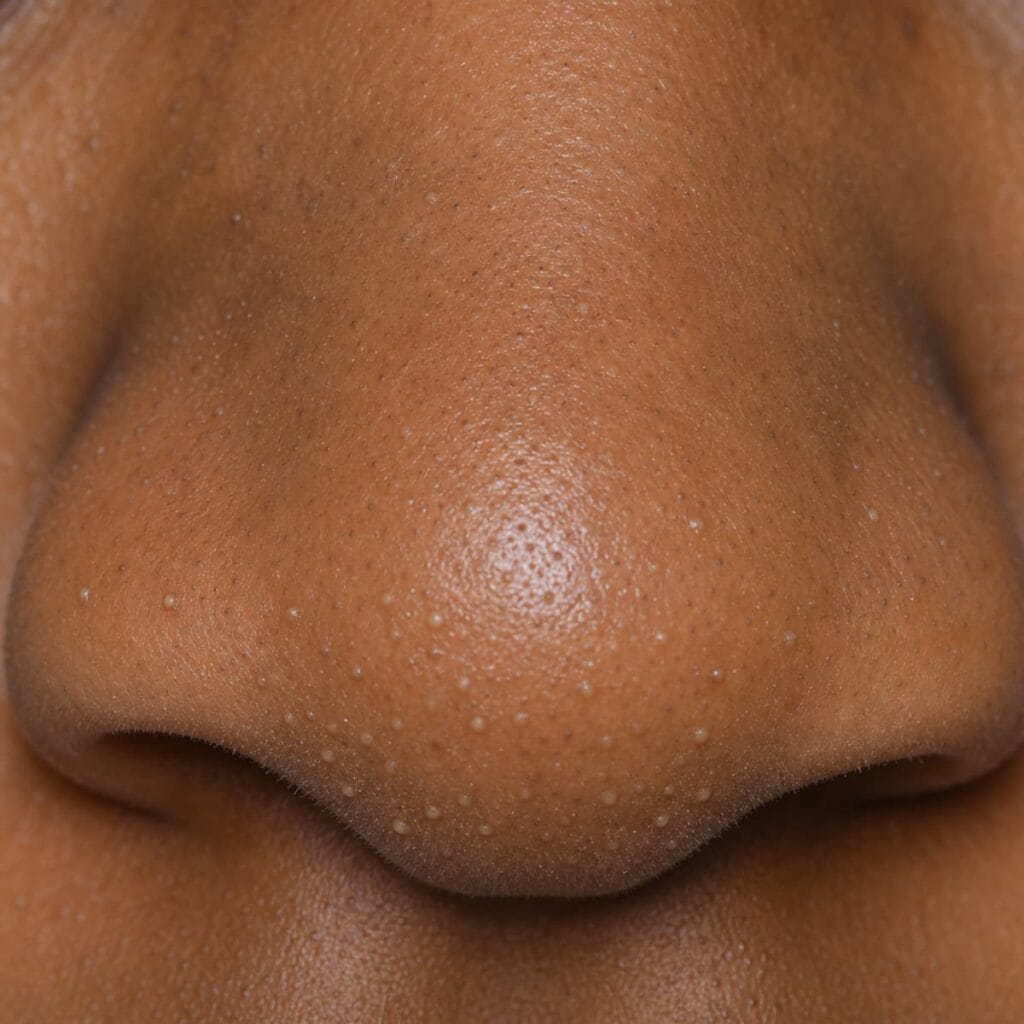
A whitehead is a clogged pore that stays closed at the surface. Skin grows over the trapped oil, dead skin, and melanin inside, so none of it reaches air or oxidizes, which is why it stays white or flesh-colored.
- Appearance: a small white or flesh-colored bump
- Location: most common on the nose, chin, and forehead
- Feel: not painful, but raised enough to feel under your fingers
- Common mistake: confusing it with a pustule, though whiteheads don’t contain pus
2. Inflammatory Acne
Inflammatory acne is the more severe type, since your immune system is actively responding to it. It shows up as papules, pustules, nodules, and cysts.
A. Papules and Pustules
A papule forms when the inflammation inside a clogged pore spreads into the surrounding skin, causing redness and swelling without pus.
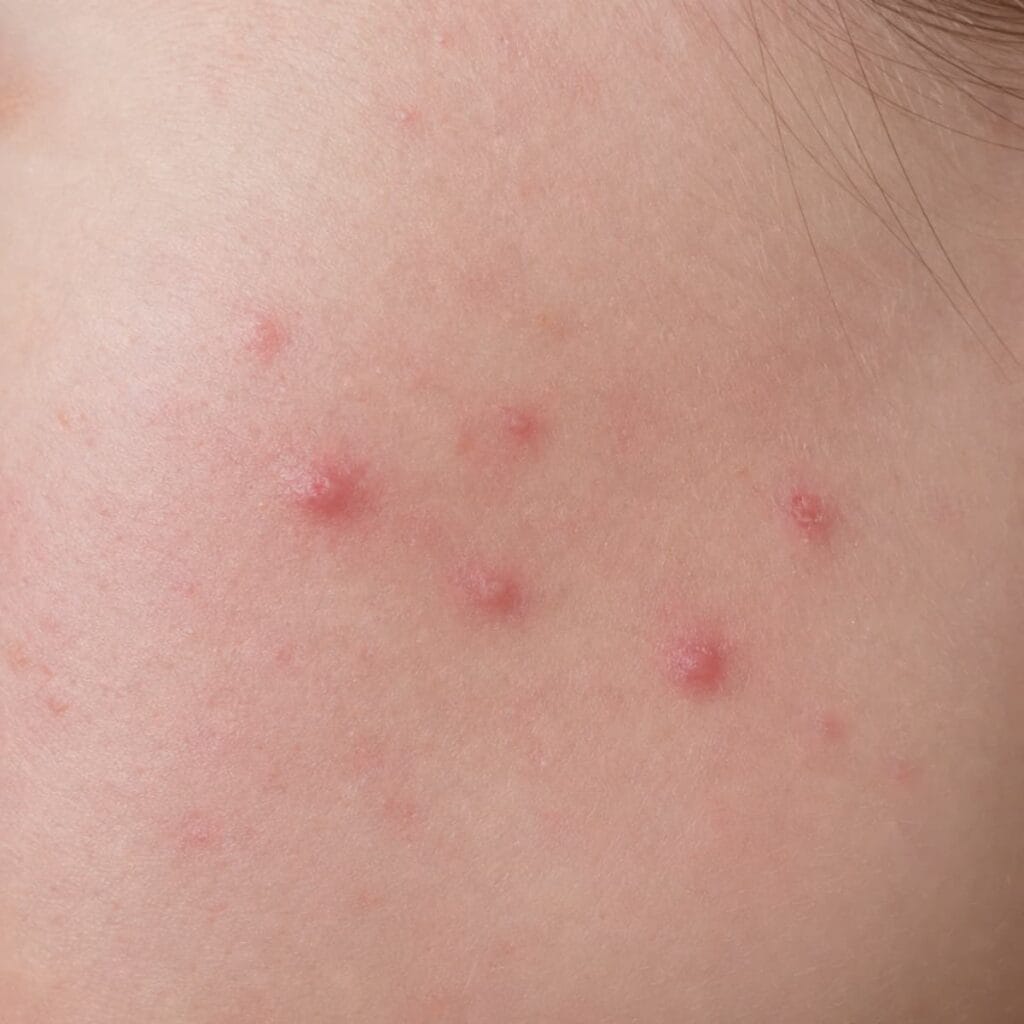
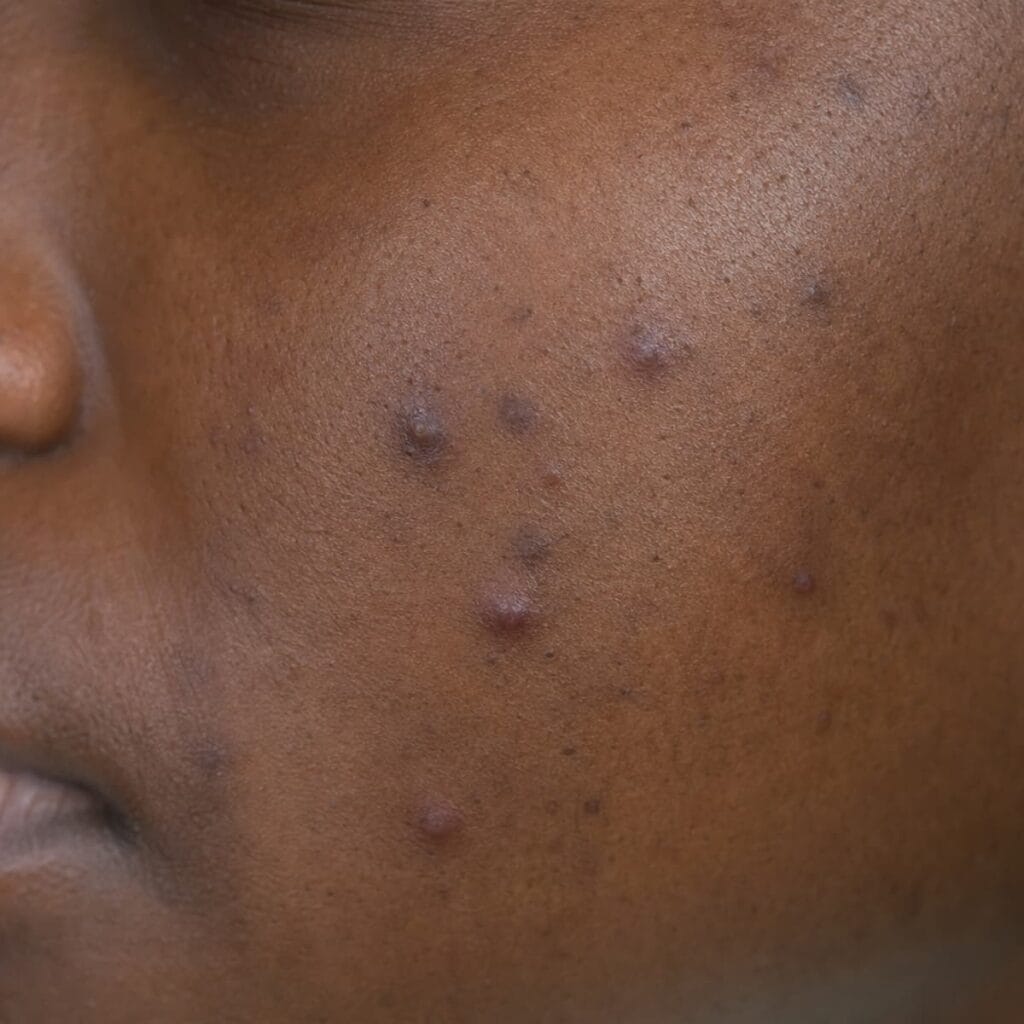
- Appearance: small, raised bumps that can look red, brown, or violet depending on your skin tone, with no visible center
- Location: can appear anywhere on the face, chest, back, or shoulders
- Feel: tender or sore to the touch
- Common mistake: trying to pop it, which only spreads the inflammation since there’s nothing inside to drain
A pustule often starts out as a papule, but as white blood cells rush in to fight the bacteria and die off, they turn into the pus that gives it its white or yellow center.
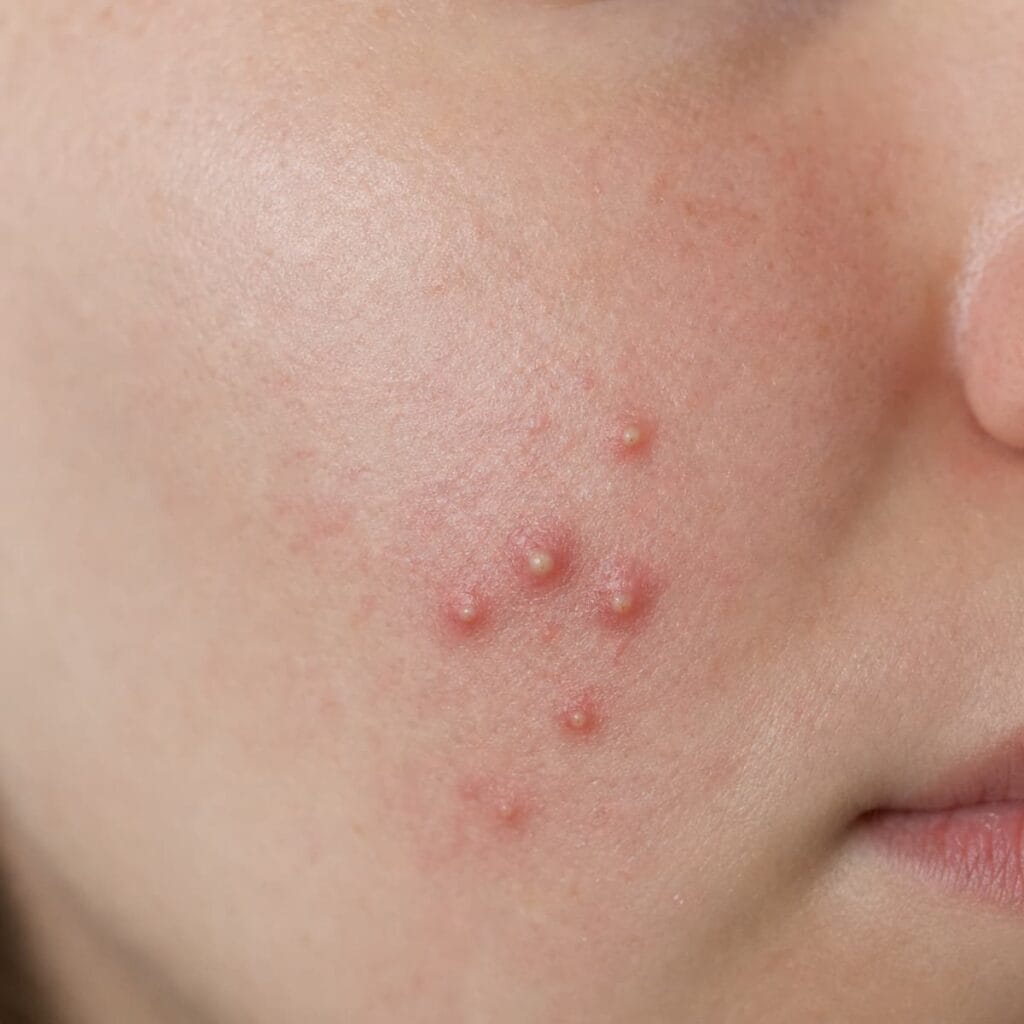
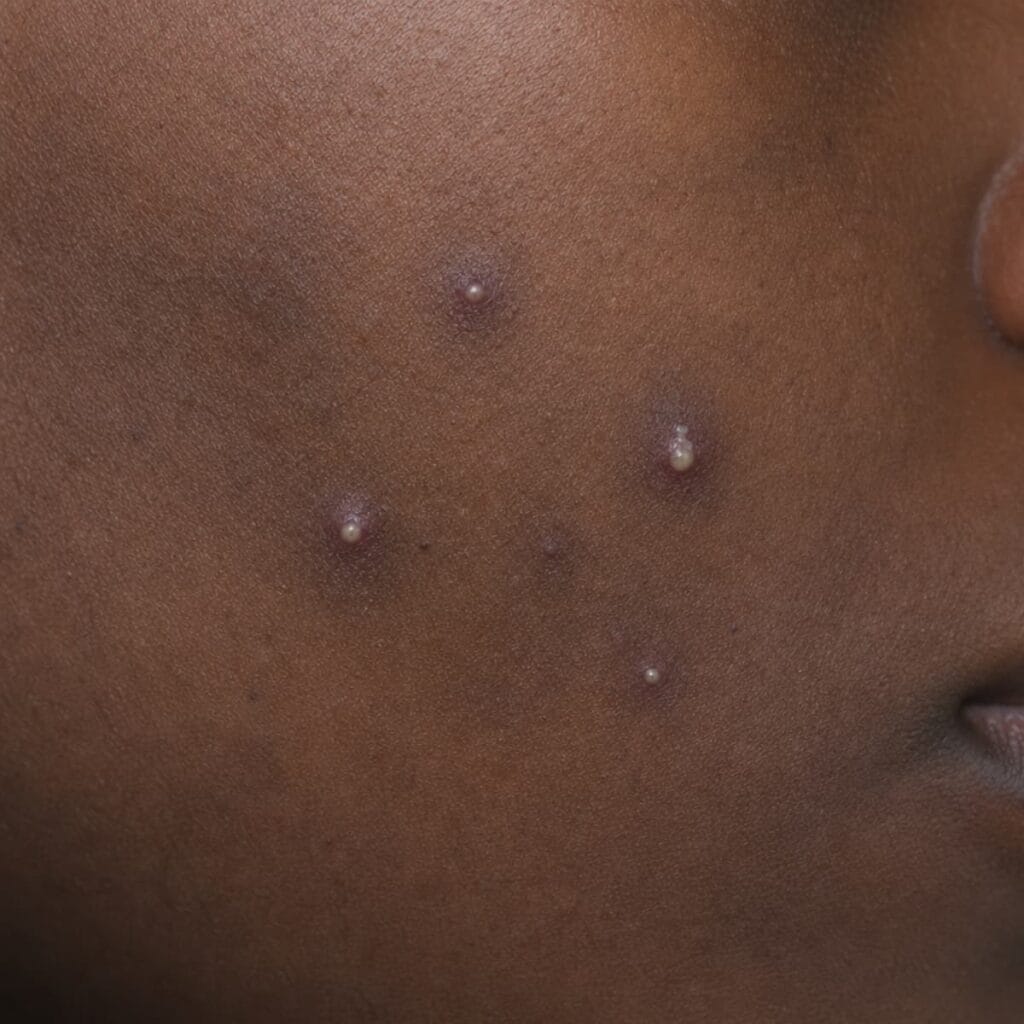
- Appearance: similar to a papule, but with a white or yellow center surrounded by inflamed skin that can look red, brown, or violet depending on your skin tone
- Location: the same areas as papules, often appearing in clusters
- Feel: tender or sore to the touch, similar to a papule
- Common mistake: popping it, which can push bacteria deeper and lead to scarringring
B. Nodules and Cystic Acne
A nodule forms when the inflammation from a papule or pustule pushes deeper into the skin, creating a hard lump with no pus and no visible head.
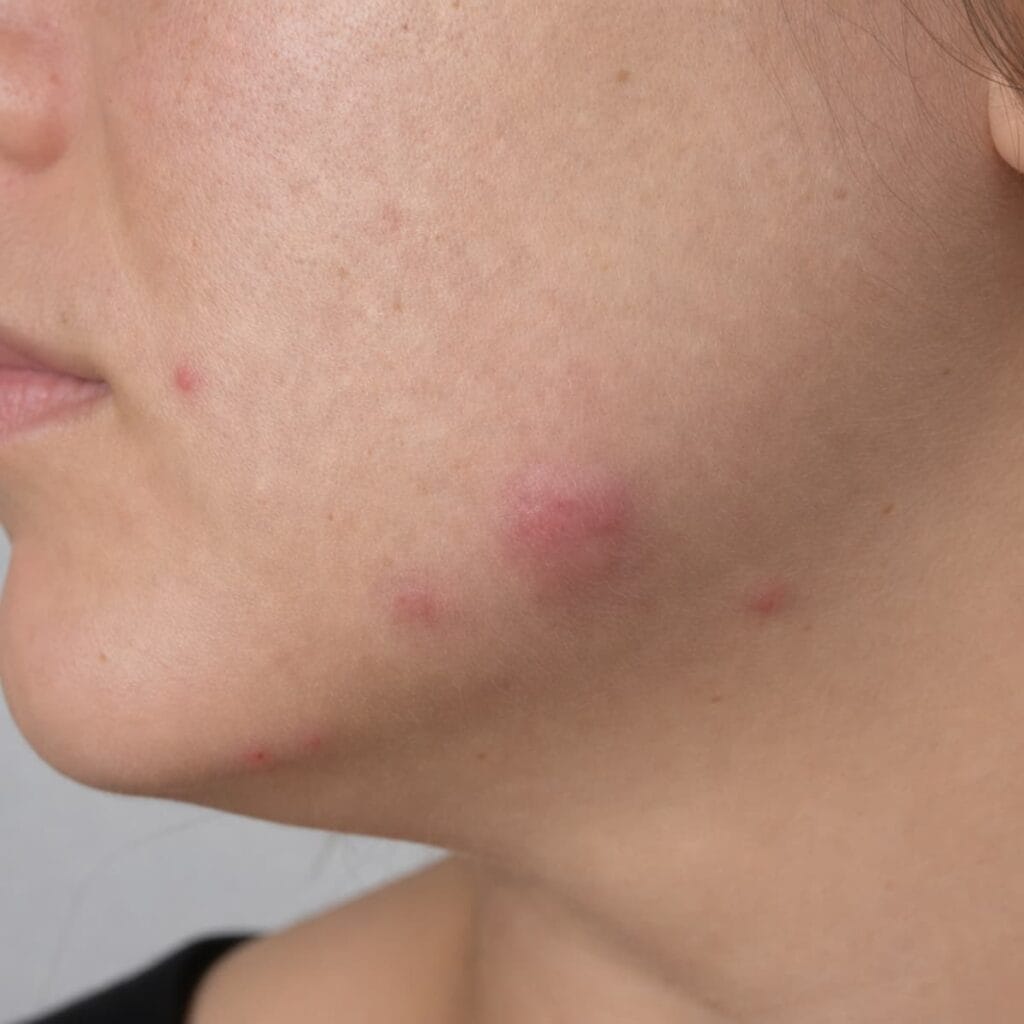
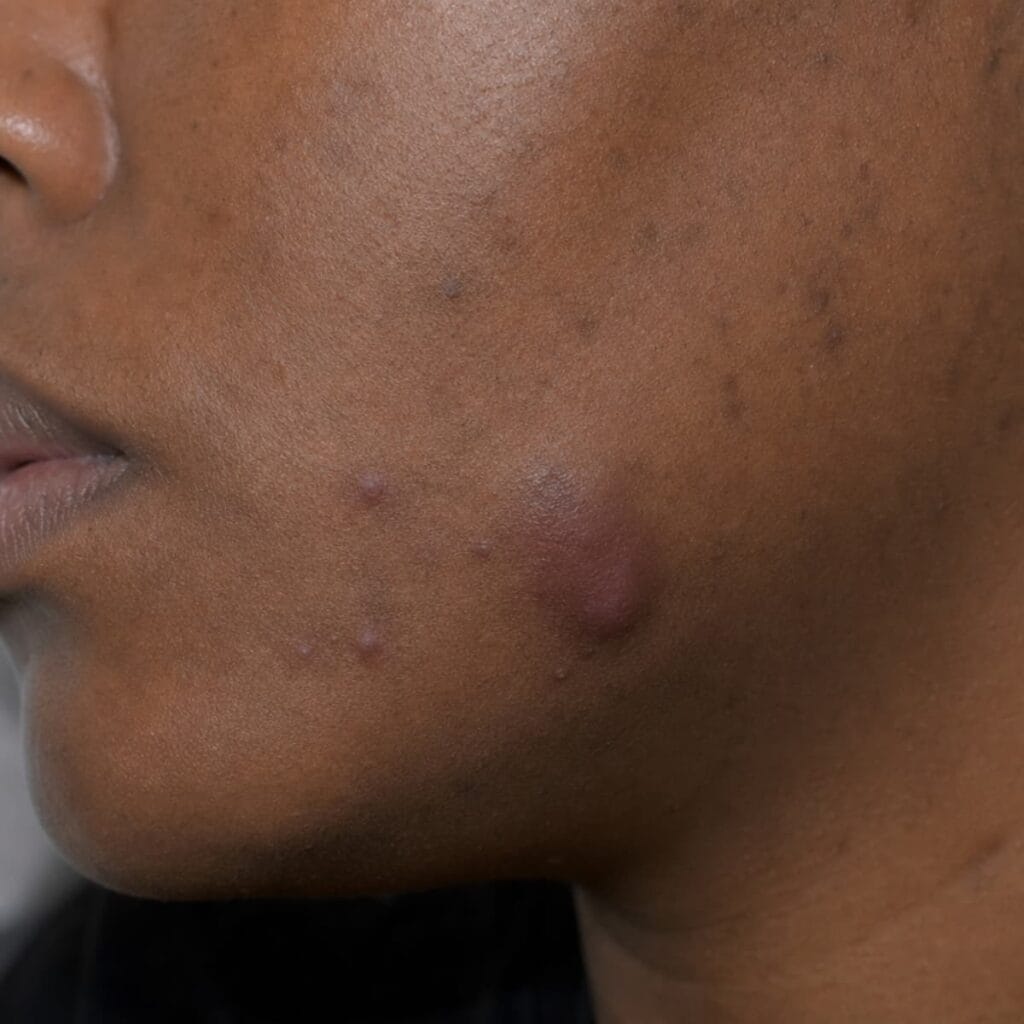
- Appearance: large, firm bumps that sit deeper under the skin than a papule or pustule, sometimes red, brown, or violet depending on your skin tone
- Location: most common on the jawline, chest, and back
- Feel: hard and painful, often aching even when nothing’s touching it
- Common mistake: trying to extract it, which won’t work since there’s no head, and can make scarring worse
A cyst forms the same way a nodule does, but it fills with pus, which makes it soft while a nodule stays hard.
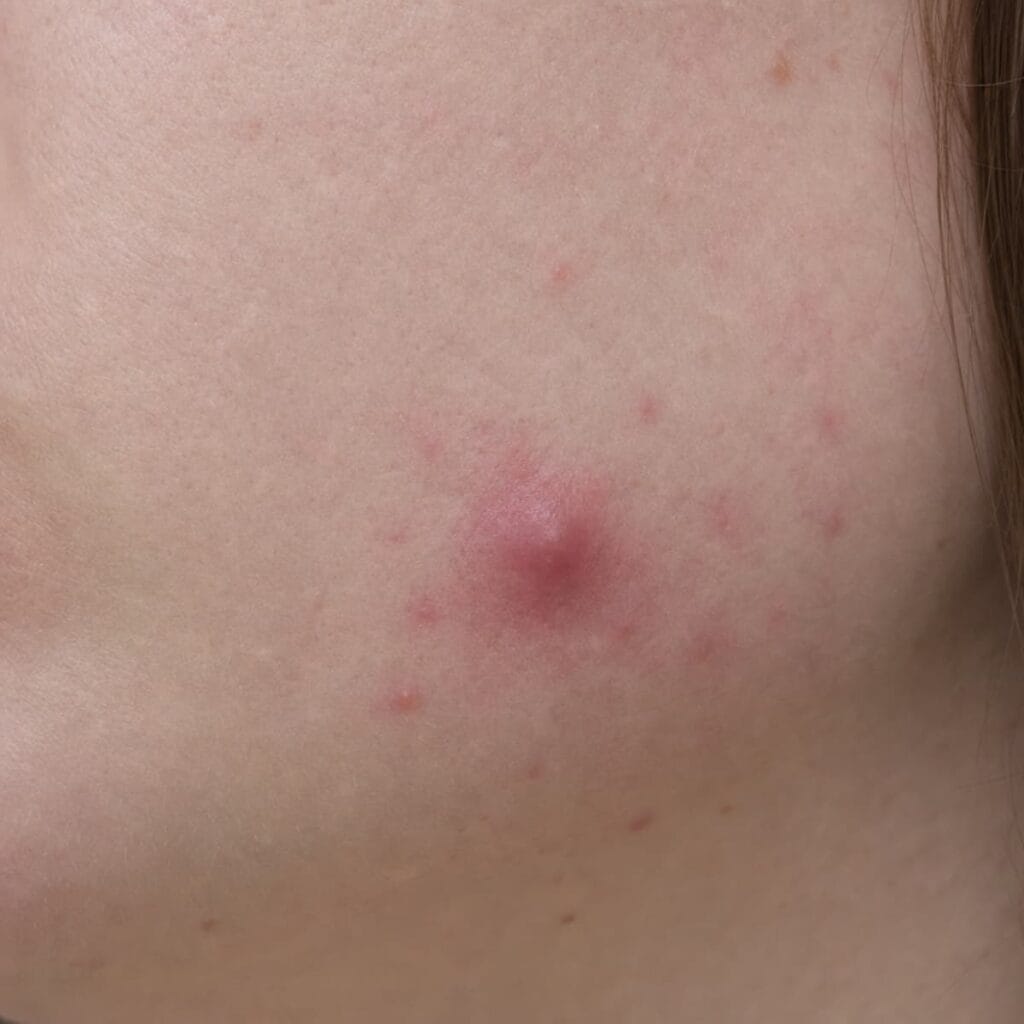
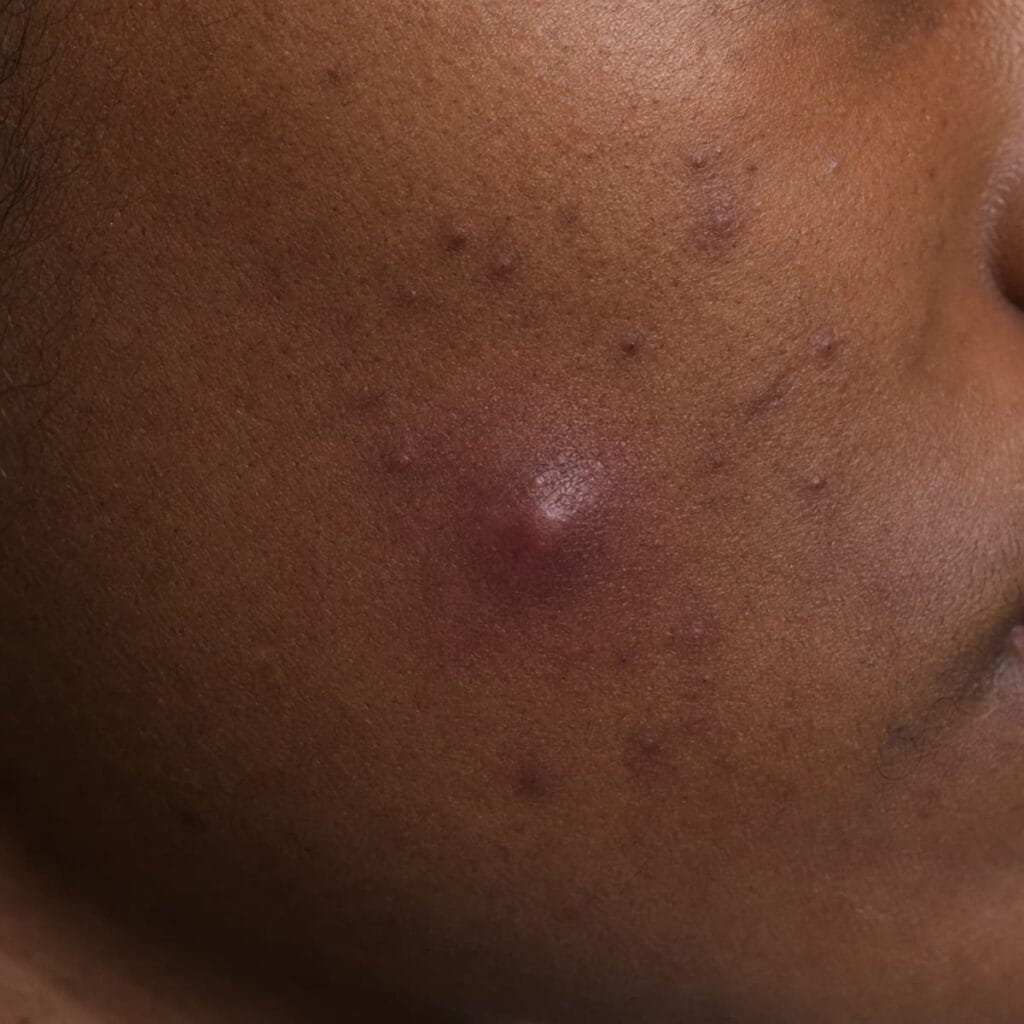
- Appearance: large, soft, fluid-filled bumps, often red, brown, or violet depending on your skin tone
- Location: the same areas as nodules
- Feel: soft and tender, like a fluid-filled lump under the skin
- Common mistake: popping or squeezing it, which can push the inflammation deeper and almost always leads to scarring
What Looks Like Acne But Isn’t
Plenty of skin conditions get mistaken for acne, even though they form differently and need different treatment. Confusing one for the other means treating something that won’t respond, and with a few of these, the wrong product can even make things worse.
- Sebaceous filaments: a normal part of every pore, not a clog, more visible on oily skin, and impossible to get rid of permanently since they’re not a problem at all
- Milia: small, hard, white cysts trapped under the skin with no pore opening, common around the eyes, and can’t be extracted the way a whitehead can
- Fungal acne: caused by yeast overgrowth, not bacteria, itchy and uniform in size, usually on the chest and back, and needs an antifungal, not standard acne treatment
- Keratosis pilaris: rough, sandpaper-like bumps from trapped keratin, most common on the arms and thighs but can also show up on the cheeks, especially in kids and teens
- Folliculitis: inflamed hair follicles that look like small pimples, often triggered by shaving or sweaty workout clothes
- Rosacea: persistent facial redness with small bumps that can look like papules, often flares with heat or alcohol, and standard acne treatment often makes it worse
- Perioral dermatitis: small bumps clustered around the mouth with a clear ring of untouched skin right at the lip line, often triggered by heavy creams or steroid use
- Gram-negative folliculitis: a complication of long-term antibiotic use for acne, caused by a different type of bacteria, so more antibiotics won’t fix it
What Causes Acne?
Every type of acne, no matter how different they look, traces back to the same four things happening inside your pores.
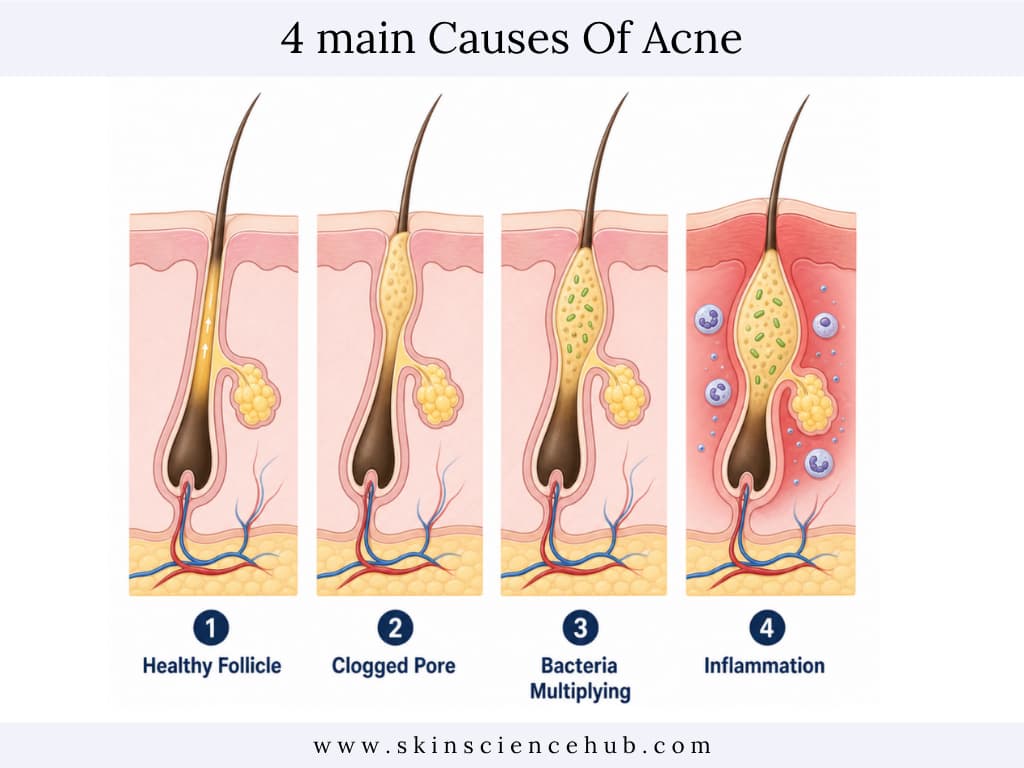
1. Excess Sebum
Sebum is the oil your skin produces to stay moisturized and protected. The trouble starts when your glands make more of it than your pores can clear, since that excess oil mixes with dead skin cells and clogs the follicle.
That overproduction usually comes down to hormones called androgens. The main one, testosterone, converts into a more potent form called DHT, which binds to receptors on your sebaceous glands and signals them to produce more oil. How sensitive those receptors are varies from person to person, so two people with similar hormone levels can still produce very different amounts of sebum.
2. Clogged Pores
Inside your hair follicles, dead skin cells are supposed to shed and rise to the surface on their own. In acne-prone skin, that doesn’t happen properly. The cells stick together instead, and they build up inside the follicle.
That buildup forms a tiny plug made of trapped skin cells and sebum. Dermatologists call it a microcomedo. It’s too small to see, but it’s where every blackhead and whitehead starts.
A plug that stays open at the surface turns into a blackhead. A plug that gets covered by skin becomes a whitehead.
3. Acnes Bacteria
A bacterium called C. acnes lives on everyone’s skin without causing problems. But in a clogged follicle, oxygen can’t get in. C. acnes thrives without oxygen, so the clog gives it the perfect environment to multiply.
Once it starts multiplying, it feeds on the trapped sebum and breaks it down into fatty acids that irritate the follicle wall. That bacterial activity, along with the irritation it causes, is what your immune system reacts to next.
4. Inflammation
Once your immune system notices the bacteria and the irritation it’s causing, it sends white blood cells to the area to fight back. That response is what makes the area swell, turn red, and feel sore or painful.
This step also decides how severe your acne becomes. A comedone (blackhead or whitehead) stays that way when inflammation is low. More inflammation turns it into a papule or pustule. Even more, and it becomes a nodule or cyst.
Acne Triggers and Patterns
Not every type of acne is defined by how it looks. Some are defined by what’s driving the breakout instead, whether that’s your hormones, where it tends to show up, or something external like friction, a product, or a medication.
1. Hormonal Acne
Hormonal acne pushes your sebaceous glands to make more oil than your skin can handle. It can show up as blackheads and whiteheads, or as deep, painful cysts, depending on how your skin reacts. What usually gives it away isn’t how it looks but where and when it shows up, often along the jawline and chin, and for many people, flaring around their menstrual cycle.
2. Acne by Location
You’ve probably heard that where you break out reveals what’s wrong inside your body, a clogged liver causing chin acne, stress causing forehead breakouts. That’s not how it works. The explanation is simpler than that. It comes down to how many oil glands an area has, how much friction or pressure it gets, and in some spots, how much hormone activity reaches it.
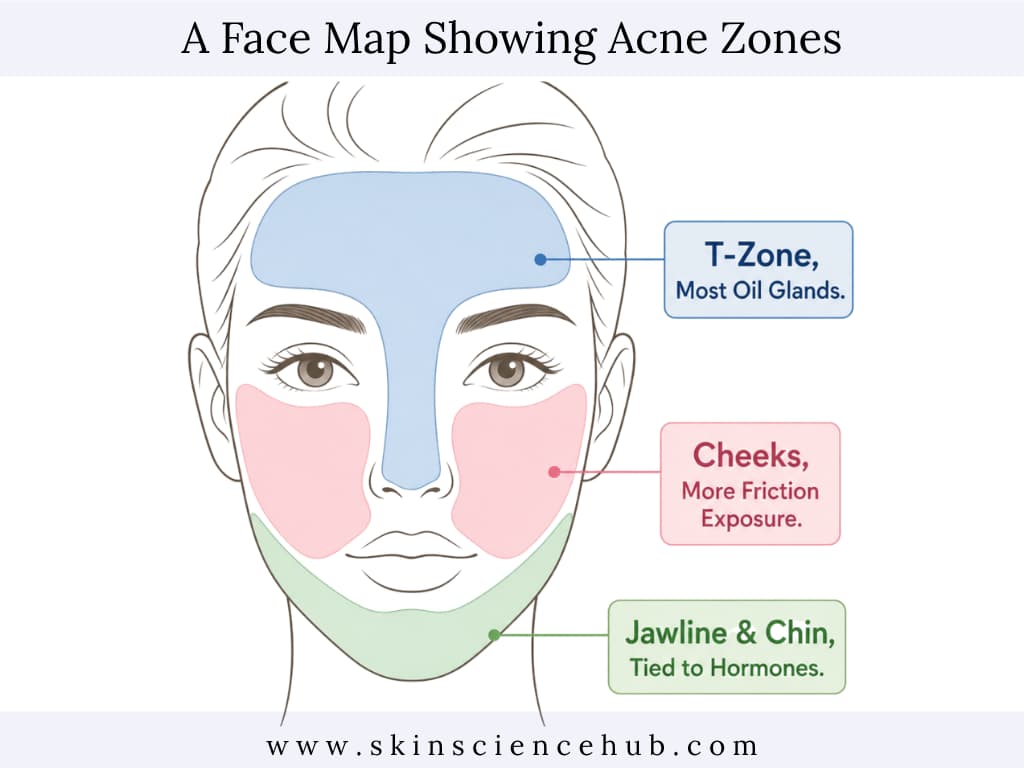
- Forehead and nose: oil glands are densest here, which is why this area, often called the T-zone, tends toward blackheads and whiteheads
- Cheeks: fewer oil glands than the T-zone, but more exposure to phone screens, pillowcases, and hands, which makes friction a bigger factor here
- Jawline and chin: closely tied to hormonal acne, and friction from phone calls or tight collars can contribute too
- Chest and back: oil glands here are just as active as on your face, and tight clothing or sweat trapped against the skin can make breakouts worse
Other Triggers Worth Knowing
A few other factors can trigger breakouts that look like regular acne but need a different approach.
- Drug-induced acne: triggered by medications like corticosteroids, lithium, or anabolic steroids, usually identifiable by timing, breakouts starting soon after a new prescription, all roughly the same size and stage.
- Acne mechanica: triggered by heat, friction, or pressure trapping sweat and oil against the skin, common under helmets, backpack straps, or tight workout gear, and usually clears up once the friction is removed.
- Acne cosmetica: caused by comedogenic ingredients in makeup, moisturizers, or hair products building up gradually, including pomade acne along the hairline from oily hair products.
My guide lists the best ingredients for acne and shows you how to combine them safely.
How to Treat Each Type of Acne
Once you know your type, treatment gets a lot more specific.
Treatment by Type
Treating Comedonal Acne
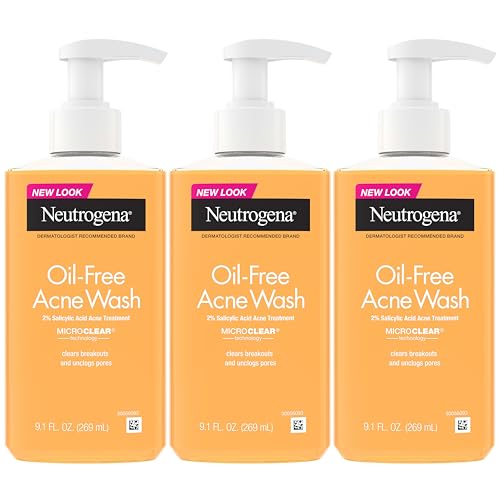
Blackheads and whiteheads respond well to salicylic acid, which clears the oil and dead skin built up inside the pore. Neutrogena’s Oil-Free Salicylic Acid Acne Wash, with 2% salicylic acid, handles this well as a daily cleanser. For more on choosing the right cleanser, see our full guide on best cleansers of acne-prone skin.

