Hypochlorous Acid for Skin: Benefits, How to Use & Safety
Last updated on September 6th, 2026
Hypochlorous acid is one of those ingredients that sounds too good to be true. Antimicrobial enough to destroy acne bacteria, gentle enough for sensitive and eczema-prone skin, and naturally produced by your own immune system.
Yet most dermatologists didn’t talk about hypochlorous acid for skin outside of wound care until recently.
Your white blood cells have been making this molecule your entire life, using it to destroy bacteria and infections within milliseconds before it breaks down into harmless compounds. Researchers have used it in medical wound care for over a century.
But the ingredient has one serious weakness that most brands haven’t solved. Hypochlorous acid is so unstable that your spray bottle may contain nothing but salt water by the time you use it, and you’d never know from looking at it.
I’ll show you which benefits have solid evidence behind them, who actually needs this ingredient, and how to choose a product that still works when it reaches you.

What Is Hypochlorous Acid?
Your white blood cells make hypochlorous acid to fight off bacteria, viruses, and infections. When your immune system detects a threat, it produces this molecule to destroy it through oxidation, breaking down the invader’s proteins and cell membranes within milliseconds. And because it breaks down into harmless compounds almost immediately after, it doesn’t linger on your skin or trigger the irritation and tissue damage you’d get from harsher antiseptics.
The sprays you see in skincare are synthetic versions of this same molecule. Companies make it by running an electric current through saltwater, which rearranges the molecules into hypochlorous acid (HOCl), and you end up with a clear liquid that smells faintly of chlorine. That scent comes from the HOCl itself, so it’s normal and actually a sign the product is active.
That chlorine scent is exactly why people worry it’s just diluted bleach, but the two are nothing alike. In bleach, hypochlorous acid reacts with other chemical components and transforms into substances that are toxic and burn skin on contact. Bleach also sits at a pH around 11 to 13, which is highly alkaline, whereas hypochlorous acid on its own has a pH between 3.5 and 5.5, much closer to your skin’s natural acidity. At that lower pH, it destroys bacteria without damaging the surrounding tissue, which is why dermatologists recommend it for sensitive and compromised skin while warning against bleach anywhere near your face.

What Does Hypochlorous Acid Do for Skin?
Hypochlorous acid destroys bacteria and calms inflammation at the same time, and that combination is exactly what most inflammatory skin conditions need.
Once it makes contact with harmful bacteria, it oxidizes their proteins and DNA within milliseconds. It can even penetrate the protective shields bacteria build around themselves, which most topical antimicrobials can’t do. And because it works so fast, bacteria can’t develop resistance the way they do with antibiotics.
It also targets harmful microorganisms without disrupting the beneficial bacteria your skin needs. Your skin’s microbiome plays a direct role in maintaining barrier function, so an antimicrobial that doesn’t wipe out everything indiscriminately is valuable.
Beyond the antibacterial action, hypochlorous acid lowers histamine activity. Histamine is what drives the intense itching and redness you experience with inflammatory conditions, so reducing it directly addresses the itch and redness cycle. It also quiets other inflammatory signals that keep your skin reactive, while supporting skin barrier repair and recovery.
What Does Hypochlorous Acid Treat?
1. Hypochlorous Acid for Eczema and Atopic Dermatitis
If you’ve sat at your desk trying not to scratch your arm raw, or woken up at 3 AM because the itching won’t let you sleep, you know eczema is exhausting. And the cycle is brutal. Scratching damages your barrier further, which lets more bacteria in, which drives more inflammation, which makes you itch more.
When you have atopic dermatitis, your impaired skin barrier becomes colonized with Staphylococcus aureus bacteria, and that bacterial overgrowth is a direct driver of both inflammation and itch. Research shows hypochlorous acid spray reduces those bacterial counts within minutes and improves itching within three days of consistent use. One study found it reduced scratching behavior as effectively as topical corticosteroids, a notable result for anyone trying to reduce long-term steroid use.
Beyond clearing bacteria, it also lowers histamine activity directly at the skin level, so it addresses both the bacterial and inflammatory sides of the itch cycle.
That said, hypochlorous acid is not a replacement for your established eczema treatments. It works best alongside barrier-repairing moisturizers and any prescription medications your dermatologist has recommended, particularly during flares when bacterial overgrowth is at its worst.
2. Hypochlorous Acid for Wound Healing
Hypochlorous acid is FDA-approved for wound care and has been used in medical settings for decades, long before it became a skincare trend.
Research shows it reduces bacterial load in wounds while actively supporting the healing process. One study found it improved scar appearance better than silicone gel after four months.
The reason wound care specialists prefer it over hydrogen peroxide or rubbing alcohol is simple. Those antiseptics kill bacteria, but they also damage the surrounding healthy tissue in the process. Hypochlorous acid, on the other hand, destroys bacteria without harming healthy cells, so your skin heals faster and with less scarring.
3. Hypochlorous Acid for Acne
The acne evidence is thinner than eczema, but there is one solid study. Researchers ran a double-blind trial on 89 patients with mild to moderate inflammatory acne, comparing hypochlorous acid directly against benzoyl peroxide. Around 77% of people using hypochlorous acid saw good to excellent improvement, compared to 71% using benzoyl peroxide, and the difference between the two was not statistically significant.
Benzoyl peroxide is one of the most established acne treatments available, so performing on par with it is a strong result.
But acne has multiple drivers, and hypochlorous acid only addresses two of them, bacteria and inflammation. It doesn’t reduce oil production or clear dead skin cell buildup, so it works better alongside exfoliants or retinoids rather than on its own. The researchers themselves noted a larger trial is needed before drawing firm conclusions.
4. Hypochlorous Acid for Rosacea
For rosacea, the evidence is mostly observational rather than clinical. There are no large controlled trials.
Rosacea involves chronic inflammation and a compromised skin barrier, and hypochlorous acid addresses both. It reduces inflammatory signals without the irritation that most active ingredients cause, which is why dermatologists who use it in practice report improvements in patients with inflammatory rosacea, particularly those whose skin is too sensitive for standard treatments like azelaic acid or metronidazole.
But without controlled trials, we can’t say how consistently it works or for whom. If standard treatments have irritated your skin, it’s reasonable to try. Just treat it as a supportive addition rather than a primary treatment.
5. Hypochlorous Acid for Seborrheic Dermatitis
A 2014 study evaluated hypochlorous acid gel on 25 patients with mild to moderate facial and scalp seborrheic dermatitis. After two weeks, investigator assessments showed an average severity improvement of 33%, and patients themselves reported a 217% improvement in how their skin felt. Both measures continued improving at four weeks. Burning, stinging, and itching all decreased, and the gel was well tolerated by all but one participant who experienced increased redness and scalp scaling.
Seborrheic dermatitis involves both inflammation and Malassezia yeast overgrowth on the skin surface. Hypochlorous acid targets the inflammation and helps rebalance the skin environment, and because it does this without the irritation that many standard treatments cause, it tends to sit well even on reactive skin.
But 25 people is a small sample with no comparison group, so larger randomized controlled trials are needed before we can say how it compares to standard treatments. If current treatments are irritating your skin, hypochlorous acid is worth trying during flares.
6. Hypochlorous Acid for Psoriasis
There are no clinical trials testing hypochlorous acid directly in psoriasis patients, so the evidence here is early stage.
Animal studies show it reduces several inflammatory markers directly linked to psoriasis, but promising results in mice don’t always translate to humans, and the researchers themselves describe the clinical benefit as largely hypothetical at this stage.
If standard treatments are irritating your skin, hypochlorous acid is gentle enough to try alongside your existing routine. But it should not replace treatments your dermatologist has prescribed.
7. Hypochlorous Acid for Sensitive Skin
Sensitive skin reacts to almost everything. What it needs is an ingredient that works without making things worse.
Hypochlorous acid is one of them. Its pH sits between 3.5 and 5.5, which is close to your skin’s natural acidity, so it doesn’t disrupt your barrier the way alkaline or strongly acidic ingredients do. It contains no fragrance, no alcohol, and no harsh preservatives. And because it targets harmful bacteria without wiping out your skin’s beneficial microbiome, it doesn’t leave your barrier more vulnerable after use.
For people whose skin reacts to most actives, hypochlorous acid is one of the few antimicrobial and anti-inflammatory options that works without triggering a reaction.
Hypochlorous Acid vs Salicylic Acid
Both ingredients show up in acne routines, but they work through completely different mechanisms and aren’t doing the same job.
Salicylic acid is a chemical exfoliant. It dissolves the dead skin cells and excess oil that clog pores, which makes it effective for blackheads, whiteheads, and oily skin. But it can irritate sensitive or inflamed skin, and it doesn’t address bacteria or inflammation directly.
Hypochlorous acid, on the other hand, doesn’t exfoliate at all. It destroys acne-causing bacteria and calms inflammation without touching oil production or cell turnover.
So if your acne is driven by clogged pores and excess oil, salicylic acid is the more effective choice. If your skin is inflamed, reactive, or too sensitive for exfoliants, hypochlorous acid is the more appropriate one. For many people, both have a role in the same routine.
Is Hypochlorous Acid Safe?
Yes. Hypochlorous acid has an excellent safety profile. The most common complaints in studies are mild dryness or occasional irritation, but both are rare.
Your body already produces this molecule naturally, so it doesn’t trigger the immune responses or systemic absorption concerns that come with synthetic compounds. It’s also why dermatologists routinely recommend it during pregnancy and breastfeeding, when most actives are off the table.
The more important safety question isn’t about side effects. It’s whether your product still contains active HOCl when it reaches you, because this ingredient degrades faster than most people realise.
How to Use Hypochlorous Acid Spray For Skin
Wash your face, apply hypochlorous acid spray on clean skin, and let it dry completely before applying anything else. Because it works through oxidation, applying vitamin C or retinoids on top while it’s still wet can reduce how well those ingredients perform. Once it’s dry, continue with your serums and moisturizer as normal. You can use it once or twice daily, and because it’s so gentle, you don’t need to ease into it the way you would with retinoids or acids.
For eczema flares, spray directly on affected areas after sweating or when itching starts. The earlier you catch a flare, the better it works.
For body acne, apply to your chest, back, or other breakout-prone areas after cleansing. Some people also spray it after workouts when they can’t shower immediately.
For cuts or scrapes, spray directly on the wound. It clears bacteria without the tissue damage that hydrogen peroxide causes.
Important Limitations
Hypochlorous acid doesn’t replace your cleanser. It destroys bacteria but doesn’t remove oil, makeup, or sunscreen, so cleansing first is still necessary.
And keep your bottle away from heat. Store it somewhere cool and dark rather than your car or a steamy bathroom, because heat degrades it quickly.
Best Hypochlorous Acid Products
The Stability Problem
Most hypochlorous acid products have probably stopped working before they even reached store shelves, and you’d never know.
Hypochlorous acid only stays effective at a pH between 3.5 and 5.5. Stray outside that range and it breaks down. Heat, sunlight, and air exposure degrade it rapidly, and even a perfectly formulated product has a limited shelf life.
Most brands added hypochlorous acid to their line because it’s trending, not because they figured out how to keep it stable through manufacturing, shipping, and storage. And once it degrades, it’s completely harmless but also completely useless. You’re essentially spraying expensive salt water on your face, and the liquid looks, smells, and feels exactly the same either way.
That’s why choosing the right product with this ingredient is more important than with almost anything else in your routine.
How to Choose a Hypochlorous Acid Product
Look for products that list their pH, ideally around 4.5 to 5 for facial skin. Not all brands provide this, but a listed pH tells you the brand has tested for stability, which is the single most important factor with this ingredient. Concentration should sit between 0.01% and 0.02% for skincare use. And because the best formulations only need water, sodium chloride, and hypochlorous acid, a long ingredient list is usually a sign the formula isn’t built around this ingredient.
Avoid anything with alcohol or fragrance since both irritate skin. And avoid products promising overnight acne clearing, wrinkle elimination, or dramatic results. Quality hypochlorous acid products are antimicrobial and anti-inflammatory support, and any brand that doesn’t share basic information about pH or stability testing is telling you they either don’t understand the chemistry or haven’t done the work.
Tower 28 SOS Daily Rescue Facial Spray
Tower 28 spent eight years developing a stable formulation with a confirmed pH of 4.5 and just three ingredients, water, sodium chloride, and hypochlorous acid. It has formal recognition from the National Eczema Association, National Psoriasis Foundation, and American Rosacea Society, which makes it the most independently verified option on the market. If you have eczema or reactive skin, this is where to start.
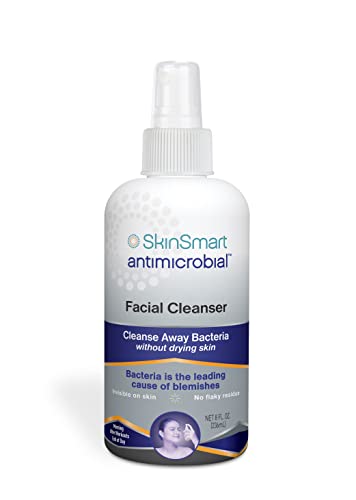
Skinsmart Antimicrobial Spray
Skinsmart keeps things simple. Water, sodium chloride, and hypochlorous acid, nothing extra. If you need a reliable option for body acne, wound care, or everyday antimicrobial use, it gets the job done cleanly.
Briotech Topical Skin Spray
Briotech is the go-to for wound care and post-procedure recovery. Its formulation is clean and minimal, and it’s gentle enough to use when your skin is at its most vulnerable. If you need something that works without irritating already compromised skin, this is a solid choice.