
Teen Skincare Routine: 3 Simple Steps for Clear, Healthy Skin

Last updated on April 20th, 2026 at 04:16 pm

As a teenager, your skin is already doing most of the hard work. It regulates oil, repairs the barrier overnight, and renews itself every 21 to 28 days, the fastest cell turnover you will ever have. A good teen skincare routine keeps those natural processes running smoothly.

But your feed probably tells a different story. Influencers push retinoids, chemical exfoliants, and glass skin serums, and the products pile up fast. A Northwestern University study on viral teen skincare routines found that most girls ages 7 to 18 now use six products daily. Whether you’re looking for a simple skincare routine for teens or just a basic starting point, the answer is always the same three steps.

I’m a pharmacologist who researches skincare ingredients, and the products being marketed to teens are designed for adult skin problems you don’t yet have. In this guide you’ll find the three products your skin actually needs right now, the ingredients worth avoiding and why, and how to adjust everything based on your skin type.

Teen skincare routine - what to use vs what to avoid for teenagers
  • This post contains affiliate links. All recommendations based on ingredient research and formulation analysis. Purchasing from this link helps this site at no additional cost to you. Please read our affiliate disclosure for more information

Teen Skincare Routine Steps

Three products are all your skin needs right now, and the routine takes under two minutes. This applies whether you’re a teenage girl building her first routine or a teenage boy dealing with oily skin for the first time.

Morning Apply moisturizer, then sunscreen. That’s it.

Night Cleanse your face, then moisturize. Add spot treatment if you’re breaking out.

No toners, no serums, no ten-step systems. The sections below walk through each step in full.

Cleanse Your Face at Night

Wash your face before bed because oil, sunscreen, and environmental residue build up throughout the day. Morning cleansing is optional. If you wake up with oily skin, go ahead and wash. If your face feels normal or dry, a plain water rinse is enough.

Your cleanser should feel gentle after rinsing. Tight, stripped skin means the formula is too harsh. Look for pH-balanced options between 4.5 and 5.5, since this range matches your skin’s natural acidity, and choose fragrance-free formulas to avoid unnecessary irritation.

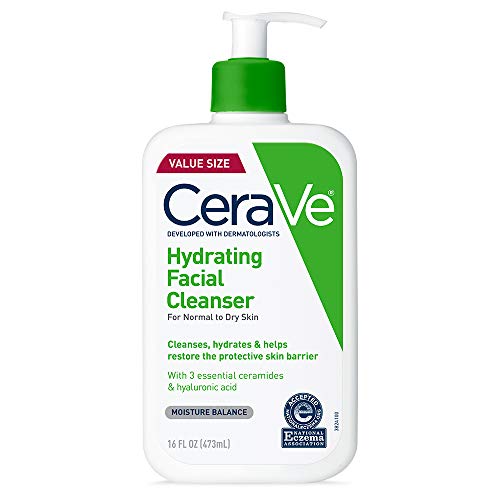
Wet your face with lukewarm water because hot water strips protective oils. Massage the cleanser for about thirty seconds, rinse thoroughly, and pat dry. CeraVe Hydrating Facial Cleanser and Cetaphil Gentle Skin Cleanser both work well for most skin types.
Moisturize After Cleansing

Apply moisturizer to damp skin immediately after cleansing because damp skin absorbs moisture more effectively. Even oily skin needs this step. When your skin gets dehydrated, your oil glands produce more sebum to compensate, so leaving out moisturizer actually makes oiliness worse.

Use about a dime-sized amount for your face and blend it down onto your neck, since neck skin ages just as fast as your face. Lightweight gel formulas like Neutrogena Hydro Boost Water Gel absorb quickly on oily skin. If your skin runs dry, a richer cream with ceramides works better. CeraVe Moisturizing Cream contains both ceramides and niacinamide, which calms inflammation while it hydrates.

Apply Sunscreen Every Morning

Sunscreen is the single most protective step in this routine. UV exposure darkens acne scars and lays the groundwork for wrinkles later, and the damage accumulates invisibly while your skin still looks fine. Starting now means real, visible protection by the time you’re in your thirties.

Apply broad-spectrum SPF 30 or higher as your last morning step. Use about a nickel-sized amount and blend it down onto your neck. Chemical sunscreens with avobenzone feel lighter and blend invisibly, while mineral sunscreens with zinc oxide suit sensitive skin well. La Roche-Posay Anthelios Clear Skin SPF 60 controls shine throughout the day, and Neutrogena Clear Face SPF 50 won’t clog pores. Pick whichever texture you’ll reach for every single morning.

How to Treat Teen Acne Breakouts

Only add this step if you’re actively breaking out. Your whole face doesn’t need acne treatment when only your T-zone acts up.

Benzoyl peroxide kills acne-causing bacteria. Salicylic acid unclogs pores. Start with 2.5% benzoyl peroxide or 1% salicylic acid once daily, applying only to areas with active breakouts. Always moisturize after because both ingredients dry your skin while they work. Give any product a full six weeks before deciding it isn’t helping. If nothing improves after three months, see a dermatologist.

Teen Skincare Routine by Skin Type

The three-step routine works for every skin type. What changes is the product texture, since a rich cream that works beautifully for dry skin can clog pores and worsen oiliness for someone whose face is already producing excess sebum. Read through the descriptions below and match your symptoms to find yours, because a basic skincare routine for teens works best when the products actually suit your skin.

Teen Skincare for Oily Skin

If your forehead and nose look shiny by mid-afternoon and your pores appear larger than they used to, you likely have oily skin.

Use gel or foaming cleansers because these formulas cut through oil and rinse clean. CeraVe Foaming Facial Cleanser cleanse thoroughly while keeping your barrier intact. Neutrogena Hydro Boost Water Gel is a good moisturizer choice for this skin type. For sunscreen, La Roche-Posay Anthelios Clear Skin SPF 60 is well suited for oily skin.

Teen Skincare for Dry Skin

If your skin feels tight after washing and you notice flaking around your nose or cheeks, you likely have dry skin.

You can leave out morning cleansing if your face feels comfortable, since dry skin doesn’t produce enough oil overnight to need washing twice daily. At night, use cream cleansers because these formulas clean without stripping protective lipids. CeraVe Hydrating Facial Cleanser contains ceramides that strengthen your barrier during cleansing.

Apply moisturizer to damp skin right after washing. CeraVe Moisturizing Cream is a strong choice for dry skin. If dryness persists at night, add a few drops of squalane oil as a final layer since squalane mimics your skin’s natural sebum and absorbs well.

Teen Skincare for Combination Skin

If oil shows up across your forehead, nose, and chin while your cheeks stay comfortable or slightly dry, you likely have combination skin.

This happens because hormones stimulate sebaceous glands unevenly, producing different oil levels across different areas of your face. Use the same products across your entire face. Targeting different zones with different products complicates your routine without improving results. A gentle cleanser and lightweight moisturizer address both zones effectively. CeraVe PM Facial Moisturizing Lotion works well here because it contains niacinamide, which regulates sebum in oily areas while hydrating drier regions at the same time.

Teen Skincare for Acne-Prone Skin

If you break out frequently, either with red painful lesions or with blackheads and whiteheads, your skin is acne-prone.

Cleanse every night with a gentle, non-comedogenic cleanser. CeraVe Foaming Facial Cleanser removes oil and residue without disrupting your barrier. Apply moisturizer after cleansing because keeping your barrier intact actually helps regulate oil production and reduces irritation from spot treatments. CeraVe PM Facial Moisturizing Lotion absorbs quickly and contains niacinamide, which calms redness and controls oil at the same time.

For sunscreen, choose oil-free, non-comedogenic formulas. Neutrogena Clear Face SPF 50 won’t clog pores and sits comfortably under makeup.

Then apply spot treatment only to areas with active breakouts. Choose either benzoyl peroxide or salicylic acid, since your skin needs time to adjust to one active ingredient before you introduce another.

Change your pillowcase twice a week. Sebum and dead skin cells accumulate on fabric overnight and transfer back to your face while you sleep. If your acne doesn’t improve after three months of consistent treatment, the When to See a Dermatologist section below covers exactly when and why to get professional help.

Now that you know what your skin needs, it’s worth understanding what it doesn’t, and why some popular ingredients actively work against it.

Skincare Ingredients Teens Should Avoid

Most active skincare ingredients are designed to solve problems that come with age, and as a pharmacologist who researches these compounds, the mismatch between what these products do and what teen skin actually needs is one of the clearest patterns I see. Slowing cell turnover, declining collagen, weakening barriers, these are adult problems. Your skin doesn’t have them yet, and using these ingredients doesn’t give you an advantage. It creates irritation and disrupts a barrier that’s still developing.

Retinol and Retinoids

Retinoids treat wrinkles and sagging by forcing faster cell turnover, which is a problem your skin doesn’t have yet. Your collagen production is already running at peak levels, and your cell renewal cycle is naturally fast. Redness, peeling, and dryness show up within days because your skin barrier is still maturing and can’t handle that level of chemical disruption. Repeated disruption weakens the barrier further over time.

Dermatologists do sometimes prescribe tretinoin for severe acne, but that is closely monitored medical treatment for a diagnosed condition. Buying retinol serums over the counter because TikTok said to start early is unsupervised use of a potent ingredient your skin doesn’t need. Leave all retinol products alone unless a dermatologist prescribes one specifically for your acne.

Chemical Exfoliating Acids

AHAs like glycolic acid, lactic acid, and mandelic acid dissolve the bonds holding dead skin cells together to reveal smoother skin underneath. Adult skin benefits from this because turnover has slowed. Your turnover is already fast, so these acids create irritation without delivering any real benefit.

A Northwestern University study analyzing teen TikTok skincare routines found these acids in most of the routines they examined. Concentrations at 10% and above burn the skin and increase sun sensitivity. Even 5% concentrations are too harsh for most teen skin.

Salicylic acid is different. At 0.5% to 2% as a spot treatment, it helps with acne by unclogging pores. But daily application across your whole face at higher concentrations damages your barrier and can make breakouts worse.

High-Strength Vitamin C and Other Unnecessary Actives

The Ordinary sells a 30% vitamin C suspension, and this concentration irritates even adult skin. It also oxidizes quickly when exposed to air and light, turning orange or brown, and once degraded, oxidized vitamin C generates free radicals that damage skin cells. Anti-aging peptides have the same problem of mismatched purpose. They signal your skin to produce more collagen and elastin, and you already produce plenty of both. Harsh physical scrubs with walnut shell or apricot particles create micro-tears in your skin, while products labeled firming or wrinkle-reducing either clog pores or damage your barrier. None of them address problems your skin actually has right now.

When Teens Should See a Dermatologist

Some conditions need professional care because over-the-counter products can’t reach the underlying problem.

See a dermatologist if you develop cystic acne. These deep, painful lumps form beneath the skin’s surface where creams and gels can’t penetrate, and they commonly leave permanent scars. Oral antibiotics or isotretinoin work significantly better for severe cystic acne than anything available over the counter.

Sometimes what looks like acne isn’t acne at all. Rosacea causes flushing and redness mainly on your cheeks and nose. Perioral dermatitis shows up as small bumps around your mouth. Eczema appears as rough, flaky patches that itch intensely. Acne treatments irritate all three conditions because they each require a different diagnosis and a different treatment plan. If your usual treatments make things worse, see a dermatologist.

See a professional if acne affects how you feel about yourself or makes you avoid social situations. Early treatment prevents permanent scarring and skin texture changes that don’t resolve on their own.

Bottom Line

Hormones drive most teen skin changes. Your sebaceous glands produce more oil, your pores enlarge, and breakouts appear more frequently. A consistent routine keeps all of that manageable.

Cleanse at night. Moisturize after. Wear sunscreen every morning. Everything else is optional.

Three consistent steps protect your skin now and build a foundation that pays off for decades.

Teen Skincare FAQ

Yes, and it’s extremely common. About 85% of people between 12 and 24 experience acne. Puberty triggers a surge in androgens, which signals your oil glands to produce more sebum. That excess oil mixes with dead skin cells, blocks your pores, and creates the conditions bacteria need to cause inflammation.

Around 11 to 12, when puberty begins and oil production increases. A gentle cleanser and sunscreen are enough to start. Add moisturizer if your skin feels dry or tight after washing. You don’t need anything beyond that at this stage.

A gentle cleanser, moisturizer, and sunscreen. That’s it. Younger skin doesn’t need actives, acids, or anti-aging treatments. Introducing potent ingredients too early disrupts a barrier that’s still maturing, and the irritation outweighs any benefit.

Yes. Testosterone increases oil production and pore size during puberty, which is why boys often experience more severe acne than girls. The same three steps apply to everyone. Cleanse at night, moisturize after, and wear sunscreen every morning.

Yes, but product choice is important. Look for oil-free, non-comedogenic formulas and always remove everything before bed. The real issue isn’t the makeup itself. It’s leaving it on overnight, because that traps sebum and creates the environment bacteria need to multiply.

Visible acne improvements take six to eight weeks because your skin renews itself every 28 days and you need two full cycles for noticeable changes. Dark spots from old breakouts fade over three to six months with consistent sunscreen use. Take monthly photos since daily progress is too gradual to notice in the mirror.

Similar Posts

Leave a Reply

Your email address will not be published. Required fields are marked *