Turns Out the $4 Tub of Vaseline You Walked Past a Hundred Times Might Actually Fix Your Dry Skin Better Than Your $80 Night Cream
Slugging skincare has taken over social media as the secret to waking up with plump, glowing skin. But what is slugging exactly? The concept is simple. You slather petroleum jelly on your face before bed. It seals your skin and stops water from evaporating overnight.
But the advice around slugging is completely contradictory. Dermatologists swear by it for healing damaged skin and call it the gold standard for post-procedure care. Clean beauty influencers warn it’s toxic and pore-clogging. Meanwhile half the people who try it wake up with breakouts instead of dewy skin. No one knows if they should be doing this or avoiding it completely. So does slugging work? The answer depends on your skin type and how you use it.

What Is Slugging and How Does It Work?
Face slugging is applying petroleum-based ointment as the final step in your nighttime skincare routine. The slugging meaning comes from how your skin looks afterward. Shiny. Slimy. Like a slug.
Your skin constantly loses moisture. At night this accelerates because indoor heating, air conditioning, and dry bedroom air strip water from your skin faster. When you apply the ointment over your skin, you create a barrier that prevents this water from evaporating while you sleep.
Slugging does more than lock in moisture. The occlusive layer enhances whatever products you apply underneath. Your serums and moisturizers penetrate better and stay active longer because they can’t escape into your pillowcase or evaporate into the air.

Who Should Try Slugging (And Who Should Avoid It)
Slugging for Dry Skin
Slugging works best for very dry skin. You complete your nighttime routine but wake up with tight, uncomfortable skin. Your moisturizer isn’t providing enough occlusion. Winter makes this worse because indoor heating and cold air strip moisture faster than moisturizer can keep up.
Slugging for Damaged Skin Barriers
Slugging also helps when your skin barrier is compromised. Over-exfoliating damages your barrier. Harsh weather damages it. Professional procedures like microneedling or laser treatments damage it. Petrolatum creates the ideal environment for skin to heal itself. Dermatologists have used it for post-procedure care for decades because it works. If you’ve had a professional treatment, check with your practitioner first since everyone has preferred aftercare protocols.
Slugging to Boost Product Performance
If your serums and treatments aren’t delivering results. Slug over them. The occlusive layer helps them penetrate better and stay active longer instead of evaporating overnight.
Who Should Skip Slugging
Skip slugging if you have oily skin. You already get a greasy sensation, so adding thick ointment feels uncomfortable. However, some people have oily but dehydrated skin. Their skin lacks water even though it produces oil. Light slugging can maintain hydration for this skin type without excessive greasiness.
Humid climates and night sweats make slugging miserable. If moisture already saturates the air or you sweat while sleeping, occlusive ointment traps heat against your skin. This applies to rosacea-prone skin too since trapped heat triggers redness and flushing.
You’re acne-prone but the situation is nuanced. Petrolatum is non-comedogenic according to scientific testing. It doesn’t clog pores directly. But it traps everything underneath against your skin. If you don’t cleanse properly before slugging or you produce excess oil, you may break out. Many people with acne-prone skin actually do well with petrolatum-based products, especially when acne medications cause dryness and irritation. Test carefully and watch how your skin responds.
Even if your skin type fits, you might hesitate because of safety concerns you’ve heard about petroleum jelly.
Is Petroleum Jelly Safe for Your Face?
Clean beauty advocates claim petrolatum is carcinogenic. This is false. Unrefined petroleum contains carcinogenic compounds called polycyclic aromatic hydrocarbons (PAH). The refining process removes these PAHs completely to create cosmetic-grade petrolatum. Think of the difference between drinking gutter water versus filtered bottled water. Cosmetic petrolatum is purified and safe.
Pure petrolatum won’t trigger allergic reactions because it can’t bind with skin proteins that cause sensitivity. This makes it different from most skincare ingredients. Preservatives cause reactions. Fragrances cause reactions. Plant extracts cause reactions. Pure Vaseline doesn’t interact with your skin proteins so it stays non-allergenic. This matters even more because most petrolatum products are anhydrous and need no preservatives. If you react to parabens or phenoxyethanol in your other products, pure petrolatum sidesteps that issue completely.
Best Slugging Products
All slugging products work through occlusion. The differences come down to petrolatum concentration and what else manufacturers add to the formula.
1. Vaseline
Vaseline is 100% pure petrolatum. Nothing else. This makes it the thickest and most occlusive option. It’s been used since the 1800s and has the longest safety record of any skincare product. A large tub costs less than $5 and lasts months. Choose this if you have very dry skin or severely compromised barrier function.

2. Aquaphor
Most people find pure Vaseline too thick. Aquaphor fixes this. It contains 41% petrolatum plus mineral oil and lanolin. These ingredients make it spread more easily. Dermatology clinics prefer this for post-procedure care because patients find it more comfortable. Lanolin causes problems though. Some people are allergic to it. It comes from sheep so the product isn’t vegan. Aquaphor costs more than Vaseline but stays affordable.

3. CeraVe Healing Ointment
If you want barrier repair beyond simple occlusion, try CeraVe Healing Ointment. It contains 46.5% petrolatum plus ceramides, panthenol, and hyaluronic acid. The ceramides help repair damaged barriers while hyaluronic acid adds hydration. This costs more than Aquaphor but delivers extra benefits. It’s moderately priced and works well if your barrier needs active repair.

4. La Roche-Posay Cicaplast Baume B5
La Roche-Posay Cicaplast Baume B5 takes a different approach. It contains petroleum jelly but adds panthenol, madecassoside, copper, zinc, and manganese. These ingredients accelerate healing and reduce inflammation. Dermatologists recommend this for irritated or damaged skin that needs active repair alongside occlusion. It feels lighter than pure petrolatum products but costs the most.

Start with Vaseline for maximum occlusion at the lowest price. Switch to Aquaphor if you find pure petrolatum too thick. Use CeraVe when you need barrier repair ingredients. Choose LRP Cicaplast for actively irritated or healing skin. All four slug effectively because they all contain petrolatum as the occlusive base.
How to Build Your Slugging Routine
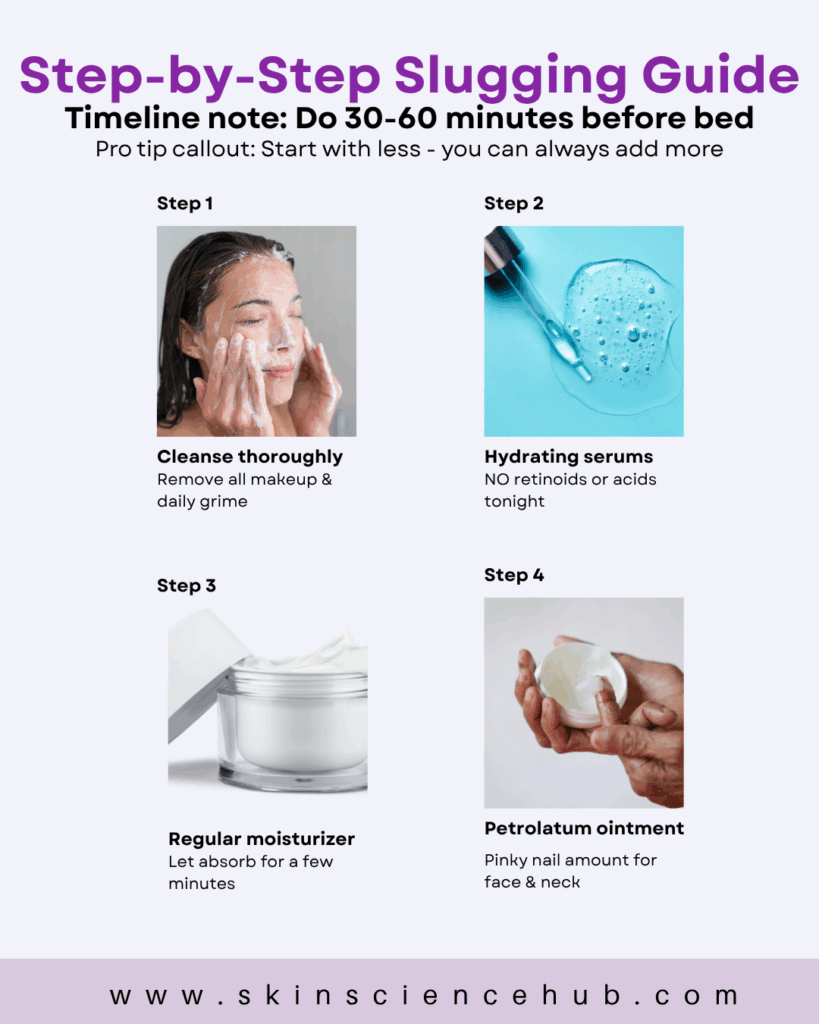
Building an effective slugging routine means waking up with glowing skin instead of greasy pillowcases. Start with clean skin. Anything you slug over gets trapped against your face all night. You only want beneficial ingredients underneath that barrier.
Your approach depends on your skin’s current state. If you’re recovering from a procedure or dealing with irritated, flaking skin, apply petrolatum directly on damp skin right after cleansing. Skip all other products. Your skin heals better when you keep things simple and avoid ingredients that might irritate further. If you have dry or sensitive skin and want to boost your regular routine, apply your hydrating serums and moisturizer first. Let them absorb. Then finish with the ointment as your final occlusive step.
Amount matters more than you think. Start with a pinky nail’s worth for your entire face and neck. This seems small but petrolatum spreads further than you expect. You can always add more if needed.
Timing prevents wasted product. Apply your slug at least 30 minutes before bed. An hour works better. The product won’t absorb quickly. If you apply it and immediately climb into bed, you’ll transfer most of it to your pillowcase instead of keeping it on your skin where it works.
What NOT to Slug Over
Slugging enhances whatever sits underneath. Strong actives become too intense when you trap them under an occlusive barrier.
Skip retinoids on slugging nights. Tretinoin, retinaldehyde, and retinol penetrate deeper when occluded. The same applies to exfoliants like salicylic acid and glycolic acid. These ingredients work through controlled irritation. Slugging removes the control. The occlusive barrier forces deeper penetration than your skin can handle. You wake up red, burning, and peeling instead of glowing.
Some people with tolerant skin slug over actives intentionally. They want maximum results and their skin can handle the intensity. But this takes years of tolerance building. For most people, slugging over actives causes more irritation than benefit. Save slugging for your rest nights when you’re not using strong treatments.
Slug over hydrating ingredients instead. Hyaluronic acid works better under occlusion. So does niacinamide. Peptides and vitamin C deliver enhanced results without the irritation risk. Your skin gets the penetration boost without the damage.
Troubleshooting Your Slugging Routine
A few breakouts when you start your slugging routine don’t mean you need to stop completely. The most common causes are using too much product, poor cleansing, or layering irritating actives that became too potent when trapped. Give your skin a few days to settle. Try again with less product, better cleansing, and no actives underneath. If you still break out after adjusting these factors, slugging doesn’t work for your skin type.
You’ll know you’re using too much when your pillow gets greasy or you leave visible residue on everything you touch. The goal is a thin protective layer. It should take about an hour for the product to settle into your skin. Waking up sticky and uncomfortable instead of soft and hydrated means you need to scale back.
Pilling happens when the product rolls off in little balls or clumps during application. Three things cause this. You’re using too much. You’re not waiting long enough between skincare steps. Or you have silicone-based products that don’t layer well with petroleum jelly. Let your moisturizer absorb for 5-10 minutes before slugging. Use less product. Check your serums and moisturizers for silicones. Ingredients ending in “cone” or “siloxane” can cause pilling when you layer petrolatum on top.
Your slugging routine is working when you consistently wake up with comfortable, soft, plump skin instead of tightness and dryness. Over a couple weeks you should notice less flaking, reduced irritation, and better overall hydration. Your slugging routine isn’t working if you get consistent new breakouts, increased irritation, or see no improvement in dryness after two weeks of proper use. Track how your skin responds each morning for at least two weeks before deciding whether this technique works for you.
The Bottom Line
So does slugging work? Yes, when matched to the right skin type. Slugging isn’t the toxic pore-clogger that clean beauty influencers warned you about. It’s also not a miracle cure that works for everyone. It’s a legitimate technique backed by decades of dermatological use. When done correctly, it can dramatically improve dry, compromised, or irritated skin.
The technique works if you match it to your skin’s needs. Use the right product and amount. Skip it on nights when you’re using strong actives. If you try it properly and your skin responds well, you’ve found an affordable solution to chronic dryness. If it doesn’t work even after adjusting your approach, move on to other options.
Start with pure Vaseline once weekly on a night when you’re not using actives. Apply a pinky nail’s worth after your regular moisturizer. Track how your skin feels each morning. If you wake up more hydrated without breakouts, increase to twice weekly. Very dry skin can handle nightly slugging. Oily or acne-prone skin should stay at once or twice weekly maximum. Adjust based on what your skin tells you.