What Is Azelaic Acid, How It Works and What It Treats
Last updated on July 16th, 2026
Azelaic acid is a naturally occurring acid found in grains like wheat and rye, and it’s one of the few skincare ingredients that treats acne, calms rosacea, and fades dark spots all at once. As a pharmacologist, I think it’s one of the most underestimated actives in skincare.
The discovery was entirely accidental. In the 1970s, researchers noticed that people with a fungal skin infection were developing white patches exactly where the yeast lived. The yeast was bleaching their skin. When they investigated, they found the yeast produces azelaic acid, which blocks the enzyme responsible for skin pigment. That single observation led to decades of clinical research into an ingredient that now has two FDA approvals and documented clinical use across several other conditions.
This guide covers how azelaic acid works, what it treats, how to use it, and what to pair it with.
What Is Azelaic Acid
Azelaic acid is a dicarboxylic acid, meaning its chemical structure contains two carboxyl groups. That structure gives it a completely different mechanism from exfoliating acids like glycolic or salicylic, so it targets acne, pigmentation, and redness directly.
It occurs naturally in grains like wheat, rye, and barley, and your skin produces small amounts of it too. Because it’s naturally occurring, your skin recognises and tolerates it well, even at higher concentrations.
Over the counter products range from 5 to 10 percent and come in serums, creams, and gels. Prescription concentrations run between 15 and 20 percent, available through brands like Finacea and Azelex in the United States. The concentration you need depends on what you’re treating, and that starts with understanding how azelaic acid works.
How Does Azelaic Acid Work
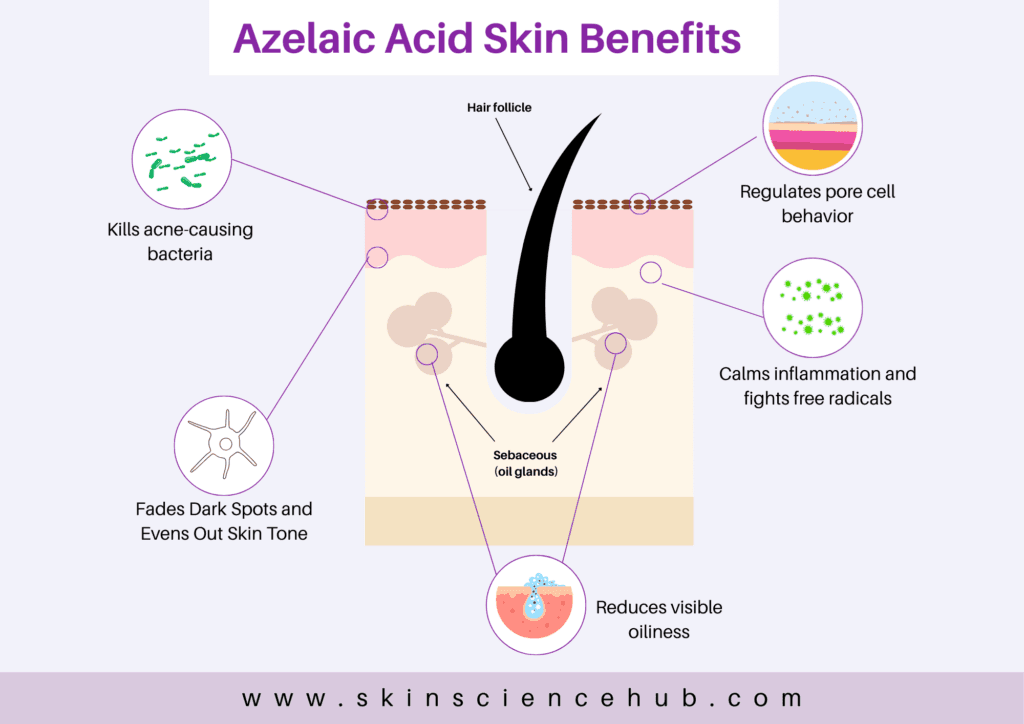
To understand what azelaic acid does for your skin, it helps to know it works through four distinct mechanisms, each targeting a different driver of common skin problems.
Azelaic Acid Kills Acne Bacteria
Azelaic acid targets Propionibacterium acnes, the bacteria responsible for inflammatory acne. It disrupts their metabolism by lowering internal pH and blocking protein synthesis, so bacteria can’t adapt to it. This is why it keeps working even after years of continuous use, unlike topical antibiotics like clindamycin or erythromycin, which lose effectiveness as bacteria develop resistance over time.
Azelaic Acid Calms Inflammation
Inflammation drives most visible skin problems, whether you’re dealing with acne, rosacea, or dark marks left after breakouts. Azelaic acid scavenges reactive oxygen species and stops inflammatory signals before they trigger redness and swelling.
Azelaic Acid Fades Dark Spots
Azelaic acid inhibits tyrosinase, the enzyme that drives melanin production, so your skin produces less pigment in areas where melanocytes are overactive. Because it targets only those overactive cells, your natural skin tone stays completely untouched.
Azelaic Acid Unclogs Pores
Azelaic acid has mild keratolytic properties that normalise how skin cells behave inside your pores, reducing the buildup that leads to blackheads and whiteheads.
What Does Azelaic Acid Treat
Azelaic acid has FDA approval for two conditions and documented clinical use across several others, which makes it one of the more versatile actives in dermatology.
Acne
Azelaic acid treats both comedonal and inflammatory acne, so it works on blackheads, whiteheads, and painful red bumps all at once. It does this by killing acne bacteria, unclogging pores, and calming inflammation simultaneously. Over the counter concentrations work well for mild to moderate acne, while prescription strength at 20 percent handles more stubborn cases. Most people see improvement within four to sixteen weeks. If you want a deeper dive in how azelaic acid work for acne, our guide on Azelaic acid for acne covers that.
Rosacea
The FDA approved azelaic acid specifically for papulopustular rosacea, the type that causes red bumps and pustules across your cheeks and nose. In a clinical trial of 961 patients, 15 percent gel reduced inflammatory lesions by 61.6 percent and calmed redness after twelve weeks. Rosacea responds more slowly than acne, so give it eight to twelve weeks to see a real difference in redness and bumps. If you want to dive deeper in how azelaic acid work for rosacea, read our guide on Azelaic acid for rosacea.
Hyperpigmentation and Melasma
Because azelaic acid targets overactive melanocytes without affecting healthy skin cells, dermatologists recommend it as a primary treatment for melasma, particularly for darker skin tones. One study found that 73.8 percent of patients using azelaic acid 20 percent saw significant fading at 24 weeks, compared to just 19.4 percent using hydroquinone 2 percent. Pigmentation is the slowest of all these conditions to respond, so give it three to six months. If you want to go deeper on ingredients that target dark spots, our guide on the best ingredients to fade hyperpigmentation covers everything worth knowing.
Post Inflammatory Hyperpigmentation
The dark spots acne leaves behind respond well to azelaic acid because it clears active breakouts while fading existing discoloration at the same time. For deeper skin tones prone to dark spots after every breakout, that means fewer new spots forming while the existing ones lighten.
Perioral Dermatitis
Dermatologists use azelaic acid off label for perioral dermatitis, the stubborn rash around the mouth that resists many conventional treatments. Its antibacterial and anti-inflammatory properties address two of the main drivers of the condition, which is why it shows up in treatment plans even without a formal FDA approval for it. Our guide on how to treat perioral dermatitis covers exactly how to use it for this.
Who Should Use Azelaic Acid
Azelaic acid is approved for ages twelve and up and works across almost every skin type, but a few groups benefit from it more than most.
Darker skin tones respond particularly well because azelaic acid fades hyperpigmentation without the risks hydroquinone carries, making it one of the safest brightening options available.
Pregnant and breastfeeding women have very few actives they can safely use. Retinoids are off limits, high concentration salicylic acid is questionable, and benzoyl peroxide has limited safety data. Azelaic acid is pregnancy category B, so dermatologists confidently recommend it during this time.
Sensitive skin types also do well with it, because it works without triggering the irritation that stronger actives cause.
The one group where azelaic acid alone won’t be enough is people with severe cystic acne. Those deep, painful nodules require treatments that penetrate further than any topical can reach, so a dermatologist visit makes more sense than relying on topicals alone.
How to Use Azelaic Acid
Start with clean skin. Azelaic acid absorbs better without oils or other products in the way, so cleanse first, pat dry, and apply a thin even layer across your entire face. Applying it broadly treats existing problems while stopping new ones from forming.
Once it absorbs, follow with moisturizer, then sunscreen in the morning. Azelaic acid doesn’t cause photosensitivity, so morning and evening use is completely fine.
If you have sensitive skin, start once daily and build to twice daily over a few weeks. Giving your skin time to adjust reduces the chance of any initial tingling or irritation.
In a multi-step routine, apply azelaic acid after water-based serums but before heavier creams and oils. Thinner textures go first so the active reaches your skin directly.
After a month or two of consistent use, your skin may feel less greasy. Azelaic acid doesn’t directly affect oil production, but enough people notice this that it’s worth knowing.
Can You Use Azelaic Acid with Retinol and Other Actives
Azelaic acid works well alongside most actives, but applying them in the correct sequence helps each one reach your skin directly.
Niacinamide is the most natural pairing. Both calm inflammation and fade pigmentation, and niacinamide strengthens your skin barrier over time, so your skin experiences less irritation from the azelaic acid.
Hyaluronic acid keeps your skin hydrated throughout the treatment. This also prevents dryness at higher concentrations. Apply it before the azelaic acid so it’s already working when the active goes on.
Vitamin C and azelaic acid target pigmentation through different pathways. Vitamin C prevents new dark spots by neutralising free radical damage, while azelaic acid fades existing ones by slowing melanin production. Apply vitamin C first, let it absorb, then follow with azelaic acid.
Retinol combines well with azelaic acid, but introduce them gradually. Start on alternate nights and let your skin adjust before using both together. Many people find they tolerate retinol better after a few months on azelaic acid, because azelaic acid calms underlying inflammation first and reduces the sensitivity that retinol can trigger.
Is azelaic acid better than retinol? They serve different purposes. Retinol drives cell turnover and targets fine lines, sun damage, and acne. Azelaic acid targets bacteria, inflammation, and pigmentation. For rosacea or melasma, azelaic acid is the stronger choice. For anti-ageing and texture, retinol is more effective. Most people with multiple concerns get better results using both than relying on either one alone.
Benzoyl peroxide and strong exfoliants like glycolic or salicylic acid work well alongside azelaic acid when you split them across morning and evening, so each active absorbs without interference.
Azelaic acid is one of the gentlest actives you can use. My guide shows you what it pairs with, plus 31 other ingredients.
Best Azelaic Acid Products
Three over the counter options work well for most people, and the right one depends on your skin type.
The Ordinary Azelaic Acid Suspension 10% is the most affordable and widely available. It’s a no-frills formulation, just azelaic acid, which makes it a clean starting point.

Naturium Azelaic Acid Emulsion 10% works well for dry and normal skin. It combines azelaic acid with niacinamide in a light lotion that absorbs without feeling sticky, so you get brightening and soothing from a single product.

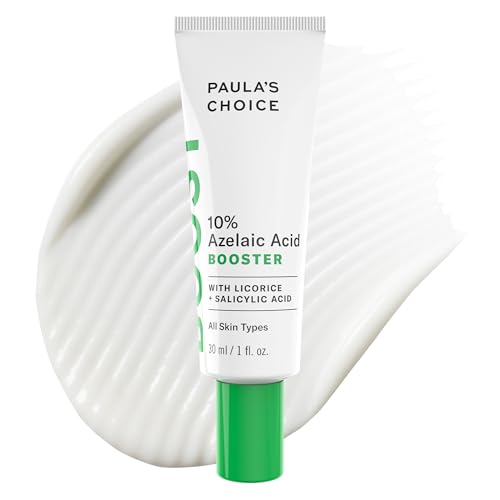
Paula’s Choice 10% Azelaic Acid Booster suits oily, combination, and acne-prone skin. It pairs azelaic acid with salicylic acid and licorice root for pore clearing and brightening in one lightweight serum.
For prescription strength, Finacea 15% gel is the FDA approved option for rosacea and Azelex 20% cream is used for stubborn acne and melasma. Both require a doctor’s visit in the United States, though many countries sell them over the counter.
Azelaic Acid Side Effects
Azelaic acid is well tolerated by most people, but a few reactions are common when starting out.
The most common is tingling, mild burning, or stinging right after application. Studies show up to 10 percent of users experience this, but it typically fades within fifteen to twenty minutes and stops altogether as your skin adjusts over the first few weeks. If the sensation persists or worsens, stop using it and see your dermatologist.
Some people also experience purging in the first two to four weeks. Because azelaic acid speeds up cell turnover inside the follicle, existing breakouts may surface faster than they would on their own. Purging shows up where you already get acne, so if you’re breaking out somewhere completely new, that’s a reaction and you should stop the product.
Dryness or peeling is less common, but if you notice either, drop back to once daily until your skin settles. If prescription strength feels intense, try applying it over your moisturizer rather than under it, since this slows absorption without reducing its effectiveness.
Bottom Line
Few skincare ingredients work across this many conditions without causing irritation, and azelaic acid is one of them. It’s safe during pregnancy, well suited to darker skin tones, and backed by decades of clinical research. Whether you’re dealing with acne, rosacea, or stubborn dark spots, it’s an ingredient worth taking seriously.