
Closed Comedones: How to Get Rid of Them and Prevent Them
If your forehead feels bumpy but you can’t spot any pimples, you might be dealing with closed comedones. Also known as whiteheads, closed comedones are tiny bumps that form when oil and dead skin cells get stuck inside a pore with a sealed opening. They don’t hurt or turn red, but they can still make your skin look rough, even when you’re wearing makeup.
These are a type of comedonal acne that often pops up during puberty and can stick around for years. Because the clog is hidden beneath the surface, scrubbing or using harsh cleansers won’t get rid of it, and choosing the right treatment starts with understanding how these bumps form.
In this guide, you’ll learn what closed comedones are, how to tell them apart from similar skin issues, and what causes them. You’ll also find out the best treatments and how to prevent them from coming back, with tips for darker skin along the way.
What Are Closed Comedones?
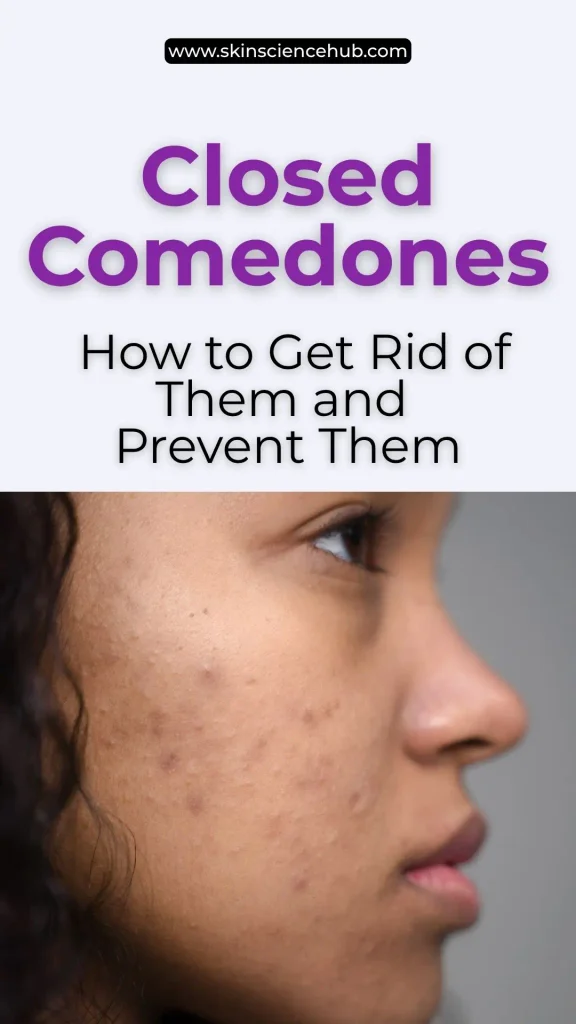
Closed comedones are clogged pores with a sealed opening at the surface. They’re a noninflammatory type of acne, which means they aren’t red, swollen, or sore, and they usually look like small, firm bumps that match your skin tone or look a little white.
Every comedone starts as a microcomedone, a blockage too small to see. Some grow into much larger bumps called macrocomedones, which can be harder to clear and often need a dermatologist’s help. If a closed comedone lingers, the pore wall can break, turning it into a red, inflamed pimple.
People often call any pimple with a white top a “whitehead,” which causes a lot of confusion. A closed comedone has a firm plug of oil and dead skin cells, whereas a pustule is filled with pus and sits on red, sore skin. If your bump hurts or has redness around it, you may be looking at a pustule.
On darker skin, closed comedones can blend in so well that they’re easy to miss. A 2024 review notes that this can delay an acne diagnosis. Because darker skin is more prone to dark marks after a bump becomes inflamed, treating closed comedones early helps prevent them. You can learn more about these marks in our guide to PIE vs PIH.
Open vs Closed Comedones
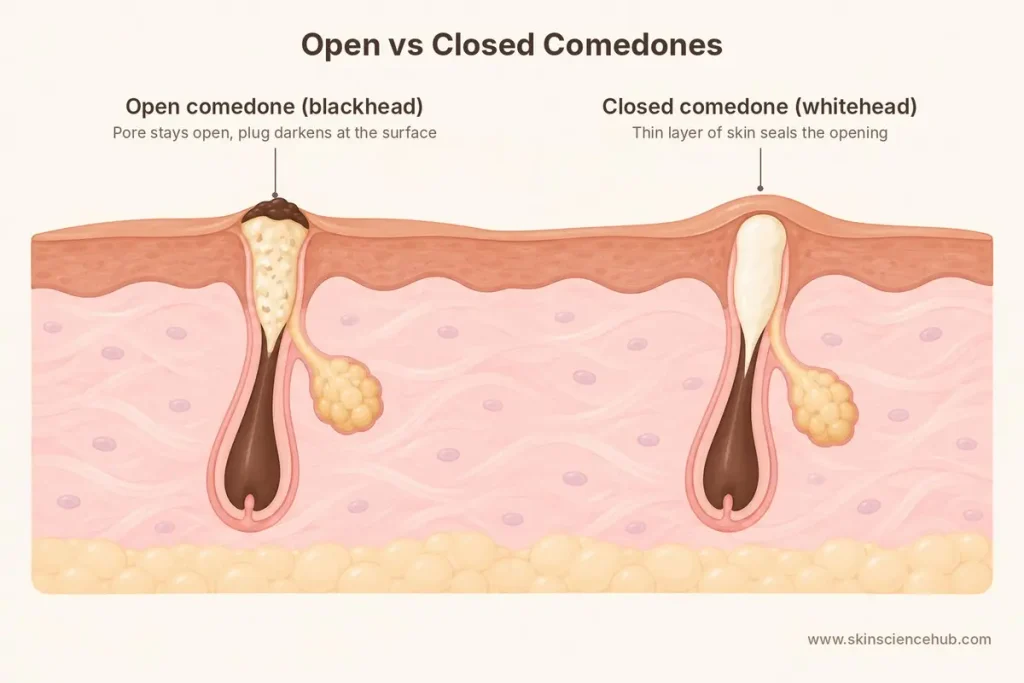
The difference between open and closed comedones is whether the pore opening stays open. An open comedone, or blackhead, forms when the plug reaches the surface and turns dark because of pigment and oxidized oil, not dirt. A closed comedone, or whitehead, has a thin layer of skin that seals the opening, so the plug keeps its pale color and is harder to spot. The same ingredients clear both types, like retinoids and salicylic acid.
What Can Be Mistaken for Closed Comedones?
Fungal acne, milia, perioral dermatitis, and keratosis pilaris can all resemble closed comedones. It’s important to tell them apart before you start any acne treatment, because acne treatments can make some of these conditions worse.
| Condition | Where It Appears | How It Feels | Key Clue |
|---|---|---|---|
| Closed comedones | Forehead, chin, cheeks | Firm and painless, no itching | Small bumps with no redness |
| Fungal acne | Chest, back, upper arms, hairline | Itchy | Red bumps all the same size, worse after sweating |
| Milia | Around the eyes, nose, upper cheeks | Hard | Look like tiny white pearls and don’t change for months |
| Perioral dermatitis | Around the mouth, nose, eyes | Dry, flaky, may burn | Clear strip of skin along the lip line |
| Keratosis pilaris | Outer cheeks, upper arms, thighs | Rough, like sandpaper | Worse in winter |
Closed Comedones vs Fungal Acne
Fungal acne, or Malassezia folliculitis, happens when yeast that normally lives on your skin grows out of control. The biggest giveaway is itching, because closed comedones don’t itch, while fungal acne often does, especially after sweating. You can also have both at the same time, particularly in hot, humid weather. If your bumps itch, check out how fungal acne differs from regular acne.
Closed Comedones vs Milia
Milia are tiny bumps filled with keratin, the protein that makes up your skin’s outer layer. If a spot hasn’t changed after several months of consistent acne treatment, it may be milia, and a dermatologist can confirm the diagnosis and remove them safely.
Closed Comedones vs Perioral Dermatitis
Perioral dermatitis is a rash that can be worsened by steroid creams, heavy moisturizers, retinoids, and strong acids, so treating it like closed comedones can backfire. If your bumps burn or flake, it’s a good idea to see a dermatologist before you begin treatment, and you can also learn more about treating perioral dermatitis.
Closed Comedones vs Keratosis Pilaris
Keratosis pilaris, or KP, forms when keratin builds up and blocks a hair follicle. It shows up on both your face and body, especially on your outer cheeks, upper arms, and thighs. You can find out how to treat KP on your face.
What Causes Closed Comedones?
1. Overactive skin cells – Your pores are lined with skin cells that normally shed and get carried away by your skin’s natural oil. When your pores produce too many cells, the cells can clump together, trapping oil underneath until it hardens into a plug. The bacterium C. acnes, which is common on most people’s skin, can make these cells stickier, which helps the plug grow.
2. Hormones – Hormones called androgens tell your oil glands to make more oil, which is why closed comedones often start in puberty and can worsen before your period, during pregnancy, or around menopause. If your acne follows your cycle, hormonal acne might be the cause.
3. New products and harsh cleansing – New skincare, makeup, and hair products can clog pores within a few weeks of use. Harsh cleansers and rough scrubbing can make the issue worse because they damage your skin barrier, and irritated skin is more prone to clogged pores.
4. Smoking and stress – Some research links smoking to closed comedones. In a study of adult women with acne, smokers were much more likely to have acne made up mostly of comedones. Stress may also play a part, although research on stress and skin is still limited.
Closed Comedones on Your Forehead, Chin, and Cheeks
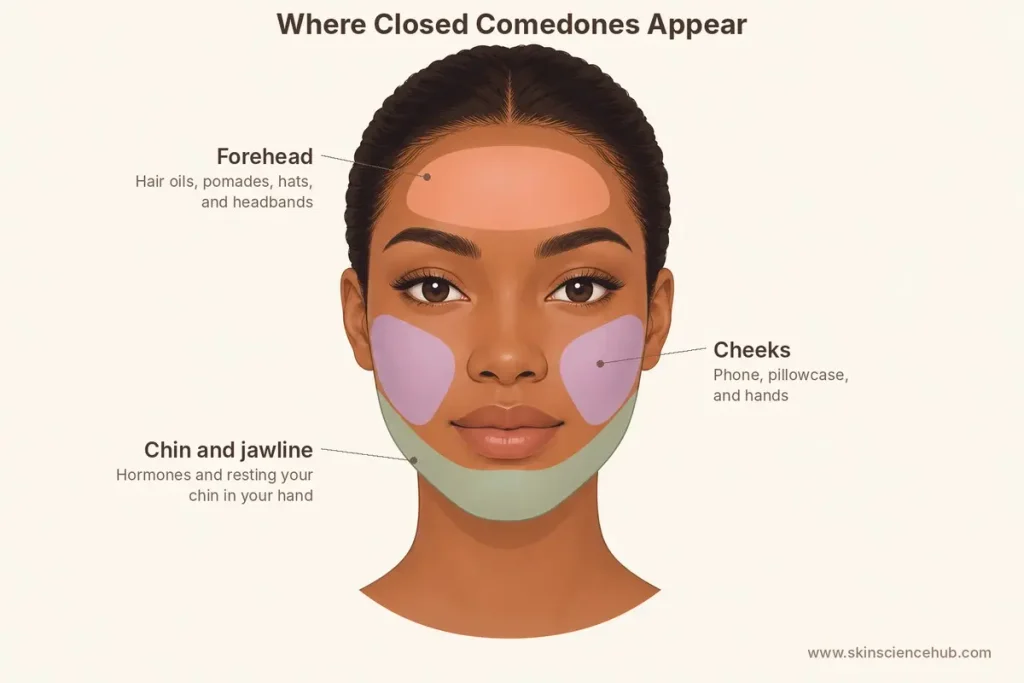
Where your spots appear can give you a clue about what’s causing them.
Forehead – Hair oils, pomades, and styling creams sometimes make their way from your hairline to your skin, which dermatologists refer to as pomade acne. Hats and headbands can also cause friction and trap sweat.
Chin and jawline – Closed comedones here are often connected to hormones, especially in adult women, and resting your chin in your hand can make things worse by clogging the pores.
Cheeks – Your phone screen, pillowcase, and hands can all spread oil and product onto your skin.
How to Get Rid of Closed Comedones: Step by Step Treatment
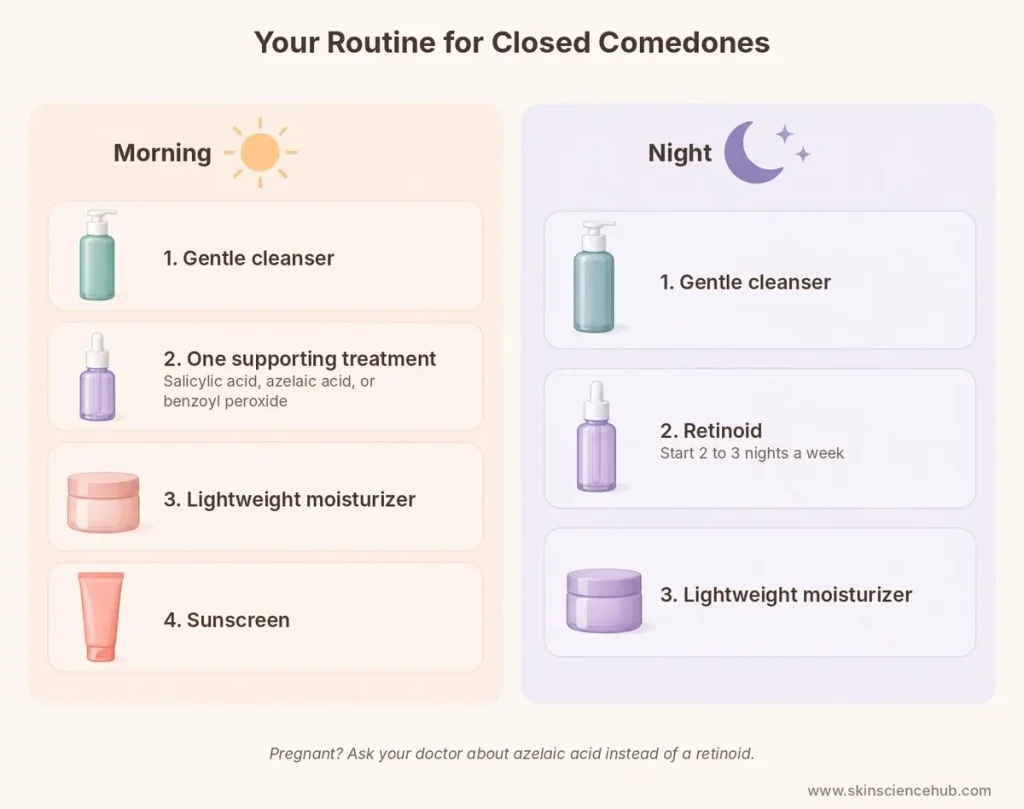
You can treat most closed comedones at home, and clearing them works best when you build your routine gradually. Start with the first two steps, and then add each new treatment once your skin adjusts to the previous one. That typically means a retinoid plus salicylic acid. If your skin is sensitive, you’re pregnant, or you also get inflamed spots, azelaic acid or benzoyl peroxide may suit you better. Either way, one supporting treatment is usually enough.
Step 1: Audit Your Skincare, Makeup, and Hair Products
Before you add anything new, look at what you already use. Think back to the weeks before your bumps appeared, and jot down any skincare, makeup, sunscreen, or hair products you started around that time.
Rich facial oils, thick balms, heavy foundation, and coconut oil are common culprits. If you suspect a product, stop using it for a few weeks and see whether new bumps slow down. Change one product at a time, so you know which one made the difference.
The best test is how your skin responds over a few weeks of use, because “noncomedogenic” isn’t a regulated term, and comedogenic ratings come from older lab tests that don’t always match how your skin reacts.
Step 2: Build a Gentle Base Routine
To help your skin stay calm while your treatments are working, try this simple routine.
Gentle cleansing: Wash your face twice a day with a mild cleanser and lukewarm water, and leave out the scrubs. You can find our top picks in our guide to the best face wash for oily skin and acne.
Lightweight moisturizer: Use a gel or lotion moisturizer with glycerin, ceramides, and niacinamide. Glycerin and ceramides hydrate your skin and strengthen its protective layer, while niacinamide soothes redness and helps keep oil levels in check. CeraVe PM Facial Moisturizing Lotion works well because it includes all three ingredients all three ingredients, keeping your skin hydrated without feeling greasy.
Sunscreen: Don’t forget to wear sunscreen every morning. Retinoids and acids can make your skin more sensitive to the sun, so daily protection is key to preventing irritation and dark marks. A fluid or gel formula is usually a good fit for oily skin.
Step 3: Start a Topical Retinoid Like Differin
For closed comedones, a topical retinoid is your best bet! It helps the cells in your pores shed properly, so they don’t stick together. This clears up the clogs you already have and helps keep new ones from forming.
Adapalene still needs a prescription in some places, like the UK. But in the US, Differin Adapalene Gel 0.1% is available over the counter, and it was the first retinoid the FDA approved for treating acne without a prescription. As a pharmacologist, I suggest starting with adapalene because it targets specific retinoid receptors in the skin, which is part of why it tends to be gentler than older retinoids like tretinoin.
If you need something stronger, a dermatologist can prescribe tretinoin or another retinoid. If you’d prefer something milder, retinol and retinal work more slowly but are gentler on your skin, and you can compare them in our guide to retinal vs retinol.
Apply a pea-sized amount to your whole face at night, starting 2 or 3 nights a week and gradually increasing to every night as your skin gets used to it. Make sure to cover the entire area where you get bumps, not just the ones you can see, because new clogs can form in skin that still looks clear.
You might experience some dryness and peeling in the first few weeks, which is normal. These tips on using retinol with sensitive skin can help you ease into it. Retinoids aren’t recommended during pregnancy, so talk to your doctor if you’re pregnant or planning to be.
Step 4: Add Salicylic Acid Once Your Skin Settles
Once you’ve used your retinoid for about 4 to 6 weeks and your skin has adjusted, you can introduce salicylic acid. It’s oil-soluble, so it soaks into your pores and helps clear out any blockages.
Try a leave-on toner, serum, or gel with 1% to 2% salicylic acid. Apply it in the morning a few times a week, then gradually increase how often you use it. Paula’s Choice Skin Perfecting 2% BHA Liquid Exfoliant is a reliable pick because it’s light, fragrance-free, absorbs quickly, and blends well under your moisturizer.
If your skin is sensitive, a salicylic acid cleanser is a gentler approach. CeraVe SA Smoothing Cleanser combines salicylic acid with ceramides and niacinamide, and letting the lather sit for a minute or two before rinsing gives the salicylic acid time to reach your pores.
Azelaic Acid for Sensitive Skin and Pregnancy
If a retinoid irritates your skin, or you’re pregnant, azelaic acid is a great alternative. It helps keep your pores clear, soothes redness, and fades the dark marks that breakouts leave behind, which is especially beneficial for those with darker skin tones. It’s also one of the treatments doctors often recommend during pregnancy, so it’s worth asking yours about it.
Over-the-counter products typically have 10% azelaic acid, while prescription versions, which most studies used, can go up to 20%. The Ordinary Azelaic Acid Suspension 10% is a budget-friendly way to get started.
For stubborn bumps, you can also pair it with your retinoid, applying azelaic acid in the morning and your retinoid at night. If you use salicylic acid in the morning too, alternate the two on different days to minimize irritation.
Benzoyl Peroxide for Inflamed Spots
Benzoyl peroxide kills C. acnes and gently loosens clogs, making it a helpful companion to your retinoid when you’re dealing with red, inflamed spots alongside closed comedones.
For most people, a 2.5% to 5% formula is all you need. Paula’s Choice CLEAR Regular Strength Daily Skin Clearing Treatment is a light, fragrance-free lotion that includes 2.5% benzoyl peroxide, along with bisabolol and allantoin to calm your skin while it clears.
Apply benzoyl peroxide in the morning and your retinoid at night. This timing is especially important with tretinoin, as benzoyl peroxide can break it down, while adapalene remains stable. Keep benzoyl peroxide away from towels and pillowcases too, as it can bleach fabric.
Do Glycolic and Mandelic Acid Work for Closed Comedones?
Glycolic and mandelic acid can be helpful supporting treatments for closed comedones. They’re both alpha hydroxy acids, which are water-soluble and gently exfoliate the skin’s surface, giving it a smoother look.
Most research on these acids looks at stronger peels done by a dermatologist. Glycolic acid peels improved comedonal acne in a randomized trial. In a 2019 study, mandelic acid peels were found to be just as effective as salicylic acid peels overall, with fewer side effects, which makes mandelic acid a gentler choice.
Can You Squeeze or Extract Closed Comedones?
It’s better to avoid squeezing closed comedones at home. The sealed opening doesn’t give the plug a way out, so pressing too hard can damage the pore wall under your skin, turning a small bump into a red, painful pimple. Plus, it can leave a dark mark that takes months to fade, especially on darker skin.
A dermatologist or a trained esthetician can safely extract them. They use a sterile tool to gently open the pore and lift out the plug, which reduces the chance of irritation and marks. Extraction clears the bumps you already have, and your routine helps keep new ones from forming.
Can You Get Rid of Closed Comedones Naturally?
Most natural remedies don’t have much solid proof for closed comedones, and some can even irritate your skin. Lemon juice and apple cider vinegar are acidic enough to burn your skin, and lemon juice can also leave dark marks if you’re exposed to the sun. Baking soda and toothpaste can throw off your skin’s natural pH balance and dry it out. Tea tree oil can help with inflamed pimples, but there’s not a lot of research on closed comedones, and it might not be the best choice for sensitive skin.
If you’re looking for reliable results, retinoids, salicylic acid, and azelaic acid have more research backing them up.
How Long Does It Take to Clear Closed Comedones?
Most people notice smoother skin after about 8 to 12 weeks of consistent treatment, and full results can take 3 to 6 months. Those bumps you’re seeing now started forming before you began treatment, so your routine needs some time to catch up. Give it at least 12 weeks before you decide if it’s working for you.
In the first few weeks, you might see more bumps or a few small pimples. This is called purging, and it happens because retinoids and acids speed up how quickly your skin sheds, pushing existing clogs to the surface sooner. Purging tends to show up where you usually get bumps and settles down within a few weeks.
If you experience burning, stinging, a rash, or bumps in areas where you don’t usually break out, it likely means your skin is reacting to the product. In that case, try using it less often and give your skin some time to recover. Our guide to skin purging vs breakouts can help you tell the difference, and if your skin feels tight or raw, it might be over-exfoliated.
Why Do Closed Comedones Keep Coming Back?
Once you stop your treatment, the cells in your pores can become sticky again and form new clogs. That’s why closed comedones often make a comeback, and don’t worry, it doesn’t mean your routine failed!
A common reason is stopping your retinoid too soon. In a randomized trial, 85% of people who kept using adapalene after their acne improved stayed improved, compared with 64% of those who switched to an inactive gel.
Bumps that return in the same spots can also point to a product, such as a hair product along your hairline or a rich moisturizer you’ve just added.
To keep your skin clear, keep using your retinoid even after your skin improves, and introduce new products one at a time. If you’re not sure how to put everything together, our guide to layering your skincare can help
When to See a Dermatologist
If your bumps haven’t improved after 12 weeks of a consistent routine, or if you’re not sure they’re closed comedones, see a dermatologist. It’s also worth getting help if you have red, painful pimples, cysts, or scarring, or if your skin is making you feel down about yourself.
A dermatologist can prescribe a stronger retinoid or prescription-strength azelaic acid. If your acne is tough to clear or you also have inflamed spots, they might suggest an oral treatment, like hormonal therapy or isotretinoin.
Remember, you’re not in this alone!